What is biodiversity?
Biodiversity is the variety of life on Earth, working on three levels at once: the range of species, the ecosystems they build together, and the genetic differences within each species. It spans every living thing, from the tiniest microorganisms to the largest mammals, and the habitats that hold them together. This variety is what allows ecosystems to function and to provide the services we rely on, from clean air and water to pollination.
Some regions hold far more biodiversity than others, with tropical areas richest of all. The most exceptional are known as hotspots, and they are often home to endemic species, found nowhere else on Earth.
Read more: Nature’s symphony: 15 Interconnected wonders of biodiversity
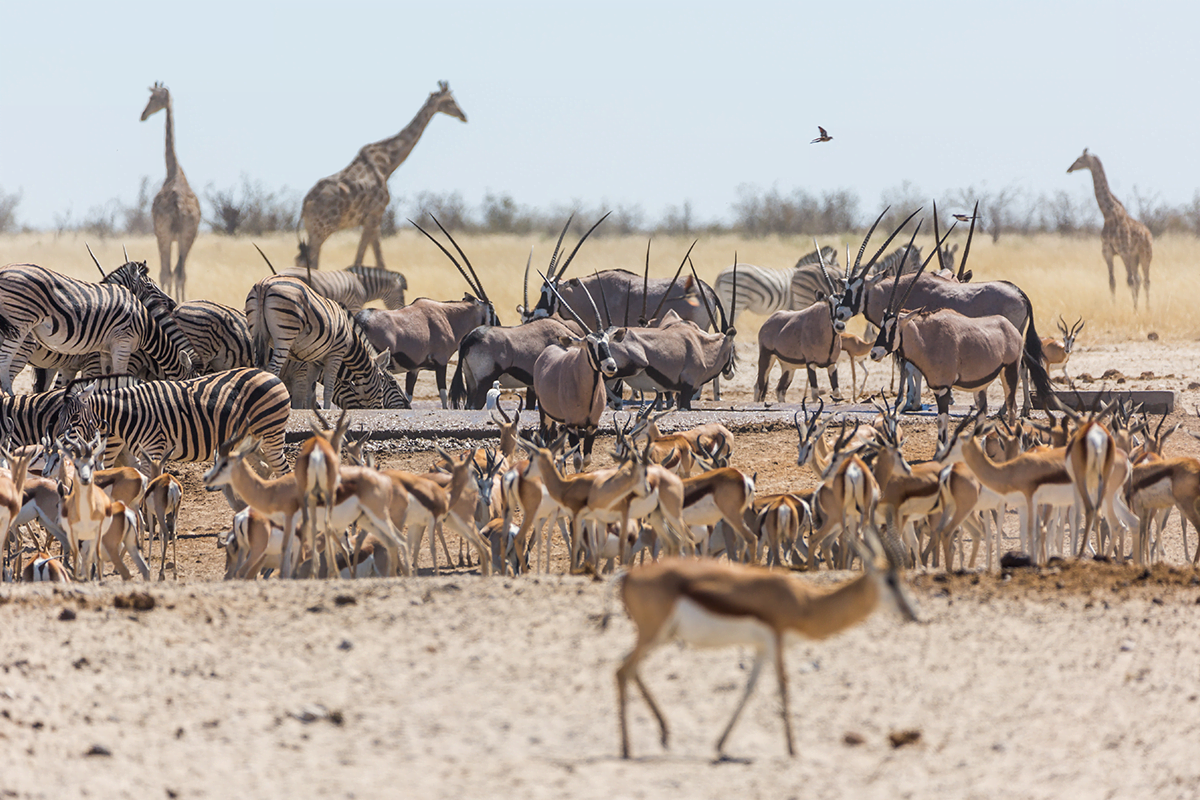 Different species sharing their habitat peacefully at Etosha National Park, Namibia, Africa.
Why biodiversity matters
Biodiversity is far more than a pleasant view. Every species in an ecosystem is part of a single connected web. Plants, animals, fungi, and microorganisms all depend on one another to keep the system in balance, and each one plays a role in keeping it healthy. Pull out or weaken one thread, and the effects ripple outward across the whole web, often in ways that are hard to predict and harder to reverse.
The richer and more varied an ecosystem, the more resilient it is: better able to absorb shocks such as natural disasters, pest outbreaks, and changing environmental conditions. As biodiversity declines, that resilience erodes with it. Looking ahead, assessments of the coming decades point the same way: where forest cover falls and land is converted for other uses, both local and global biodiversity decline too. Acting early to protect it is far more effective than trying to rebuild what has already been lost.
Read more: 5 Types of ecosystems
The benefits of biodiversity
-
Food and pollination: Healthy, diverse ecosystems grow the food we eat. Nearly three-quarters of the crops that produce fruit and seeds for human consumption depend on pollinators to some extent, from apples and cherries to blueberries and almonds. A varied range of pollinators means higher yields and better-quality harvests.
-
Clean water and air: Wetlands, marshes, and forests act as natural filters, trapping sediment and removing pollutants from the water we drink, while their root systems hold soil in place and recharge groundwater. Trees and plants clean the air at the same time, capturing airborne pollutants and cooling the spaces around them.
-
Healthy soil: Fertile soil is built and maintained by the diversity of life within it. Earthworms and other invertebrates break down plant matter and aerate the ground, while fungi and microbes convert it into the nutrients plants need to grow. The more varied this underground community, the healthier and more productive the soil becomes, and the better it holds water and resists erosion.
-
Climate and flood protection: Forests, oceans, and other ecosystems are among our most powerful allies against changing environmental conditions, absorbing carbon through photosynthesis and locking it away in wood, roots, and soil. Diversity strengthens this: a forest with a greater range of species tends to store more carbon than a uniform one. At the same time, trees, wetlands, and grasslands slow rainfall and help the ground absorb it, reducing the risk of floods and storms.
-
Health and wellbeing: Nature protects both physical and mental health. Birds and bats keep insect populations in check, limiting the spread of disease, while plants and other organisms are the source of many of the medicines we depend on. Time spent in nature is also linked to lower stress, better mood, and sharper focus.
-
Livelihoods and culture: Beyond the resources we can see, biodiversity underpins entire economies and ways of life. More than half of global GDP depends on nature and the services it provides, from raw materials for fuel and shelter to the fish that gives billions of people their main source of protein. Parks, forests, and coastlines also support tourism and recreation, and for many communities they are deeply tied to local culture and identity.
Read more: Sweet solutions: the role of bees and Impact Investments in environmental restoration
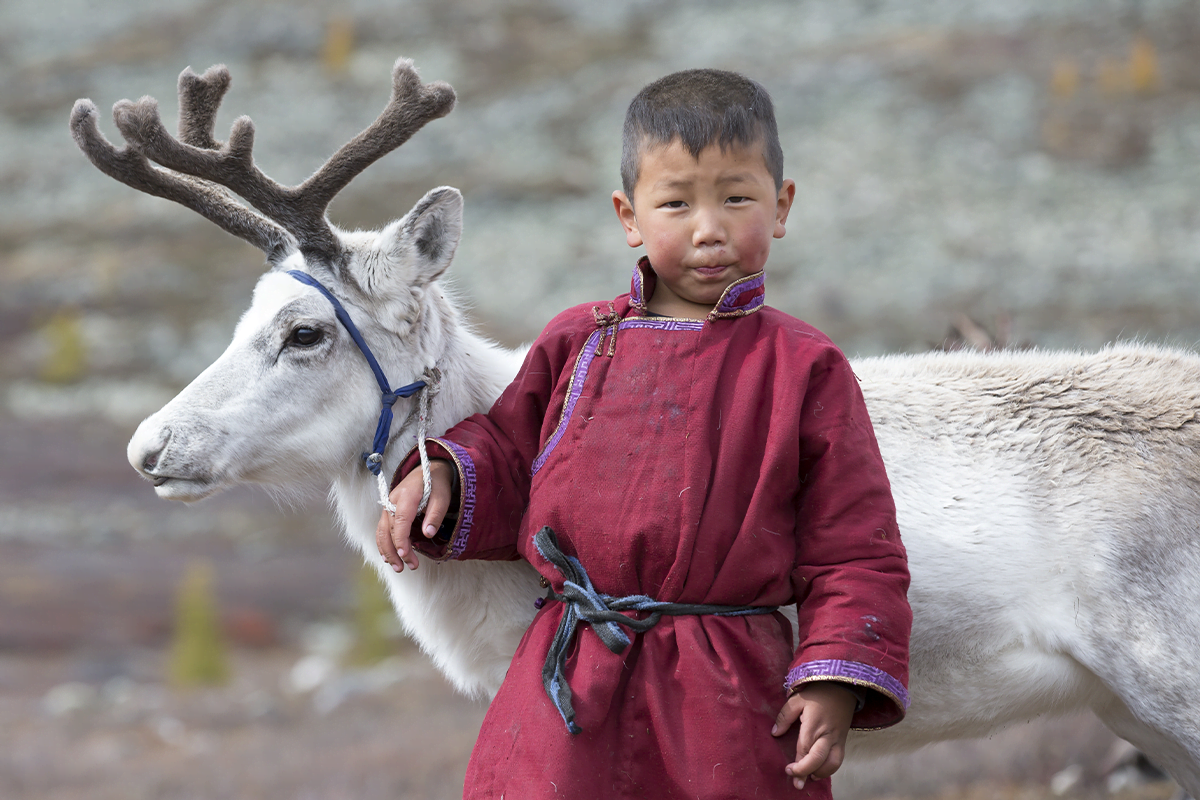 A Tsaatan boy, dressed in a traditional title with a reindeer baby, Mongolia.
What threatens biodiversity
-
Habitat loss and fragmentation: The destruction and break-up of natural habitats, through deforestation, fire, overuse, and urban expansion, is the single biggest threat to biodiversity. It is identified as the main threat to 85% of all species on the IUCN Red List of threatened species.
-
Over-exploitation: Using natural resources faster than they can recover does more harm than the resources are worth. Shrimp farming, for example, degrades coastal fisheries, destroys wetlands, and pollutes coastal waters in countries such as India, Thailand, Ecuador, and Indonesia, with research showing its environmental cost outweighs its export value. The illegal wildlife trade adds further pressure, driving the unlawful capture and trade of wild plants and animals.
-
Changing environmental conditions: Rising global temperatures are reshaping habitats and the species that depend on them. Even a shift of around 2°C can raise sea levels enough to destroy coastal ecosystems, pushing biodiversity out of ranges it has occupied for millennia.
-
Population growth and over-consumption: At the start of the 20th century there was roughly one billion people; today there are more than eight billion. That growth drives rapid, unsustainable demand for food, minerals, and water. The imbalance is stark: around 25% of the world's population uses roughly 75% of its natural resources.
-
Changing environmental conditions Rising global temperatures are reshaping habitats and the species that depend on them. Even a shift of around 2°C can raise sea levels enough to destroy coastal ecosystems, pushing biodiversity out of ranges it has occupied for millennia.
-
Population growth and over-consumption At the start of the 20th century there was roughly one billion people; today there are more than eight billion. That growth drives rapid, unsustainable demand for food, minerals, and water. The imbalance is stark: around 25% of the world's population uses roughly 75% of its natural resources.
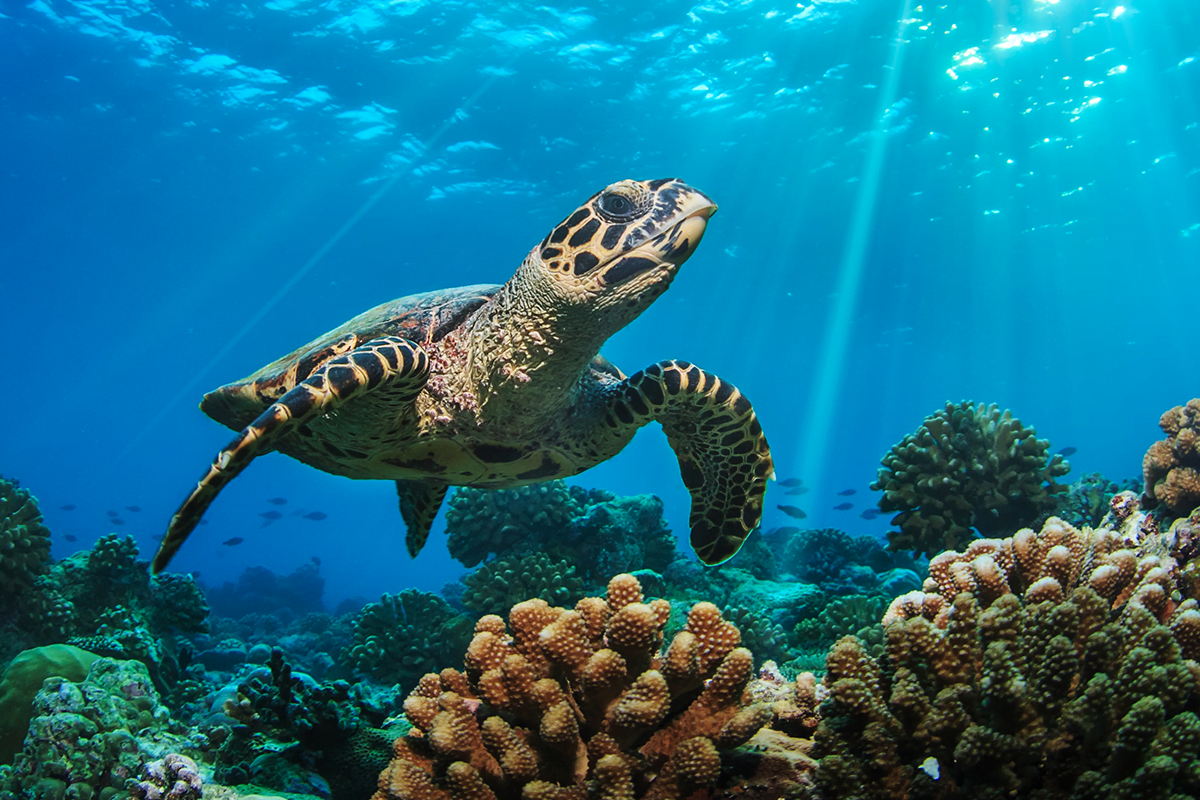 Maldivian sea turtle floating on coral reef.
Protecting and restoring biodiversity
One of the most encouraging things about nature is its capacity to recover. Given the chance, degraded ecosystems can come back, and the web of life that depends on them with it. Protecting biodiversity means easing the pressure on that web: rethinking how we use natural resources and giving ecosystems the room to heal. It is a shared effort, with governments setting and enforcing the rules, businesses committing to sustainable practices and backing restoration, and local communities, often the closest stewards of the land, playing a central role.
-
Protected areas: national parks, wildlife sanctuaries, and other reserves give species the space to thrive and reproduce free from human pressure.
-
Habitat restoration: degraded or destroyed habitats (wetlands, forests, grasslands) are rebuilt through reforestation, removing invasive species, and restoring soils.
-
Sustainable use: resources are used in ways that keep ecosystems healthy, such as forestry and fishing that maintain biodiversity rather than deplete it.
-
Adapting to change: as environmental conditions shift, measures such as wildlife corridors help species move and cope, keeping populations connected.
Read more: Reforestation: 10 amazing benefits of planting trees
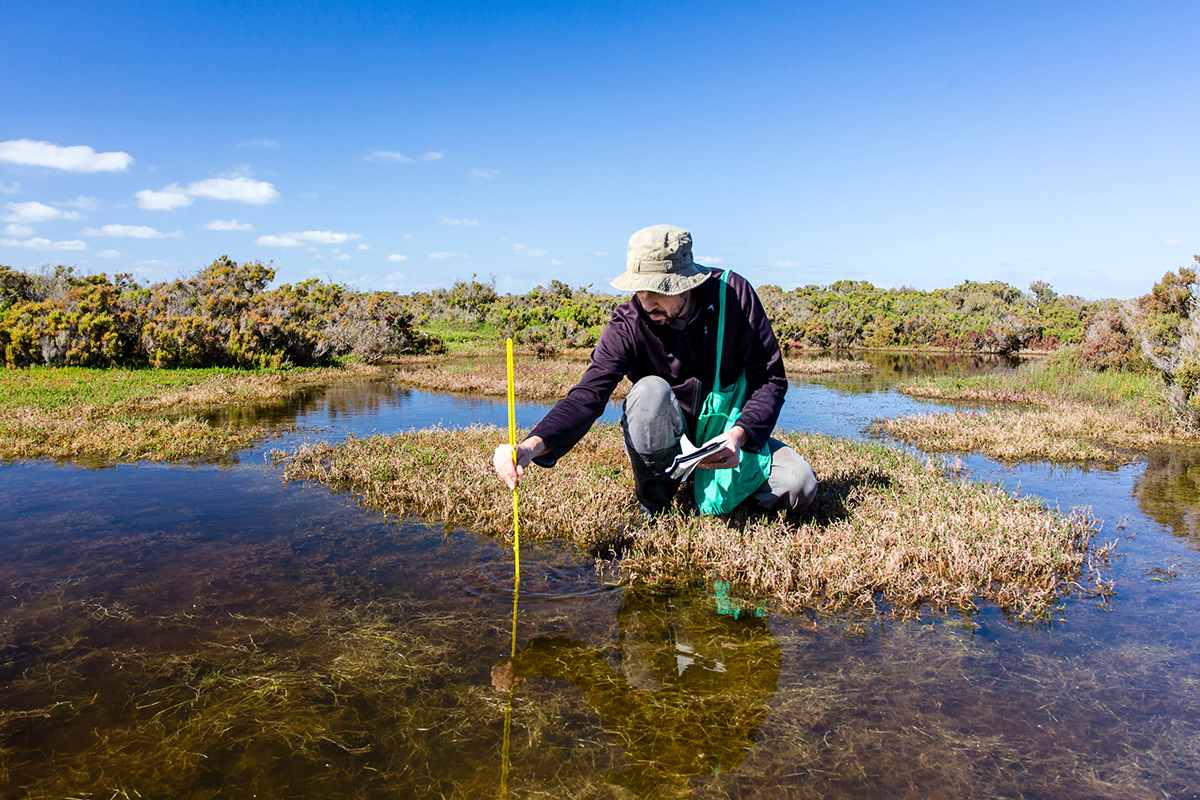 Scientist measuring water quality parameters in a wetland.
Biodiversity credits
Each of the approaches need funding to happen, and that is where biodiversity credits come in. They are a financing mechanism that turns the protection and restoration above into something businesses and individuals can invest in directly. Each credit represents a measurable gain in biodiversity, such as a restored wetland, a protected stretch of forest, or a habitat brought back to health, achieved through a specific conservation project and verified against an agreed standard.
Unlike carbon credits, which measure carbon stored or avoided, biodiversity credits capture the health and variety of an ecosystem itself. They give governments, organisations, and individuals a practical way to fund the restoration, creation, and protection of habitats, channelling finance towards the projects that need it. As the methods for measuring biodiversity continue to mature, credits are becoming an increasingly reliable way to turn investment into real-world impact for nature.
Read more: Why we need to restore high-priority areas like Africa
How Green Earth supports biodiversity
At Green Earth, biodiversity is central to everything we do. We develop and manage large-scale tree-planting and ecosystem-restoration projects that rebuild degraded land and vital habitats, capturing carbon while delivering real benefits for species and the services healthy ecosystems provide. We monitor and research our sites continuously, so we can measure what works and keep improving it.
We do this hand in hand with governments, partners and local communities so that projects fit their needs and support long-term stewardship of the land. The result is conservation that holds environmental and social impact together, and a practical way for any business to play its part in helping nature recover.




