What is air pollution?
Clean air is air free from harmful levels of pollutants such as particulate matter, nitrogen oxides, sulphur dioxide, ozone, and carbon monoxide. Air pollution occurs when these substances build up to concentrations that affect people, wildlife, and ecosystems.
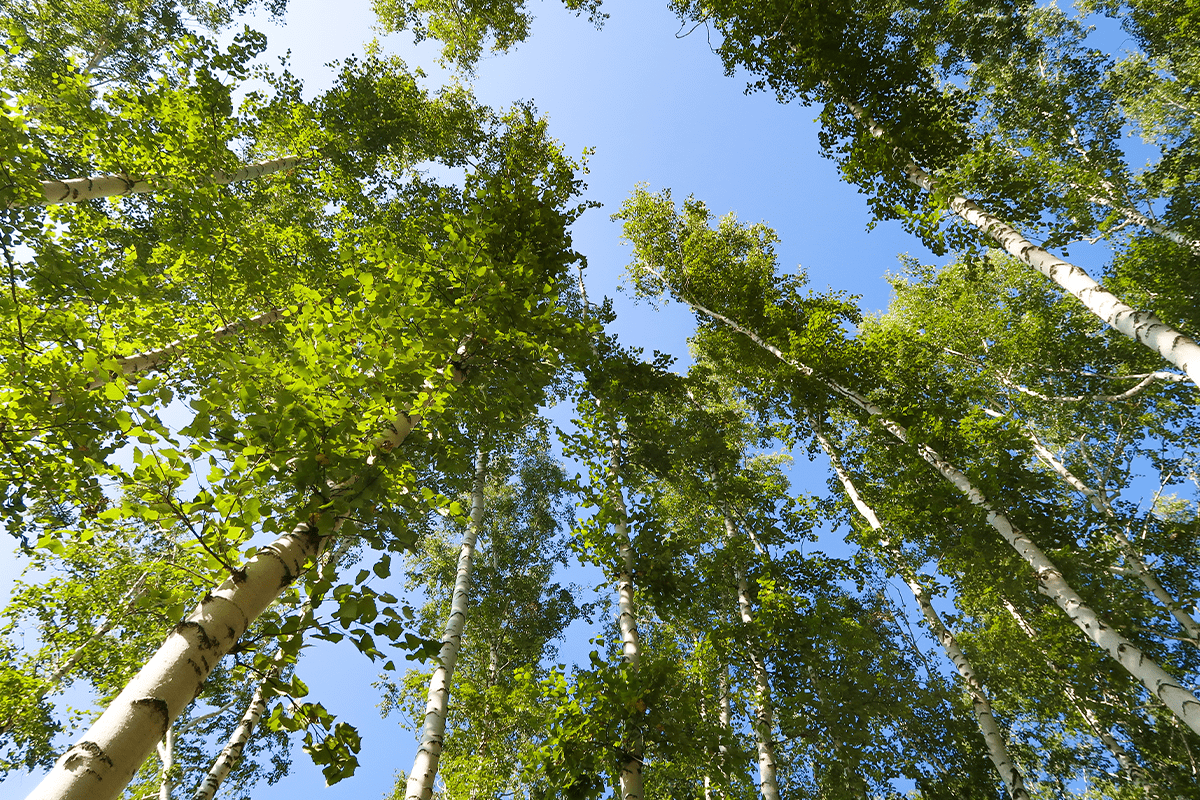
Poor air quality is one of the world's leading environmental health risks, and it also places pressure on ecosystems, agriculture, and the wider economy. The encouraging news is that air quality responds quickly to action, and nature is one of the most effective tools available.
This page explains what causes air pollution, how it affects health and the environment, and the solutions that deliver cleaner air, with a focus on the role of nature-based solutions.
What causes air pollution?
Natural sources
Some air pollution comes from nature. Dust storms, wildfires, and volcanic eruptions release particulate matter and gases that affect air quality, usually over shorter periods and in specific regions.
Societal causes
Most air pollution comes from human activity, and three sources dominate: transport, industry, and the burning of fossil fuels. Vehicles emit nitrogen oxides, carbon monoxide, and particulate matter, particularly in busy urban areas. Factories add sulphur dioxide, nitrogen oxides, and volatile organic compounds. Generating electricity and heat from coal, oil, and gas releases further pollutants alongside carbon emissions.
Air pollution and carbon emissions share the same main root: burning fossil fuels. Action that reduces one supports the other, which is why nature-based solutions that absorb pollutants and store carbon work on both fronts at once.
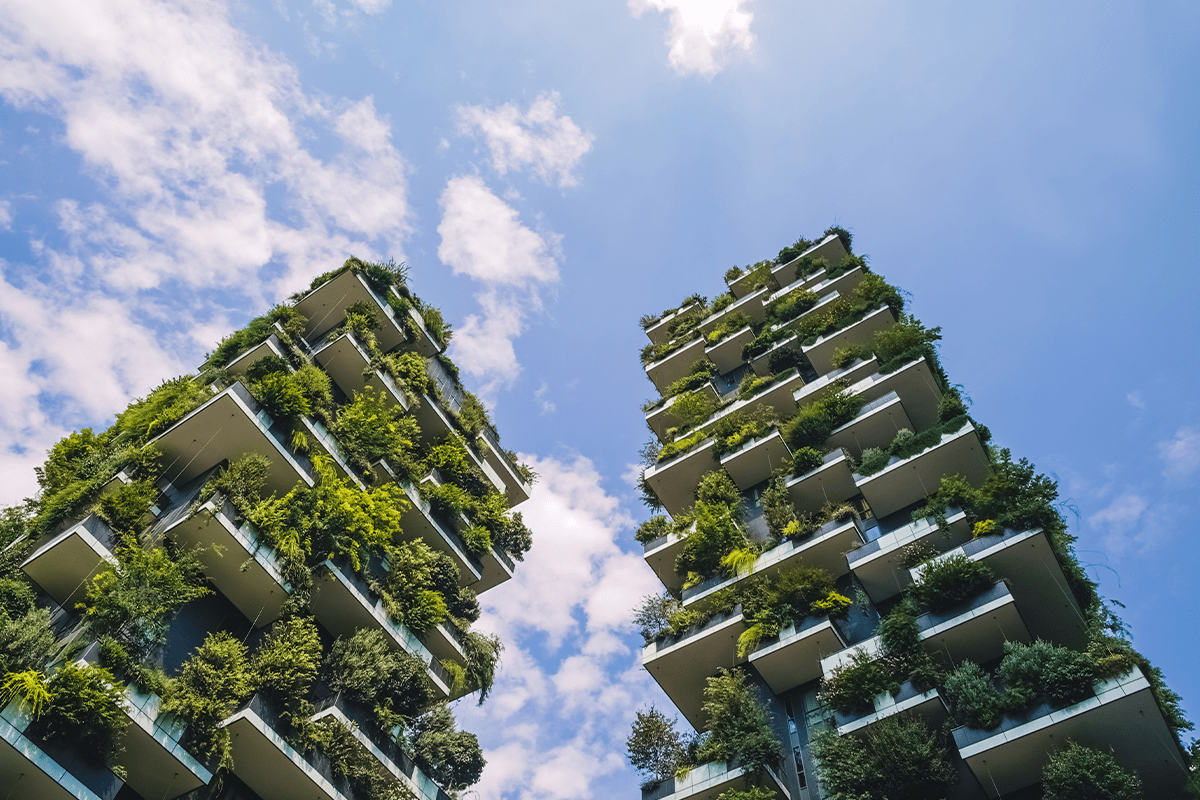
Bosco Verticale (Vertical Forest). Residential skyscrapers in the Porta Nuova district of Milan, Italy.
How air pollution affects health and the environment
Effects on human health
Air pollution affects health in the short and long term. Fine particulate matter penetrates deep into the lungs and bloodstream, contributing to respiratory conditions such as asthma and bronchitis, and to cardiovascular conditions including heart disease and stroke. The International Agency for Research on Cancer (IARC) classifies outdoor air pollution as a Group 1 carcinogen.
Indoor air quality matters too. Around 2.3 billion people, close to a third of the global population, still cook over open fires or basic stoves using wood, charcoal, and other solid fuels, which produces harmful household smoke (IEA). Efficient cookstoves are one of the most direct ways to improve the air these households breathe.
Effects on the environment
Air pollution reaches beyond people. Pollutants such as nitrogen and sulphur oxides acidify soils and water, harming plants, aquatic life, and the ecosystems that depend on them. Acid rain damages forests, crops, and freshwater habitats, and reduces the biodiversity that keeps ecosystems healthy and productive.
Read more: Why are tropical rainforests important?
Healthy forests and wetlands are part of the response, filtering pollutants and buffering these effects across whole landscapes.

People riding bicycles in the city.
Solutions for cleaner air
Cleaner air comes from reducing pollution at the source and from strengthening the natural systems that remove it. Nature offers both, and it is available now, at scale.
How trees and forests clean the air
Trees are among the most effective natural air filters. They remove air pollution in two ways: they intercept particulate matter on leaves, bark, and branches, and they absorb gaseous pollutants such as ozone, nitrogen dioxide, and sulphur dioxide through the pores (stomata) in their leaves. Particles settle on the tree's surface and are later washed to the ground by rain, while absorbed gases are broken down inside the leaf.
The effect is measurable at scale. Trees and forests across the contiguous United States removed an estimated 17.4 million tonnes of air pollution in a single year, with health benefits valued at around $6.8 billion (USDA Forest Service). Trees also cool their surroundings, which slows the formation of ground-level ozone and reduces the energy, and the emissions, needed to cool buildings.
Read more: Breathe easy: How trees are nature's air-cleaning machines
Forests deliver these benefits across whole regions, and other ecosystems contribute in their own way. Wetlands, for example, capture and hold pollutants that would otherwise reach water and air.
Read more: Small, isolated wetlands are pollution-catching powerhouses
Green infrastructure brings the same principle into cities. Street trees, parks, green roofs, and living walls, such as Milan's Bosco Verticale, filter pollutants, cool streets, and make dense urban areas healthier places to live.
Trees are the most accessible nature-based solution for cleaner air, and their benefits compound as forests mature.
Nature and technology, working together
Nature-based solutions and engineered technology both have a role in cleaner air. Nature-based solutions are ready now: they are deployable at scale, cost less than most engineered alternatives, and deliver co-benefits, including biodiversity, water security, and stronger livelihoods, that carbon capture cannot. Engineered options such as direct air capture continue to mature and will add capacity over time. For businesses looking to compensate for hard-to-abate emissions within their value chain in the near term, nature offers the most effective route available today.
Read more: Nature-based solutions vs carbon capture technology: Which is most effective?
Cleaner energy reduces pollution at its source. Renewable power (wind, solar, and hydro) replaces the fossil fuels behind much of the world's air pollution, and electric vehicles cut emissions from transport. As demand for energy-intensive technologies grows, pairing that demand with clean power and nature-based compensation protects air quality.
Read more: Powering AI responsibly: the role of carbon compensation
These shifts in how we power daily life steadily lift the quality of the air around us.
Policy and business action
Policy sets the direction for cleaner air. National and international bodies such as the WHO and the US Environmental Protection Agency (EPA) set air-quality standards for key pollutants, giving governments and businesses clear targets to work towards. Carbon pricing, through carbon taxes or emissions trading, gives companies a financial reason to cut emissions, and emissions standards hold industry and transport to measurable limits.
For businesses, the opportunity is to treat air quality as part of a wider sustainability strategy: reducing emissions within the value chain, switching to clean energy, and financing nature restoration that removes pollutants at scale.
How Green Earth supports cleaner air
At Green Earth, we restore nature at scale, and cleaner air is one of the direct results. As an end-to-end developer of nature-based projects verified to leading standards, we work on the two levers that matter most for air quality: growing more trees and replacing polluting cookfires.
Our reforestation and agroforestry projects put millions of trees back into the landscape, where they filter pollutants, restore ecosystems, and support local communities. The Mount Kenya Regenerative Agroforestry Project and the Regenerative Agroforestry Project Cameroon show how large-scale restoration delivers cleaner air alongside biodiversity and water benefits.
 Maasai women carrying newly received cookstoves. Hongera Energy Efficient Cookstoves Project, Green Earth.
Our cookstove projects tackle household air pollution directly. Efficient, locally made stoves cut the smoke that harms households still cooking on open fires, while easing pressure on surrounding forests. The Hongera Energy Efficient Cookstoves Project, the Green Earth Sauki Cookstove Nigeria Project, the Sawa Cookstoves Project, and the Stoves for Schools Project bring cleaner air into homes and classrooms.
Read more: How cookstove carbon credits deliver value to buyers, communities, and nature
Every project is designed, monitored, and verified in-house, so the air-quality and nature benefits are real, measurable, and reported.
Read more: From the ground up to space: seeing Green Earth's impact in Uganda
See how that impact takes shape on the ground across our projects.
Restoring nature is a practical route to cleaner air, stronger ecosystems, and measurable impact for your business.



