What are carbon credits?
A carbon credit (also called carbon unit, carbon offset, or carbon footprint credit) is one verified tonne of carbon dioxide (CO2), or the equivalent amount of other emissions measured as CO2 equivalent (CO2e), that a project has reduced, removed, or prevented from reaching the atmosphere. Each credit is a measurable, tradable unit, backed by independent verification that the reduction or removal genuinely happened.
The credit is the asset. Compensation is what you do with it: a business retires credits to take responsibility for the emissions it cannot yet eliminate within its value chain.
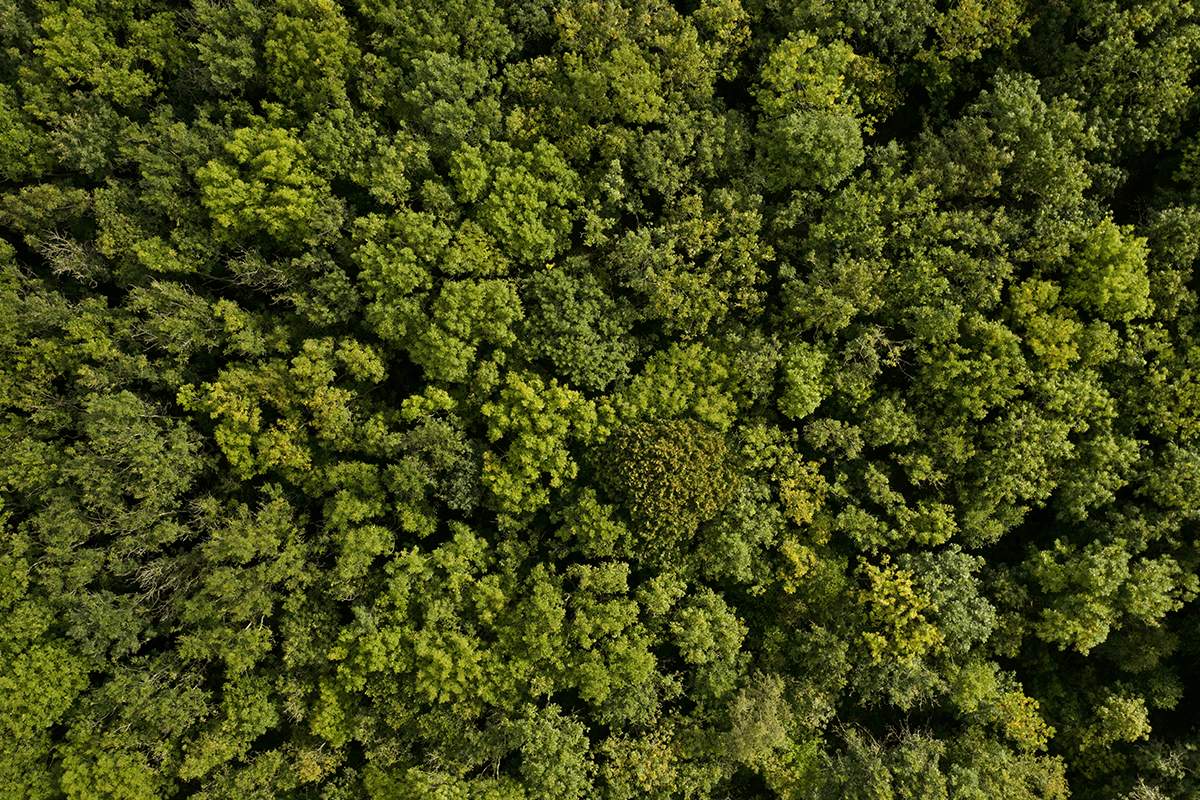
Aerial view of a forest.
Credits matter because they put a price on carbon emissions and direct that money towards the projects that cut or capture them. For a business, they turn an environmental goal into a funded, verifiable outcome. For nature, they channel finance into reforestation, habitat restoration, and cleaner cooking at a scale that grants and goodwill alone rarely reach.
Read more: Sustainability simplified: Carbon units for beginners
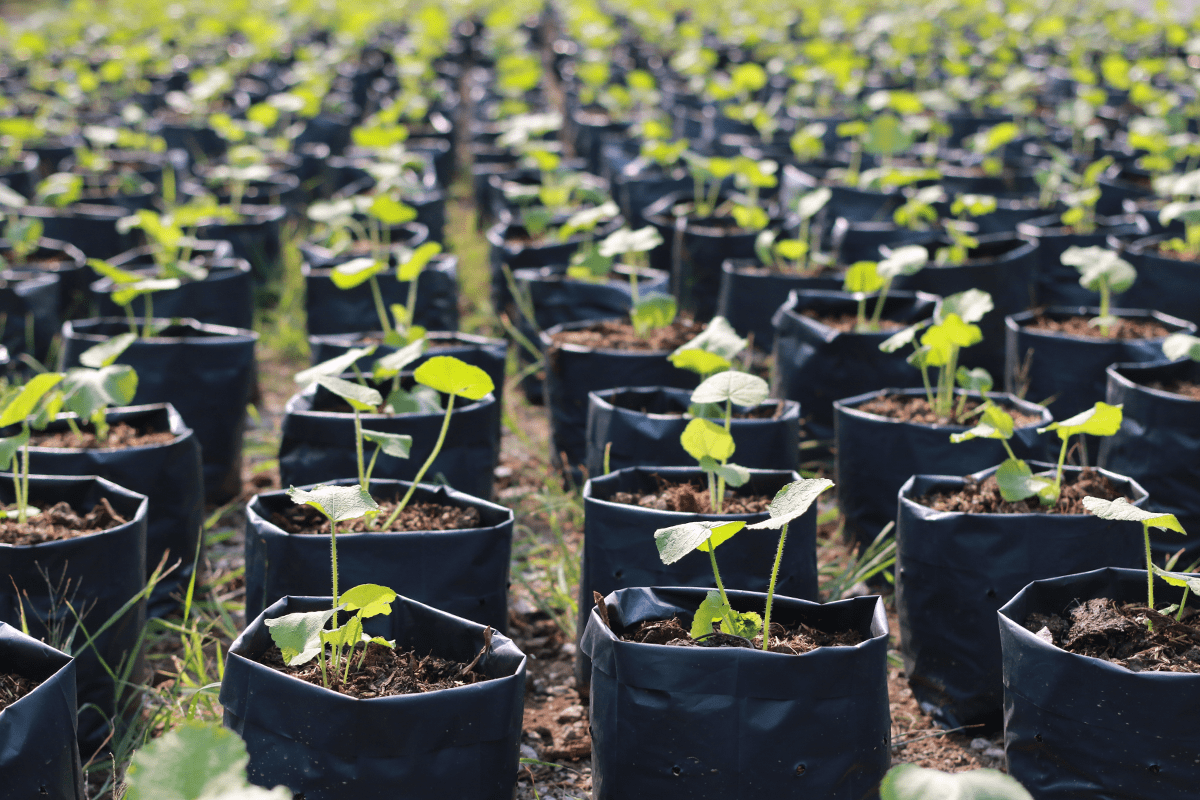
Young tree nursery.
How are carbon credits generated and verified
Every credit starts with a project that changes the carbon balance — planting and protecting forests, restoring degraded land, or replacing inefficient household stoves with cleaner ones. The project measures the carbon it removes, or the emissions it avoids, against a baseline of what would have happened without it. An accredited, independent body audits that measurement before a single credit is issued.
Issuance runs through established standards. Verra’s Verified Carbon Standard (VCS) and the Gold Standard are the most widely recognised; each sets the methodology, checks the figures, and issues credits only once a project meets its criteria. At Green Earth, we abide by and apply these methodologies from the project design stage, before the first tree goes in the ground, or the first cookstove is produced.
Once issued, each credit carries a unique serial number and sits on a public registry. When a buyer uses a credit, it is retired — permanently marked as spent, so it cannot be counted or sold twice.
Read more: How are carbon credits issued?
Credits fall into two broad families: those that avoid or reduce emissions, and those that remove carbon already in the atmosphere. The project types behind each are covered on our carbon compensation pillar.
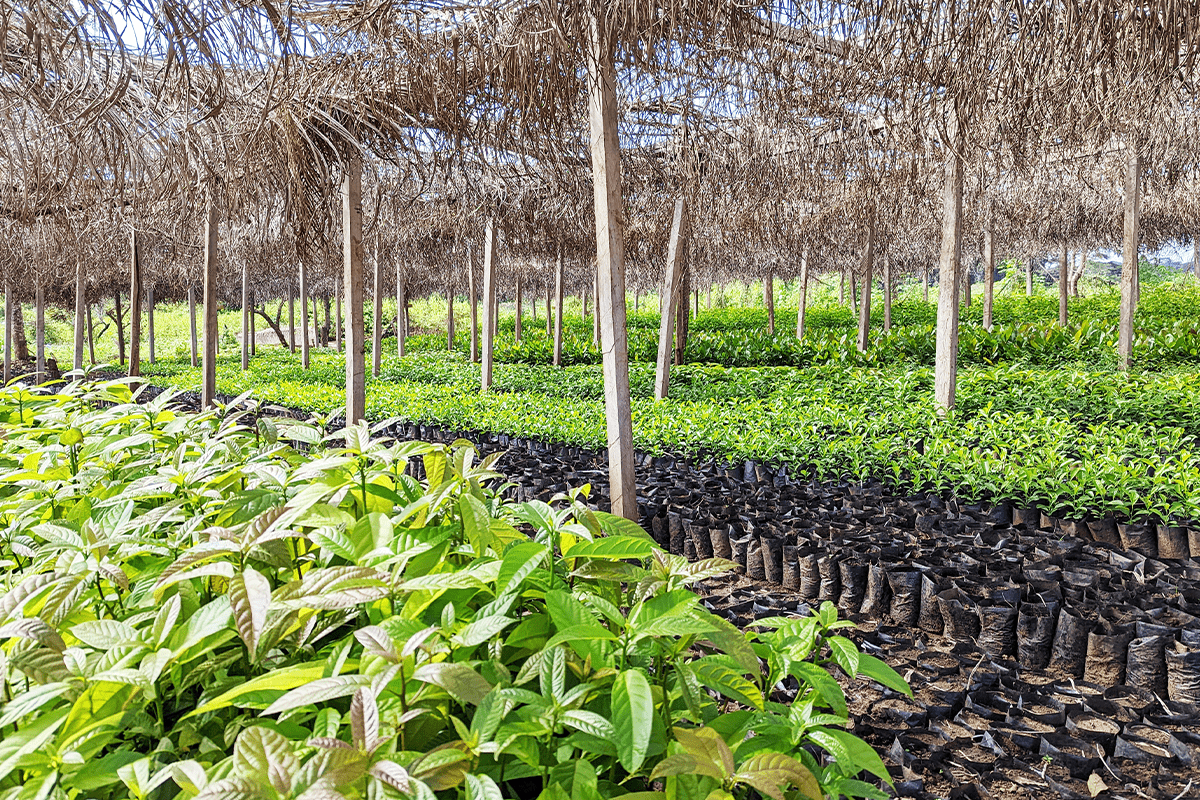
Tree nursery - Greenzone Afforestation Project, Cameroon, Green Earth.
What makes a carbon credit high-quality
Not every credit carries the same weight. The credits worth buying share a set of qualities that hold up to scrutiny:
- Additionality: the reduction or removal would not have happened without the funding the credit provides.
- Permanence: the carbon stays locked away for the long term, with safeguards against release from fire or felling.
- No leakage: cutting emissions in one place does not simply push them somewhere else.
- Robust measurement: the impact is monitored, reported, and independently verified, rather than estimated.
Read more: How to choose high-quality carbon credits
The strongest credits do more than balance carbon. They protect biodiversity, restore soil and water, and create stable income for the communities that steward the land. These co-benefits are increasingly what separates a high-quality credit from a cheap one.
Read more: High-quality carbon credits vs regular carbon credits: what sets them apart?
The market has sharpened its definition of quality. The Integrity Council for the Voluntary Carbon Market (ICVCM) sets a benchmark through its Core Carbon Principles, the threshold that high-integrity credits are now assessed against. As an end-to-end developer, Green Earth controls every stage—design, planting, monitoring, verification, and issuance—so the quality of each credit is built in.
Read more: Carbon credit project stewardship: what happens after credit issuance
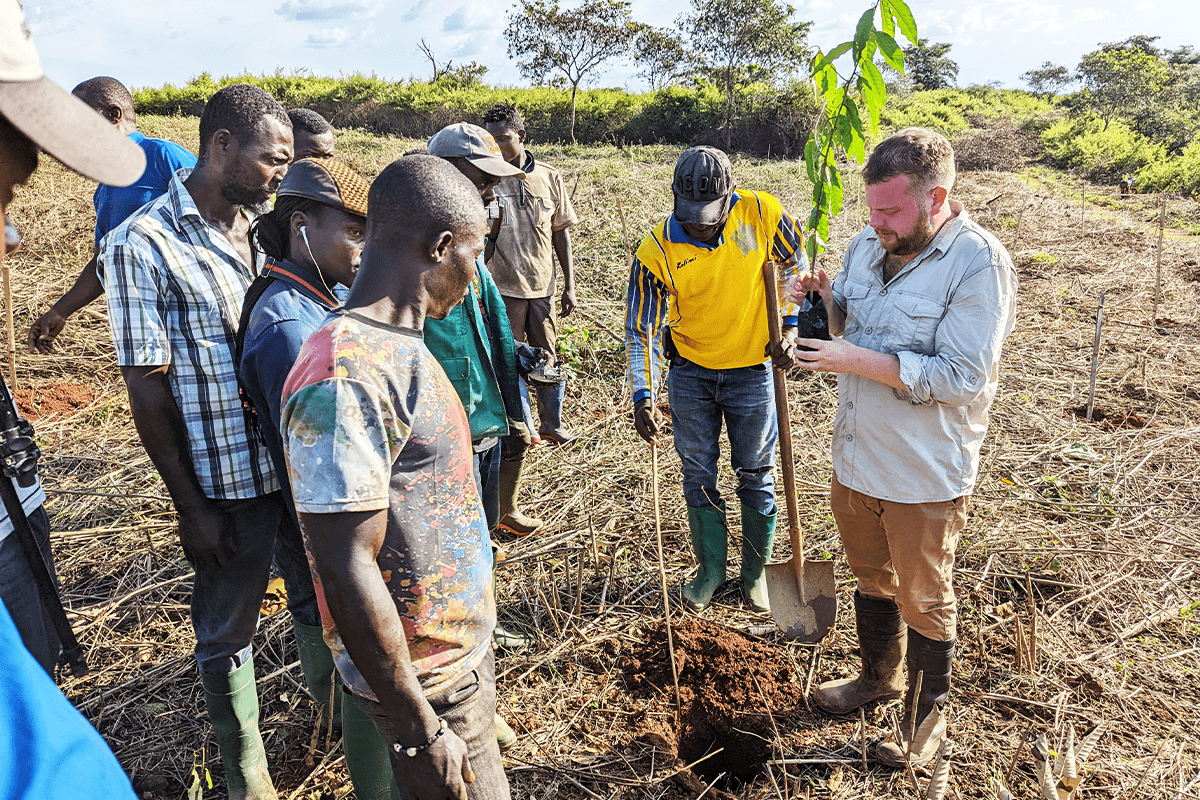
Nicholas Wall providing training, Afforestation Project, Cameroon, Green Earth.
The carbon credit market
Carbon credits are bought and sold in two kinds of market: compliance markets and voluntary (also known as verified) carbon markets.
Compliance markets are set up by governments. They cap how much a company can emit and let those that come in under the cap sell their surplus. The largest is the European Union Emissions Trading System (EU ETS), the world’s biggest carbon market, which covers around 40% of the EU’s carbon emissions.
Voluntary carbon markets, also known as verified carbon markets, let companies buy credits by choice—usually to take responsibility for emissions they cannot yet eliminate, or to meet a sustainability commitment. This is where most nature-based credits are traded, and where Green Earth operates. Compliance schemes now price close to 30% of global carbon emissions and raised a record $107 billion for public budgets in 2025.
Voluntary carbon markets let companies buy credits by choice—usually to take responsibility for emissions they cannot yet eliminate, or to meet a sustainability commitment. This is where most nature-based credits are traded, and where Green Earth operates. In 2025, the primary market for new credits grew by around a third to $15.8 billion, as corporate buyers moved decisively towards high-integrity removals.
Read more: The rising demand for nature-based credits
Who are the key players in the global carbon market?
The market brings together several groups: governments, which set the rules and run compliance markets; companies, which buy credits to meet their environmental goals; project developers, which design and run the projects that generate credits; standards and registries such as Verra and the Gold Standard, which verify and issue them; and brokers and exchanges, which connect buyers and sellers. Green Earth is an end-to-end project developer, originating credits from its own nature-based projects.
Read more: Who’s who in the carbon market: Key institutions and frameworks and what they do
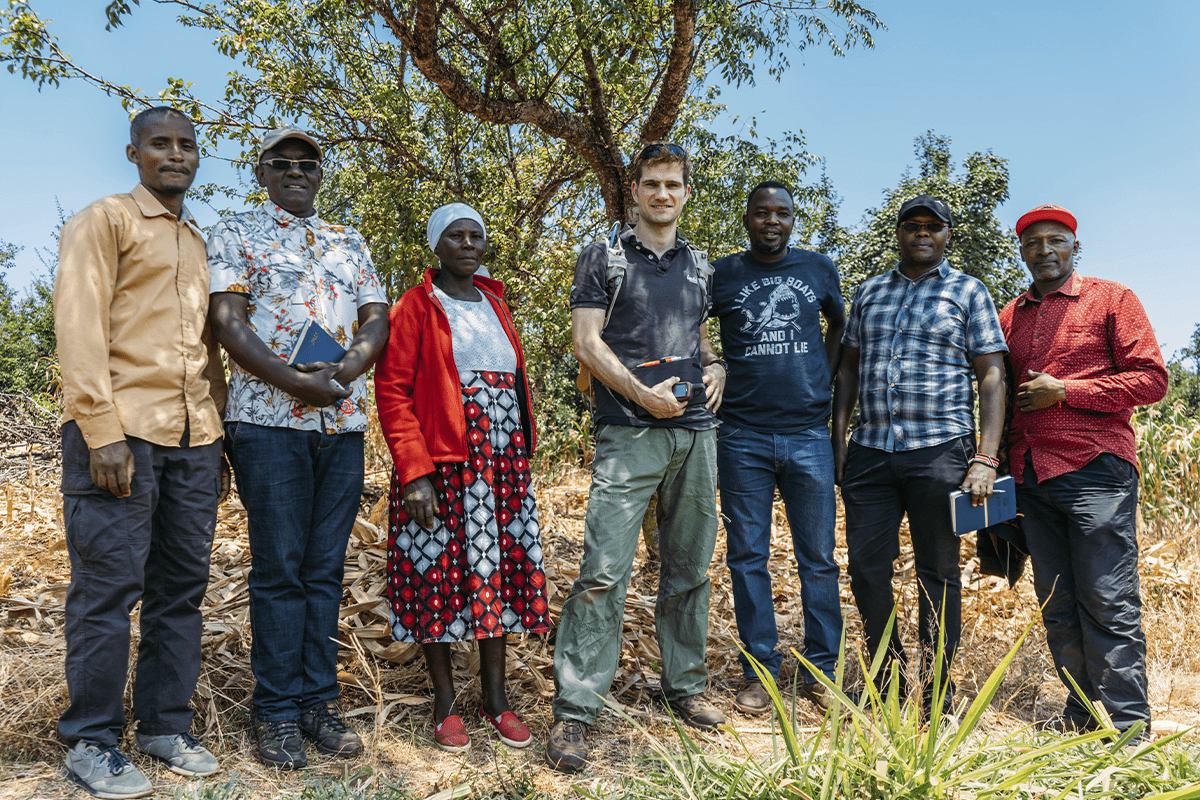
The Green Earth team with locals, Hongera Energy Efficient Cookstoves Project, Kenya, Green Earth.
What determines the carbon credit price?
Carbon credits are traded in the global carbon market, which operates as a two-sided market, with buyers and sellers of carbon credits. The trading and pricing of carbon credits vary depending on the type of market, compliance or voluntary, and the specific trading platform or exchange.
Read more: Cracking the code of carbon pricing: How does it work?
In compliance markets, the carbon credit price is determined by supply and demand, as well as regulatory mechanisms such as the cap-and-trade system. Companies unable to meet their emissions reduction targets must purchase carbon credits to offset their excess emissions. This creates demand for carbon credits, driving up the price. Conversely, companies that have reduced their emissions below their targets can sell their excess credits, increasing supply and leading to a decrease in price.
In verified (voluntary) markets, the price of carbon credits is typically determined by the buyer and seller in a negotiation process. The price can vary widely, depending on factors such as the type and quality of the carbon credits, the project size, and the specific market or exchange. Carbon credit prices are often set through contracts, which specify the quantity and quality of the credits, the price, and the delivery date.
Read more: Carbon pricing: global solutions for a global challenge
Various factors, including government policies and regulations, economic trends, and market demand, can influence the price of carbon credits. Carbon credits can also be influenced by environmental factors such as weather patterns and natural disasters, which can impact emissions reductions.
The pricing of carbon credits is typically expressed in terms of a cost per metric tonne of CO2e. Prices range widely, from a few dollars to over $100 per metric tonne, depending on the specific market and the quality of the credits. The price of carbon credits can significantly impact the scale of emissions-reduction projects, as higher prices can provide greater financial incentives for companies to reduce their carbon footprint and invest in carbon-reduction projects.
Let us inform you
We will keep you updated on all the latest news.
The benefits of carbon credits
Carbon credits turn environmental action into something measurable and fundable. Their benefits reach nature first, then the communities living closest to these projects, and the businesses that buy them.
Read more: The real cost of 1 tonne of CO2: Translating carbon into hectares
For nature and ecosystems
High-quality credits channel finance into restoring forests, wetlands, and degraded land at a scale that grants alone rarely achieve. Nature-based projects do more than capture carbon: they rebuild habitats, protect biodiversity, improve soil health, and safeguard water supplies.
Read more: The hidden strength of nature-based credits in corporate decarbonisation strategies

Woman with energy-efficient cookstove, Hongera Energy Efficient Cookstoves Project, Kenya, Green Earth.
For communities
Credits fund jobs and training in the places that need them most. Reforestation and cookstove projects employ local people, pass on skills in sustainable land management, and create new income streams—from tree nurseries to cleaner household cooking that improves air quality and frees up time.
Read more: How carbon project developers quantify biodiversity and community impact
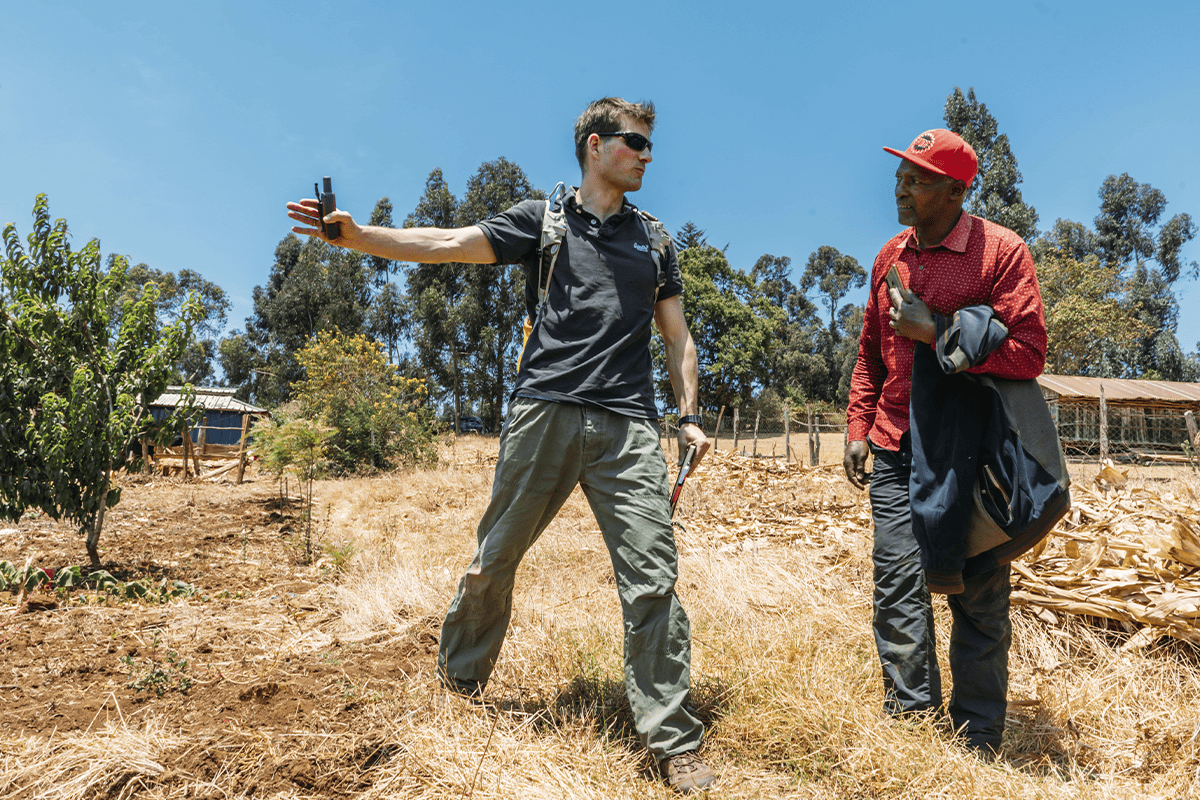
Thomas Donia, Hongera Energy Efficient Cookstoves Project, Kenya, Green Earth.
For businesses
For a company, credits are a way to act on emissions it cannot yet remove, support its sustainability goals, and show customers and investors a credible commitment to nature. Used alongside direct emissions cuts, they help a business take responsibility for its footprint today while it works on longer-term reductions.
Our projects
We develop large-scale, impactful projects.
Carbon credits in corporate strategy
Carbon credits sit within a wider set of corporate sustainability tools, and how a business uses them matters as much as whether it does: the credible path is to reduce emissions within your value chain first, then use high-quality credits to take responsibility for what cannot yet be eliminated.
Carbon credits and your net-zero targets
The rules for using credits in a net-zero strategy have just been rewritten. In June 2026, the Science Based Targets initiative (SBTi) published Version 2.0 of its Corporate Net-Zero Standard, which takes effect in February 2027. For the first time, it sets out a defined role for high-integrity credits and removals: they cannot count towards a company's validated Scope 1, 2, and 3 reduction targets — those must come from real cuts — but a new voluntary recognition programme rewards businesses that fund verified reductions and removals for the emissions they continue to release.
From 2035, large companies will be required to support carbon removals, rising to full coverage of residual emissions by their net-zero year. For any business planning ahead, a working knowledge of high-quality credits is now a near-term priority.
Read more: The new SBTi Corporate Net-Zero Standard: what it means for business

Locals with energy-efficient cookstove, Hongera Energy Efficient Cookstoves Project, Kenya, Green Earth.
Reporting and disclosure
Sustainability reporting rules treat credits with discipline. Under the EU's Corporate Sustainability Reporting Directive (CSRD) and its ESRS E1 climate standard, a company reports its gross emissions and discloses any carbon credits separately — credits cannot be netted against those emissions or counted towards its reduction targets, and any claim to have neutralised emissions must set out the integrity of the credits behind it. That makes clean, traceable, high-quality credits not just good practice but a reporting requirement.
Read more: Aligning with CSRD: the smart move for future-proofing your business
Supporting the Sustainable Development Goals
A credit's wider impact is now measured, not just claimed. Nature-based projects deliver benefits well beyond carbon—clean water, decent work, health, life on land—and the leading standards verify them against the UN Sustainable Development Goals: the Gold Standard requires projects to demonstrate specific goals, while Verra's SD VISta label certifies a project's SDG contributions independently.
Buyers increasingly select credits on the strength of these co-benefits, and often pay a premium for them. Green Earth's projects are designed to advance several goals at once, from clean cooking to life on land.
How Green Earth originates high-quality carbon credits
As an end-to-end project developer, Green Earth controls every stage of a carbon credit’s life, from project design and planting to monitoring, verification, and issuance. This hands-on model, with our own ecologists and local teams on the ground, is how we build quality into every credit we originate.
Our verified nature-based projects span reforestation, agroforestry, dryland restoration, and cleaner cooking across Africa and Central Asia. Below is a selection of our projects:
- The Mount Kenya Regenerative Agroforestry Project restores forest and safeguards a vital water catchment across Mt Kenya and the Aberdares, pairing responsible tree planting with careful monitoring to hold back deforestation. Certified under Verra's Verified Carbon Standard.
- The Regenerative Agroforestry Project Cameroon rebuilds forest on the edge of the Congo Basin, restoring nature and supporting local livelihoods through reforestation and agroforestry. Certified under Verra's Verified Carbon Standard.
- The Greening of the Dried Aral Sea Project revives the dried banks of the Aral Sea in Kazakhstan through saxaul planting, stabilising the soil and bringing a collapsed dryland ecosystem back to life. Certified under Verra's Verified Carbon Standard.
- The Hongera Energy Efficient Cookstoves Project manufactures and distributes efficient, locally made cookstoves to families around Mt Kenya, improving household air quality and easing pressure on nearby forests. Certified under the Gold Standard.
- The Green Earth Sauki Cookstove Nigeria Project brings locally made, energy-efficient stoves to households across Nasarawa and Niger States in Nigeria, cutting fuel use and easing the strain on local forests.
Together, these projects show the breadth of our work, from tropical forest to dryland, and from tree planting to cleaner household energy, each independently verified and managed on the ground by our own teams.
With high-integrity credits, your business does more than meet its targets: it funds real forests, restored land, and stronger communities—every tonne measured, verified, and traceable. Choose Green Earth as your trusted sustainability partner and support nature restoration, and your business at the same time.