
Carbon markets
Africa
Carbon pricing
Africa’s voluntary carbon market (VCM) is set to become a $1.5 trillion industry by 2050, offering significant economic opportunities for the continent, according to experts at the University of Nigeria, Nsukka (UNN).
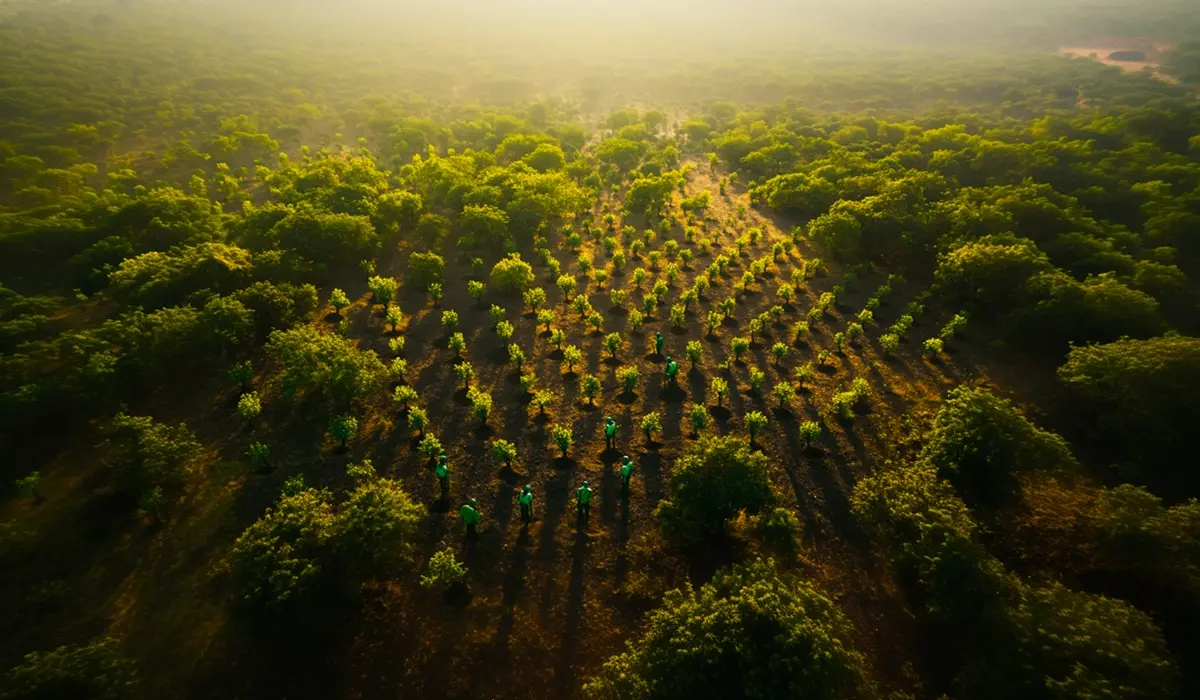
 Aerial view of forest workers planting trees in Nigeria with rows of saplings stretching across the vast landscape. AI generated picture.
During a stakeholders’ workshop, Acting Vice Chancellor Professor Polycarp Emeka Chigbue highlighted the market’s rapid growth, with global revenues hitting $2 billion in 2021. He explained that the VCM operates outside regulatory carbon markets, focusing on private transactions of carbon offsets, making it a key tool for emission reduction under the Paris Agreement’s Article 6.
Professor Nnaemeka Chukwuone, Director of the Resource and Environmental Policy Research Centre at UNN, outlined the transformative potential for Nigeria. By participating in the VCM, the country could reduce emissions, meet its Nationally Determined Contribution (NDC) targets, and unlock over $2 billion in revenue by 2030.
Read more: How Trump’s comeback to the White House influences the carbon market
Chukwuone explained that offsets in sectors like forestry, agriculture, and energy will attract significant investment and create sustainable jobs. He noted that forestry initiatives, in particular, could drive substantial revenue and employment, further boosting Nigeria’s climate and economic goals.
The VCM, active for more than two decades, has become a powerful tool for private-sector initiatives to support global sustainability efforts. Experts emphasised that expanding carbon markets across Africa could position the continent as a leader in carbon trading, helping to combat environmental challenges while fostering economic development.
As countries like Nigeria and South Africa pursue strategic partnerships to grow their carbon markets, the VCM offers a pathway to achieve sustainable growth, reduce emissions, and provide long-term benefits for local communities.
Read more: Shell and Microsoft lead the carbon credit market in 2024
By collaborating with DGB Group, your business can become part of a growing global effort to reduce emissions and foster sustainable development. As highlighted by the VCM’s potential for Africa, nature-based initiatives like those led by DGB offer businesses a pathway to align with their sustainability goals while driving meaningful change. DGB’s high-quality carbon units empower organisations to address emissions effectively and contribute to lasting environmental and economic progress.