
Carbon credits
Sustainability
Carbon footprint
CSRD

More and more small and medium-sized businesses are hearing the same question from their larger customers: What is your carbon footprint? That question now travels down entire supply chains, and it arrives next to tender requirements, certification criteria, and rising customer expectations.
For most businesses, the willingness to act is already there. The piece that tends to be missing is a solid starting point. Knowing where to begin with sustainability as an SME is the question we hear most often, and it is exactly why a carbon action plan matters. This article, and our webinar, sets out what such a plan involves, why it is commercially significant, and where you can find practical guidance to apply to your own business.
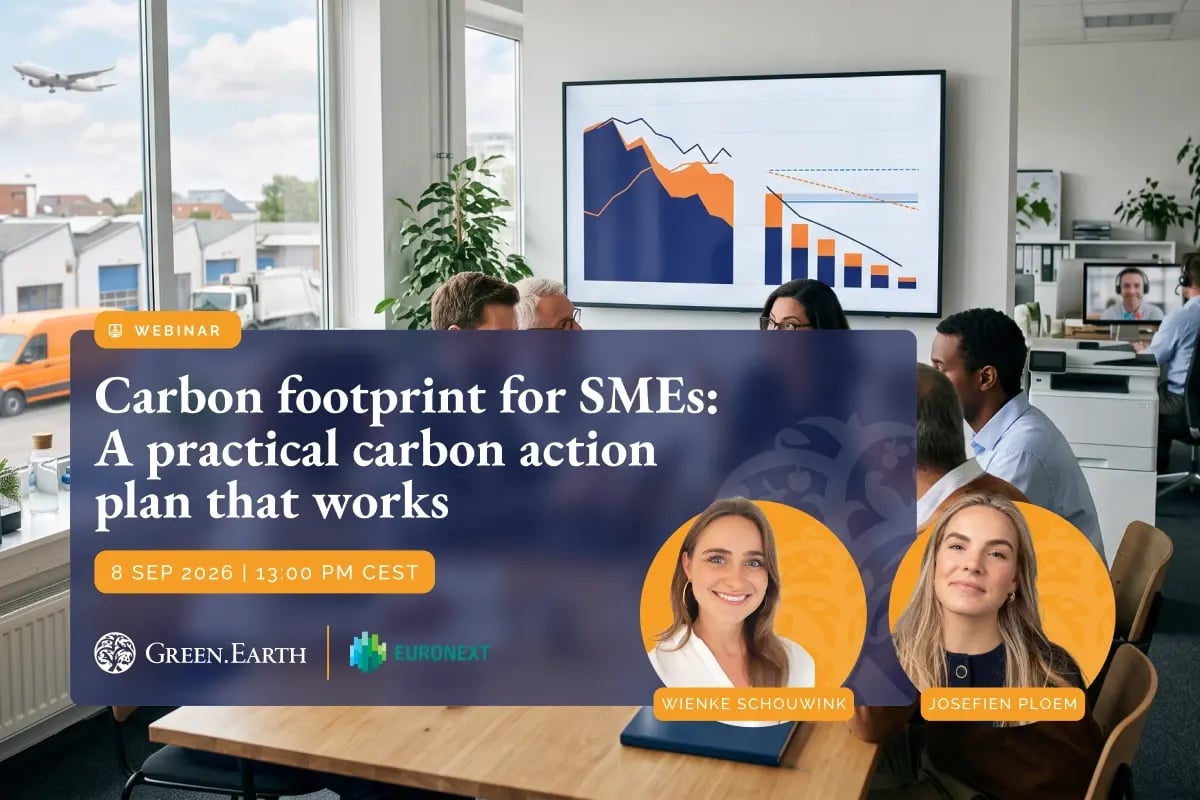
Every business faces several pressures at once: customers asking for carbon data, tenders and certifications setting requirements, and running costs that reward efficiency. A carbon action plan turns those pressures into a clear sequence with real commercial value. The nuance comes down to applying it to your own operations, because every business starts from a different point. That is exactly what our live webinar is built to help you do.
→ Watch the webinar and find out all the answers
Why SMEs are being asked about carbon now
The pressure to measure carbon rarely begins with an SME itself. It begins with its customers. Large organisations are setting environmental targets of their own, and they are asking suppliers for carbon data to meet them. According to CDP, corporate supply chain emissions are, on average, 26 times greater than a company's own operational emissions. For a large buyer, the fastest route to its target runs straight through its suppliers.
Read more: SME carbon footprints: a practical guide
This is why the question now reaches so many businesses. More than 340 major corporate buyers engage their suppliers through CDP's Supply Chain Program. Tenders increasingly include carbon criteria, and a growing number of certifications ask for measured results. A clear carbon footprint for SMEs is becoming a standard part of doing business, much as quality and safety credentials already are.
Understanding your Scope 1, 2, and 3 emissions (your direct emissions, your purchased energy, and the emissions across your value chain) puts you in a position to answer these questions with confidence, qualify for more tenders, and find efficiencies that lower costs.

What a clear answer unlocks
A carbon action plan answers outside pressure and creates value inside the business. That value shows up in four ways:
- Sharper priorities: See exactly where your emissions come from, and focus effort where it counts.
- Stronger bids: Back tenders and certifications with measured data, which now carries more weight than intent.
- Lower costs: Capture the savings that come from more efficient energy use and leaner operations.
- A reliable-supplier signal: Reassure larger partners as they work to reduce their own value-chain emissions.
Read more: Emissions accounting without an ESG team: achieving the best of both worlds for SMEs
What a carbon action plan actually involves
Every carbon action plan for SMEs follows the same four steps, whatever the size or sector of the business:
- Measure: Establish your carbon footprint across Scope 1, 2, and 3 to set a clear baseline.
- Reduce: Target the changes that lower your emissions most, based on your own emissions profile.
- Compensate: Address the emissions you cannot yet remove by supporting verified nature projects that draw down carbon.
- Communicate: Share your progress credibly with customers, tenders, and certifications.
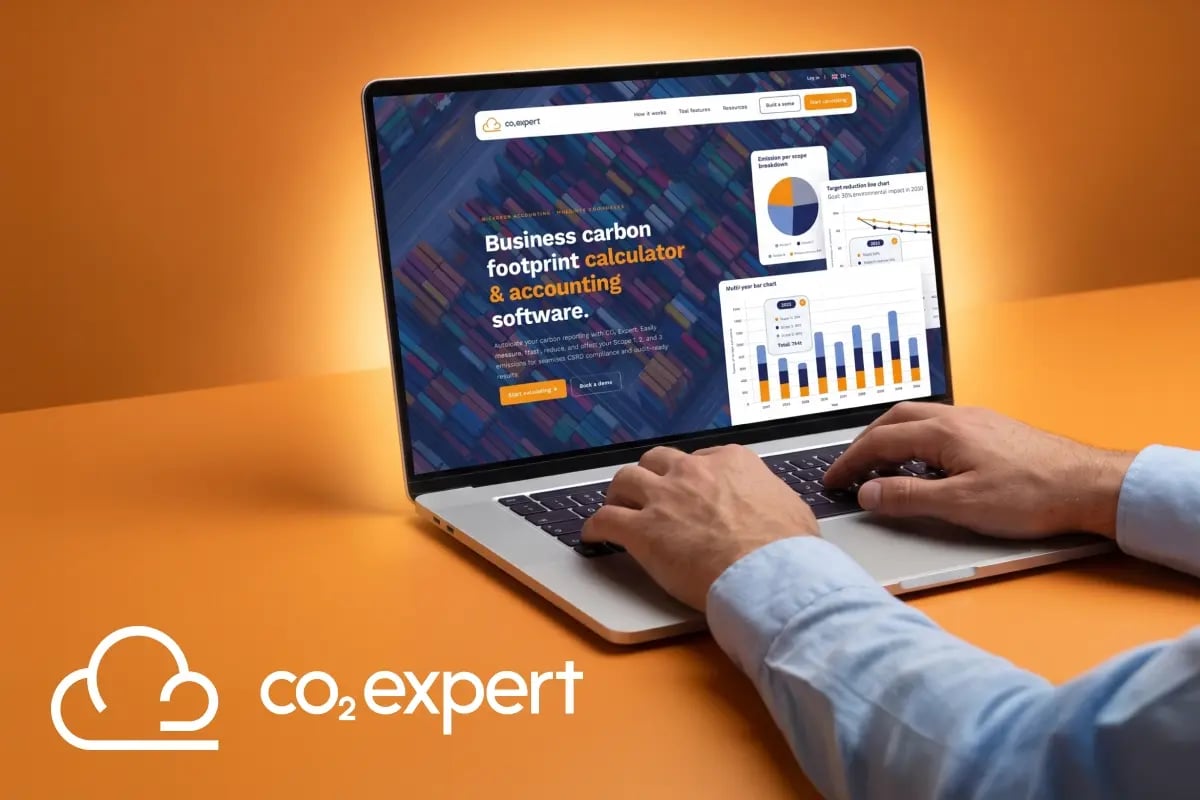
Each step is straightforward to state. Measurement gives you the baseline, reduction targets your biggest opportunities, compensation handles what remains through carbon credits from verified projects, and communication turns the work into commercial value. The measurement step can start today: CO2 Expert, our free Scope 1 and 2 carbon footprint tool, calculates your footprint at no cost and gives you a baseline to build on.
→ Watch our webinar to learn more about these steps
Where the difficult part usually lies
Applying these four steps to a specific business is where most SMEs get stuck. Every organisation starts from a different point, so the priorities that matter for a producer look different from those of a trader or a service provider. Knowing which emissions to tackle first, and which changes will make the biggest difference, takes judgement rather than a template.
The evidence backs this up. According to the World Economic Forum, most SMEs lack dedicated sustainability staff), and 73% are concerned about the upfront costs of reporting, with 65% finding current standards complex. This is the gap between knowing how SMEs can reduce their carbon footprint in principle and doing it in practice. A generic checklist rarely survives contact with a real business, with its own suppliers, customers, and constraints.
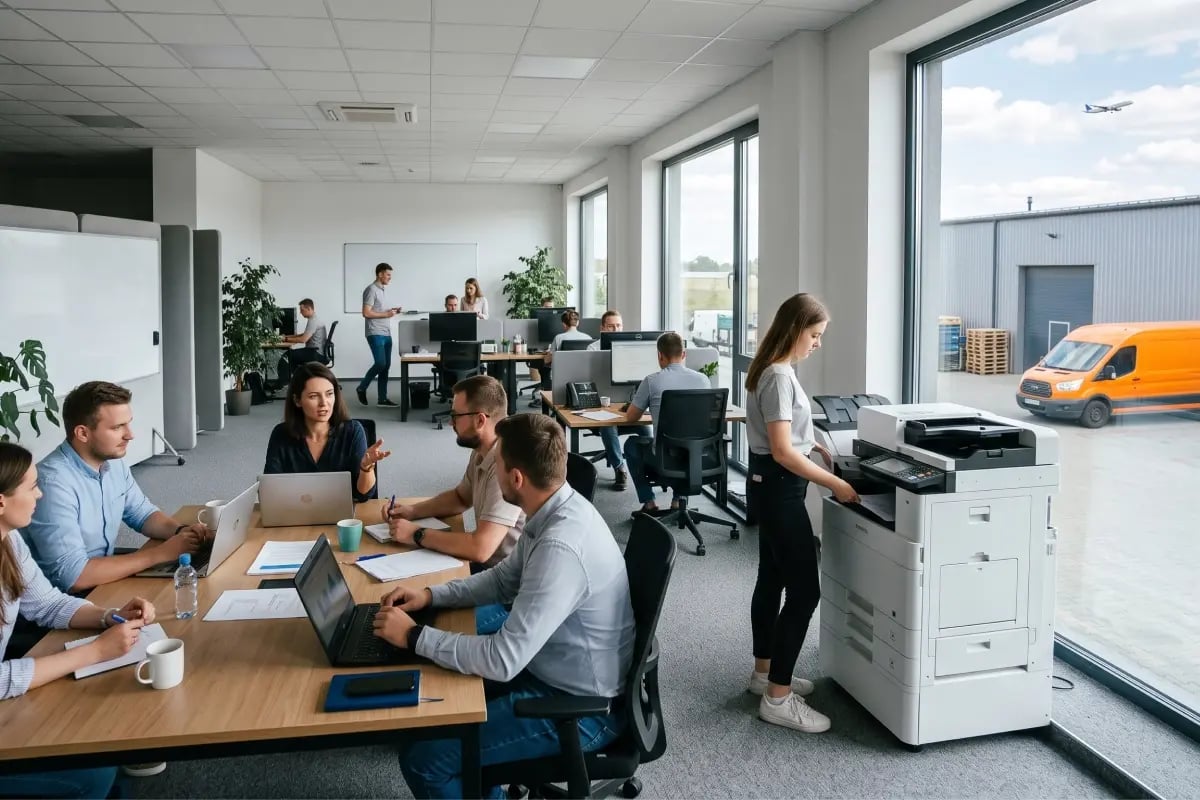 A small business team holding a meeting to discuss a practical carbon action plan, sustainability strategies, and climate action for SMEs. AI generated picture.
This is exactly the point where practical guidance makes the difference — guidance built on real examples rather than theory.
Read more: The VSME Standard for SMEs: Simplified ESG reporting in the EU
Get clarity in one practical session
To help SMEs move from principle to practice, Green Earth hosted a live webinar: Carbon footprint for SMEs: A practical carbon action plan that works.
In this session, we covered:
- Why sustainability now matters for SMEs, and what it delivers commercially
- How to map your Scope 1, 2, and 3 emissions as a solid starting point
- How to reduce based on your actual emissions profile, with real-world examples
- How to compensate for remaining emissions through certified nature projects
- How to communicate your results credibly with customers, tenders, and certifications
The session is built around the four steps above, applied to the reality of a small or medium-sized business. You will see how to measure your footprint using CO2 Expert, how to reduce your carbon footprint based on your own emissions profile, and how to compensate and communicate credibly. Throughout, we share relatable examples from companies that have already been through the process, so you can see what works rather than only what is recommended.
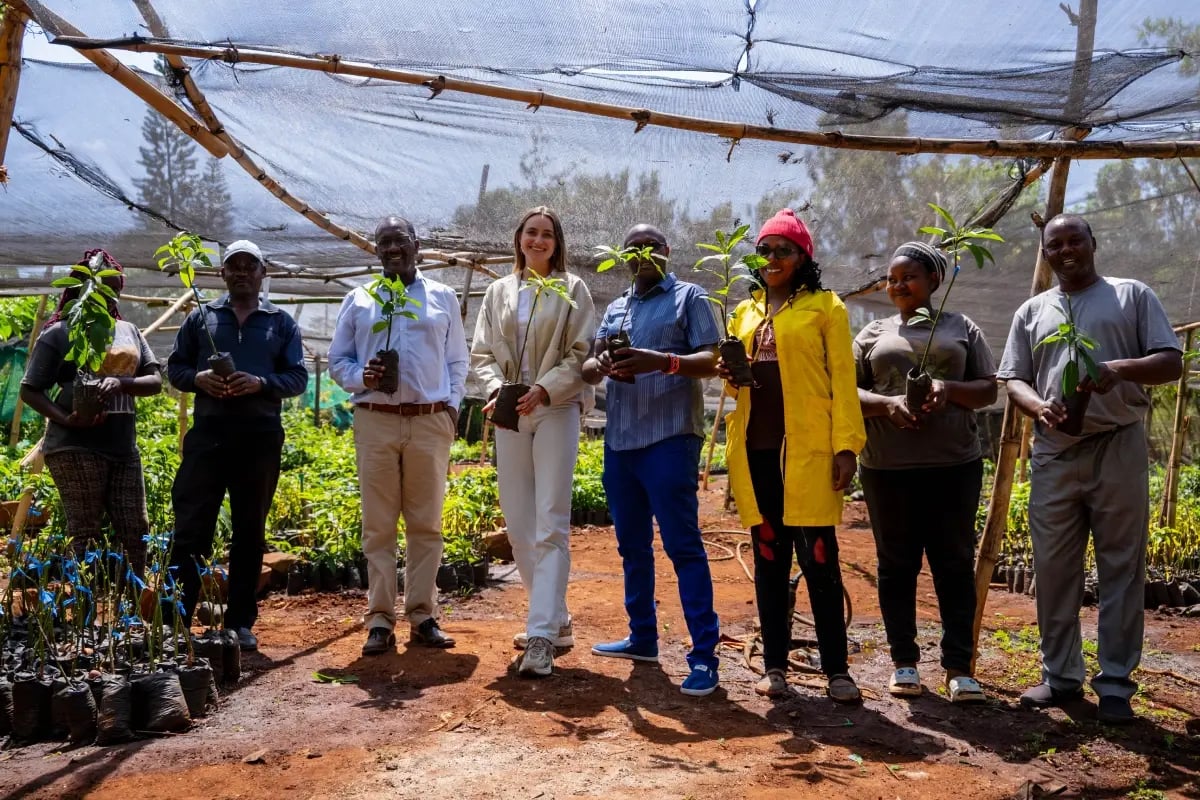 One of the webinar hosts, Wienke Schouwink, with the local community and Green Earth team members, during a visit to the Mount Kenya Regenerative Agroforestry Project, Green Earth.
The webinar is hosted by Josefien Ploem, Sustainability Manager at Green Earth, and Wienke Schouwink, Head of Business Development, who work with businesses on exactly these matters every week. The session closes with an open discussion, where you can put your own questions to our experts. Whether you are a producer, a trader, or a service provider, you will leave knowing where to start and how to build on it: the essence of a practical carbon action plan that works.
→ View the recording of our live webinar
How Green Earth supports your first step
Green Earth is an end-to-end developer of verified nature projects. We source, develop, and manage reforestation, agroforestry, and clean cookstove projects across multiple countries, and we oversee the full project lifecycle, from design to long-term monitoring. Our projects are independently verified by Verra and Gold Standard, and we pair ecological science with satellite imagery, field data, and AI-driven monitoring, so businesses can measure, reduce, and report their environmental impact with confidence.
To make that impact easy to act on, we have brought our verified carbon credits, along with other diversified and high-integrity credits we trust, together in one marketplace. This is the place where businesses can browse projects and purchase the credits that fit their goals.
 Green Earth’s carbon credits marketplace.
This is the same expertise behind the webinar. Bringing it into one practical session is how we help SMEs take a clear first step, and then keep going. If you want a straightforward answer to the question of where to begin, this is the place to start.