
Sustainability
Plastic offsetting
Plastic credits
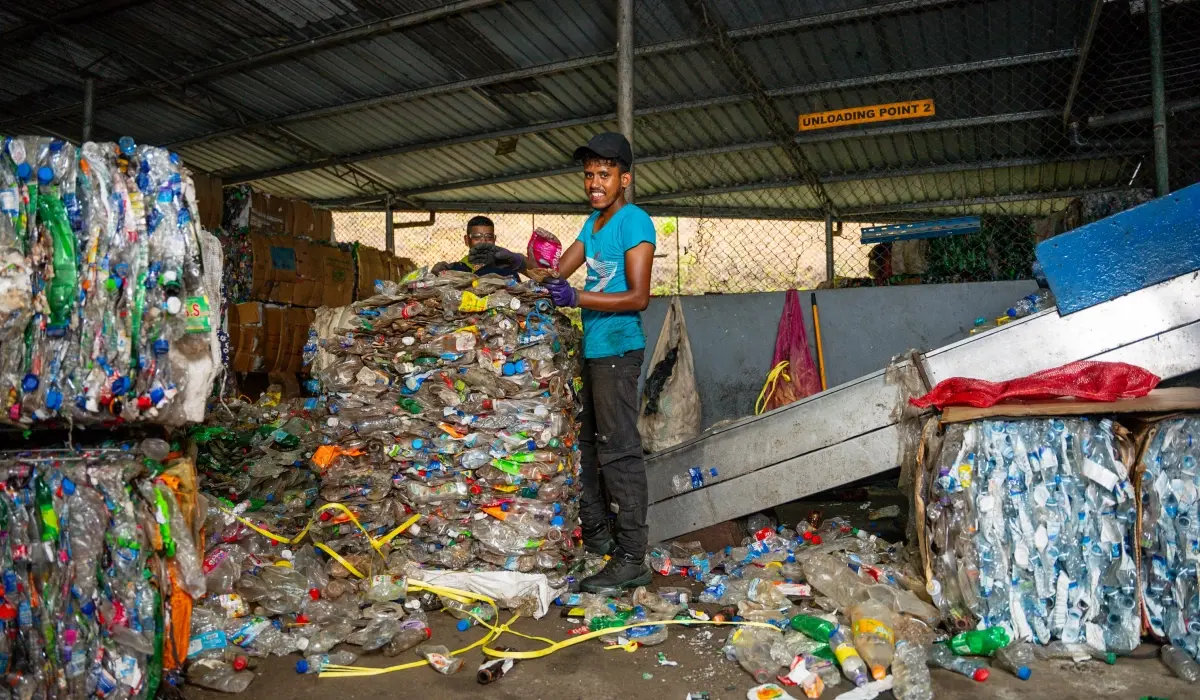
A plastic credit funds the collection of plastic waste in places where no formal system exists to collect it. Each credit represents a measured, independently audited quantity of plastic taken out of the environment or returned to use, tracked on a public registry.
For a consumer brand carrying a packaging footprint, buying plastic credits is a way to take responsibility for your plastic use while funding collection work on the ground. This article is for sustainability, packaging, and procurement leads deciding whether to buy plastic credits, from whom, and what to check first.

Collection credits and recycling credits
The first thing to understand is which kind of credit you are buying. Verra’s Plastic Waste Reduction Standard issues two types, collectively called Plastic Credits. Each credit represents 1 tonne of plastic waste collected or recycled above the project’s baseline — the volume the project adds beyond what would have happened without it. An independent auditor verifies each credit, and the public Verra Registry records every issuance and retirement. The type you buy determines what you can say you funded:
- Waste collection credits (WCC): These fund the collection of plastic waste and its delivery to an end destination that keeps it out of the environment. One credit represents 1 tonne collected. Eligible projects range from community collection in the environment to new collection and sorting infrastructure. A collection credit lets you say you funded the recovery of that tonne.
- Waste recycling credits (WRC): These fund the recycling of plastic into feedstock that can replace virgin plastic. One credit represents 1 tonne recycled. A recycling credit lets you say you funded a tonne of plastic turned back into usable material.
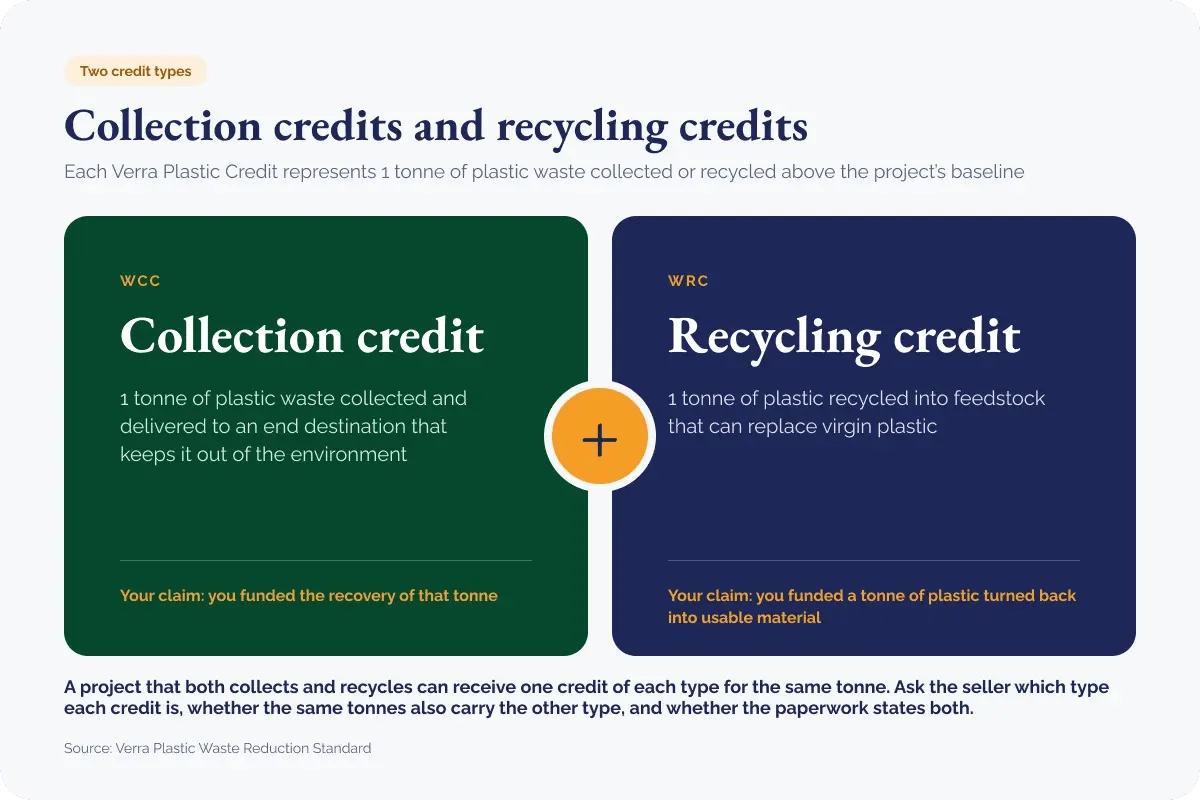 Collection credits and recycling credits infographic.
A project that both collects and recycles plastic can receive one credit of each type for the same tonne. If you buy both types from one project, the two credits may trace back to a single physical tonne collected and recycled. Before you buy, ask the seller which type each credit is, whether the same tonnes also carry the other type, and whether the paperwork states both.
If you want to learn more about the mechanics of how do plastic credits work, start with our ultimate guide to plastic credits.
Who certifies, and what certification covers
Three certification programmes account for most of the credits a buyer will meet, and each sets the rules a project follows to issue:
- Verra Plastic Waste Reduction Standard (PWRS) — The most widely used programme (discussed above), issuing both collection and recycling credits in 1-tonne units with third-party auditing and public registry tracking.
- PCX Plastic Pollution Reduction Standard — A programme administered by PCX Solutions, with its own methodology for collection and co-processing.
- Zero Plastic Oceans Ocean Bound Plastic (OBP) certification — Covers low-value, mismanaged plastic collected within 50 km of shorelines and coastal waterways, and issues at a 1 kg threshold. This is the standard behind most ocean bound plastic credits.
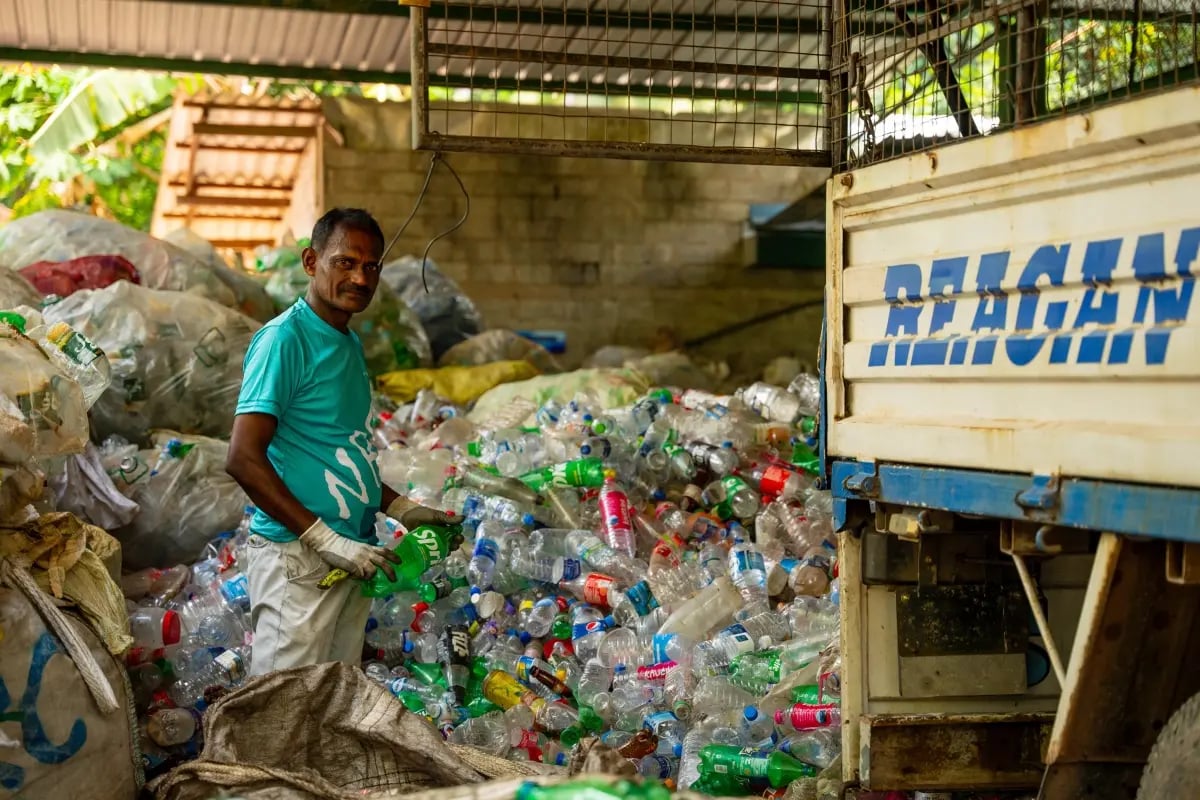 A local man sorting collected plastic bottles in Sri Lanka. Green Wheels Plastic Collection Project, Green Earth.
A certificate proves two things, and they are the two that matter most: the quantity of plastic behind the credit, and the chain of custody that traces it. It confirms that a stated tonnage was genuinely collected or recycled, and that it can be followed from the collection point to the processor. The plastic credit price and claims you can make sit elsewhere, set by your agreement with the seller rather than by the certificate.
Read more: Green is the new pink: Barbie proves plastic is no longer fantastic
Five checks before you buy
A defensible purchase comes from asking five specific questions and getting documented answers. Together they tell you whether plastic credits are credible. Here’s what you should check before buying plastic credits:
- Additionality: Would this material have been collected without the plastic credit programme? Credits should fund collection in places with no working waste system, not subsidise collection that already pays for itself.
- Traceability: A traceable chain of custody from the collection point to the processor, with volumes reconciled at each step rather than estimated at the end.
- No double counting: Check that each tonne is retired once on a public registry under a serial number you can look up, so no one else can claim the same tonne.
- Processing end point: Where the material goes after collection, and evidence that it was processed rather than stockpiled or sent on untracked.
- Project stage: Whether the credits are already issued, pending issuance, or forward-sold against future collection. Each is a legitimate purchase, and each carries a different delivery expectation you should enter knowingly.
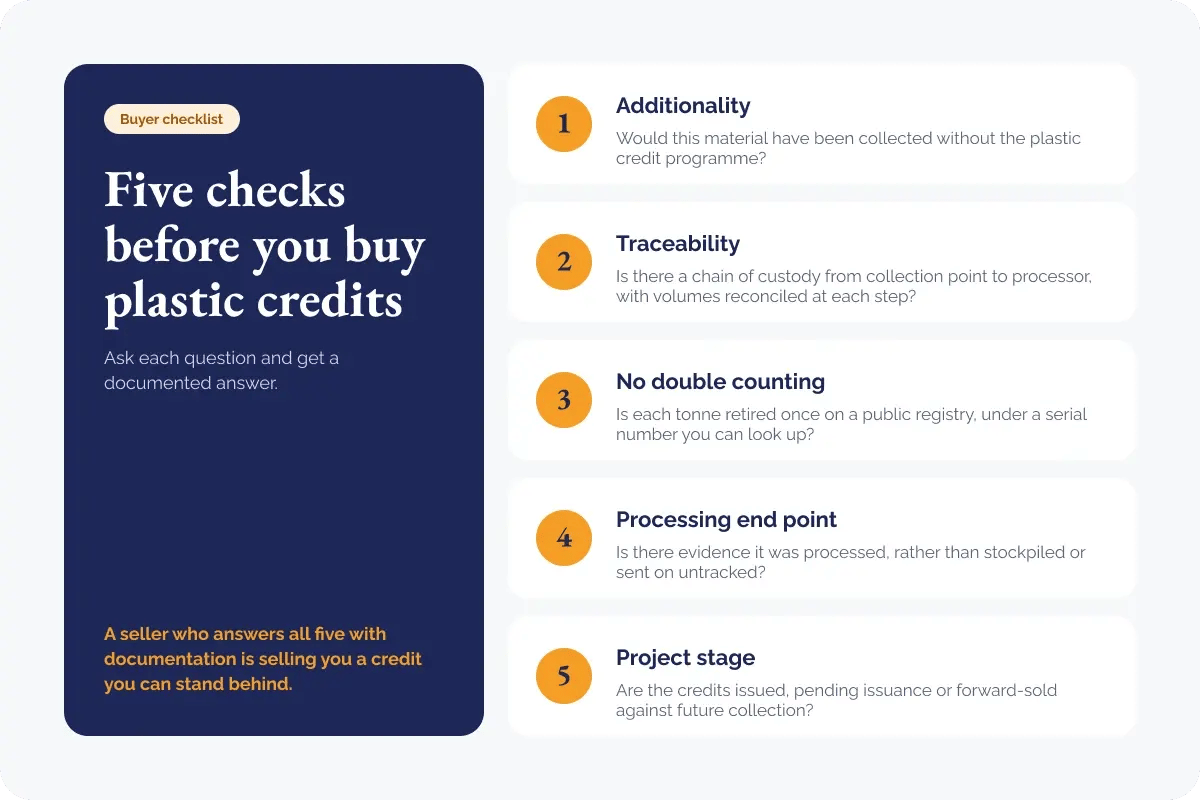 Five checks before you buy plastic credits infographic.
A seller who answers all five with documentation is selling you a credit you can stand behind.
What plastic credits add to your sustainability plan
Plastic credits give your plastic commitment its own verifiable instrument. Each Verra Plastic Credit represents 1 tonne of plastic waste collected or recycled above the project’s baseline. Each one carries a unique serial number and is retired on the public Verra Registry once used. That means, your sustainability report gets a figure an auditor can trace, and your stakeholders get a claim they can check.
In the context of your organisational sustainability, it’s important to understand that your plastic footprint and your carbon footprint measure different things, and each has its own instrument. Plastic credits report against your plastic-impact commitment. Your Scope 1, 2, and 3 emissions reductions report against your net-zero target, and carbon credits sit alongside those reductions as compensation beyond your value chain. Running both tracks side by side keeps each figure clean and gives you two distinct results to communicate.
Plastic credits and the EU Packaging and Packaging Waste Regulation
The EU Packaging and Packaging Waste Regulation (PPWR) has applied since 12 August 2026. It sets harmonised rules on recyclability, recycled content, and labelling for packaging placed on the EU market, together with extended producer responsibility (EPR) obligations. Minimum recycled content for plastic packaging follows from 1 January 2030. You meet these statutory obligations through your packaging design, your EPR registrations, and your declarations of conformity.
Plastic credits build on that compliance. They fund collection and recycling beyond your legal duties, often in regions where plastic waste has few routes to a recycler. That gives you a voluntary contribution to report alongside your compliance record. It also gives you a way to act on the plastic you have yet to design out of your products.
One programme across your environmental footprint
Plastic is one part of a wider footprint that also covers carbon emissions and the biodiversity your operations and supply chain affect. Green Earth develops projects across carbon, plastic, and biodiversity, so you can build one programme with one partner. We offer carbon footprint measurement, providing a baseline as a starting point. Then we provide the credits to act with: carbon credits, plastic credits, and biodiversity credits, each funding restoration on the ground.

What you receive, and what it costs
When you buy plastic credits, you receive a defined set of documentation: the registry serial numbers for the credits, the retirement record that shows they have been permanently claimed in your name, a certificate, and the project documentation behind them. That package is what lets you show, internally and externally, exactly what you funded and that no one else can claim the same tonnes.
On how much a plastic credit costs: price is set per tonne and varies widely by geography, the material collected, and the standard behind the credit. A credit backed by ocean bound collection in a high-cost location prices differently from a recycling credit in an established facility. Rather than quote a figure that dates quickly, ask the seller for the current price against the specific project and vintage you are considering, and confirm what that price includes.
The Green Wheels Plastic Collection Project
Sri Lanka produces more than 1.6 million tonnes of plastic waste a year, and only 3% of it is recycled back into the value chain, against a global average of around 9%. Much of the rest leaks into canals, rivers, and the Indian Ocean.
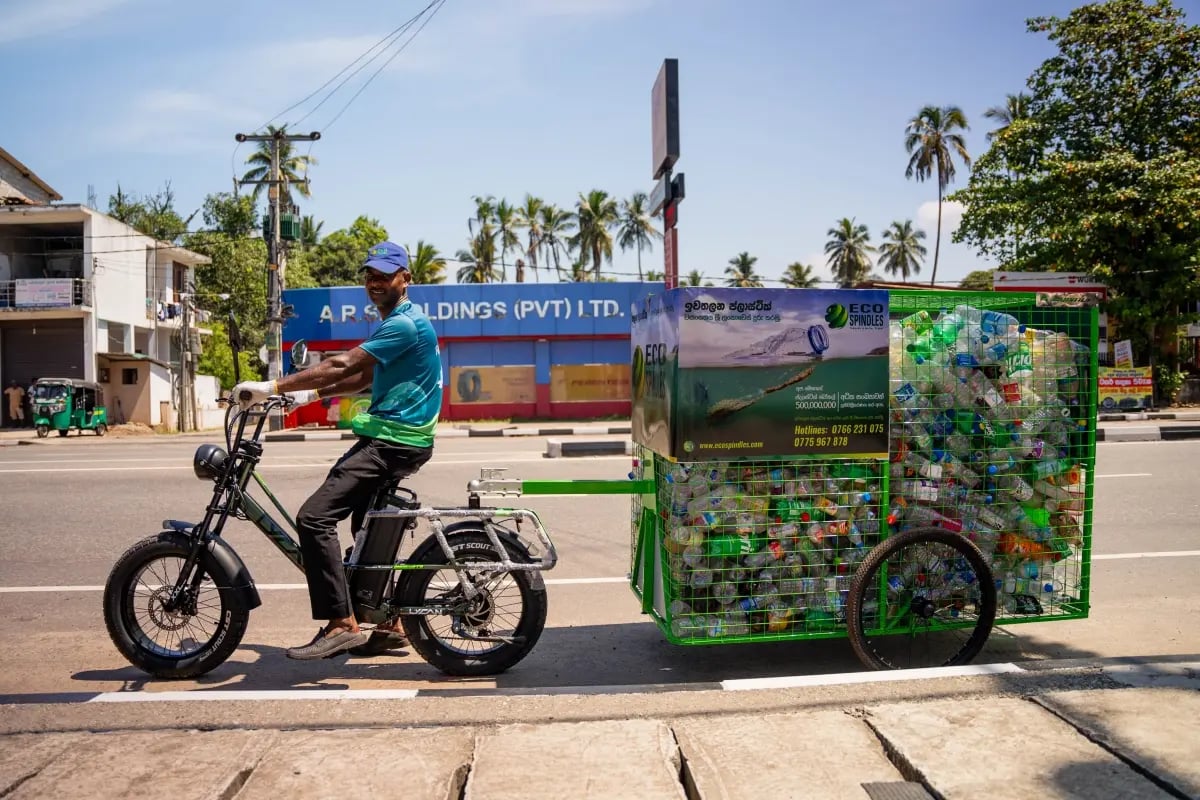 A local Green Wheels collector transporting plastic bottles by electric bike. Green Wheels Plastic Collection Project, Green Earth.
To address this plastic crisis in Sri Lanka, Green Earth, in partnership with recycling specialist Eco Spindles, launched the Green Wheels Plastic Collection Project. The project uses a fleet of locally made electric bikes to collect plastic from beaches, riverbanks, and other natural areas across Mirissa, Colombo, Negombo, and Anuradhapura, bringing collection to places a truck-based system does not serve.
Read more: Green wheels: A transformative leap for plastic collection in Sri Lanka
Each credit represents 1,000 kg of plastic collected and recycled. The plastic Green Wheels collects is turned into textile fibres and brush filaments within Sri Lanka, so the material stays in productive use in the country where it was gathered, contributing to a circular economy.
The project follows Verra's plastic waste collection and plastic waste recycling methodologies under its Plastic Standard, with a minimum project lifetime of 7 years and a collection target of 10,400 tonnes of plastic.
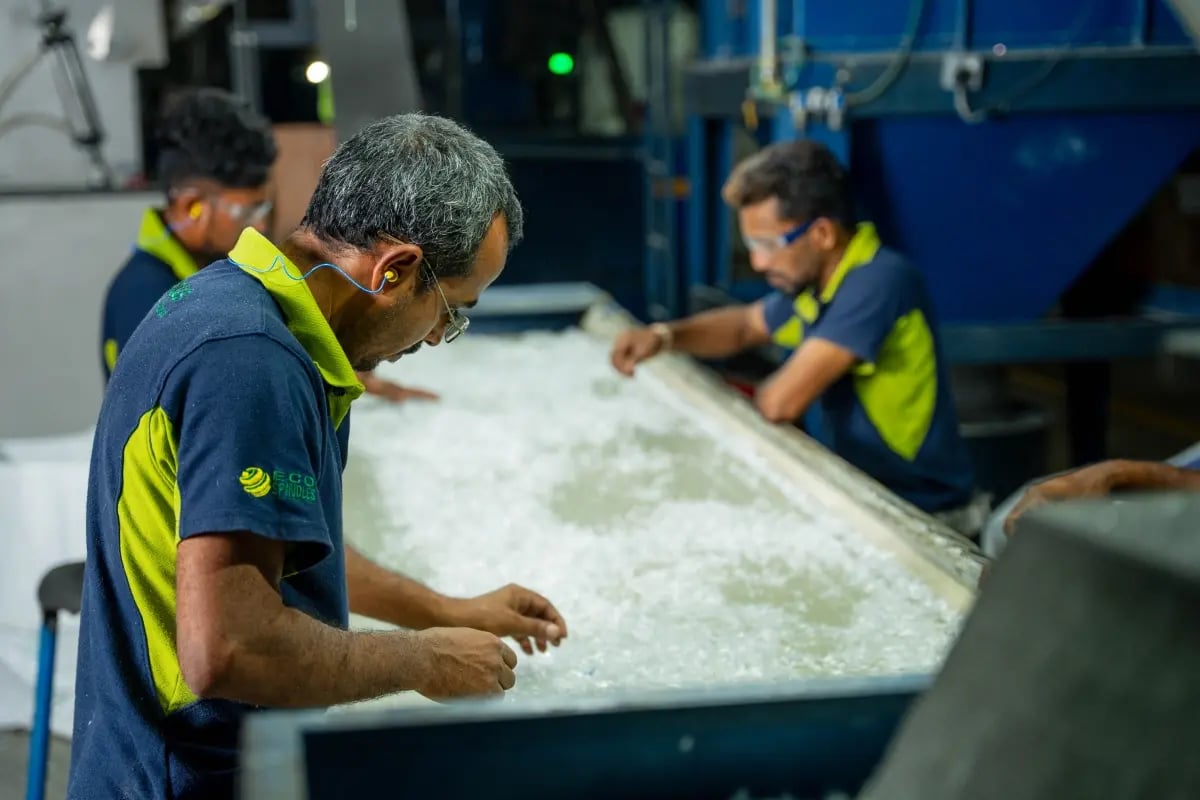 Recycling specialists inspecting shredded plastic flakes as collected bottles are being recycled into new material. Green Wheels Plastic Collection Project, Green Earth.
For a buyer working through the five checks above, Green Wheels is built to answer them: electric-bike collection reaching areas without a formal service speaks to additionality, the Eco Spindles processing route gives a documented end point, and Verra registry tracking will supply the serial-level traceability and single retirement that rule out double counting.
Buying plastic credits with Green Earth
Green Earth is an end-to-end project developer with oversight of the full supply chain behind every credit. On Green Wheels, the Green Earth team and Eco Spindles run collection, processing, and verification as one accountable chain, from the electric bikes on the Sri Lankan coast to the registry record retired in your name.
Every credit you buy funds plastic collection in the places that need it most, and gives you the proof to show customers, regulators, and your board exactly what your contribution achieved. When you buy plastic credits from Green Earth, you fund measurable nature restoration and receive the documentation to stand behind it.