x
LATEST ARTICLE The new SBTi Corporate Net-Zero Standard: what it means for business Read Article

Sustainable waste management for a circular future

Every year, humans generate billions of tonnes of waste, treating finite planetary resources as disposable. True environmental stewardship means shifting away from the 'take-make-waste' model. Sustainable waste management can be critical opportunity to restore native ecosystems, reduce global emissions, and protect local communities.


  • Share this article:

What is waste management?

Waste management encompasses the entire lifecycle of discarded materials. It includes the collection, transportation, processing, recycling, or disposal of waste tracking from its source to its final end-state.

Historically, the goal was simple: move waste out of sight. Today, modern waste management focuses on source reduction—stopping waste before it is created—and transitioning toward a circular economy where materials are continually reused rather than discarded.

A Greener Future Through Waste Management (1)
Fresh vegetables in eco-friendly cotton bags.

Types of waste and their ecological risks

Waste comes in many forms. To manage waste effectively, we must categorise it by its origin and behavior in the environment:

  • Municipal solid waste (MSW): Everyday household trash, packaging, and commercial debris.
  • Organic waste: Food scraps and yard waste. When trapped in oxygen-poor landfills, organic waste decomposes to produce methane, a greenhouse gas 28 to 36 times more potent than CO2 over a 100-year timescale.
  • Hazardous and e-easte: Electronics, chemicals, and medical waste. Electronics account for less than 2% of solid waste but contribute up to 70% of the toxic heavy metals found in landfills, leaching lead and mercury into shared groundwater tables.
  • Plastic waste: Synthetic polymers that do not biodegrade.

The scale of the plastic crisis: Humans now generate approximately 460 million tonnes of plastic waste every year—roughly equivalent to the total weight of the global human population. (OECD, 2025).

The disposal of these waste types can have significant impacts on the environment. For instance, household waste, such as plastic bags and food waste, can contribute to polluting water bodies and releasing greenhouse gases into the atmosphere. Industrial waste, on the other hand, can contain harmful chemicals and toxins that seep into soil and water sources, posing a risk to both human and animal health.

Global waste crisis in figures

According to the World Bank, global waste production is set to increase by 70% by 2050, with cities being the largest contributors to this trend. Globally, 2.01 billion tonnes of municipal solid waste are generated each year, with at least 33% not managed in an environmentally safe manner and only about 32% of that waste being recycled. 

The United States Municipal Solid Waste Management Market is expected to surpass $25 billion by 2024. The United States spends about $200 billion a year on solid waste management and lost energy resources from trash disposal. Upper-middle- and high-income countries provide nearly universal waste collection. However, lower-income countries collect about 48% of waste in cities, but this proportion drops drastically to 26% outside of urban areas.

East Asia and the Pacific Region produce the highest amount of Municipal Solid Waste (MSW) globally. China, being the most populous country, accounts for over 15% of the world's MSW. Despite having less than 5% of the world's population, the United States is the largest MSW generator globally, producing approximately 12% of the world's MSW and having the highest per capita waste production. 

Read more: Industries with the biggest nature footprints and what their decarbonisation looks like

On average, Americans generate more than 800 kilograms of waste annually per person, more than twice Japan's per capita waste production, where citizens produce around 350 kilograms of MSW annually. Interestingly, Denmark is Europe's top MSW producer per capita, with Danes generating a similar volume of waste as Americans. Urban areas generally produce twice as much waste as rural areas.

A Greener Future Through Waste Management (2)
Plastic ready to be recycled in the yard of a company specialising in ecological treatments.

The environmental and health risks of poor waste management

Improper waste management practices, such as open dumping and burning of waste, have severe environmental and health consequences. The release of toxic chemicals and pollutants into the air, soil, and water sources can lead to respiratory illnesses, cancers, and other chronic health conditions. Standing waters in waste items favour cholera and vector-borne diseases such as malaria and dengue.

Additionally, these practices can contribute to the destruction of natural habitats, soil erosion, and contamination of water sources. The World Health Organisation (WHO) estimates poor waste collection leads to environmental and marine pollution, like blocking water drains. 

Read more: The real cost of 1 tonne of CO2: Translating carbon into hectares

Why it is critical to reduce waste

Reducing waste is a foundational pillar of global climate strategy. It directly alleviates three major environmental pressure points:

  • Conserving resource capital: Extracting virgin materials (mining, logging, oil drilling) accounts for half of global carbon emissions. Keeping existing materials in circulation protects remaining wild spaces and conserves natural resources.
  • Preventing ocean plastic leakage: Globally, an estimated 11 million tonnes of plastic enter the ocean annually. In rapidly developing coastal nations like Sri Lanka, infrastructure strain means up to 55% of locally generated plastic waste leaks into waterways, disrupting marine food webs and critical coastal ecosystems.
  • Reducing corporate carbon footprints: Upstream supply chain emissions (Scope 3) typically represent over 70% of a company’s total carbon footprint. Smart waste mitigation directly lowers these numbers.

A Greener Future Through Waste Management (5)
Unpackaged grocery products on a wooden shelf.

The environmental and economic benefits of waste reduction

Waste reduction offers several environmental, health, and economic benefits. Proper waste segregation, collection, and disposal can reduce the release of harmful pollutants and toxins into the environment. By reducing the amount of waste generated, we conserve natural resources, reduce pollution, and support a more sustainable future. Waste reduction also saves money and resources by reducing the amount of materials that must be purchased and disposed of. Additionally, waste reduction can create new business opportunities and jobs in the recycling and composting industries. 

Read more: How carbon project developers quantify biodiversity and community impact

Sustainable waste management practices and strategies

Sustainable waste management follows the strict hierarchy of the '3 Rs'—Reduce, Reuse, and Recycle—prioritising maximum resource retention. Let's take a look at the main waste management practices and strategies using the 3 Rs. 

  • Source reduction: Redesigning products to use less material and eliminating single-use packaging entirely. From a consumer-side, choose products with minimal packaging, or opt for products with packaging that can be recycled or composted. Use reusable bags, containers, and utensils instead of disposable ones.
  • Organic waste composting: Diverting food and agricultural waste away from landfills into controlled composting facilities. This turns a high-emission hazard into nutrient-rich soil that restores degraded agricultural lands. According to the Environmental Protection Agency (EPA), over 63 million tonnes of food waste are generated in the commercial, institutional, and residential sectors annually, with only 4% managed via composting.
  • Waste-to-energy (WTE): This process generates electricity or heat by burning municipal solid waste, which includes both organic materials (like paper and food waste) and synthetic materials (like plastics). WTE shrinks waste volume, cuts landfill reliance, and produces renewable energy. For example, the US Energy Information Agency (EIA) reported that, in 2021, 64 US plants burned 28 million tonnes of waste to generate 13.6 billion kilowatt-hours of electricity in a single year.

  • Extended Producer Responsibility (EPR): This is a policy approach that shifts the environmental and financial burden of a product's entire lifecycle upstream from municipalities to the manufacturers themselves. According to the OECD, EPR 1) moves waste management responsibility to the producer, and 2) incentives them to design eco-friendly, easily recyclable goods, embedding environmental incentives throughout the entire production and supply chain.

  • Zero Waste: This is a holistic management philosophy aimed at eliminating waste entirely by redesigning systems to maximise resource recovery. The goal is a closed-loop system where products are systematically reduced, reused, recycled, or composted, keeping materials in circulation and out of landfills. Zero Waste prioritises sustainable product design and eco-friendly manufacturing. 

  • Recycling: Conserves raw natural resources, slashes industrial energy consumption, and diverts mass volumes from landfills by collecting, sorting, and processing high-impact materials—including paper, plastic, glass, metal, and e-waste—to be manufactured into new products.

Read more: Reduce, reuse, recycle: 7 ways for businesses to reduce waste

The recycling reality: While mechanical recycling is essential for metals, glass, and certain plastics, global infrastructure is lagging. Currently, the global circularity average stands at just 7.5%, meaning over 92% of materials are still lost to landfills or incineration annually (Circularity Gap Report, 2025).

Read more: 5 Sustainable business practices to achieve net zero

A Greener Future Through Waste Management (3)
Farmer putting compost in the soil of a vegetable garden.

Challenges and solutions in waste management

While sustainable waste-management practices offer many benefits, there are also several challenges associated with implementing them.

Read more: Top sustainable technology trends

Challenges in implementing sustainable waste management practices

  • Linear economic incentives: Virgin plastic and raw materials are frequently cheaper to produce than recycled alternatives due to historic fossil fuel subsidies. Implementing sustainable waste-management practices can be costly, requiring investments in new infrastructure and technologies. 
  • Lack of infrastructure: Local municipalities globally are facing a rapid inflation-driven surge in waste volumes that outweighs existing collection capabilities. Many communities lack the necessary facilities and resources to support waste reduction, recycling, and composting programmes.
  • Public education gap: Many people are unaware of the negative impacts of improper waste disposal and may not understand how to properly dispose of waste and reduce their waste footprint. 

Read more: Net zero and a circular economy: Top 3 opportunities and challenges

A Greener Future Through Waste Management (6)
Kids in a classroom learning about waste segregation.

Solutions to overcome waste management challenges

Overcoming systemic infrastructure and behavioral barriers requires a coordinated, multi-stakeholder approach:

  • Policy and regulation: Governments must drive accountability by mandating waste reduction, enforcing recycling regulations, and providing financial incentives for sustainable corporate practices.
  • Public-Private Partnerships (PPPs): Collaborations between governments, private enterprises, and communities pull together the capital and logistical network needed to build modern recycling infrastructure.
  • Consumer education: Raising public awareness about the impacts of improper disposal empowers individuals to adopt the '3 Rs' (Reduce, Reuse, Recycle) and support municipal sustainability initiatives.
  • Source reduction and design: Businesses must prioritise eliminating single-use items, cutting down on product packaging, and designing goods optimised for reuse and circularity.

The Green Earth value

It is up to all of us to take action towards sustainable waste management. By reducing waste, recycling, and supporting sustainable production, we can help create a greener, circular future. Small actions can have a great impact towards reducing our global footprint.

Read more: The ultimate guide to plastic credits 

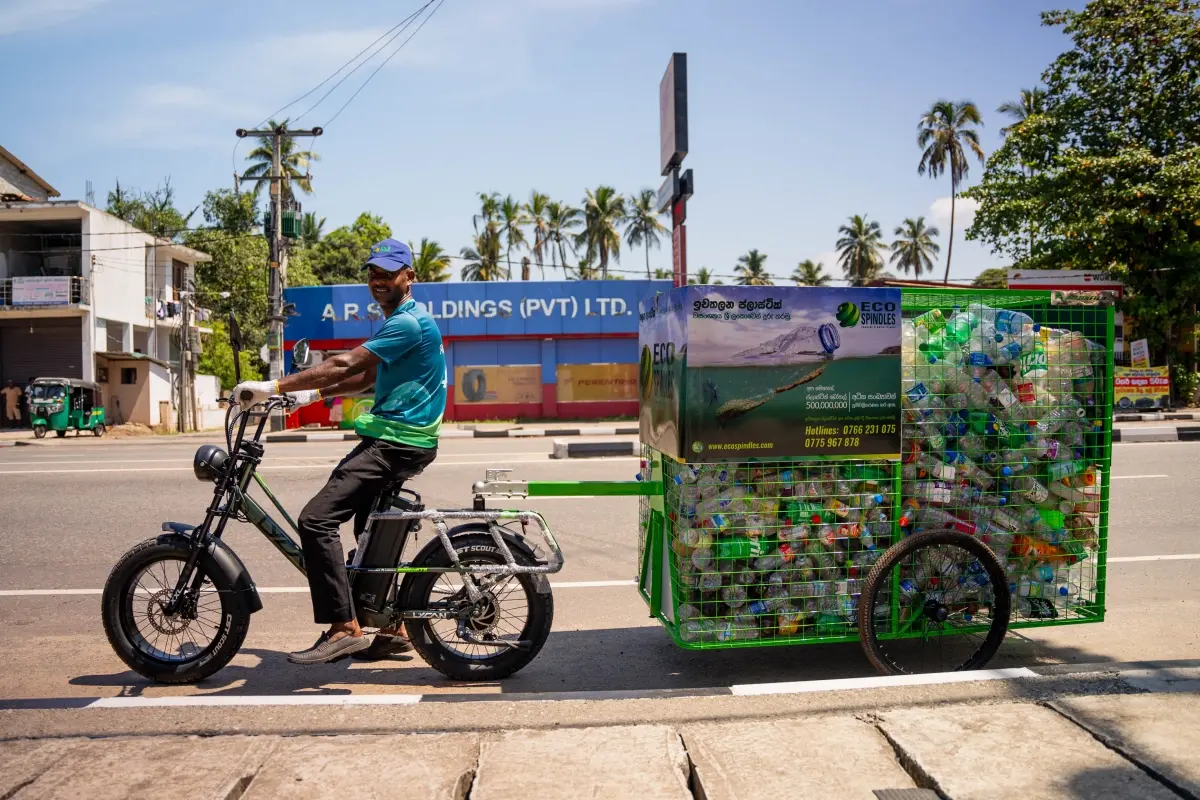
Green Earth is committed to restoring nature and the environment through initiatives like Green Wheels Plastic Collection Project, which aims to combat plastic pollution by collecting and recycling throusands of tonnes of plastic waste from local beaches, riverbanks, and other natural areas using a fleet of locally manufactured electric bikes. The collected plastic is recycled into products such as brush filaments and textile fibres for clothing, supporting local manufacturing and contributing to a circular economy.

Circular Economy Meets Carbon Markets_ Closing Loops, Capturing Value_visual 5

E-bike rider from the Green Wheels Plastic Collection Project collecting plastic waste, Green Earth. 

That’s why Green Earth offers a unique solution to help you reduce your environmental impact and plastic use and contribute to nature:  plastic credits. Our plastic credit programme allows you to offset the impact of plastic on nature and biodiversity. Each plastic credit purchased represents 1,000 kg of plastic cleaned up and recycled.

By participating in this programme, you help reduce the amount of plastic waste that ends up in our oceans, harming marine life and disrupting delicate ecosystems. With our programme, you support initiatives that work to remove plastic from the environment and prevent more from ending up in oceans and other habitats, contributing to a healthier, cleaner planet.

Read the latest articles

Read the latest trends and tips from the world of environmental ecosystems and carbon neutrality.

On 11 June 2026, the Science Based Targets initiative (SBTi) published the most substantial revision..

In a kitchen in rural Kenya, a mother kneels beside a three-stone fire to cook the day’s ugali (a st..

Selecting a carbon credit provider has become a material decision for corporate sustainability teams..

Get started

As the world's first publicly traded purpose company focused on ecosystem restoration, Green Earth is harnessing market forces and the access to capital needed to accelerate Earth's reforestation rapidly. Reach out to us to learn more about our work.

Let’s get to know you