
Agroforestry
Local communities
Uganda
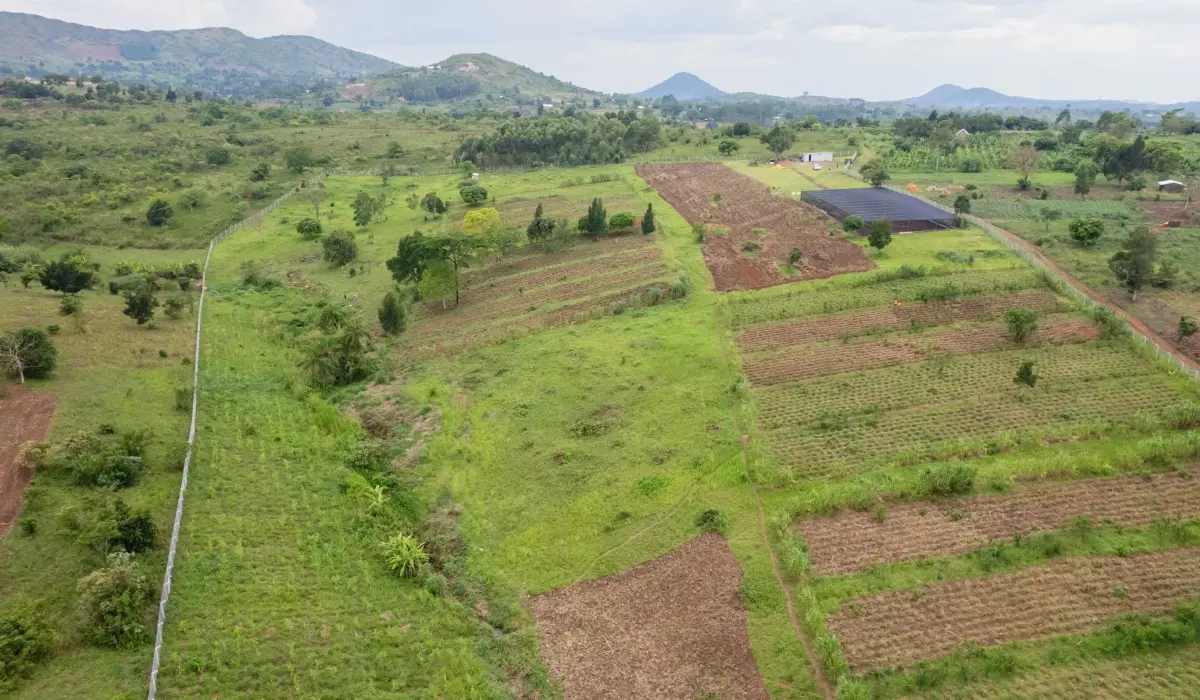
In agroforestry, a seedling's survival often depends on what happens before it reaches the field. Ahead of this season's rains, Green Earth has trained 686 farmers across 493 hectares in the Bulindi Agroforestry and Chimpanzee Conservation Project to prepare their land and plant seedlings at the right moment. The training began on 3 August 2026 and continues in the field today.
When farmers plant promptly and correctly as soon as seedlings arrive, more of those seedlings establish and grow into healthy trees, a direct win for both the project's overall success and the farmers' own results. This season, the team reached out to farmers early to get them ready, so planting can start the day the seedlings arrive.
The Green Earth team met farmers in small groups near project planting locations. Each session opened with a quick refresher on the project and everyone's role, then moved into the field, where farmers learned by practice. The training focused on what is needed for a young tree to survive its first season: getting the soil right, handling seedlings with care, and planting at the right time. For farmers who already have healthy, well-established agroforestry fields, the team added guidance on maintaining those fields.
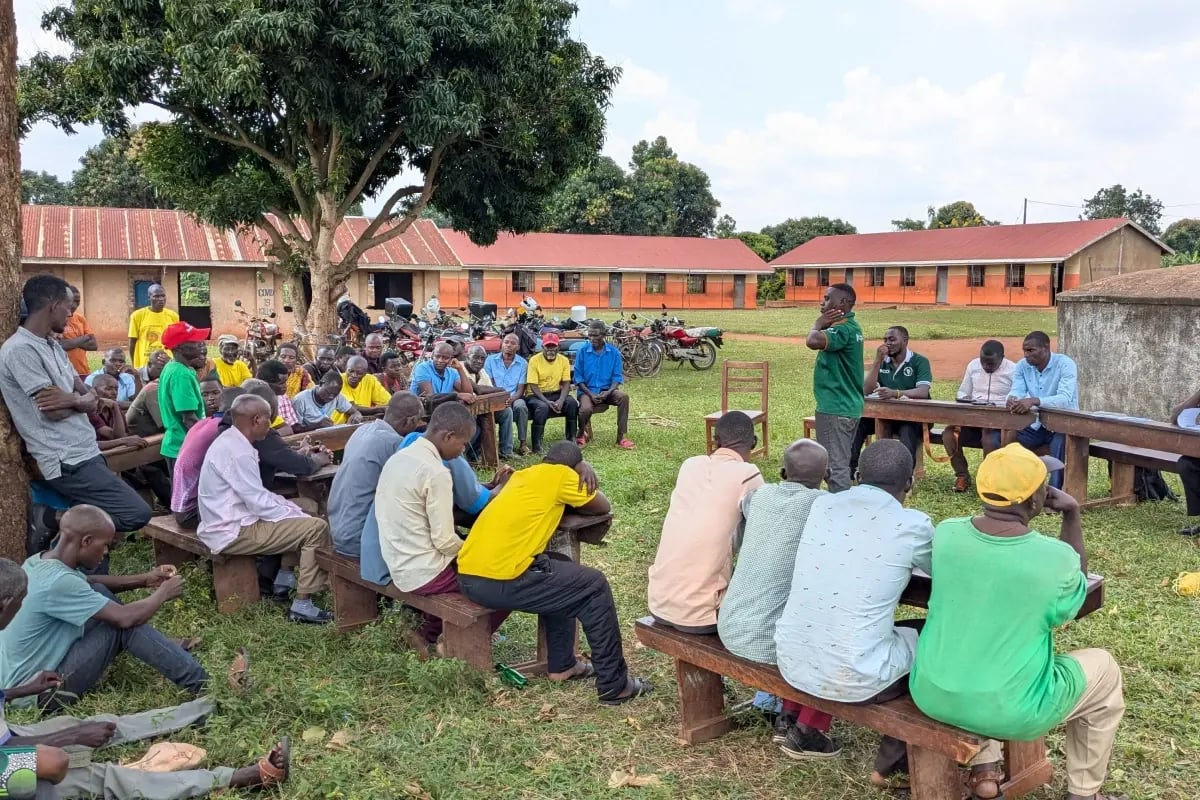 The Green Earth team during training with farmers. Bulindi Agroforestry and Chimpanzee Conservation Project, Green Earth.
The sessions covered the practical decisions that determine how well seedlings establish once they're in the ground:
-
Timing: When to plant during the day, so seedlings settle in favourable conditions.
- Handling: How to carry seedlings to the field, so each one recovers from the stress of transport and goes into the ground in good shape.
- Field labour: How farmers can guide their own planting teams directly, keeping the people doing the work close to the result.
- Layout: How to arrange the different tree planting spots across a plot, a point that becomes clear quickly once it's demonstrated in the field.
Read more: From bushland to mother garden: Bulindi's Mwani nursery is growing strong
The training proved highly valuable. Many farmers arrived confident they were ready, but the hands-on sessions showed where their preparation could improve. Those who initially pushed back came to understand what proper preparation and planting actually involved and how that can benefit them. On-site demonstrations also cleared up long-standing points of uncertainty quickly.
The response has been strong. Farmers with 30 to 40 years of experience said they learned something new about preparing land and establishing seedlings. Many also said the sessions helped them understand the project and each party's role more clearly. The format felt participatory and engaging throughout, closer to shared work than a formal lecture.
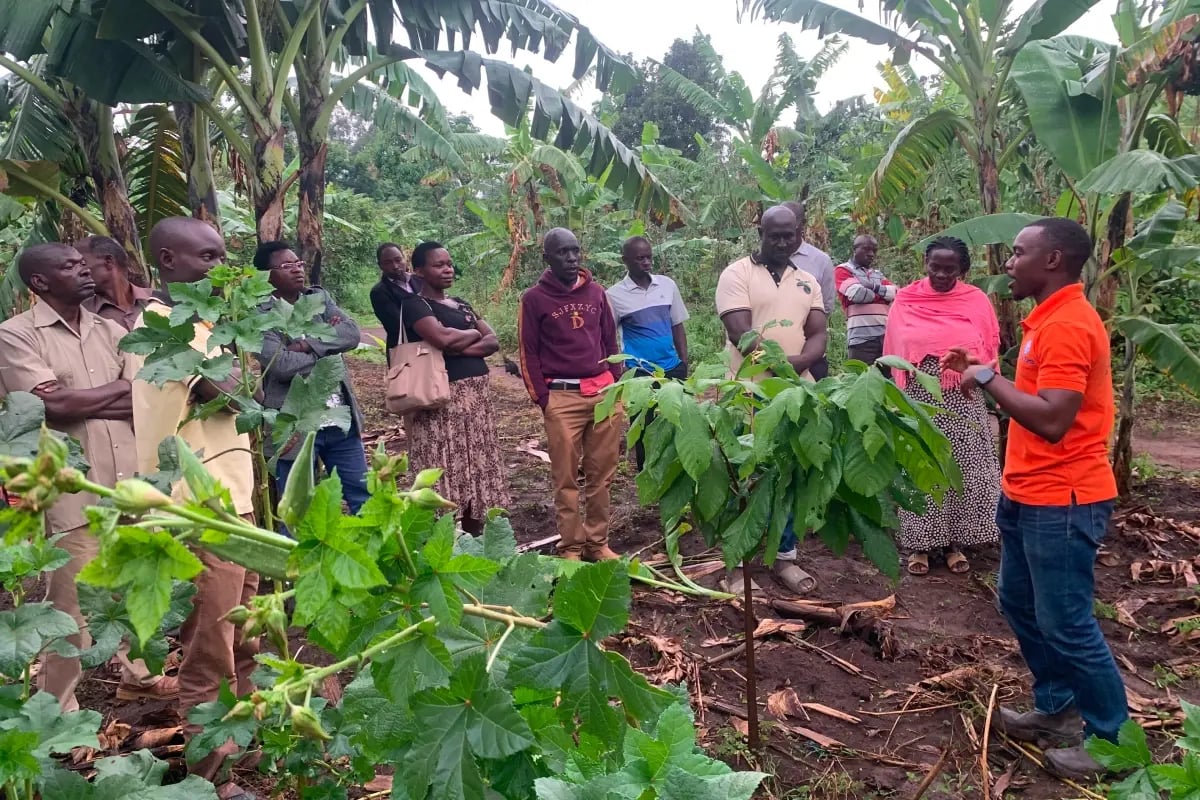 The Green Earth team during planting training with farmers. Bulindi Agroforestry and Chimpanzee Conservation Project, Green Earth.
These trainings address the root cause of low establishment. Better preparation, careful handling, and well-timed planting will work together to raise seedling survival across the project this season.
The Bulindi Agroforestry and Chimpanzee Conservation Project protects one of western Uganda's forest corridors, where more than 300 wild chimpanzees live among village farmland. As these forests were cleared over the years, chimpanzees and farmers ended up competing for the same land. Green Earth restores that habitat through afforestation, replanting the forest foods chimpanzees rely on and easing the pressure on farmers' crops.
Read more: How community stewardship makes carbon credits durable
This project comes with real gains for local households: new boreholes for clean water, school programmes, and coffee to grow as a cash crop. The project is one of the nature-based projects Green Earth develops end to end, from the first seedling to the verified carbon credit. Discover our projects to see how funding nature restoration delivers measurable impact for wildlife and local communities while benefitting your business.