
Nature conservation
Forest
Nature-based solutions
Local communities
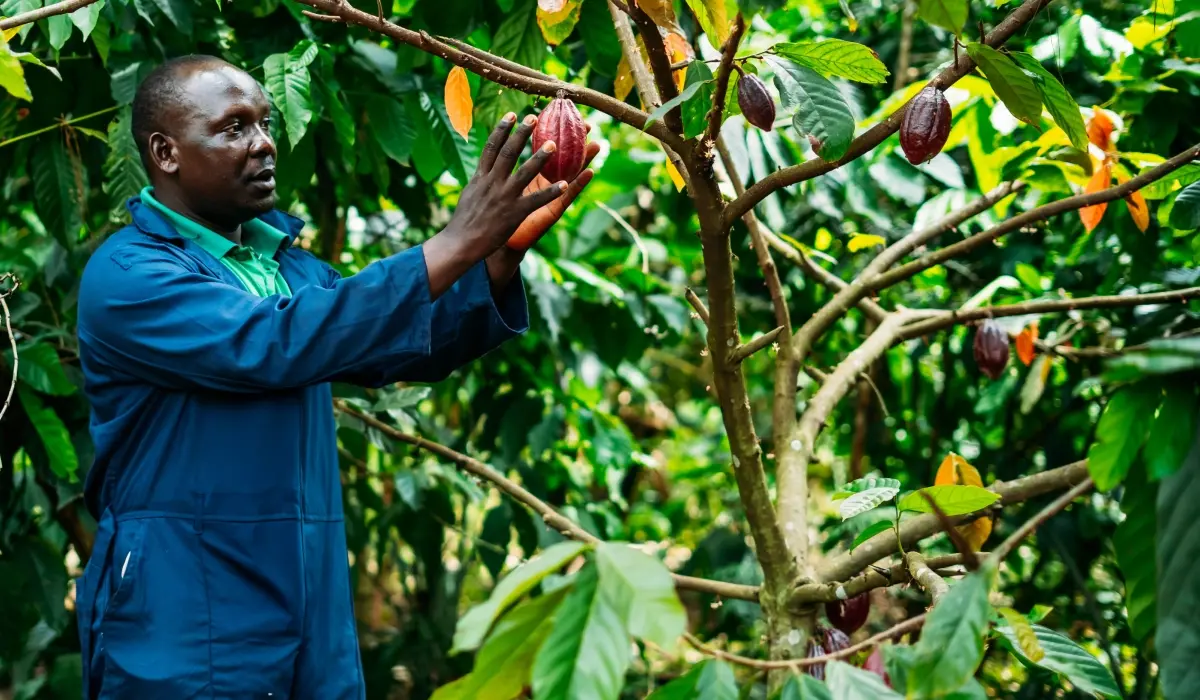
A carbon credit is a commitment that extends well into the future. The tonne of CO₂ compensated for today from a nature-based carbon project must remain out of the atmosphere for good, which means the forest behind the credit has to remain standing long after the transaction is complete. For any buyer, this raises a defining question: What ensures that the forest endures?
Satellite imagery and carbon models can document a forest’s condition at a given moment, but they cannot measure the commitment to the forest of the people living alongside it. Yet that commitment is precisely what determines whether a forest endures. When the people who live alongside a forest hold a lasting stake in its survival, they protect it; when they do not, even a well-managed project can fail over time. This is the principle behind community stewardship, and it is the most reliable foundation for durable carbon credits from nature-based solutions.
The principle is straightforward. A carbon credit represents carbon mitigated across a project’s entire lifetime, so its value depends on whether the forest survives for that full period, a quality the market refers to as carbon credit permanence. Remote data alone cannot secure this outcome, because the pressures that undermine a project are typically local, human, and difficult to detect from orbit.
The most effective protection is a community with a direct economic stake in the forest’s survival: Where local people benefit from the forest, they have a clear incentive to maintain it. This principle underpins Green Earth’s nature-based carbon projects across multiple continents, where farming families participate as partners rather than as beneficiaries alone. For a buyer, a credit supported by community stewardship represents a materially lower-risk purchase, and this article will analyse that mechanism.

What makes a carbon credit durable?
A carbon credit represents 1 tonne of CO₂ that a project prevents from entering, or removes from, the atmosphere. Restoration projects generate these credits gradually, as trees mature and sequester carbon over a lifetime measured in decades. The buyer is therefore paying for an outcome that develops over the long term, rather than for a single act of planting.
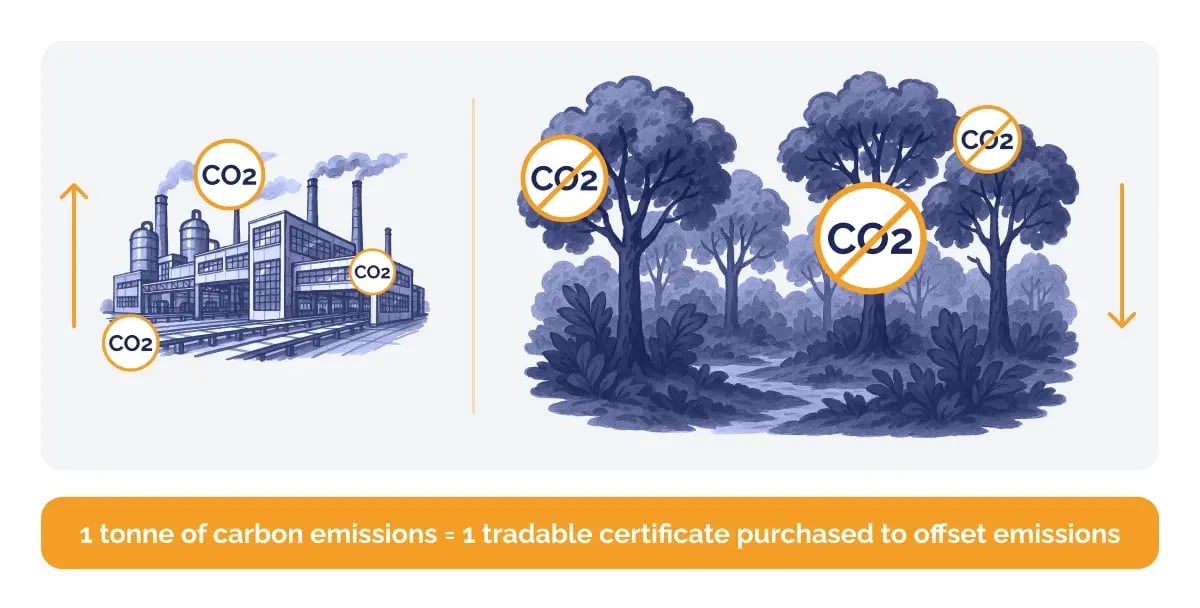 Infographic illustrating how carbon credits work.
What makes a credit durable is the project's ability to keep that carbon stored for the full term, which depends on a few underlying qualities:
- Permanence: The carbon remains locked away for the project's entire lifetime.
- Additionality: The restoration only happens because the project exists, so the outcome is genuine, rather than something that would have occurred anyway.
- Protection against leakage: Safeguarding one area does not simply push clearing or degradation into another.
- Continuous monitoring: Conditions on the ground are tracked over time, so emerging risks are identified early and remedied.
- Local commitment: The people living alongside the forest have a lasting reason to protect it, which is what holds the other factors together.
Read more: Indigenous and local knowledge in carbon projects: why it defines credit quality
This extended horizon is both the objective and the principal source of risk. If the forest burns, is cleared, or is gradually degraded through grazing and firewood collection, the stored carbon is released and the credit no longer reflects a genuine outcome. This long-term storage is the permanence, and it is the most important quality a buyer ultimately acquires.
Demand for removal-based projects continues to grow, and nature-based solutions account for most of them. Carbon Direct reports that 95% of the removal credits issued in the voluntary carbon market in 2025 came from nature-based projects, with high-durability methods such as biochar making up the remaining 5%, and projects that corporate demand for carbon removal could reach 46 to 110 million tonnes a year by 2030, roughly 6 to 14 times today's levels.
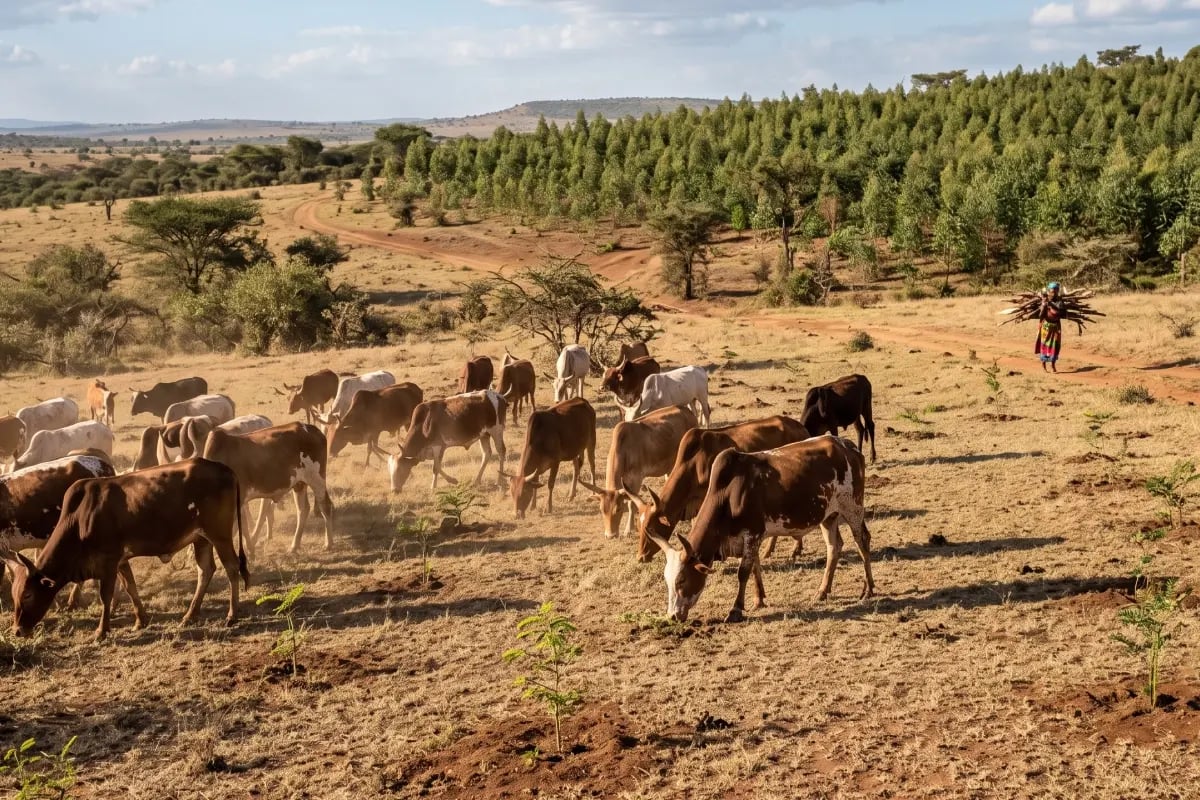 Livestock grazing among young tree seedlings in Africa, with a person collecting firewood at the edge of a regenerating forest. AI generated picture.
MSCI finds that buyers are steadily shifting towards removal-based and higher-integrity credits, which command higher prices than conventional avoidance credits, a preference reinforced by the more than 12,000 companies that now hold a committed or approved science-based emissions target, up nearly 70% in a single year. As high-quality supply tightens, these credits are likely to command higher prices still.
Read more: Carbon credit project stewardship: what happens after credit issuance
Why do carbon projects fail without on-the-ground presence?
The market now has access to more data than at any previous point. Buyers and project developers can draw on satellite imagery, increasingly sophisticated carbon models, and continuous digital registries. But while these tools are vital for carbon project monitoring, the factors that most frequently compromises a project are not visible in a satellite pass. A change in local livelihoods, a boundary dispute, livestock grazing among young saplings, or rising demand for firewood all develop quietly on the ground, out of sight of remote monitoring. By the time they become apparent in remote data, the damage has often already occurred.
Read more: Why a forest with more species stores more carbon
Peer-reviewed research on reforestation demonstrates how readily carbon accounting can diverge from reality when projects underestimate tree losses caused by human activity and natural disturbance, and it emphasises that credible carbon claims depend on continuous monitoring rather than periodic measurement. Where protection in one location simply displaces clearing to another, an effect known as leakage, only those familiar with the area are positioned to identify it.
Remote tools are essential and highly capable, but they document a forest rather than defend it. This is precisely where on-the-ground monitoring for carbon integrity becomes necessary. A consistent presence is required to identify emerging risks early and to respond to them. The answer to why carbon projects fail generally returns to the same shortfall: extensive observation from a distance, combined with insufficient presence on the ground.
This is why the presence that matters most comes from the project developer itself. Remote data becomes dependable only when it is verified against physical observation on site, which requires the developer’s own teams to be embedded in the project region rather than overseeing it from a distance. A developer present on the ground can calibrate models against reality, confirm that planting and protection are genuinely taking place, and respond the moment conditions change.
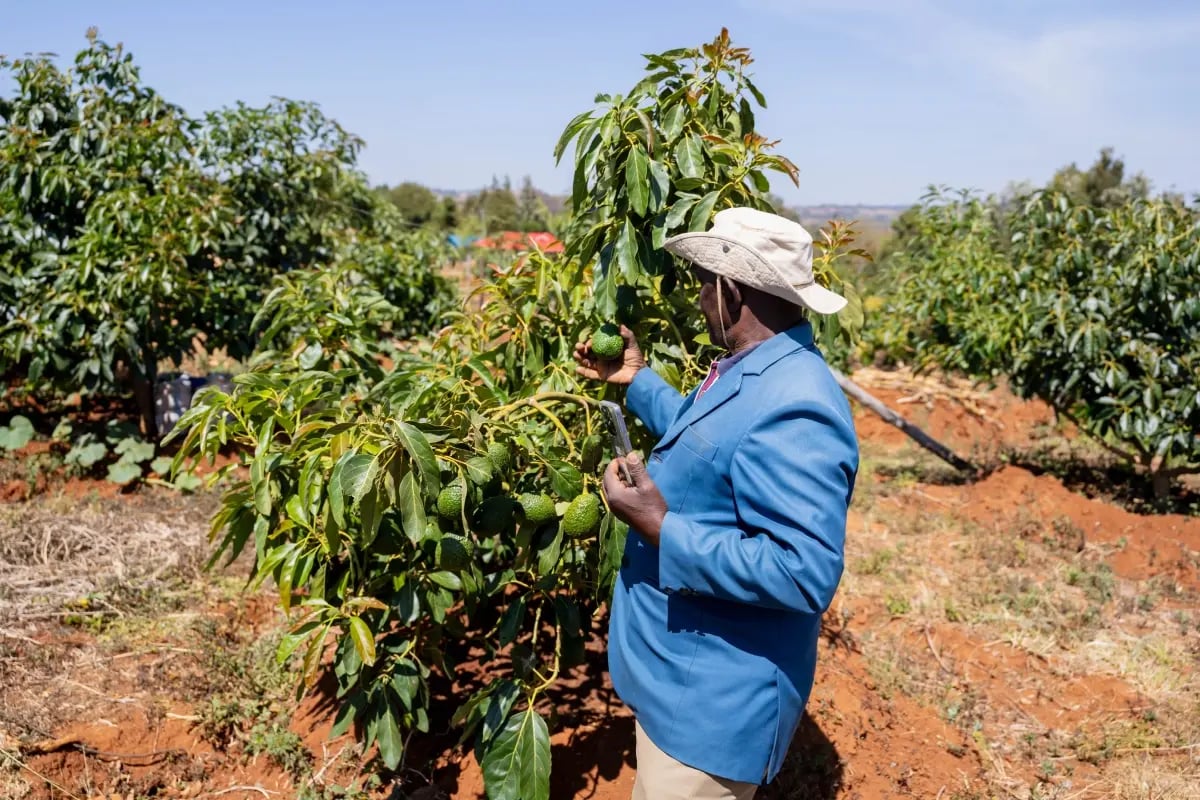 Kenyan farmer checking ripe avocados on his farm as part of the Mount Kenya Regenerative Agroforestry Project, Green Earth.
How community involvement protects forests
A substantial body of evidence addresses the question of who protects forests most effectively, and the findings are consistent. A landmark 2021 review by the Food and Agriculture Organization of the United Nations (FAO) and FILAC, drawing on more than 300 studies, found that deforestation is consistently lower in Indigenous and community-held territories where collective land rights are secure. The World Resources Institute reaches the same conclusion from a broader base, noting that the evidence for reduced deforestation on community-managed land has strengthened over time.
Read more: The real cost of 1 tonne of CO2: Translating carbon into hectares
The explanation is structural, rooted in empiric evidence. When a community derives its livelihood from a standing forest, protecting that forest becomes the rational course of action over the long term. People who live alongside the trees identify the earliest signs of encroachment, resolve local disputes before they escalate, and remain in place long after an external monitoring contract has concluded.
Read more: The social impact of Green Earth’s projects
Financing that enables a community to remain on the land is often what makes a project viable in the first place. This pattern recurs across the research on local communities carbon projects: where people hold a recognised stake, forests endure. This is how community involvement protects forests, and it is why community stewardship is more accurately understood as a durability mechanism than as an ethical supplement.

How Green Earth builds community stewardship into every project
Green Earth is an end-to-end project developer with full supply chain oversight, which means our teams are present on the land rather than managing it remotely. Across our nature-based carbon projects, a consistent design principle applies: to provide the surrounding community with a direct and lasting reason to protect the forest.
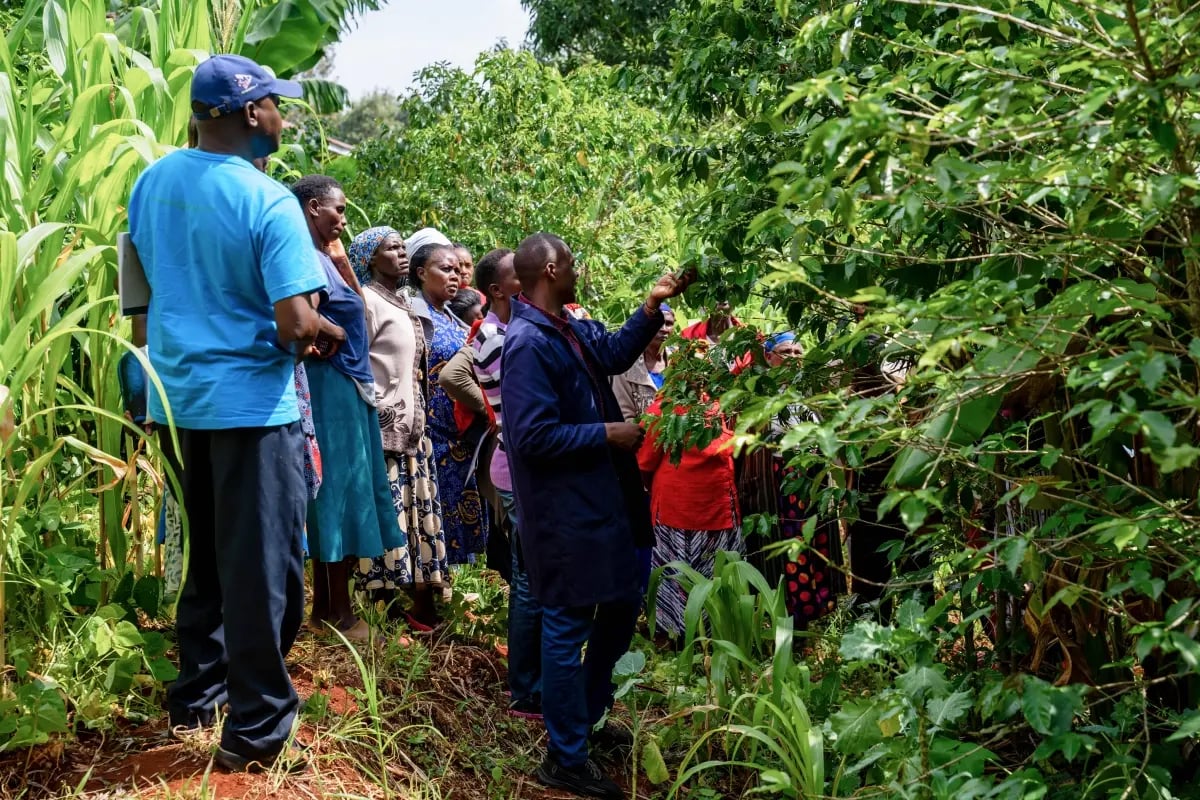 Local farming families during an agroforestry training session. Bulindi Agroforestry and Chimpanzee Conservation Project, Green Earth.
In western Uganda, our Bulindi Agroforestry and Chimpanzee Conservation Project works with local farming families whose smallholdings lie within an unprotected wildlife corridor between the Budongo and Bugoma forests, an important habitat for endangered chimpanzees. Because the small forests in this area are owned by village households, the project depends on those households choosing to plant and maintain trees. Green Earth and its local partner, The Bulindi Chimpanzee & Community Project (BCCP), support that decision through agroforestry training, seedlings, alternative income sources such as coffee farming, and boreholes for clean water. As a result, protecting the forest aligns directly with the interests of the families who live there.
Read more: From the ground up to space: seeing Green Earth’s impact in Uganda
Our Mount Kenya Regenerative Agroforestry Project follows the same approach. The crop yields from the trees planted remain with the local farmer, and the wider benefits are retained by the communities carrying out the work, which establishes each smallholder as a long-term steward of the restored land.
By linking carbon outcomes to the everyday livelihoods of the surrounding community, the project makes protection a natural consequence rather than an external requirement.
Green Earth’s Hongera Energy Efficient Cookstoves Project in Kenya reflects the same principle from a different perspective. The emissions reductions are possible only because households adopt and continue to use the stoves, which makes community participation integral to the project rather than incidental to it.
Read more: How cookstove carbon credits deliver value to buyers, communities, and nature
What community stewardship means for your carbon credits
For a buyer, these factors fundamentally shape what a carbon credit represents. A credit is only as sound as the outcome of the project, and the outcome behind a nature-based credit is a living forest that must remain standing for decades. When that forest is protected by a community with a stake in its survival, the buyer holds one of the most durable carbon credits available: a credit supported by people with a direct interest in the forest’s continued existence, because their livelihoods depend on it. This is what community stewardship in carbon projects looks like in practice.
An effective end-to-end model relies on on-the-ground presence to ensure this community stewardship is upheld. Green Earth’s own teams work in the regions where our projects operate, carrying out continuous field monitoring, verifying conditions in person, and checking remote data against what they observe directly. This developer presence works alongside community stewardship: The project provides the permanent, daily incentive to the community to protect the forest, while our teams provide the professional oversight that identifies risks early and keeps the project on course.
This durability carries practical value, because it reduces genuine risk within the purchase. The principal risk associated with any restoration credit is reversal: The forest is lost, the stored carbon is released, and the compensation the buyer has paid for is effectively negated. A credit exposed to this risk can also become a reputational concern if a project underdelivers and the shortfall emerges later, during an audit or review.
Community stewardship is the safeguard that makes reversal least likely, because those best positioned to prevent it are present continuously and have a direct interest in doing so. For an organisation compensating for hard-to-abate emissions within its value chain, this is the difference between a credit that withstands scrutiny and one that appeared sound only at the point of purchase.
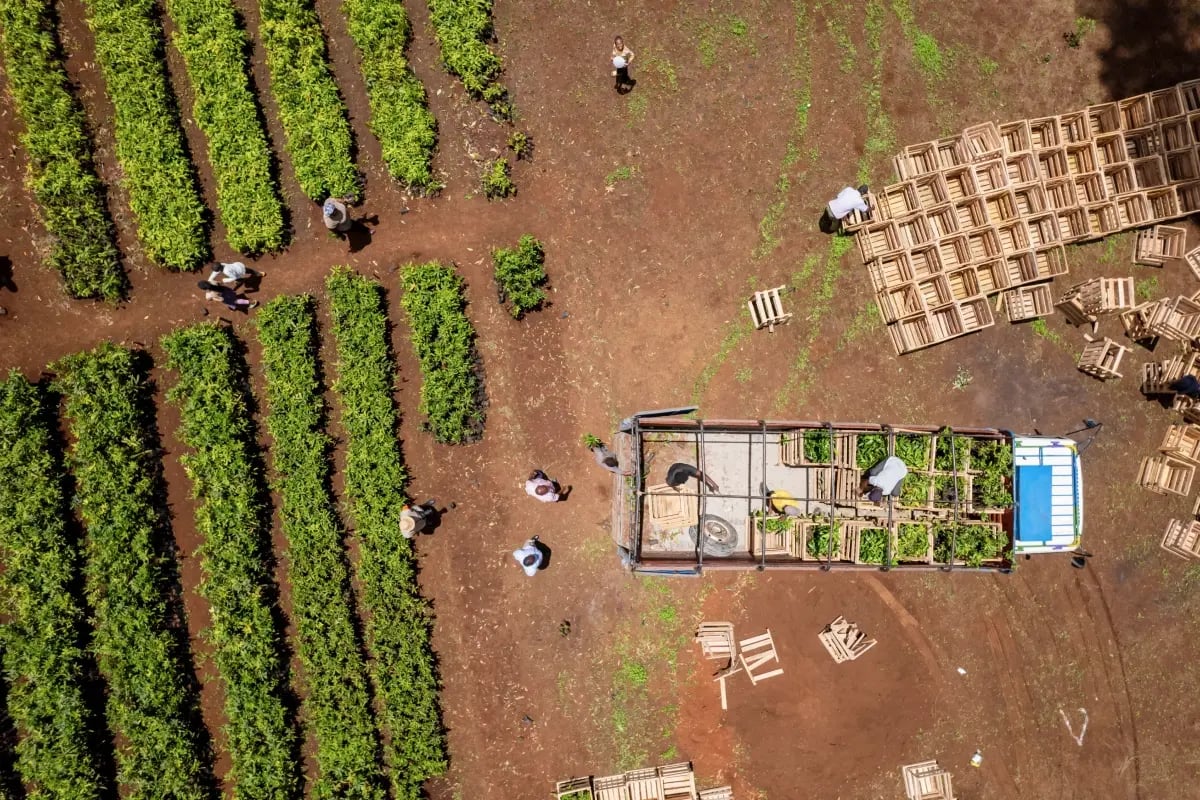 Local community members working on the distribution of tree seedlings. Mount Kenya Regenerative Agroforestry Project, Green Earth.
This also provides procurement and sustainability teams with a practical means of assessing quality. When evaluating a provider, the depth of genuine community involvement is among the most reliable indicators of durability available. It is therefore worth establishing several points directly: Who lives alongside the forest, what they gain from protecting it, and who is present on the ground when problems arise. A provider able to answer these questions clearly is describing a project designed to endure.
Read more: Planning a food forest: the foundations for long-term carbon integrity in Kenya
Every purchase from Green Earth includes the documentation needed to demonstrate this value internally. Buyers receive an Impact Report, a Carbon Credit Certificate, a Communication package for engaging their own stakeholders, and a Contribution badge. Together, these connect the tonnes compensated to the communities and landscapes that support them, ensuring that the value of the purchase can be clearly evidenced and communicated.
At Green Earth, community stewardship is embedded in the design of our carbon project. From the farming families involved in the Bulindi Agroforestry and Chimpanzee Conservation Project to the smallholders of the Mount Kenya Regenerative Agroforestry Project, Green Earth’s teams and local partners develop projects in which communities and forests succeed together, which is what sustains carbon storage over the long term.