
Carbon credits
Net zero
SBTi
Business

On 11 June 2026, the Science Based Targets initiative (SBTi) published the most substantial revision of its flagship corporate framework since its introduction. The SBTi Corporate Net-Zero Standard Version 2.0 takes effect on 1 February 2027 and reshapes the way companies approach their net-zero targets.
For any organisation that has set, or intends to set, science-based targets, two questions are now pertinent: What has changed, and what action it requires. For decision-makers, the most significant development is clear. For the first time, the standard establishes a defined and recognised role for high-integrity carbon credits and carbon removals within a credible net-zero strategy.
A credible net-zero strategy performs two functions: It reduces an organisation’s own carbon emissions, and it takes responsibility for the emissions that remain. Version 2.0 reinforces both, and, for the first time, formally recognises and rewards the role of carbon credits. This article sets out what has changed, and then examines what the SBTi net-zero standard means for businesses.

The role of the SBTi in corporate net zero action
The Science Based Targets initiative is the organisation that defines and validates corporate climate targets against the latest available science. Since the introduction of the first standard in 2021, more than 11,000 companies and financial institutions have set science-based targets through it. Version 2.0 of the SBTi Corporate Net-Zero Standard follows two public consultations and pilot testing with several hundred companies, and it takes effect on 1 February 2027. Version 1 remains open for target setting until the end of 2027, which provides a clear transition period.
Read more: Who’s who in the carbon market: Key institutions and frameworks and what they do
SBTi validation is increasingly regarded by customers, financial institutions, and regulators as evidence of credible corporate action. In practical terms, the SBTi net-zero standard has become the principal reference point for what constitutes responsible corporate climate action.

For its first decade, the SBTi concentrated on the setting and validation of targets. Version 2.0 of the SBTi Corporate Net-Zero Standard reframes the standard as an implementation framework, structured around the decisions that determine emissions in practice: capital allocation, procurement, and supplier engagement. It also adopts a best-efforts approach, which acknowledges that companies do not control every part of their value chain. The intention is for the standard to operate within core business processes, rather than alongside them as a fixed checklist.
The key changes at a glance
Version 2.0 of the SBTi Corporate Net-Zero Standard introduces several principal structural additions that companies will need to take into account:
- Two company categories have been announced: Category A applies to large companies and to medium-sized companies in higher-income markets, and Category B applies to small companies and to medium-sized companies in emerging markets, which carry lighter requirements.
- A target base year based on the latest available data has been introduced, in place of a fixed historical baseline.
- Two or more near-term, five-year targets, together with an optional overarching net-zero target can now be designed within sustainability strategies.
- An implementation hierarchy that prioritises direct emissions reductions was added, followed by action within shared systems, and then sector-level action.
- Continuous assessment of progress is now the standard, under which a shortfall in one cycle results in steeper reductions in the next.
- A new and structured role for ongoing emissions responsibility was also incorporated into the framework, which is examined in detail below.
A recognised role for carbon credits
The most significant development for prospective buyers concerns the treatment of carbon credits. Version 2.0 introduces the Ongoing Emissions Responsibility (OER) programme, a voluntary recognition scheme for companies that take responsibility for the carbon emissions they continue to release across all scopes on the path to net-zero, by funding verified reductions and carbon removals.
Crucially, credits cannot be used to meet a company's validated Scope 1, 2, or 3 reduction targets — those must come from real cuts to its own emissions. The OER programme complements the targets rather than counting towards them. Participation is displayed publicly on the SBTi Dashboard, which distinguishes participating organisations from those that do not take part.
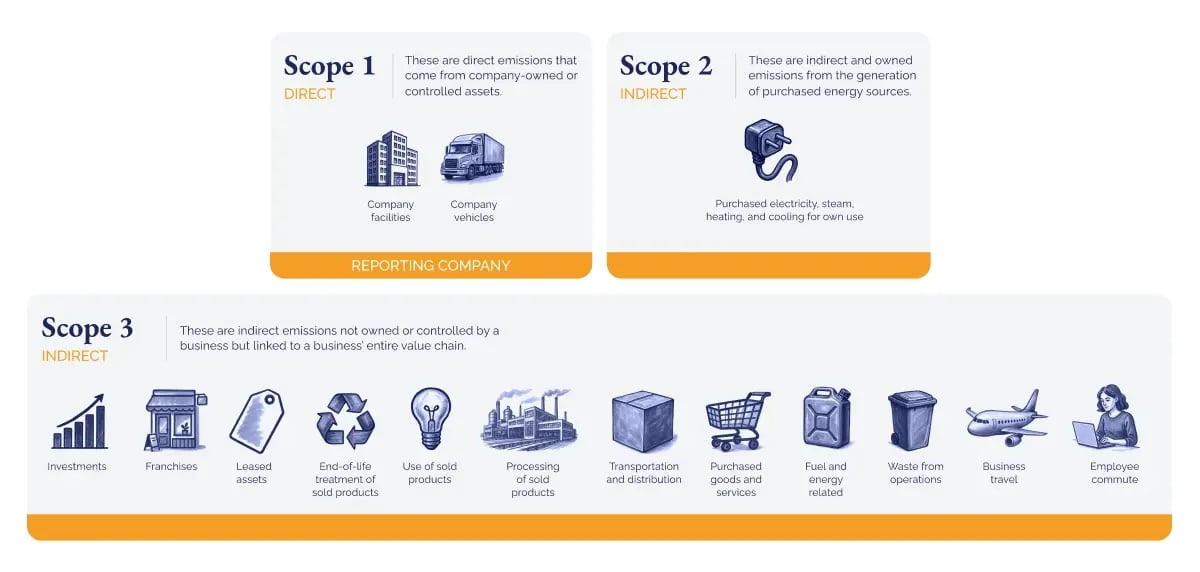 3 scopes illustration.
Recognition is available at three levels, determined by the share of ongoing emissions a company elects to cover:
- Engaged: at least 1% of ongoing emissions
- Advanced: at least 10% of ongoing emissions, inclusive of all Scope 1 and Scope 2 emissions
- Leadership: 100% of ongoing emissions for large companies, funded through a contribution budget of $80 per tonne of CO2
The activities eligible for recognition expressly include projects that restore, protect, and enhance natural carbon sinks, and that remove carbon from the atmosphere. Nature-based projects therefore feature among the activities recognised for carbon credits in a net-zero strategy under the new standard strategy are recognised under the new standard.
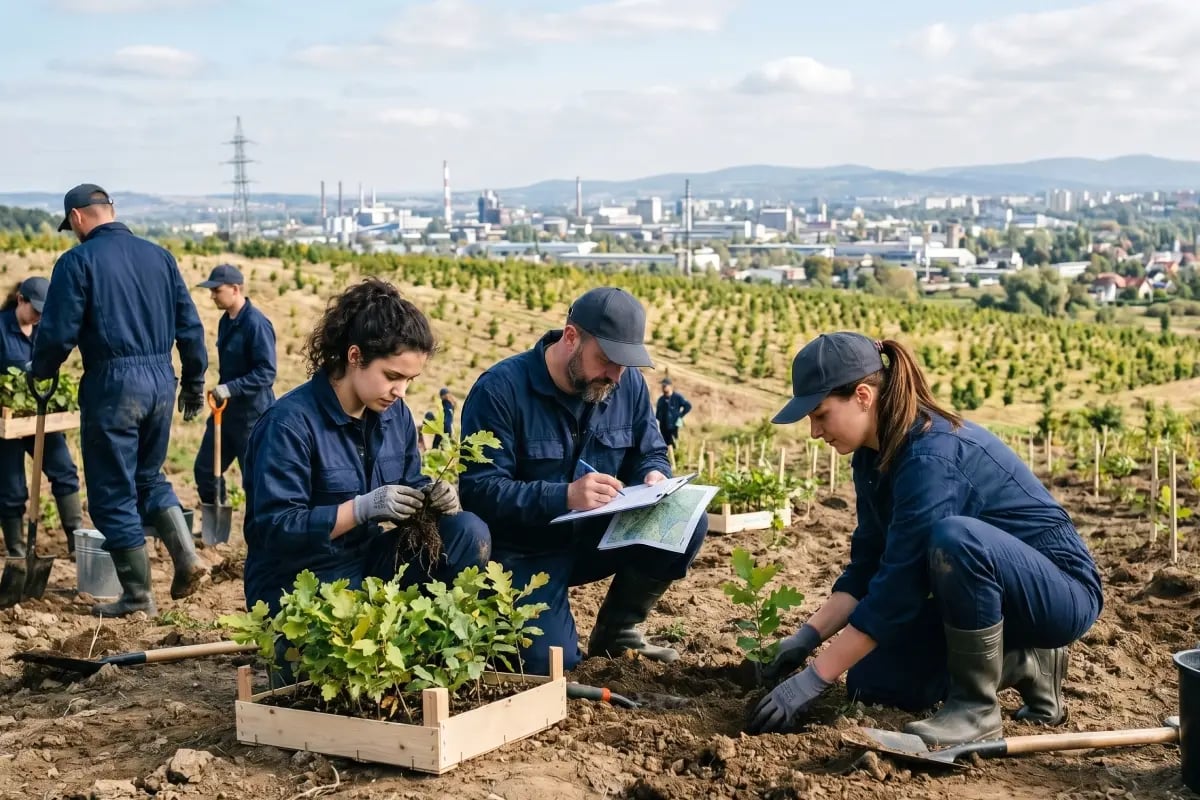 Tree seedlings being planted in the foreground with an industrial city in the background symbolizing how nature-based carbon projects help address remaining emissions on the path to net zero. AI generated picture.
Credits applied in this way must be permanently retired at the point of claim, which safeguards both their integrity and the company’s associated claim. The same rule applies to Scope 3: Credits cannot substitute for reducing value-chain emissions, though residual Scope 3 emissions must be neutralised with carbon removals at the net-zero target year.
Read more: The real cost of 1 tonne of CO2: Translating carbon into hectares
What comes next as removals become a requirement
The standard also establishes a clear trajectory for the future. From 2035, large companies will be required to support carbon removals, commencing at 1% of ongoing emissions and increasing each year to reach 100% by their net-zero target year, and no later than 2050. At the net-zero point, all residual emissions must be neutralised using eligible carbon removals. The SBTi 2035 carbon removals requirement converts removals from a voluntary measure into a planned and expanding commitment, and provides every company with a clear reason to develop a thorough understanding of the removals market in advance of the deadline.
What the SBTi net-zero standard means for business
The direction of future developments is now established, with defined dates attached. The following four implications are relevant to any company that is setting or maintaining science-based targets.
Where high-integrity carbon credits fit in
A credible strategy reduces an organisation’s own emissions and takes responsibility for those that remain, and Version 2.0 of the SBTi Corporate Net-Zero Standard reinforces both. Emissions reductions form the foundation of a company’s targets. High-integrity carbon credits and removals are the means by which a company takes responsibility for its ongoing emissions and secures recognition for doing so. The two operate in combination, and the standard now defines and rewards this role through the OER programme.
Read more: Carbon credit project stewardship: what happens after credit issuance
Quality is the dividing line
The standard establishes clear integrity criteria for the activities it recognises. To qualify, a project must demonstrate additionality, which means that it would not have proceeded without the funding. It must also be independently assured by a third party, incorporate safeguards against reversals, and do no harm, protecting biodiversity, Indigenous Peoples, and local communities, and delivering positive outcomes for them. These are the qualities that distinguish high-integrity carbon credits for business from the wider market.
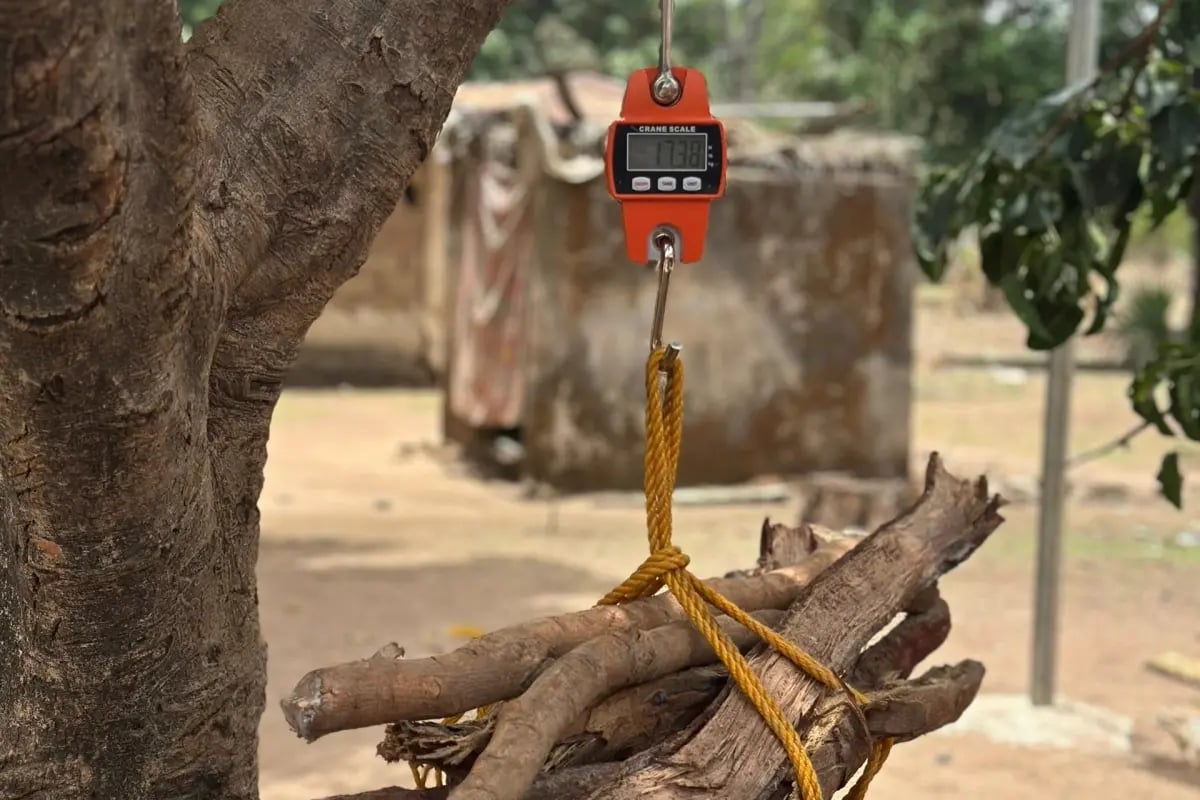 A Timber consumption review during project audit and verification process. Green Earth Sauki Cookstove Nigeria Project, Green Earth.
Permanence, which refers to the durability of carbon storage, and retirement, the permanent withdrawal of a credit from circulation once its benefit is claimed, form part of the same assessment of quality. For a prospective buyer, the implication is straightforward: The source and quality of a credit are now of greater importance than before, and selecting a developer that can evidence these qualities is the most reliable route to recognition.
Read more: How to choose high-quality carbon credits
Demand for high-integrity removals will rise
Because support for carbon removals becomes a requirement from 2035 and reaches 100% at net zero, demand for credible removals is expected to increase steadily over the coming decade. Companies that establish relationships with experienced developers now will be well-positioned, rather than competing for constrained supply at a later stage.
 A local woman in Nigeria using a cookstove for everyday cooking, improving the efficiency of her meal preparation and well-being. Green Earth Sauki Cookstove Nigeria Project, Green Earth.
Nature-based removals, which restore forests and landscapes, are a recognised and eligible component of this market, and they deliver an outcome that buyers increasingly value: measurable carbon removals alongside biodiversity and community benefits within a single project.
Read more: The hidden strength of nature-based credits in corporate decarbonisation strategies
How to prepare
Companies can take several practical steps to prepare for the new requirements. A recommended sequence is set out below:
- Measure your target-base-year footprint, so that targets rest on accurate data
- Set science-based near-term targets across Scope 1, 2, and 3
- Prioritise emissions reductions through the implementation hierarchy
- Build a portfolio of high-integrity carbon credits and carbon removals to take responsibility for ongoing emissions
- Report transparently, and review at the close of each cycle
How Green Earth fits the new standard
Green Earth develops the nature-based projects that the new standard recognises. As a listed, end-to-end project developer with full supply chain oversight, we restore, protect, and enhance natural carbon sinks and remove carbon from the atmosphere, delivering the verified outcomes that sit at the heart of the Ongoing Emissions Responsibility programme.
Our Bulindi Agroforestry and Chimpanzee Conservation Project in western Uganda shows how this works in practice. This is what the standard's integrity criteria require: additionality, because the corridor forests have no formal protection and would otherwise continue to be cleared; permanence, because community livelihoods are tied to keeping the forest standing; and the protection of biodiversity and local communities, rather than carbon alone.
 Close-up of Bulindi chimpanzees living in a safe, natural environment. Bulindi Agroforestry and Chimpanzee Conservation Project, Green Earth.
The benefits are built to last because nature and communities advance together. Forest enrichment planting with indigenous species restores the natural food sources of the chimpanzees, which reduces conflict with farmers and gives an endangered population room to recover. Because local prosperity depends on the forest thriving rather than falling, the restoration, and the carbon it stores across a project lifetime of 41 years, is durable rather than fragile. These are the lasting, nature-positive outcomes that mark out high-integrity carbon credits.
Read more: How carbon project developers quantify biodiversity and community impact
Every company that purchases verified carbon credits from Green Earth receives:
- an Impact Report
- a Carbon Credit Certificate
- a Communication package
- and a CO2 Compensated badge
Together, these provide the evidence required to demonstrate to customers, stakeholders, and validators precisely what has been funded and achieved. As the corporate net-zero transition moves from ambition to action, high-integrity carbon credits and carbon removals hold a defined, recognised, and expanding role, and Green Earth is positioned to support your business in fulfilling it.