
Biodiversity
Reforestation
Carbon credits
Nature-based solutions
Cookstoves
Verra
Local communities
Gold Standard
The verified carbon market is changing. Buyers are asking harder questions. A carbon credit's value is increasingly defined not just by the carbon it represents, but by what the project delivers alongside it and by how rigorously those outcomes are measured.
A question buyers increasingly ask is how carbon credit co-benefits are measured, and what standards govern that measurement. Biodiversity recovery, community health, and habitat restoration are the co-benefits that distinguish a high-integrity carbon credit, but how are these benefits quantified? These outcomes are also the ones that require the most robust measurement methodology and face the greatest scrutiny from buyers and verifiers alike.
At the centre of this process stands the project developer. The developer selects the indicators, deploys the monitoring technology, documents the causal pathways, and submits the evidence for independent verification through a monitoring, reporting, and verification (MRV) process. Carbon project developer integrity is therefore not a standard to comply with. It is a practice built into every stage of the project lifecycle.

This article breaks down how that practice works, from biodiversity indicators in the field to the Gold Standard for the Global Goals (GS4GG) Sustainable Development Goal (SDG) verification, and why it matters for buyers, partners, and the long-term value of nature-positive investment.
Measuring biodiversity: the indicators that matter
Quantifying biodiversity requires more than counting species. It requires a structured set of indicators that can establish a credible baseline, track change over time, and produce evidence that meets the standards of independent verification.
For nature-based carbon projects, the most commonly used biodiversity indicators are:
-
Species richness: the number of species present in a given area, with a particular focus on native flora and fauna.
- Canopy cover: the percentage of ground covered by tree canopy and the structural complexity of that cover.
- Habitat extent and connectivity: the amount of suitable habitat across a landscape and how well connected those patches are for wildlife movement.
- Ecosystem condition: the functional health of an ecosystem, including its intactness and diversity of ecological roles.
- Population abundances of key species: counts of flagship species such as primates or birds, used as proxies for overall ecosystem health.
 Bulindi chimpanzee in its natural habitat. Bulindi Agroforestry and Chimpanzee Conservation Project, Green Earth.
Each indicator is only as reliable as the method used to collect it. Nature-based project developers draw on a range of technologies to gather field data:
-
Remote sensing, including satellite imagery and LiDAR (light detection and ranging), measures canopy cover and habitat extent across large areas.
- Camera traps record wildlife presence and abundance at ground level.
- Environmental DNA (eDNA) detects species through genetic material left in soil or water samples, enabling species identification without direct observation.
- Bioacoustics uses sound recordings to monitor biodiversity, particularly for birds and insects.
- Ground surveys and transects provide direct, on-site observation data to complement and validate remote methods.
The selection of indicators and technologies is a developer decision made at the project design stage. It forms the foundation of the monitoring plan, and is one of the clearest expressions of rigorous carbon project developer methodology in practice.
Read more: How to choose high-quality carbon credits
From baseline to impact: two projects, two approaches
Methodology only proves its worth when tested in the field. The way a developer moves from a baseline measurement to a tracked outcome reveals both the quality of the monitoring plan and the integrity of the credit.
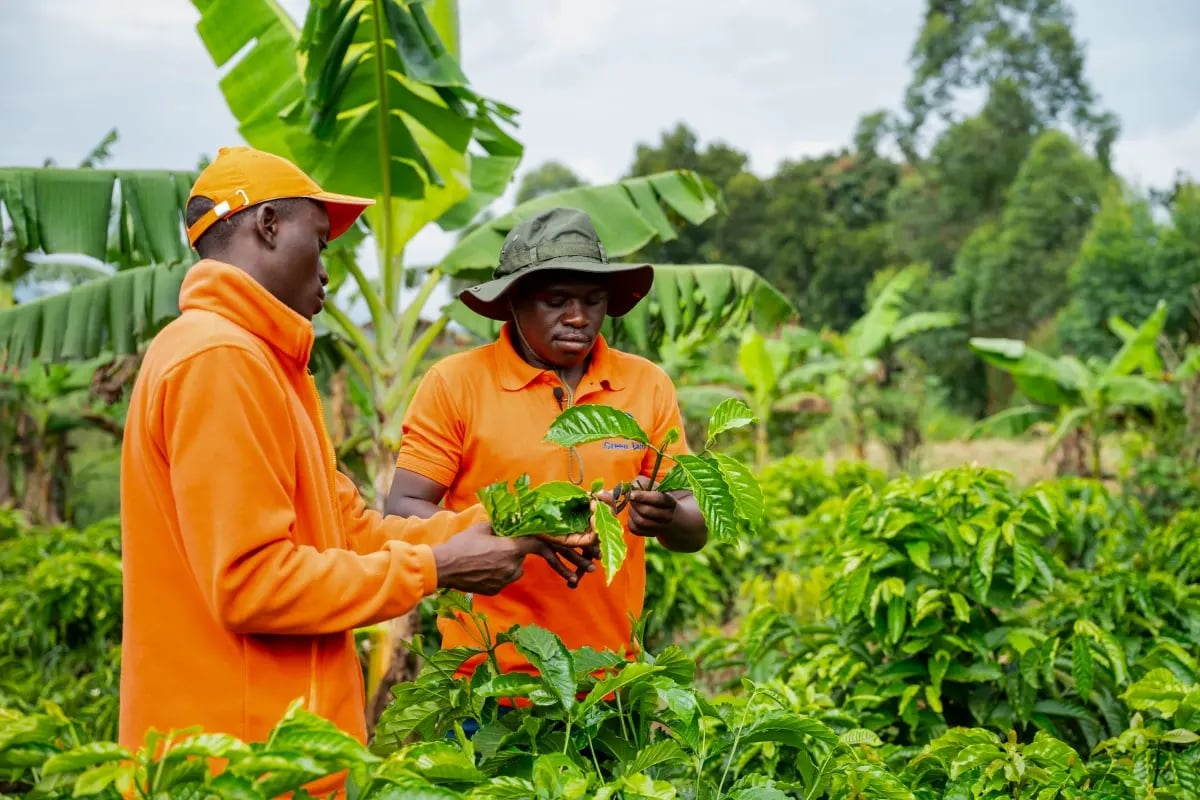 Two Green Earth team members checking the condition of young trees. Bulindi Agroforestry and Chimpanzee Conservation Project, Green Earth.
Different ecosystems call for different approaches. In forest landscapes where human activity has fragmented wildlife habitat, flagship species are often the most practical starting point. These are species whose presence signals the health of a broader ecosystem.
A developer establishes a population count at the outset, defines the interventions that will support recovery, and tracks changes over time through regular field monitoring. Projections are documented in the project design before implementation begins, so that future results can be independently verified against a clear, pre-agreed benchmark.
Read more: From the ground up to space: seeing Green Earth’s impact in Uganda
Green Earth's Bulindi Agroforestry and Chimpanzee Conservation Project in Uganda applies this approach, using the local chimpanzee population as its primary biodiversity indicator. Chimpanzees are well suited to this role: Their presence reflects the quality of the surrounding habitat, and their behaviour directly supports forest regeneration through seed dispersal. The project established a documented baseline population and set out projected recovery targets in its Project Design Document, against which future monitoring results will be verified.
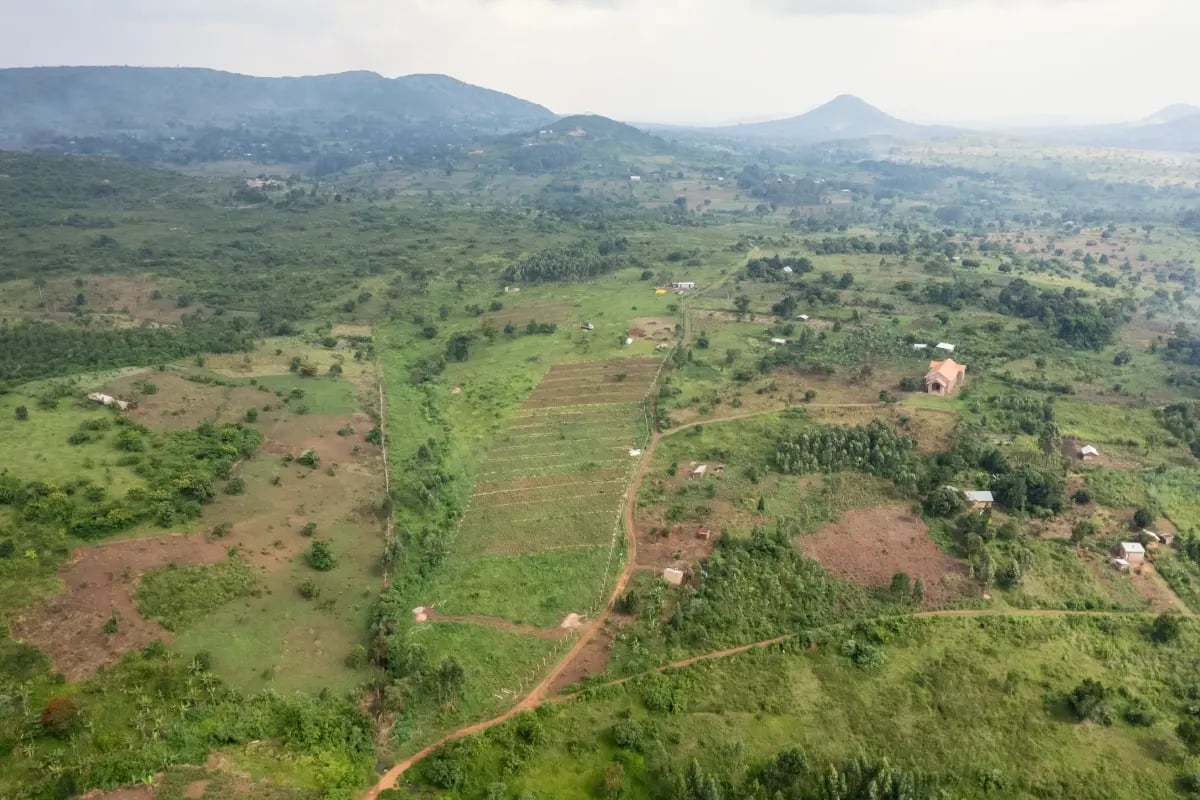 Drone shot of Bulindi Agroforestry and Chimpanzee Conservation Project site, Green Earth.
In degraded landscapes, where the priority is rebuilding ecosystem structure from the ground up, the focus shifts. Here, what matters first is the return of vegetation complexity: the layering of canopy, the reintroduction of native tree species, and the gradual reconnection of habitat patches. As that structure returns, conditions become suitable for wildlife to follow.
Green Earth's Greenzone Reforestation Project in Cameroon follows this approach, tracking forest volume, canopy development, and the diversity of tree species reintroduced into land that was previously open, degraded pasture.
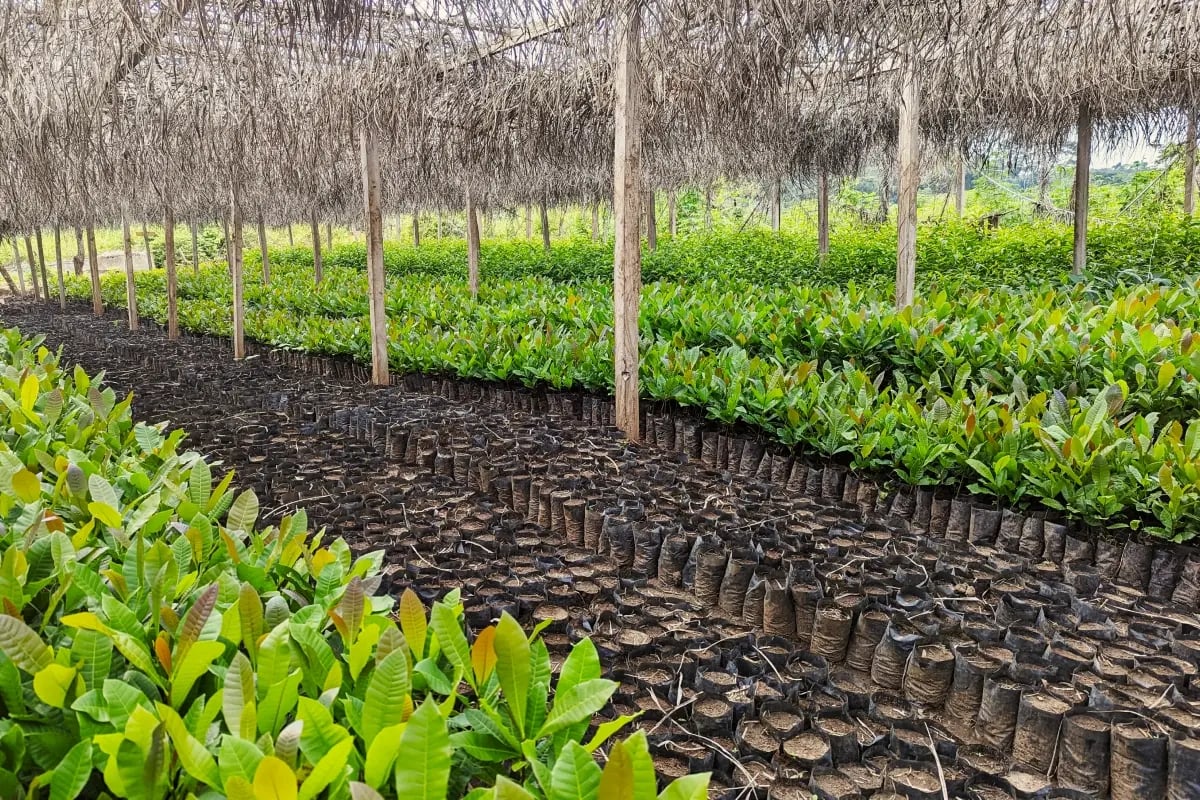 Tree seedling nursery in Cameroon. Greenzone Reforestation Project, Green Earth.
Research published in the Proceedings of the National Academy of Sciences confirms that as tree diversity increases, a more complex canopy structure develops, and with it, greater overall ecosystem productivity. The global meta-analysis of terrestrial restoration study further found that restoration actions increased biodiversity by an average of 20% relative to unrestored degraded sites, with mean biodiversity continuing to increase as restorations aged.
As vegetation structure develops and native species establish, a greater variety of birds, insects, and plants are expected to return—drawn by the richer, more layered habitats that a structurally complex forest provides.
Both projects illustrate a broader principle: Biodiversity quantification is not a fixed formula. It is a set of deliberate choices, made by the developer at the design stage, that determine what gets measured, how, and against what baseline. Those choices are what make a species conservation carbon project independently verifiable and credible to buyers.

Quantifying community impact: the Gold Standard SDG framework
Carbon credits that deliver community and social benefits need more than good intentions behind them. They need a verification framework that turns reported outcomes into independently confirmed evidence. Understanding how to quantify community impact in carbon projects starts with selecting the right framework for that verification.
Read more: Who’s who in the carbon market: Key institutions and frameworks and what they do
The Gold Standard for the Global Goals (GS4GG) provides that framework. Every project certified under GS4GG must contribute to at least three SDGs. SDG 13 (Climate Action) is mandatory. The project developer then selects at least two further SDGs based on the activities the project delivers, for example, SDG 3 (Good Health and Well-being), SDG 7 (Affordable and Clean Energy), or SDG 5 (Gender Equality).
Selecting an SDG is not enough on its own. For each one, the developer must document a clear causal pathway: a logical, evidence-based chain linking what the project does to the outcome it claims. A cookstoves project, for instance, must demonstrate how the distribution of cleaner-burning stoves leads to reduced exposure to harmful indoor air pollutants. It must then show how that reduction translates into measurable health benefits for the communities using them. The pathway must be specific, traceable, and defensible under independent scrutiny.
Monitoring is managed through the Gold Standard SDG Impact Tool, a fully digital platform that structures how developers report, validate, and track SDG contributions across the project lifecycle. Developers select indicators from a predefined matrix within the tool, aligned to the project type. They submit evidence in monitoring reports, and an accredited Validation and Verification Body (VVB) reviews it.
The types of evidence required vary by SDG, but the standard is consistent: Data must be traceable, transparent, and independently verifiable. Common evidence includes distribution and sales records, household surveys, field testing results, and stakeholder feedback logs.
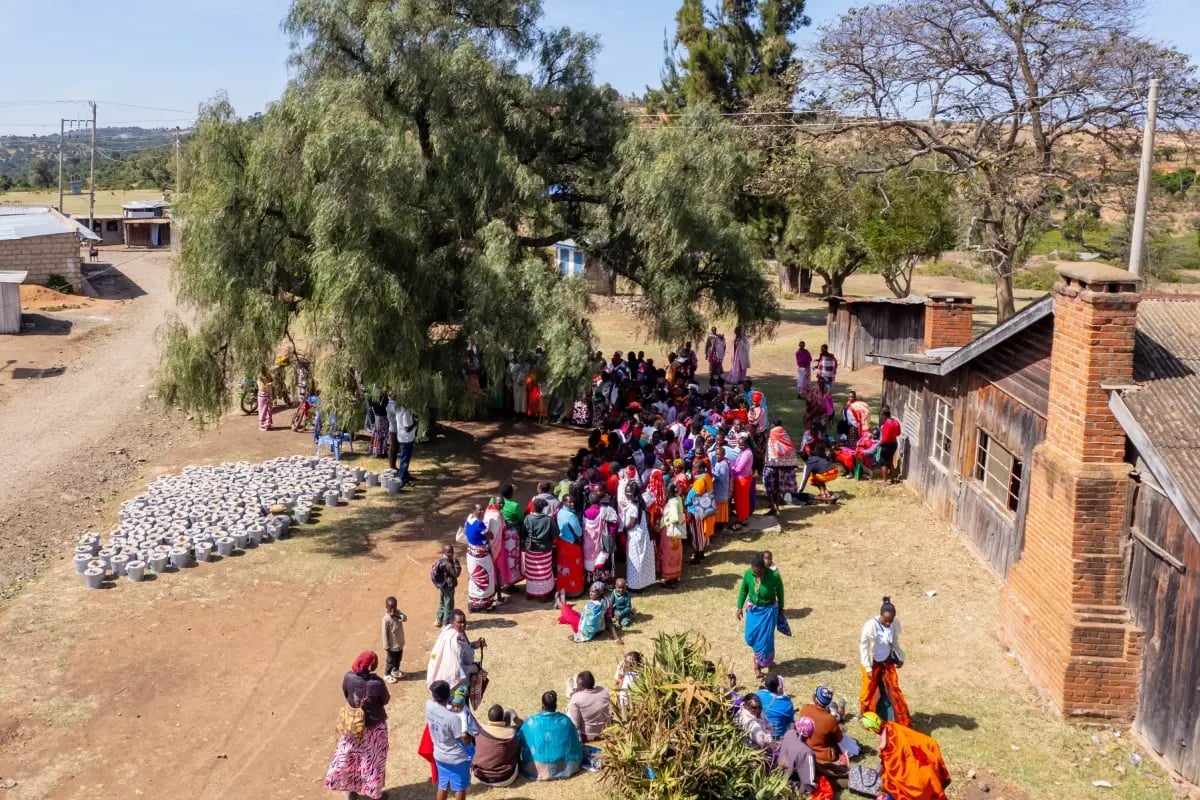 Drone shot of a cookstove distribution event among the local community. Hongera Energy Efficient Cookstoves Project, Green Earth.
This is how community impact through carbon projects moves from a reported claim to a verified outcome. The developer builds the evidence base; the framework ensures it holds up to scrutiny.
Read more: Green Earth’s cookstove projects: How they truly make a difference
How carbon developer MRV makes co-benefits verifiable
Selecting the right indicators and committing to an SDG framework are necessary steps. But, neither delivers verified impact without a rigorous MRV process behind them.
MRV is the mechanism that converts field data into registry-grade evidence. It is the stage at which a developer's methodology choices become auditable. What was planned in the project design document is tested against what is actually happening on the ground.
Monitoring is the first step. It is the continuous collection of data across the project lifecycle, using the technologies and indicators established at the design stage. For biodiversity, this means regular field surveys, remote sensing updates, and species monitoring. For community impact, it means household surveys, usage tracking, and air quality measurements where relevant. Data collection is ongoing, not periodic, and must follow the protocols set out in the approved monitoring plan.
Read more: The hidden strength of nature-based credits in corporate decarbonisation strategies
Reporting translates that data into structured evidence. Developers submit monitoring reports at defined intervals, documenting outcomes against the baseline and projections established at the outset. Every claim must be supported by traceable data. The Gold Standard SDG Impact Tool structures how this reporting is done, ensuring consistency and transparency across projects and geographies.
Verification is an independent check. An accredited VVB reviews the monitoring report, examines the underlying evidence, and confirms whether the reported outcomes are accurate and methodology-compliant. This step is what separates a credible carbon credit co-benefit claim from an unverified one.
Technology is advancing what MRV can achieve. Remote sensing, eDNA analysis, bioacoustics, and sensor-based air quality monitoring are enabling developers to collect more precise, more frequent, and more independently auditable data than what was possible even just a few years ago. Carbon credit MRV biodiversity monitoring technology is an active area of development across the verified carbon market, and one that is raising the bar for what buyers can reasonably expect from a high-integrity credit.
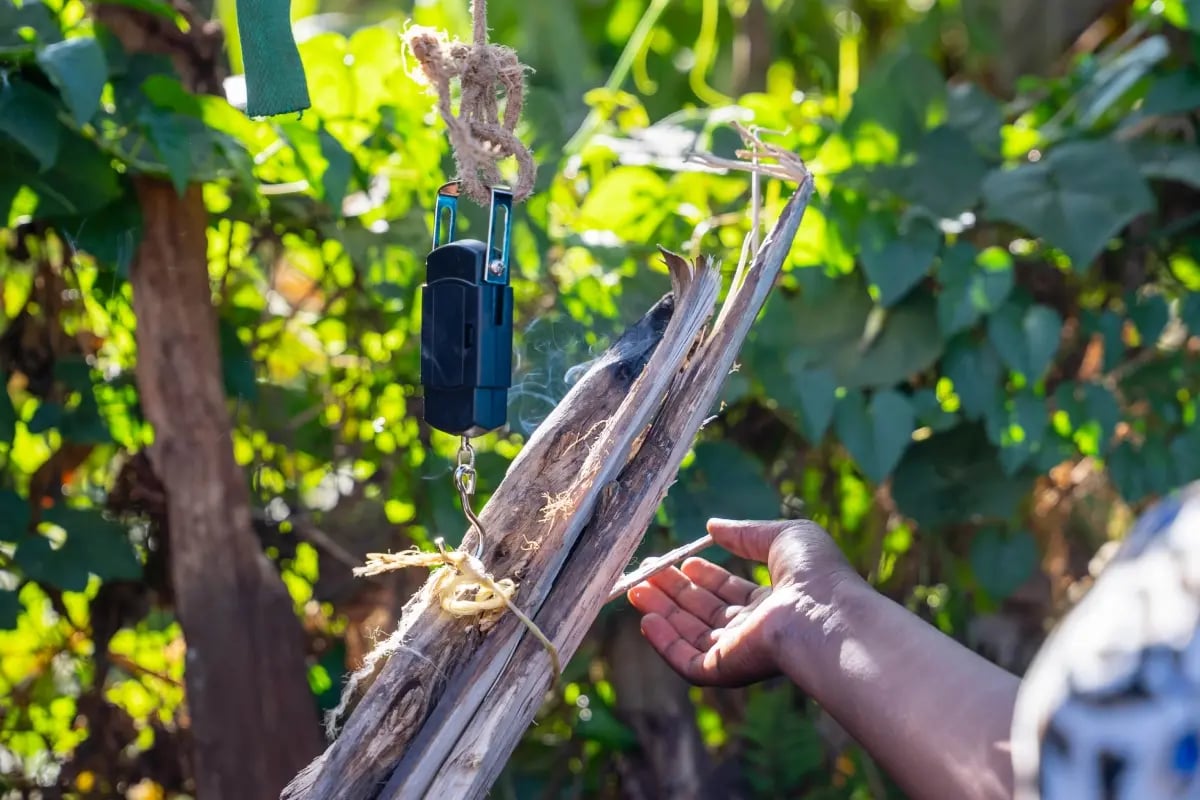 Hongera Energy Efficient Cookstoves Project, KPT.
The developer sits at the centre of this entire process. MRV quality is ultimately a reflection of the choices made at every stage, from indicator selection to data collection to the rigour with which evidence is assembled and submitted for review.
Rigour as a market signal
The verified carbon market is maturing. Buyers are more informed, standards are more demanding, and the scrutiny applied to co-benefit claims is greater than it has ever been. In this environment, the quality of a carbon credit is inseparable from the quality of the developer behind it.
Read more: Beyond tonnes: How carbon credit co-benefits elevate value
Rigorous biodiversity monitoring, independently verified SDG outcomes, and a transparent MRV process are not features that sit alongside a carbon credit. They are what makes it credible.
Developers who build these practices into every stage of the project lifecycle, from baseline setting to verification reporting, are producing credits that can withstand scrutiny and deliver lasting value. Credits that demonstrate verified biodiversity impact can also command a carbon credit biodiversity premium, as buyers increasingly align their portfolios with measurable ecological outcomes.
Nature-positive investment is growing. As more buyers make purchasing decisions with biodiversity and community outcomes in mind, the ability to demonstrate verified impact will become a defining factor in credit value. The developers best positioned to meet that demand are those who have treated co-benefit measurement as a core discipline from the start, not an afterthought.
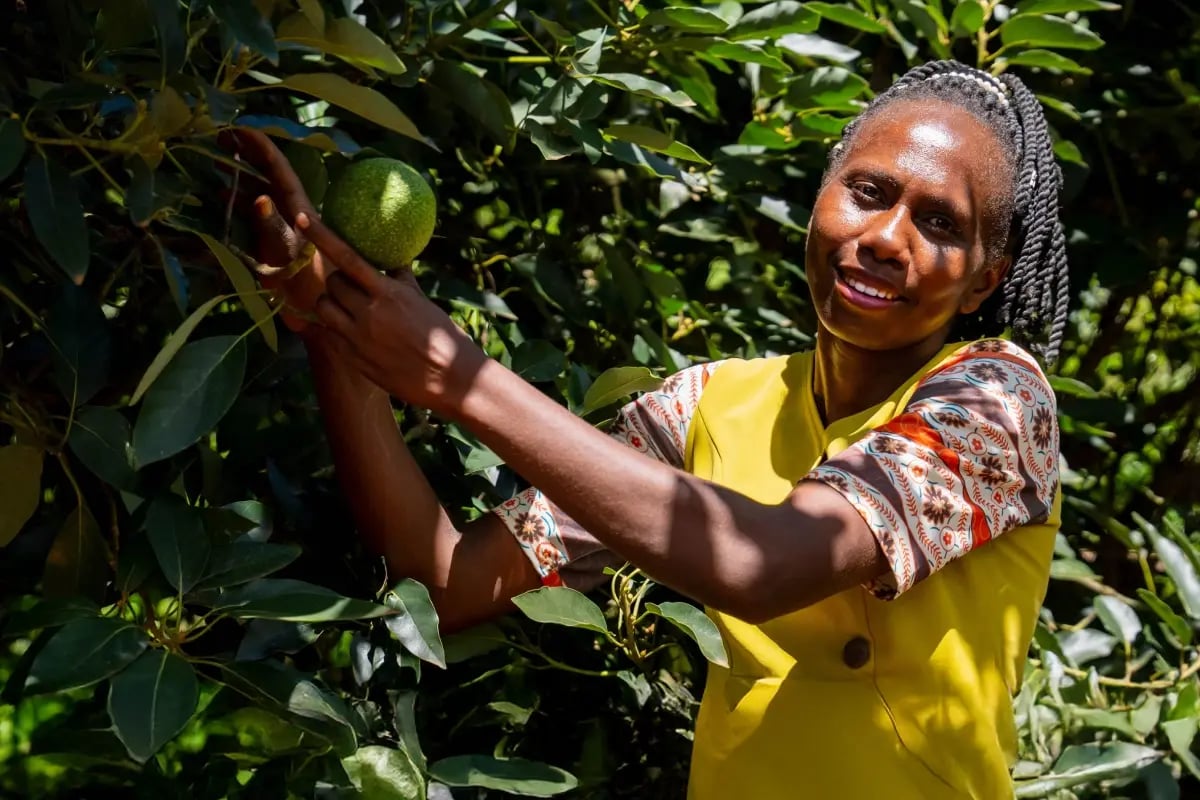 Local female farmer standing beside her mature avocado tree. Mount Kenya Regenerative Agroforestry Project, Green Earth.
For buyers, this is what carbon project developer integrity means in practice: credits backed by verified biodiversity outcomes, independently confirmed community impact, and a transparent evidence trail from field to registry.
Green Earth designs, implements, and monitors its projects directly, maintaining full oversight of the whole process and the data that underlies every credit we issue. Our work spans reforestation, agroforestry, and energy-efficient cookstove projects across the globe, revitalising biodiversity, protecting habitats, and supporting livelihoods. When you source high-quality carbon credits from Green Earth, you source the benefits behind them too.