
Carbon offsetting
Nature conservation
Green tech
Nature-based solutions
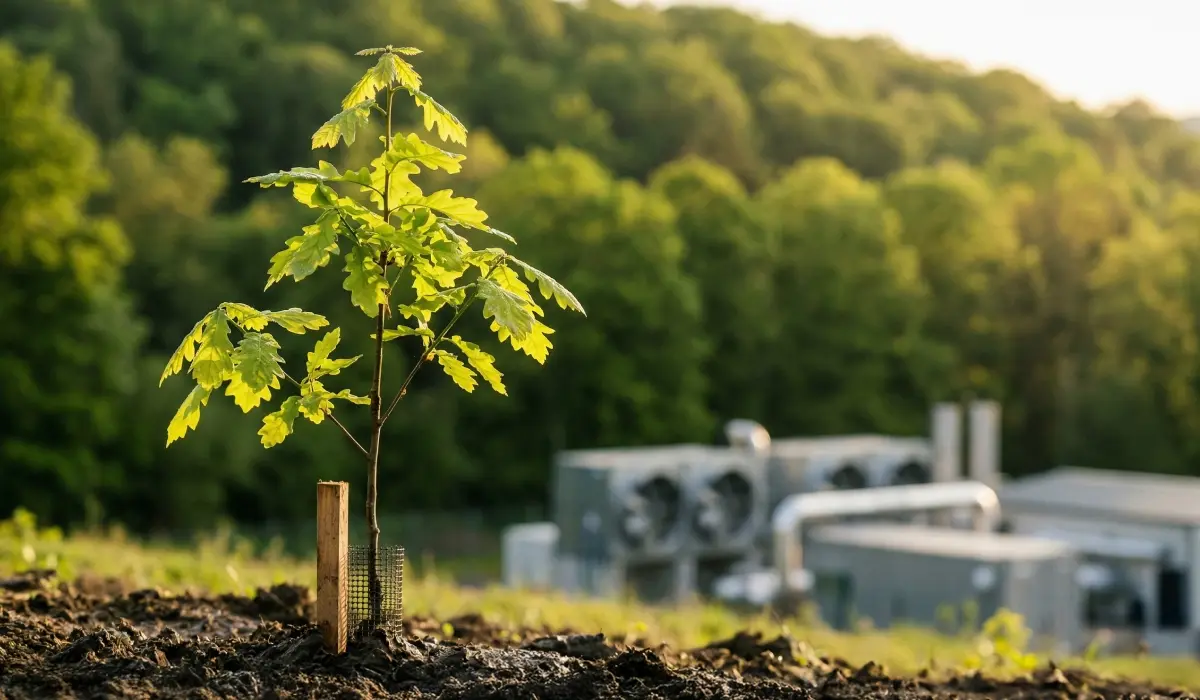
The sustainability landscape is increasingly complex. More and more carbon-capture solutions are entering the market, and innovation is a constant thread running through the carbon market. With more possibilities, buyers are faced with more considerations than simply offsetting carbon. In this sphere, two main directions are taking shape—nature-centred or tech-focused.
Machines are being built to pull CO₂ from the air. These machines are remarkable feats of engineering, but they are nowhere near ready to carry the full weight of corporate sustainability ambitions on their own.
This is not a case against technology. Direct air capture (DAC) and carbon capture and storage (CCS) have a role to play, particularly for residual industrial emissions where alternatives are limited. The question is whether the technology-first instinct that shapes many sustainability strategies is the right starting point.
When you look at the numbers, cost per tonne, scale, energy demand, and the value delivered beyond carbon itself, nature-based solutions vs carbon capture technology is not a close competition. Nature gets there first. It costs less and does far more along the way.

Carbon capture technology limitations and alternatives
The dominant assumption in many sustainability conversations is that decarbonisation is an engineering problem. DAC, in particular, has become a symbol of high-ambition corporate commitments. The technology is real. But so is the cost.
Today, removing one tonne of CO₂ via direct air capture costs approximately $1,000. A major 2024 study by ETH Zürich found that even with rapid scaling, DAC costs are unlikely to fall below $230–$540 per tonne by 2050—roughly twice as high as previous industry projections.
Scale presents an equally significant challenge. Climeworks Mammoth, the world’s largest DAC plant, is designed to capture up to 36,000 tonnes of CO₂ per year. But reaching the volumes needed to make a material difference to global atmospheric CO₂ would require tens of thousands of plants of equivalent capacity. The energy and infrastructure demands of that build-out are substantial.
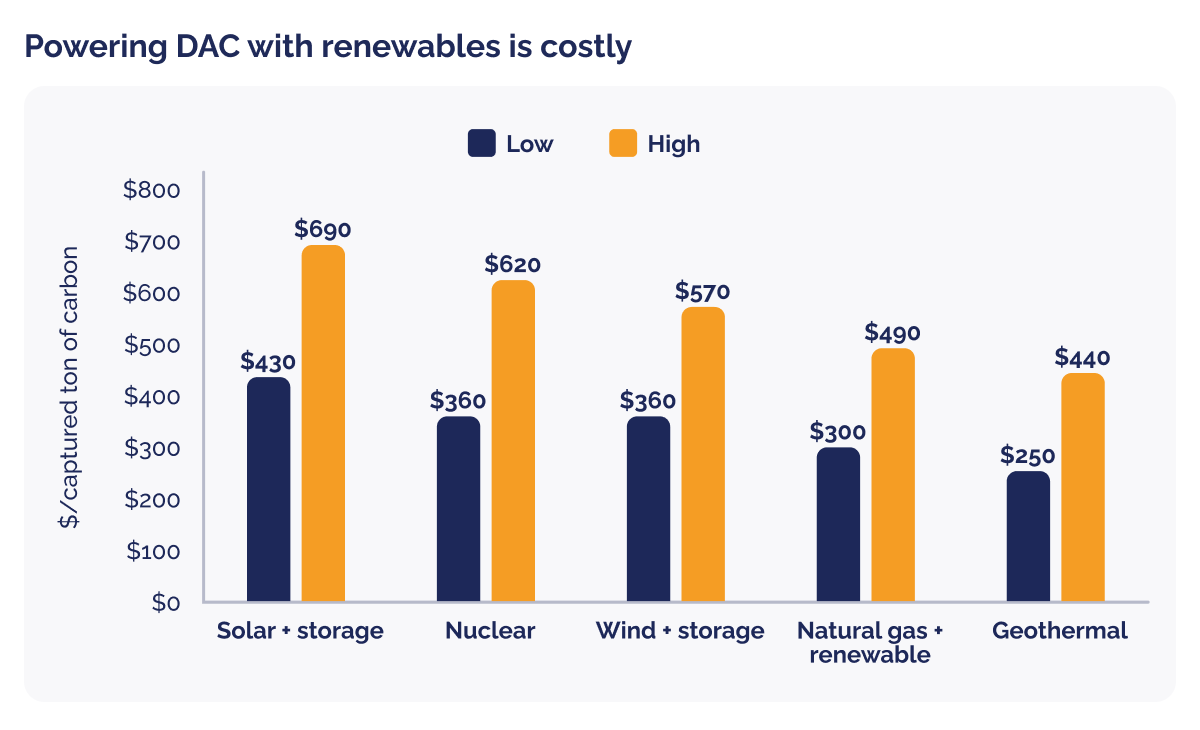 The cost of powering DAC with renewable energy. Studies show this method requires 2000–3000 kWh per tonne of CO2 captured. Source: Atmospheric alchemy.
DAC energy requirements vs nature-based solutions are equally instructive. Each tonne of CO₂ removed by DAC requires continuous electricity input, ongoing maintenance, and permanent infrastructure. A restored forest requires none of those things once it is established.
Read more: Beyond tonnes: How carbon credit co-benefits elevate value
Is direct air capture viable for corporate sustainability in the near term? For most businesses acting on 2030 targets, the cost and readiness barriers remain significant. DAC is not irrelevant. It is simply not the right first answer for companies that need verified impact today.
What nature-based carbon removal offers instead
Nature-based carbon removal starts from a fundamentally different principle. Forests, soils, and wetlands store CO₂ through biological processes that have been operating for millions of years. Restoring and protecting these ecosystems does not require new technology. It requires investment, careful design, and rigorous verification.
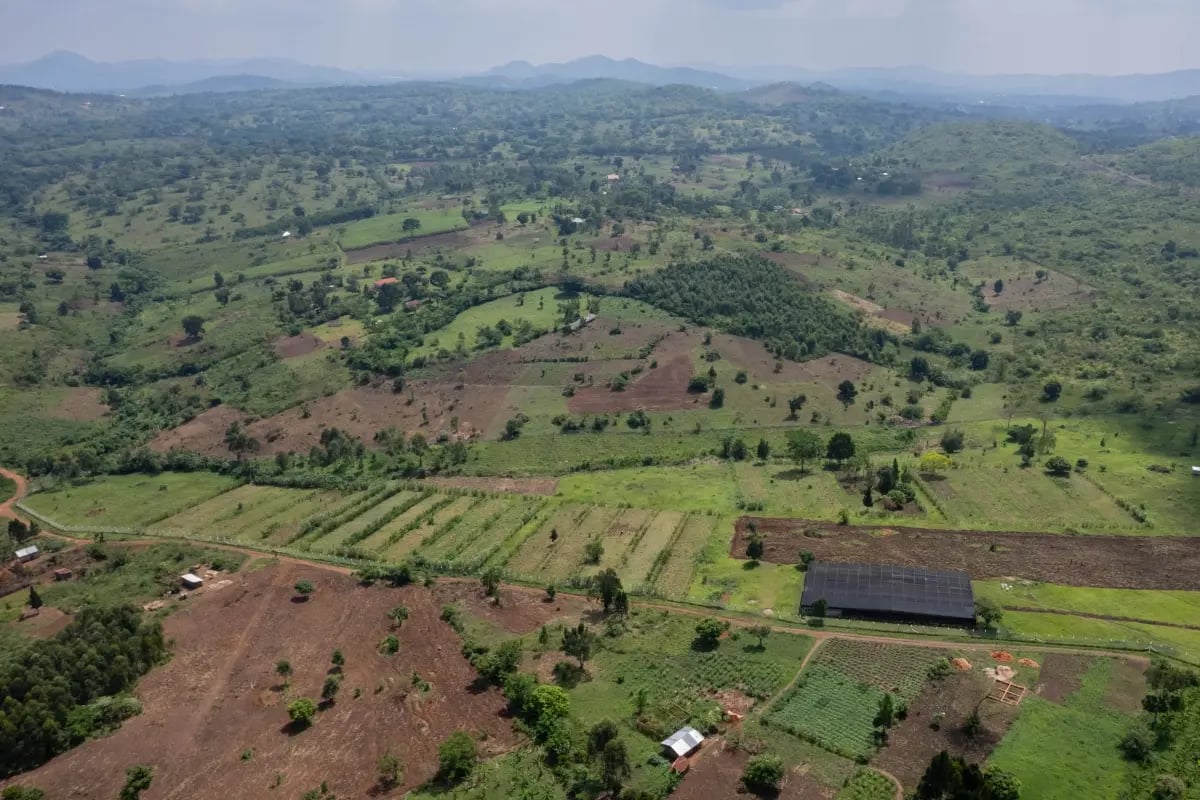 Drone photo showing restored land in Uganda as part of Bulindi Agroforestry and Chimpanzee Conservation Project, supporting local communities and biodiversity, and demonstrating nature-based carbon removal in action.
Nature-based carbon removal vs DAC cost per tonne
The carbon sequestration cost comparison between well-designed reforestation and direct air capture is striking. Reforestation typically costs less than $50 per tonne of CO₂ removed. At current DAC prices, that represents a cost differential of more than 20 to one.
A 2024 study published in Nature Climate Change confirmed that the potential is far greater than previously understood. Using the most cost-effective reforestation approach at each location and a mix of natural regeneration and tree planting, the 30-year carbon abatement potential below $50 per tonne reaches 31.4 billion tonnes of CO₂, 44% more than previous estimates suggested. Reforestation can deliver up to 10 times more abatement at costs below $20 per tonne than it was previously estimated by the IPCC.
The cost advantage of nature-based carbon removal is not a temporary market condition. It is a structural characteristic of biological systems that operate without energy input, maintenance contracts, or capital depreciation.
Read more: The hidden strength of nature-based credits in corporate decarbonisation strategies
Co-benefits technology cannot replicate
Evidence that nature-based solutions are better than direct air capture is most clear in what happens beyond the carbon itself. A restored forest regulates water catchments, prevents soil erosion, supports biodiversity recovery, and sustains local livelihoods. A direct air capture plant removes CO₂ from the air. That is its complete output.
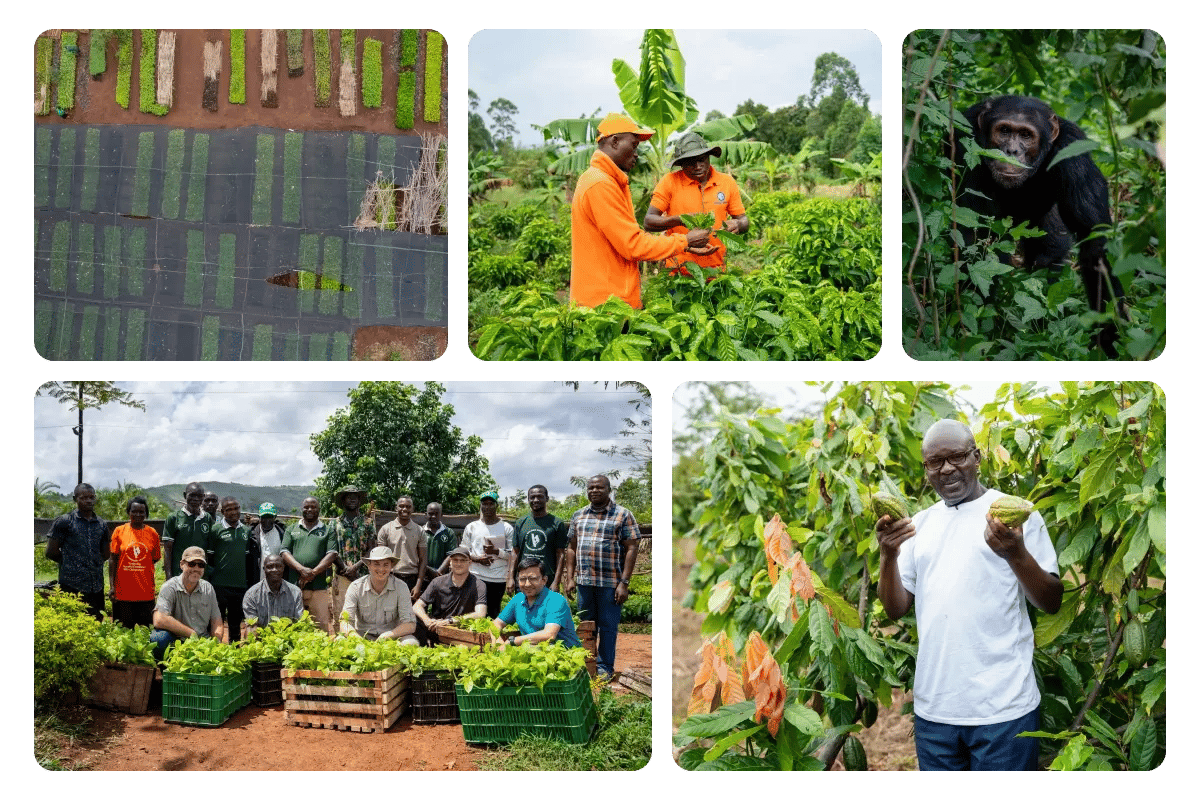 Photos from Bulindi Agroforestry and Chimpanzee Conservation Project, which is restoring forests and implementing agroforestry in Uganda, supporting biodiversity recovery and local livelihoods, showing the co-benefits of nature-based solutions beyond carbon.
A review drawing on over 250,000 peer-reviewed publications confirms co-benefits of this kind across agroforestry, avoided deforestation, and natural forest management. Biodiversity recovery, water security, food production, and community resilience all improve alongside carbon sequestration. These outcomes sit at the centre of the ESG reporting frameworks that sustainability leads and procurement teams are now required to address.
Read more: How carbon project developers quantify biodiversity and community impact
Systems that compound over time
Engineered systems depreciate. They require energy input, maintenance, and ongoing capital. A restored ecosystem improves over time. Soil carbon accumulates. Canopy closes. Biodiversity expands. The system generates the conditions for its own continued growth.
This distinction matters for ESG managers thinking across 5 and 10-year planning horizons. Nature is a long-term asset. DAC is an operating cost.
One important nuance deserves honest acknowledgement: Nature-based sequestration is not always permanent. Forests can be affected by fire or land-use change. This is precisely why project design, ongoing monitoring, and independent verification are essential. High-integrity projects address this directly—building buffer pools, tracking permanence over time, verifying outcomes against rigorous standards, and working with local communities to ensure project success.
Read more: Indigenous and local knowledge in carbon projects: why it defines credit quality
Engineered vs nature-based carbon removal: a complementary argument
The argument here is not against technology. DAC and CCS have a place, particularly for residual industrial emissions, where nature-based approaches cannot easily intervene. Both the IPCC and the International Energy Agency frame these tools as complementary, not competing.
The question is one of proportion and sequencing. Research published in the Proceedings of the National Academy of Sciences found that natural environmental solutions—such as protecting, restoring, and improving the management of land—can provide more than one-third of the cost-effective climate mitigation needed by 2030. The IPCC’s own assessment of the land sector confirms that AFOLU (Agriculture, Forestry and Other Land Use) pathways offer some of the highest-potential, lowest-cost mitigation options available this decade.
Read more: How to choose high-quality carbon credits
Why nature outperforms carbon capture technology today is a question of readiness. Nature-based solutions are deployable now, at scale, at lower cost, and with verified co-benefits that ESG frameworks require. Engineered solutions are still maturing. For businesses looking to compensate for hard-to-abate emissions within their value chain in the near term, the evidence points clearly in one direction.

What nature-based solutions look like on the ground
The numbers tell one story. But when looking at Green Earth’s project portfolio, the argument in favour of nature-based solutions is clear: it is grounded in scientific methods that make nature-based carbon removal actually deliver when properly designed, monitored, and documented.
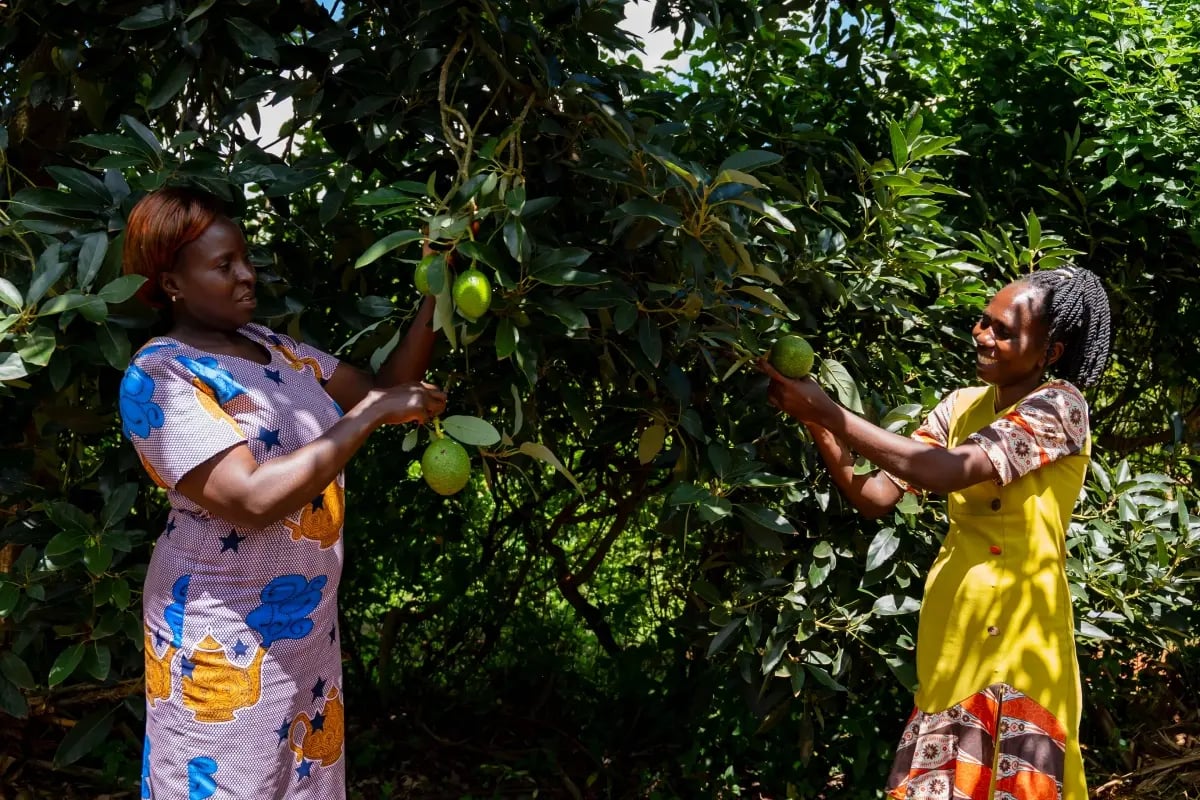 Two Kenyan farmers showing their avocado tree on their farm. Mount Kenya Regenerative Agroforestry Project, Green Earth.
Our Mount Kenya Regenerative Agroforestry Project works across 10,800 hectares with 11,000 smallholder farmers. The project is planting 6.7 million trees, with a sequestration potential of 5.1 million tonnes of CO₂. Every tonne of carbon stored is also a tree that stabilises soil, improves biodiversity, and supports farming livelihoods. Carbon sequestration and community benefits are not separate outcomes; they are the same intervention.
Read more: Planning a food forest: the foundations for long-term carbon integrity in Kenya
Our Greenzone Reforestation Project in Cameroon takes a different approach, where large-scale ecosystem restoration and biodiversity monitoring are integrated into the project design from the outset. Carbon sequestration and ecological recovery are tracked together because, in a functioning ecosystem, they cannot meaningfully be separated.
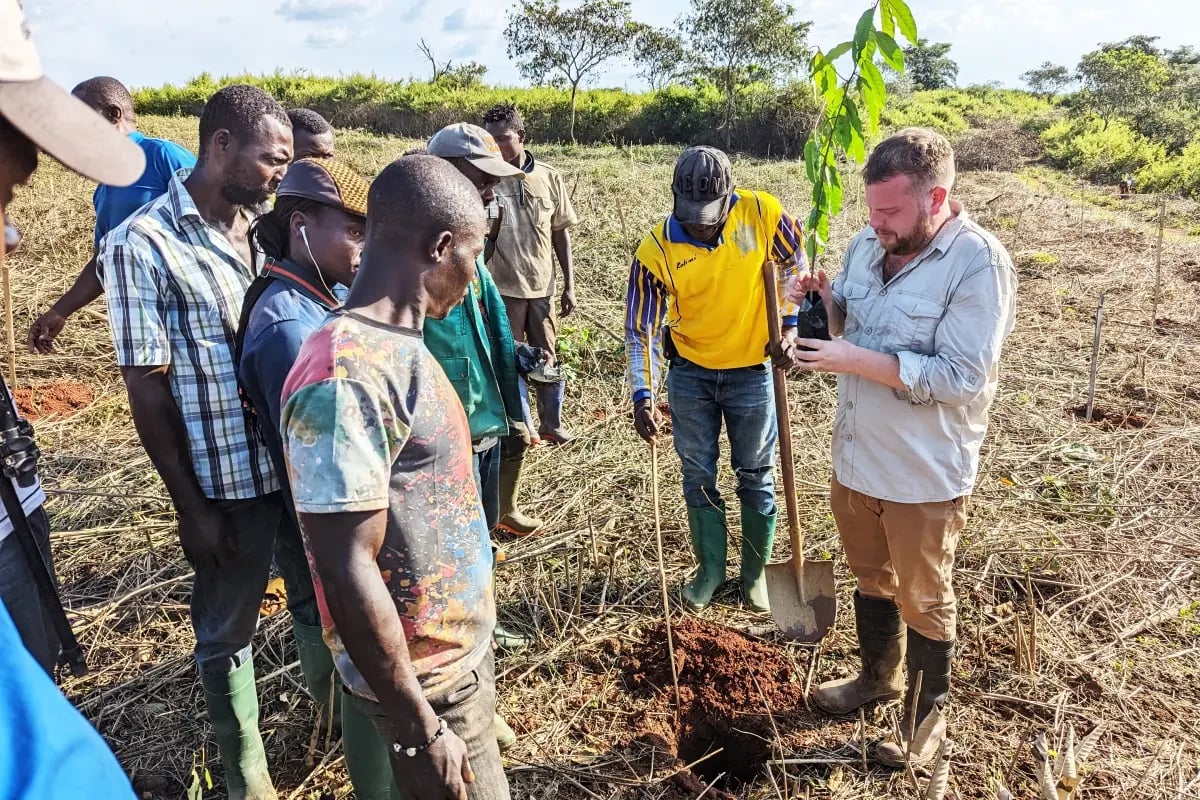 A Green Earth team member conducting a tree-planting training session for for a local community. Greenzone Reforestation Project, Green Earth.
In Kazakhstan, our Lake Aral Afforestation Project is designed to address one of the most significant examples of regional environmental degradation in the world. The project plants hardy saxaul trees to stabilise the dried banks of the Aral Sea, restoring ecological function to a landscape where no engineered solution could operate at a meaningful scale. Nature, carefully managed and rigorously documented, is the only viable path.
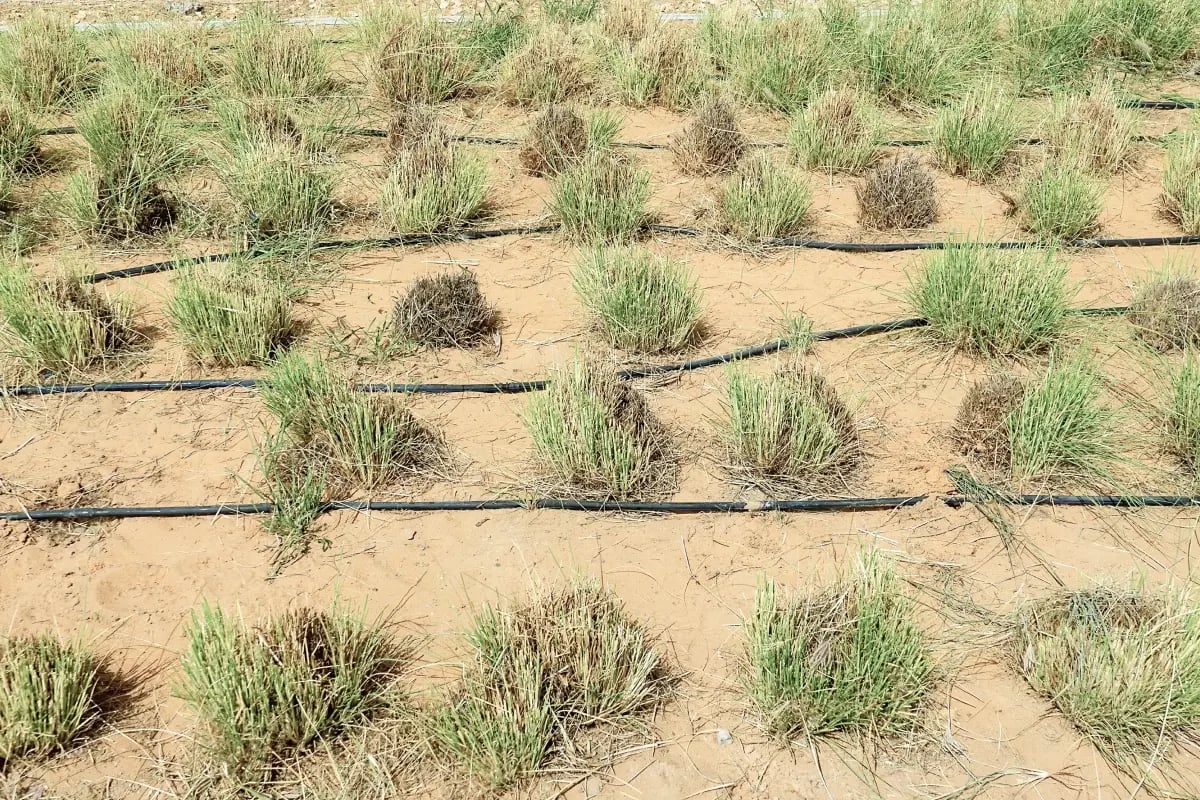 Newly planted saplings in Kazakhstan. Lake Aral Afforestation Project, Green Earth.
A nature-positive corporate sustainability strategy, built on evidence
Carbon removal for hard-to-abate emissions within your value chain does not require waiting for technology to catch up. The voluntary carbon market is maturing rapidly along with regulatory and stakeholder pressure to reach net zero. High-integrity nature-based carbon credits, verified with recognised standards, are available now at a cost that makes financial and strategic sense to your business.
Standards have also evolved to distinguish projects that are rigorously designed, monitored, and documented from those that are not. Choosing well-designed projects with independent verification addresses the permanence question directly and meaningfully contributes to your organisation’s sustainability goals.
Three conclusions follow from the evidence on why nature outperforms carbon capture technology:
- The cost advantage is structural. The gap between well-planned reforestation and DAC is not closing in the near term. The reforestation cost ceiling of under $50 per tonne holds well below even the most optimistic DAC projections for 2050.
- The co-benefits are measurable and reportable. Biodiversity, water security, improved livelihoods, and community resilience are outcomes that ESG frameworks increasingly require. Nature delivers them as a matter of project design, not as optional extras.
- The scale is available now. Well-designed reforestation and ecosystem restoration projects can be deployed across millions of hectares today. The infrastructure build-out that engineered solutions require over decades is not a constraint that applies to nature.
Green Earth is at the forefront of developing and implementing large-scale nature-based projects that are independently verified for their impact. Our projects deliver measurable outcomes in carbon sequestration, biodiversity enhancement, and socio-economic development.
Our team of experts is here to offer the support your organisation needs to not only offset carbon emissions but to make a lasting difference for nature and society. The first step is assessing your environmental footprint, and our CO2 Expert tool is free and just one click away.