
Biodiversity
Tree planting
Forest
Ecosystem
Endangered species
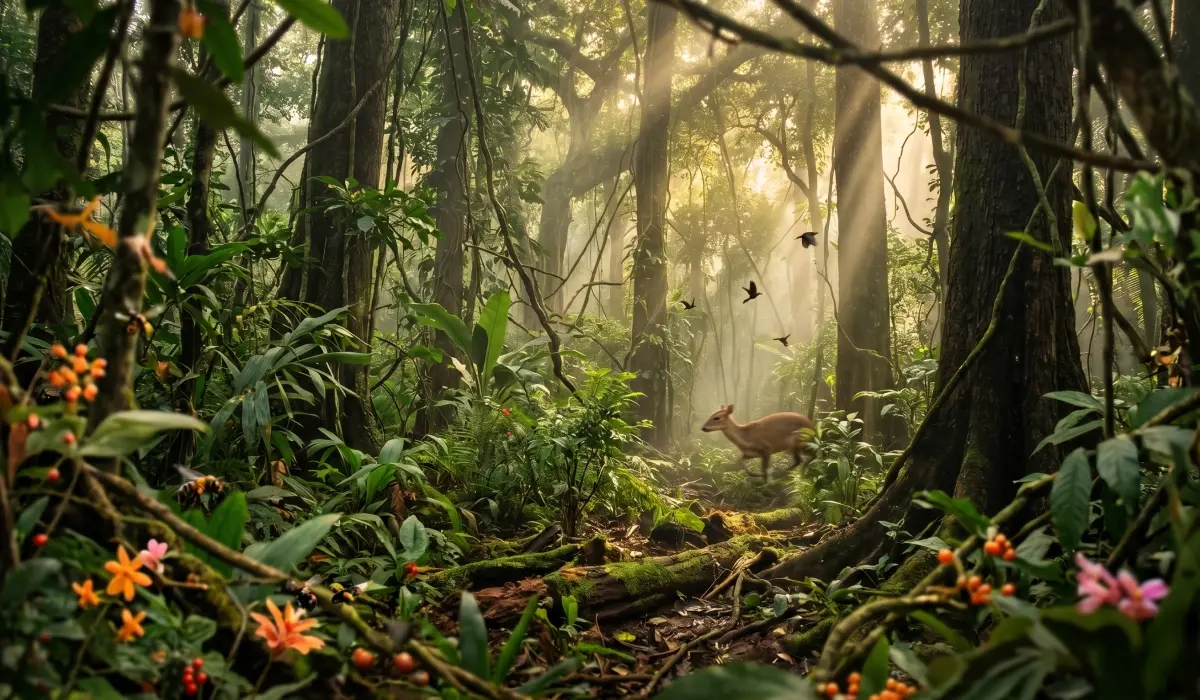
A forest is not just trees. The number of species it holds, from canopy giants to understorey shrubs to soil fungi, directly determines how much carbon it can absorb, and, more importantly, how much it can keep over time. Buyers of carbon credits increasingly ask a reasonable question: Is the carbon in this project long-lasting? The science of biodiversity has a clear answer.
Research published in Frontiers in Forests and Global Change found that diverse planted forests store over 70% more carbon than monocultures. The study reflects something fundamental about how forests function: Biodiversity is part of what makes carbon sequestration real.
This blog explains the ecology behind that finding, and why it matters for organisations building a nature strategy with both carbon credits and biodiversity credits.

More species, more canopy, more carbon
The vertical forest
When multiple tree species grow together, they occupy space at different heights and in different ways. A tall emergent species reaches for full sun. A mid-canopy species uses the filtered light below it. An understorey shrub thrives in the shade that both cast. Each one fills a different vertical niche, a different slice of the available light, water, and nutrients.
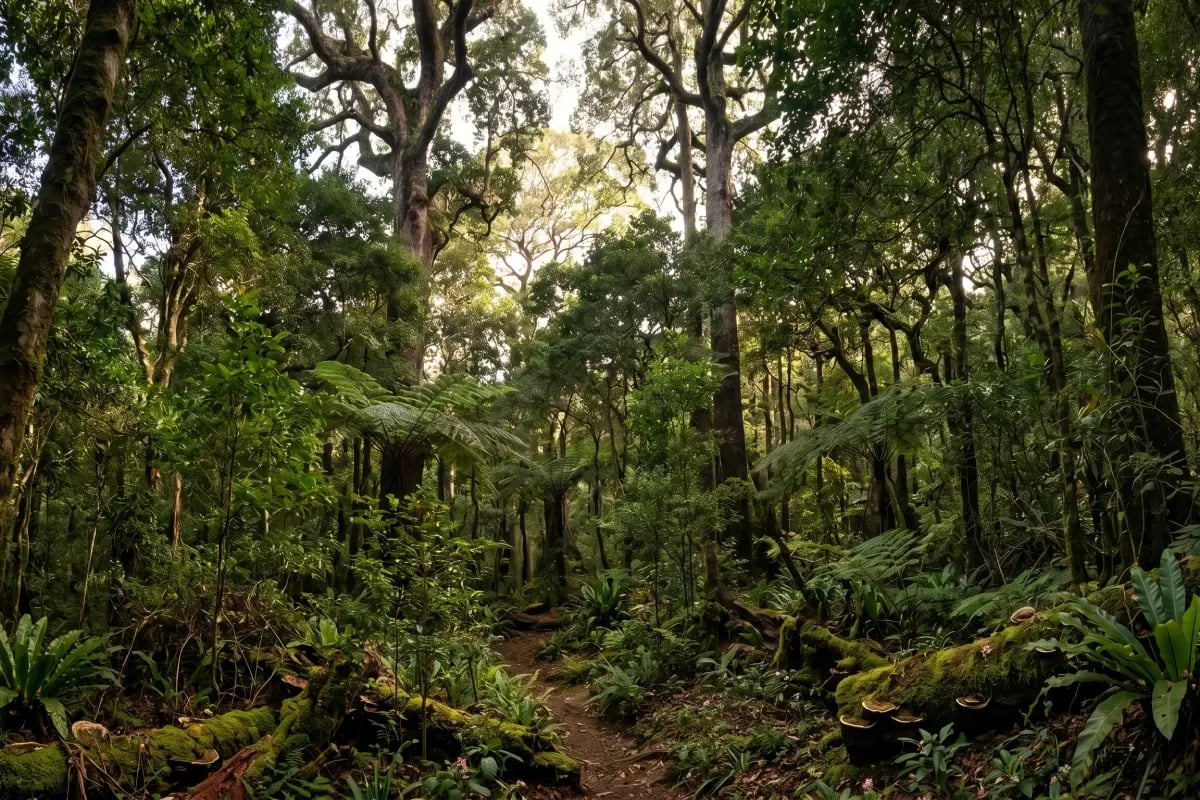 An African forest showing multiple tree species growing together, occupying space at different heights and in different ways. AI generated picture.
This is the principle of niche complementarity. Species with different crown shapes, root depths, leaf traits, and growth rates collectively use resources more completely and effectively than a single species can. The result is a forest that captures more light across its full height, cycles more nutrients, and builds more biomass, and therefore stores more carbon.
A 2025 study published in PNAS, using drone-based LiDAR scanning across 38,088 trees, found that tree diversity consistently promotes aboveground biomass by creating more complex canopy structures. Crucially, the effect of species complementarity strengthened over time, meaning that diverse forests continue to improve relative to monocultures as they age.
The same research showed that in mixed stands, different species fill canopy space with non-overlapping crowns. In a monoculture, canopy space is left unevenly occupied, light is used less efficiently, and productivity suffers as a direct result.
Read more: Nature-based solutions vs carbon capture technology: Which is most effective?
Roots, fungi, and the underground economy
The above-ground story is only half of it. Below the soil surface, diverse root systems reach different depths and utilise different nutrient pools. Fungal networks, mycorrhizal fungi that form partnerships with tree roots, vary by tree species and extend the effective reach of each tree into the soil. A species-rich forest supports a more complex and effective below-ground network.
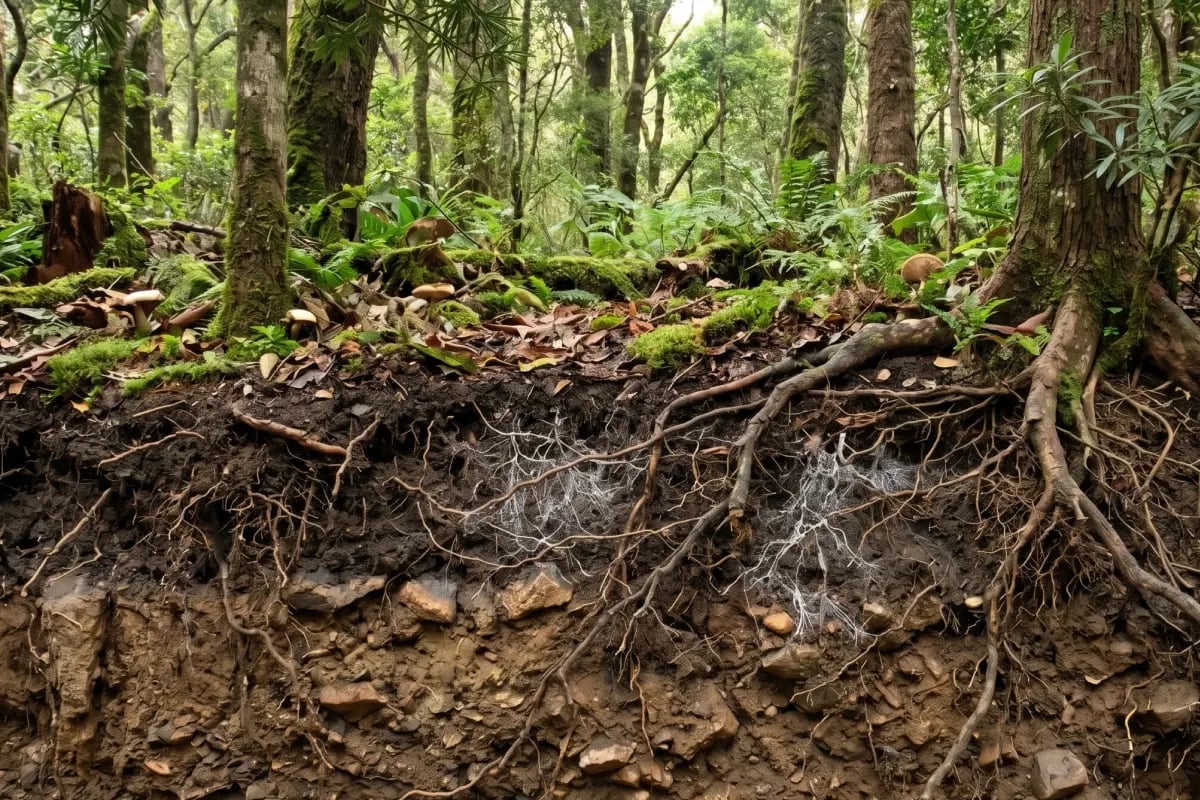 A biodiverse forest showing roots and fungal networks working below the soil surface to support nutrient exchange. AI generated picture.
Why do diverse forests sequester more carbon
A 2024 Nature Communications study using Canada's National Forest Inventory found that tree functional diversity strengthens the accumulation of carbon in both biomass and soils, particularly in resource-rich environments. The diversity that traits species bring determines how efficiently a forest converts available resources into stored carbon.
The picture that emerges from this research is consistent: A biodiverse forest is a more productive forest. More species means more complete use of space, light, water, and nutrients. More complete use of resources means more biomass. More biomass means more carbon stored.
How biodiversity affects carbon permanence
Carbon stored in a tree is only as valuable as the forest that holds it. A carbon credit from a project that burns, collapses under drought, or fails to recover from a pest outbreak is not a reliable carbon credit.
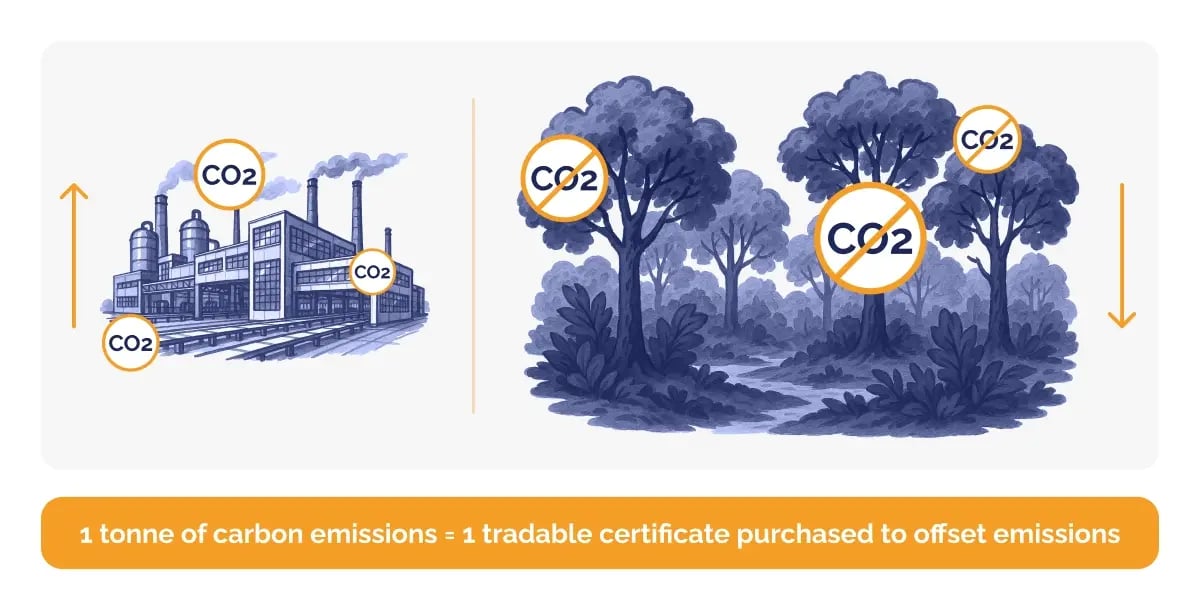 Carbon credit illustration.
This is where the concept of permanence—the long-term stability of stored carbon in a forest project—becomes essential. And permanence, it turns out, is deeply ecological. The capacity of a forest to resist changing environmental conditions and to recover from disturbance is determined primarily by its biodiversity.
A synthesis report produced for the UN-REDD Programme concluded that maintaining and restoring biodiversity in forests promotes their resilience to environmental pressures, describing biodiversity as an essential 'insurance policy' against disturbance impacts. The same synthesis stated that the permanence of forest-based carbon projects is directly linked to forest resilience and long-term carbon storage, and thus to forest biodiversity.
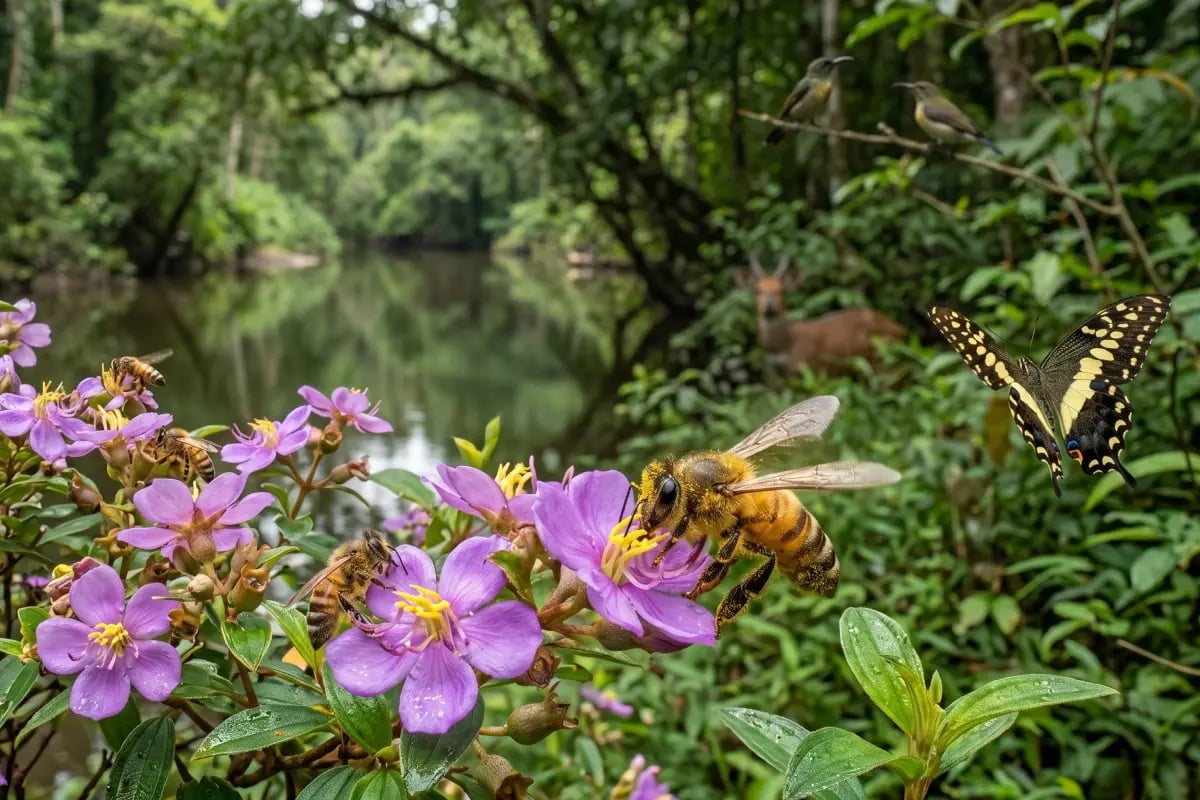 Bees pollinating flowers in a healthy biodiverse forest. AI generated picture.
The practical implications are significant. A monoculture forest, planted with a single fast-growing species, is highly vulnerable to the specific pests, pathogens, and weather events that target that species. By contrast, a biodiverse forest distributes ecological risk across many species. If one species suffers, others compensate. The forest continues to function and continues to store carbon.
Read more: How to choose high-quality carbon credits
The insurance value of species diversity
A 2022 study published in Nature found that tropical, arid, and temperate forests have experienced a significant decline in resilience since 2000, related to increased environmental variability. Forests under pressure need stronger ecological foundations to maintain their role as carbon sinks, and those foundations are built from species diversity.
A 2025 review in ScienceDirect confirmed that intensively managed forests, particularly monocultures, often have very small or even negative capacity to conserve biodiversity and sequester carbon, particularly when facing intensifying disturbance regimes. The ecological capacity that monocultures sacrifice in the name of simplicity is precisely the capacity that makes a forest's carbon real over the long term.
Biodiversity, in this light, is the structural foundation of permanence. A forest with high species richness is more likely to still be storing that carbon in 20, 30, and 50 years.

A new metric for what forests do
Beyond tonnes of CO₂
Carbon credits measure one outcome of a healthy forest: the quantity of carbon dioxide removed from the atmosphere and stored in biomass and soil. That is a meaningful measure. But, it is also an incomplete one.
Biodiversity credits measure something different and complementary: the health of the forest system itself. It measures the number of species present, the ecological functions they perform, and the richness of the ecosystem as a whole. Where a carbon credit asks 'how much carbon is being stored?', a biodiversity credit asks 'how robust is the system doing the storing?'
The two questions are increasingly understood as inseparable. As the research above shows, a forest with higher species richness stores more carbon and is more likely to keep storing it. Biodiversity, in this sense, is not a separate environmental product—it is a measure of the quality and durability of what a carbon credit represents.
Read more: Beyond tonnes: How carbon credit co-benefits elevate value
What a biodiversity credit measures
The voluntary carbon market has begun recognising this relationship. Nature-based solution projects, particularly reforestation and forest conservation projects, increasingly generate biodiversity-linked carbon credits, with growing acknowledgement that biodiversity is not merely a co-benefit but a primary asset in its own right.
At CBD COP16 in October 2024, the UK and France's International Advisory Panel on Biodiversity Credits launched a Framework for High-Integrity Biodiversity Credit Markets, marking a significant step towards standardisation and scaling of biodiversity credit markets globally. The framework sets out the principles that high-integrity biodiversity credits must meet: additionality, permanence, and verifiability.
The market context reflects this direction. Private finance for nature surpassed $100 billion as of June 2024, with projections suggesting the carbon market could reach $20–70 billion by 2040, with nearly half of that demand driven by nature-based solutions.
At the same time, buyer behaviour in the verified carbon market has shifted. Credits that deliver environmental or social benefits beyond carbon, particularly biodiversity protection, have remained in demand even as the broader market has contracted. Carbon removal credits specifically, from projects like reforestation that remove or store CO₂ long‑term, are now priced much higher than reduction‑only credits. This indicates that buyers prioritize permanence and long‑term impact over cheaper, short‑term reductions.
Read more: The hidden strength of nature-based credits in corporate decarbonisation strategies
Why biodiversity credits and carbon credits belong together
The carbon that biodiversity makes possible
For buyers already holding carbon credits from forest projects, biodiversity credits is not a competing claim on the budget. It is the ecological guarantee behind the carbon commitment already made.
A 2023 Nature Climate Change study found that the conditions that produce good biodiversity outcomes in forests are often the same conditions that produce lasting carbon outcomes, with formalised local governance creating synergies between carbon sequestration, biodiversity, and community livelihoods. The overlap is not coincidental. It is ecological.
A forest only designed for maximum carbon throughput, fast-growing monocultures, simplified structure, and minimal species variation, sacrifices the ecological complexity that makes carbon storage durable. A forest designed around biodiversity, by contrast, builds the very conditions that maximise both present and long-term carbon storage. The science consistently shows that the two goals reinforce each other.
Read more: Indigenous and local knowledge in carbon projects: why it defines credit quality
Building a nature strategy with both
For sustainability teams building a broader nature strategy, the question is not 'carbon credits or biodiversity credits?' It is: what does a complete picture of nature impact look like? Buying biodiversity credits for achieving your company’s sustainability goals reflects a more in-depth understanding of the way in which nature supports our society as a whole.
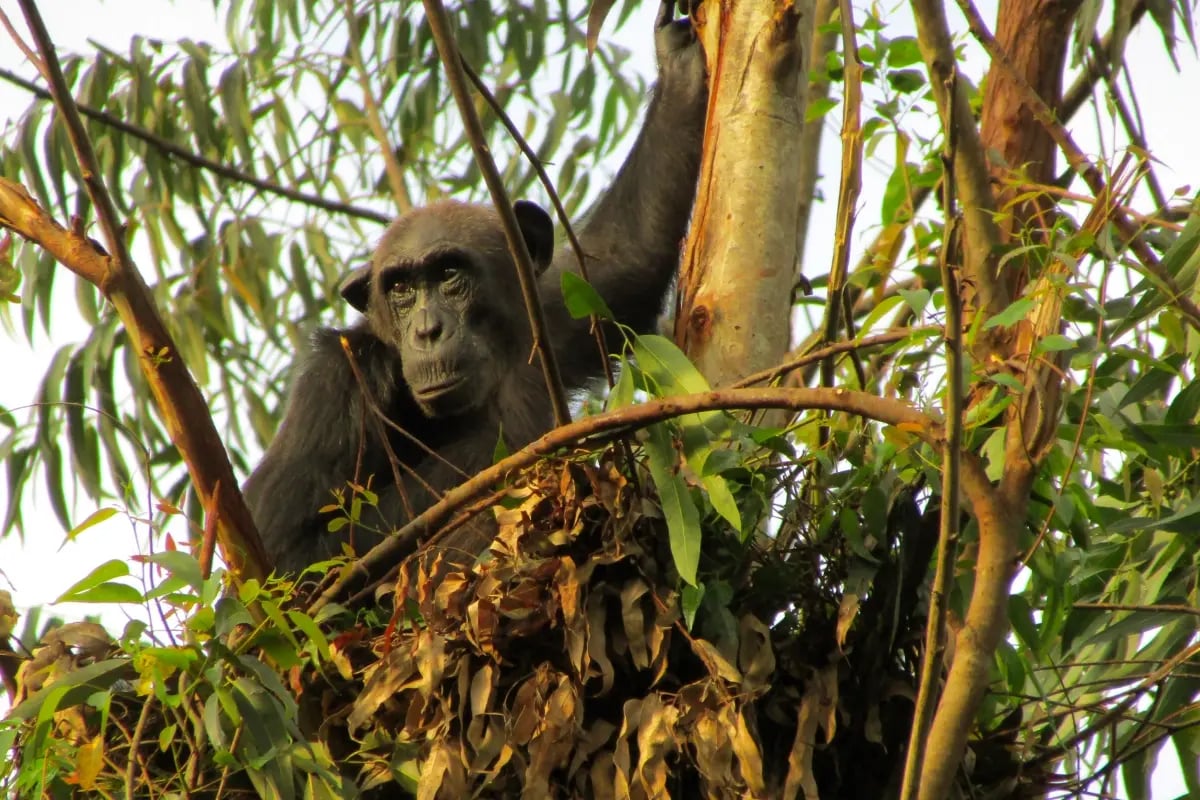 A Bulindi chimpanzee moving through its natural habitat. Bulindi Agroforestry and Chimpanzee Project, Green Earth.
Similarly, high-quality nature-based carbon credits not only account for the quantity of carbon removed and stored. When built around biodiversity health, they also support the ecological wellbeing of the system doing the storing. High-integrity nature-based projects sustain healthy ecosystems through species diversity, improve water retention and security, and support local community livelihoods.
Read more: How carbon project developers quantify biodiversity and community impact
Green Earth's Queensland Biodiversity Pilot Project demonstrates this approach in practice. The project creates biodiversity outcomes alongside carbon outcomes as an integrated design principle. Similarly, projects like our Mount Kenya Regenerative Agroforestry Project and the Greenzone Reforestation Project in Cameroon are built around species diversity as a core component of both ecological and carbon performance. And our Bulindi Agroforestry and Chimpanzee Project in Uganda utilises agroforestry to improve soil health, increase farmer yields, and conserve chimpanzee habitats.
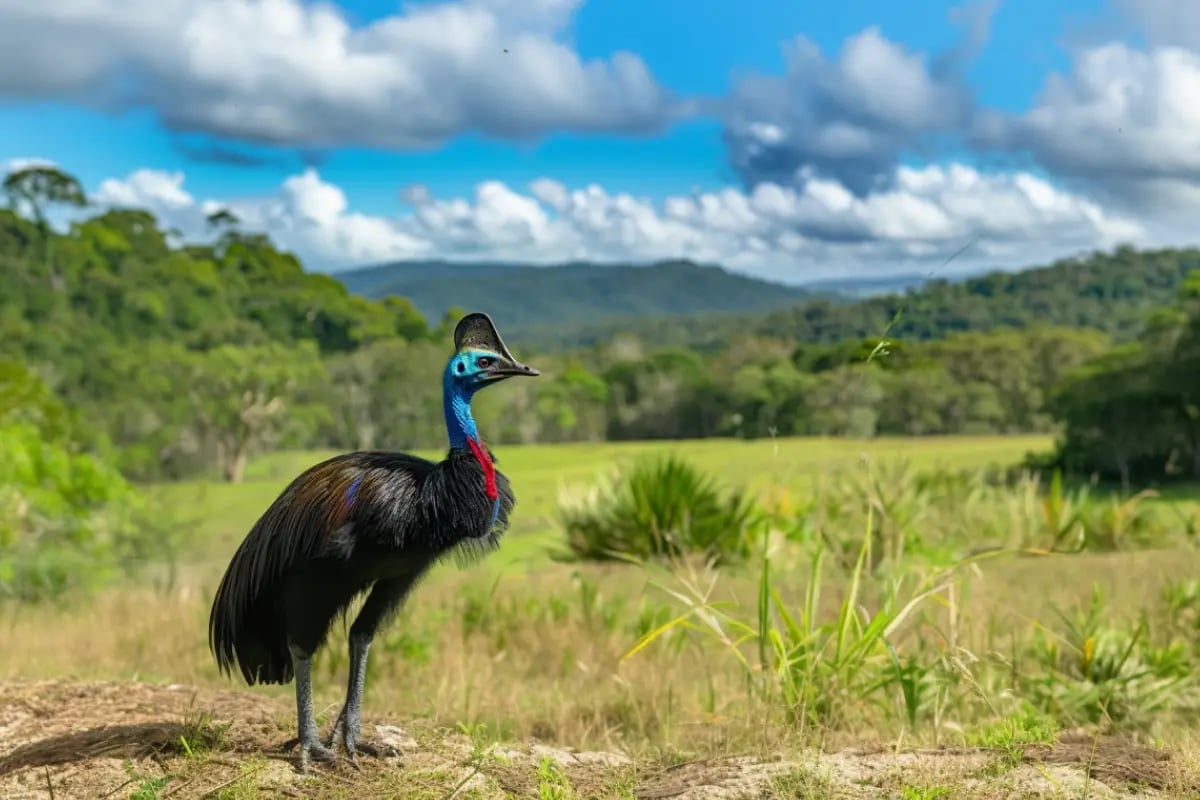 A helmeted cassowary walking through its natural environment. AI generated picture.
This biodiverse approach is built into how Green Earth designs its projects from the ground up. Our agroforestry model, which integrates trees with farming land rather than replacing one with the other, is the practical expression of the science described above. Across our projects in Kenya, Uganda, and Cameroon, we plant approximately 20 different tree species, selected for their ecological compatibility, carbon sequestration capacity, and the economic value they bring to local communities. Monocultures are not part of our model. What we grow are biodiverse forests and farms, the kind that store more carbon for longer periods, revitalise biodiversity and soil health, and support farmer and community livelihoods through sustainable farming.

How we engineer both outcomes
At Green Earth, we develop nature-based projects that are designed from the outset to deliver measurable biodiversity outcomes alongside verified carbon sequestration. Our end-to-end approach, from project design and species selection to monitoring, reporting, and verification, means we do not treat biodiversity as an afterthought. It is integral to how our projects are built and how their impact is measured.
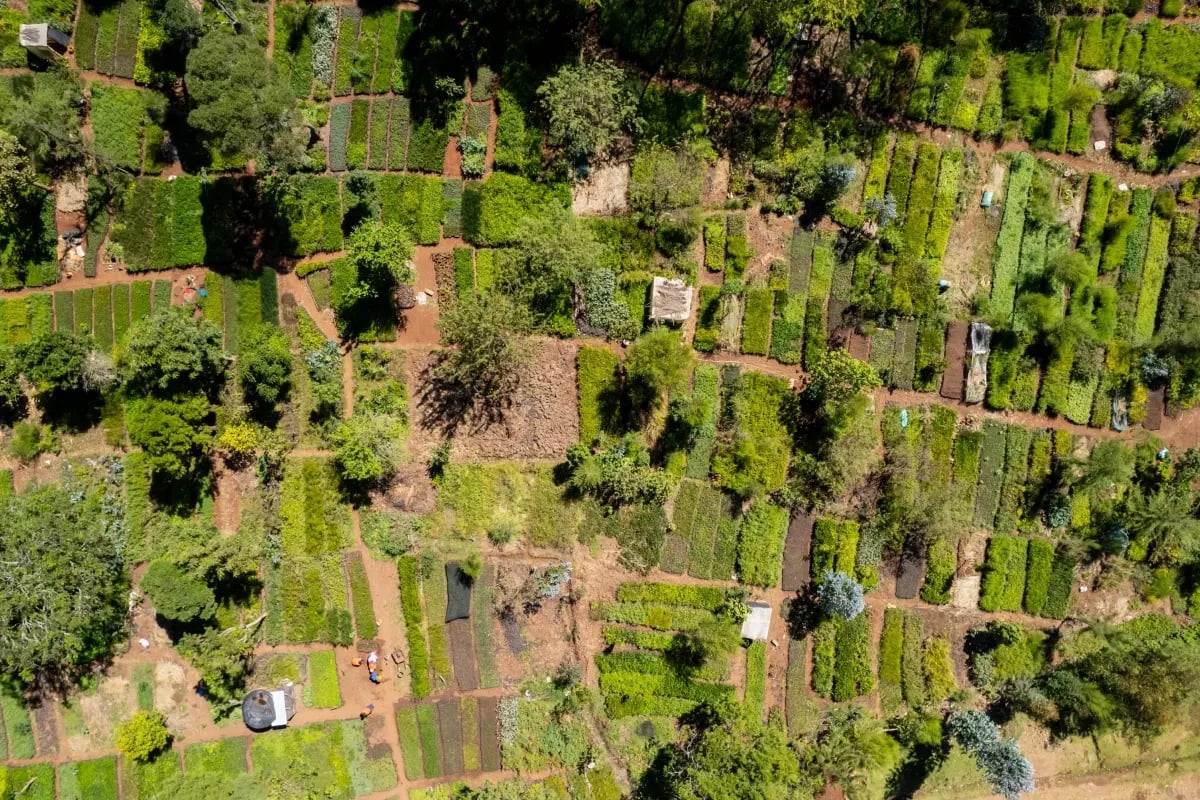 An aerial view showing a tree nursery full of diverse saplings that are being prepared and growing ready for planting. Mount Kenya Regenerative Agroforestry Project, Green Earth.
The science is clear: a biodiverse forest stores more carbon, stores it more reliably, and maintains that storage over longer timeframes. Our projects are engineered around that principle. When you buy credits from a Green Earth project, you are not choosing between carbon and nature—you are choosing both.