
Tree planting
Carbon credits
Nature conservation
Nature-based solutions
Local communities
Carbon project
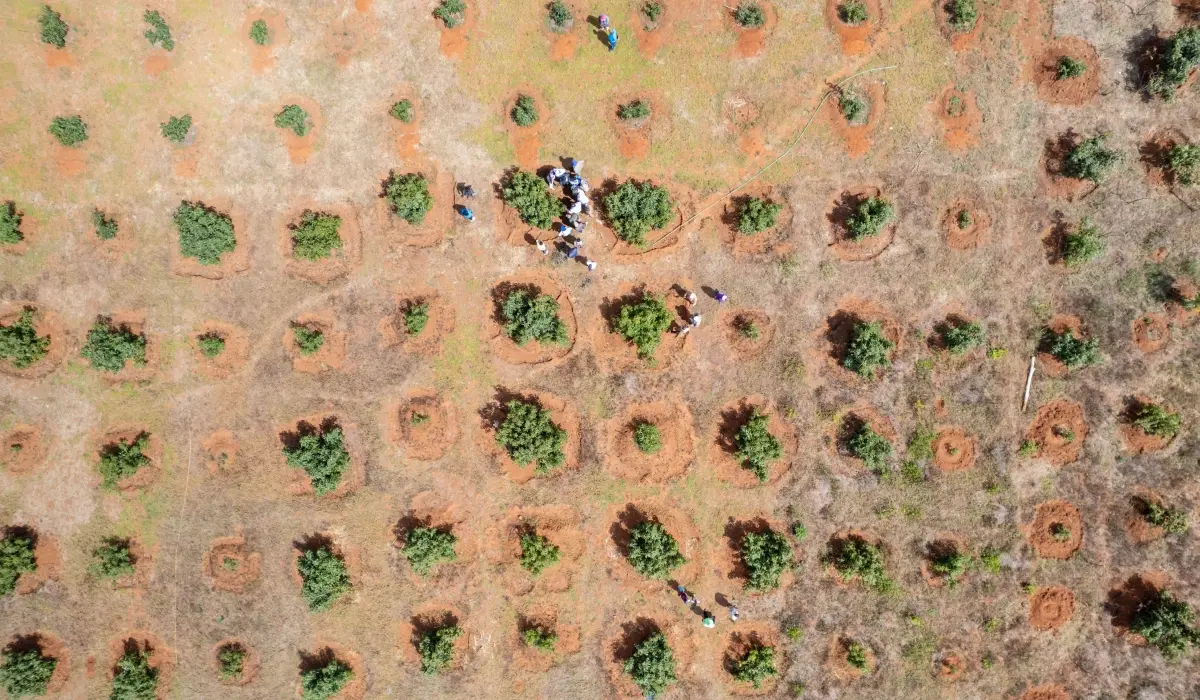
A carbon credit purchase is not a transaction that closes at issuance. The credit may be retired, the certificate filed, and the reporting box ticked. But on the ground, in the forest, in the field, and in the community, the work continues. It endures for years. In many cases, for decades.
This is what project stewardship means in practice: the sustained commitment by a developer to monitor, assess, protect, and adapt a project long after the first credit leaves the registry. It is the part of carbon credit development that buyers rarely see, and the part that most directly determines whether a credit holds its value over time.
At Green Earth, stewardship is not an add-on to our project model. It is the model. This blog walks through what that looks like: the monitoring cycles, the ecological assessments, the community engagement, and the adaptive decisions that define our work in the years and decades after issuance.

Why monitoring does not stop at issuance
The carbon stored in a living ecosystem, like a reforested hillside, an agroforestry farm, or a regenerating woodland, is not a fixed quantity. It grows with healthy seasons and may decline with adverse weather conditions, like drought. It can be lost to fire, to disease, or a change in land use. This is the fundamental difference between a nature-based carbon credit and, say, a manufactured product: the asset is alive, and living systems respond to pressure.
This is precisely why the UNDP High-Integrity Carbon Markets Toolkit is clear that nature-based carbon project integrity requires building quality and credibility into every stage of the project lifecycle, from design and baseline setting through to monitoring, verification, issuance, and retirement. Projects must also uphold human rights, safeguard biodiversity, and deliver tangible benefits for people and nature.
Read more: Indigenous and local knowledge in carbon projects: why it defines credit quality
The same principle is reflected in recent analyses from Sylvera, which note that integrity covers the full lifecycle of a carbon credit: project design, MRV (measurement, reporting, and verification), validation and verification by third parties, credit issuance through registries, and finally the claims made when credits are retired. In other words, issuance is not the end of the integrity test, but one point along a continuous one.
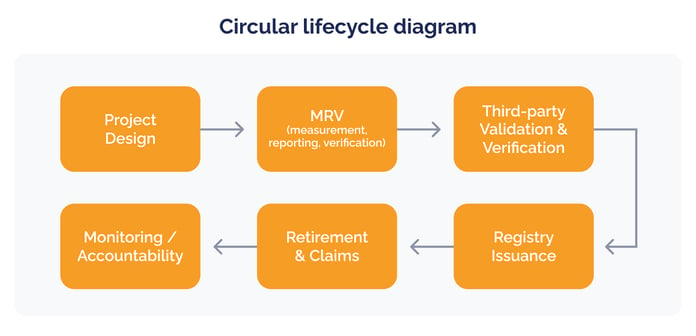 A six-stage circular lifecycle diagram showing how nature-based projects move through distinct phases, from conception through monitoring, each stage building on and informing the next in a continuous cycle.
The stakes of poor post-issuance stewardship are real. A peer-reviewed analysis found that non-physical risks, such as weak governance and limited data transparency, were the most frequently reported threats to long-term project durability, and that weakness in any one area, including inadequate monitoring, can undermine the effectiveness of the entire system.
Nature-based projects are also expected to run between 20–100 years to ensure the permanence of sequestration beyond the carbon crediting stage—a timeframe that makes continuous developer engagement essential.
The implication for buyers is straightforward. A credit from a project with no post-issuance carbon project monitoring is a credit whose real-world performance is unknown. What buyers receive depends entirely on what the developer continues to do after the sale.
What MRV actually involves on the ground
MRV is not a desk exercise. The World Bank describes monitoring as an active, recurring process: Data is collected and processed to calculate emissions reductions against the baseline during each monitoring period. Depending on the project type, this involves tracking the operation of, for example, clean cookstoves, surveying changes in tree cover, taking soil samples, or reading fuel consumption records. Local communities are also engaged in monitoring, particularly in areas that are difficult to access by external teams.
Read more: The Bulindi project expands its reach across Western Uganda
The monitoring data feeds a reporting cycle, which in turn feeds independent third-party verification. The formal external audit confirms whether the project has delivered what it claimed, and, that results in the next issuance of credits. This cycle repeats across the life of the project.
.webp?width=1200&height=800&name=070526_Carbon%20credit%20project%20stewardship_%20what%20happens%20after%20credit%20issuance_visual%203%20(1).webp) Green Earth team members, measuring the growth of project trees. Mount Kenya Regenerative Agroforestry Project, Green Earth.
Green Earth team members, measuring the growth of project trees. Mount Kenya Regenerative Agroforestry Project, Green Earth.
Reliable MRV is the backbone of carbon market credibility: without it, trust collapses, inflated claims go unchallenged, and the benefits that were promised to local communities never materialise. Remote sensing technology, including satellite imagery and lidar, can support MRV at scale, but it does not replace the need for robust methodologies, conservative assumptions, and independent verification. Ground-truth data remains essential.
Long-term ecological assessment in Green Earth’s projects
Counting carbon stocks is one dimension of project assessment. Understanding the health of the ecosystem that holds those stocks is another, and for a developer committed to long-term stewardship, it is equally important.
High-integrity nature-based projects require what researchers describe as locally adapted, biodiversity-based designs that are responsive to changing conditions. A systematic review published in ScienceDirect found that poorly planned interventions, such as monocultures or isolated plantings, can reduce the benefits of nature-based projects, and that biodiversity plays a direct role in boosting ecosystem resilience and long-term performance. In other words, the species mix, the habitat connectivity, and the ecological functioning of a project site determine how durable the carbon benefit will be.
Read more: Why a forest with more species stores more carbon
This means that in a well-run project, ecological assessment goes beyond tree counts. It tracks species diversity, monitors habitat recovery, assesses soil health, and observes whether the restored ecosystem is providing the broader environmental functions, like water regulation, erosion control, and wildlife corridor connectivity. All these define a genuinely restored landscape.
For Green Earth, ecological assessment is a core part of how we manage and report on every project in our portfolio. The data we gather shapes not only how we measure impact, but how we respond to it.
What this looks like across our agroforestry and reforestation projects
Our agroforestry projects in Kenya and Uganda, including the Mount Kenya Regenerative Agroforestry Project and the Bulindi Chimpanzee Habitat Restoration Project, operate within complex, multi-species farming and forest systems where ecological health is inseparable from community livelihoods. Our long-term ecological monitoring carbon projects include recurring assessments of canopy cover, tree species composition, and biomass accumulation, as well as soil carbon sampling at defined intervals.
For instance, for our Hongera Energy Efficient Cookstoves Project in Kenya, monitoring extends into the forests surrounding participating communities, tracking tree cover pressure and deforestation rates to assess whether reduced demand for firewood is translating into measurable forest recovery.
Ecological assessment data from each monitoring period informs the next phase of project management, a process discussed in detail in the adaptive management section below.
Research on agroforestry in East Africa provides a useful benchmark for what sustained ecological management can achieve. A systematic review found that agroforestry systems in the region stock an average of 24.2 Mg (Megagrams (metric tonnes)) of carbon per hectare in biomass and 98.8 Mg of carbon per hectare in the soil, figures that depend entirely on the sustained management of those systems over time. The same review found that agroforestry practices stored between 42% and 185% more soil carbon than control sites in Kenya, Uganda, and Tanzania, underscoring the payoff of the long-term ecological monitoring of carbon projects.
Read more: How carbon project developers quantify biodiversity and community impact
Community engagement that goes beyond the project launch
A carbon project that disengages from its communities after launch can face serious long-term risk. The permanence of a nature-based project depends, in significant part, on the continued participation and support of the people who live alongside it. Community relationships built at the design stage require ongoing investment.
The UNDP and leading standards bodies are explicit on this point: High-integrity projects must be inclusive and locally adapted. They must be designed in consultation with local communities and Indigenous peoples, ensuring traditional knowledge and social equity are embedded as a continuous feature of project operations.
High-integrity projects do not only create carbon sinks but also maximise positive impacts on communities and ecosystems, also known as core benefits. These benefits span biodiversity, community livelihoods, and soil-water system improvements, and they require active management to sustain.
Green Earth’s cookstove projects: monitoring use, not just distribution
Our community-centred cookstove projects illustrate exactly why community engagement cannot end at product distribution.
Clean cookstove projects generate verified carbon credits based on the sustained use of improved stoves by participating households. Distribution is the starting point. For the carbon benefit to be real, households must continue using the new stove, use it as their primary cooking method, and not revert to open fire or traditional stoves alongside it.
This makes ongoing monitoring in cookstove projects both more demanding and more directly connected to community engagement than in many other project types. As reporting on Nigeria's clean cooking sector makes clear, carbon credit quality depends on whether households actually use the new stove, how long they continue using it, and whether old stoves stay in use simultaneously. Credible monitoring and verification are central to a nature-based carbon project integrity under any crediting pathway.
Read more: Green Earth’s cookstove projects: How they truly make a difference
For Green Earth’s cookstove projects like the Hongera Energy Efficient Cookstove Project and the Sauki Cookstove Nigeria Project, this means regular household surveys, field verification visits, usage tracking, and feedback loops with local distribution and community partners. The data gathered informs both the next verification cycle and the community support programmes that sustain adoption, including awareness activities that explain the health and financial benefits of consistent use. Monitoring is how we maintain our promise to the community, and our promise to the buyer.
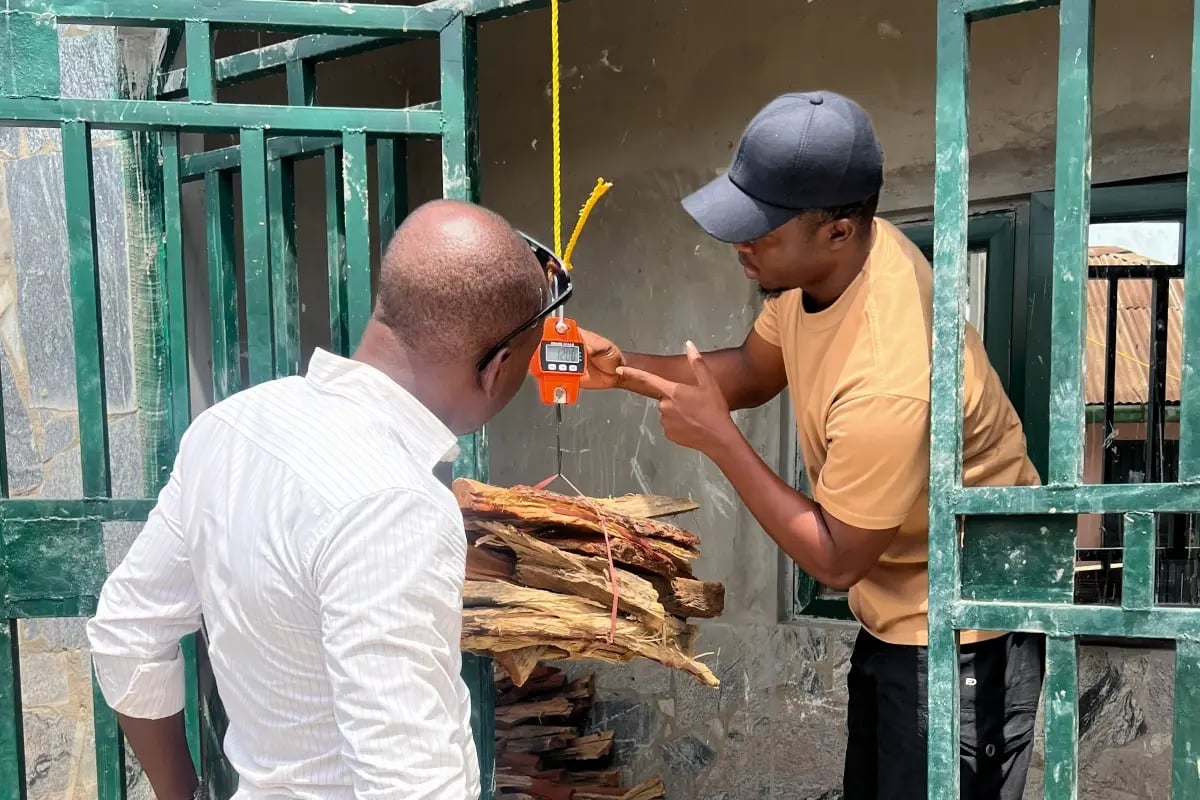 Wood used for cooking, being weighed during a Kitchen Performance Test. Green Earth Sauki Cookstove Nigeria Project, Green Earth.
Across our East African agroforestry projects, community monitoring takes a different form. Local farmers participate directly in data collection, recording changes in practice and land use that feed into the project's overall assessment. This participatory approach, recognised in academic literature on community-based MRV, increases the accuracy of monitoring in areas that would otherwise be difficult to reach, and gives communities a direct stake in the project's performance.

Adaptive management: responding to what monitoring reveals
Monitoring is only valuable if it drives decisions. A project that runs field surveys, compiles data, submits verification reports, and then carries on exactly as before has missed the point of measurement. The purpose of monitoring is to generate the information needed to manage, and to change course when the data says that it is necessary.
Adaptive management is the practice of using field data, ecological assessments, and community feedback to adjust project interventions in real time. It might mean changing the species mix in a new planting phase after soil assessments reveal suboptimal conditions. It might mean revising the geographic focus of community extension work based on uptake data. It might mean introducing new monitoring protocols after independent verification identifies a gap in the data. It is the opposite of a set-and-forget project model.
The case for adaptive management in nature-based projects is well established. Monitoring plans must be adaptable to changing conditions, and understanding in-the-field risks is essential because these factors shape project durability, the certainty of field impacts, and investment valuation. A Conservation Biology review reinforces the point: Securing permanence depends on a coordinated institutional architecture that addresses interacting physical, methodological, and non-physical risks, and that architecture must be capable of responding when those risks materialise.
Read more: Agroforestry explained: a guide to regenerative farming
The difference between monitoring and managing
Many developers monitor because standards require it. We monitor to manage.
The distinction matters. A developer monitoring for compliance produces reports. A developer monitoring for management produces results: adjusted planting strategies, refined community programmes, updated baseline assumptions, and revised intervention plans that reflect what the ecosystem and the community are actually showing.
At Green Earth, each monitoring cycle feeds a review process in which project teams assess performance against targets, identify where the project is ahead of expectations and where it needs additional support, and plan the next operational phase accordingly. This is what our brand promise 'Engineering possibilities' means in practice: not a one-time design, but a continuous process of measurement, learning, and refinement.
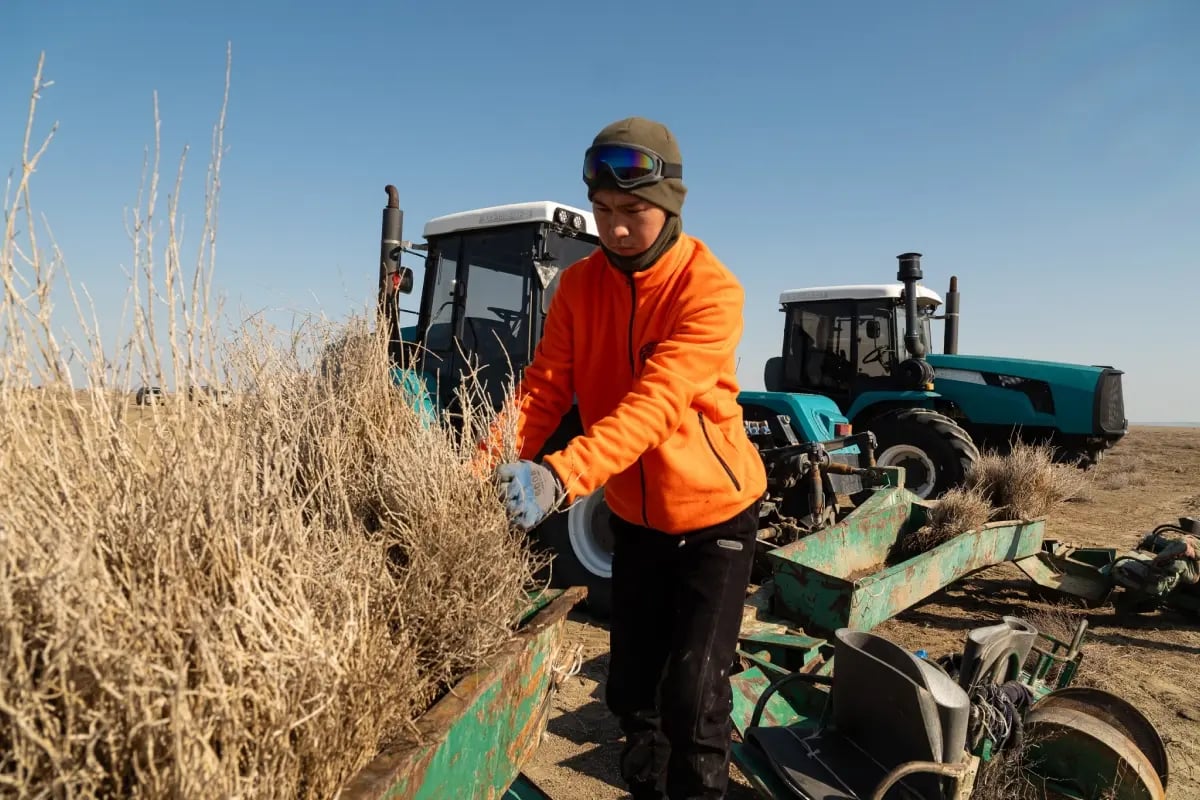 Green Earth team member during the recent Kazakhstan Saxaul planting. Greening of the Dried Aral Sea Project, Green Earth.
Our Greening of the Dried Aral Sea Project in Kazakhstan, is being designed from the outset with this adaptive model in mind, building monitoring and management feedback loops into the project architecture before the first tree is planted. Getting the stewardship framework right before issuance is just as important as sustaining it afterwards.
Read more: The hidden strength of nature-based credits in corporate decarbonisation strategies
What ongoing stewardship means for the buyer
For corporate buyers, the developer's post-issuance carbon project monitoring commitment is directly connected to the long-term credibility of their own environmental claims. A credit purchased from a developer who disengages after issuance is a credit whose underlying performance is unknown, and in a market under increasing scrutiny from regulators, investors, and the public, that is a material risk.
As Sylvera's analysis notes, quality in the carbon market is not static: delivery issues, double issuance, and reversals happen. Stakeholders need to monitor their projects to keep them on track, and emerging jurisdictional developments and potential project hurdles require ongoing attention. Buyers who rely solely on issuance-stage sign-off, without assurance that the developer continues to manage the project, face the risk that the credit they purchased no longer reflects real-world performance.
Read more: How to choose high-quality carbon credits
Equally important is the quality of the monitoring itself. Various guides advise buyers to require submission of monitoring reports, verification statements, and verifier accreditation proof as part of due diligence, and to specify minimum buffer pool levels and acceptable methodologies.
Satellite data alone is not sufficient. Social co-benefits, community livelihoods, and below-ground carbon, all of which matter for holistic project quality, require ground-level assessment that remote sensing cannot provide.
The practical checklist for buyers evaluating developer commitment looks something like this:
- Does the developer publish monitoring reports after each verification cycle?
- Is verification conducted by an accredited, independent third party?
- Does the developer maintain an active community engagement programme throughout the project life?
- Are monitoring results used to drive management decisions, or simply reported and filed?
- Does the developer have the in-country operational capacity to respond when something changes?
At Green Earth, the answer to each of these questions is yes. Our end-to-end model—from project origination through to long-term field operations—means we maintain the infrastructure, the teams, and the relationships that sustained stewardship requires.

Engineering possibilities, for decades
Carbon credit project stewardship is not a post-sale service. It is the core of what a serious project developer does. It is monitoring that drives management, ecological assessment that informs replanting decisions, community engagement that sustains adoption, and adaptive responses to what the data reveals year after year, across the full life of each project.
At Green Earth, we have built our operational model around this principle. We are present in every country where we develop projects. Our teams work directly with local communities and ecosystem managers. Our monitoring data is independently verified, and it feeds directly into how we manage each project in the periods that follow.
The work does not stop when the credit is issued. In many ways, that is when it truly begins.
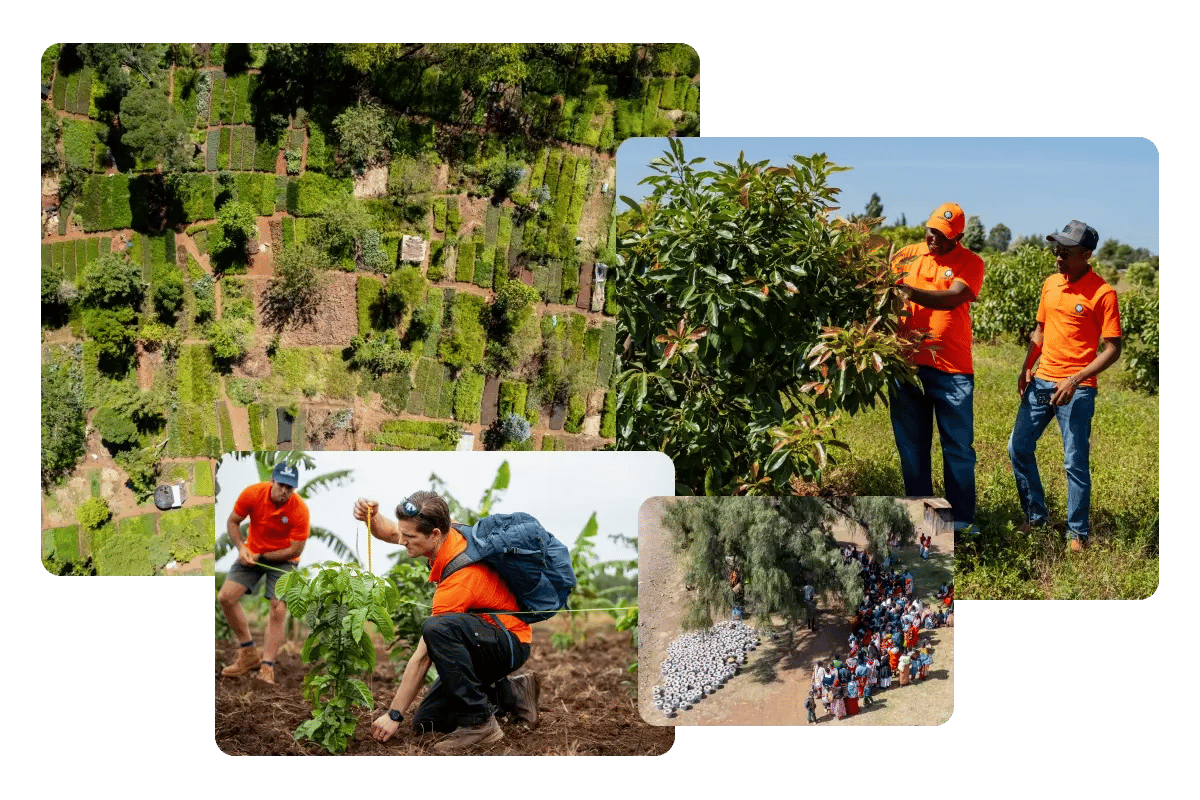 Green Earth team members during field inspections. Mount Kenya Regenerative Agroforestry Project and Hongera Energy Efficient Cookstoves Project in Kenya, Green Earth.
Green Earth is an end-to-end nature-based project developer, listed on Euronext Amsterdam. We develop, manage, and monitor our own projects across the globe, maintaining long-term field operations, community partnerships, and independent verification cycles for every project in our portfolio. Our commitment does not end at issuance. It is what issuance is built on.