
Carbon credits
Nature conservation
Net zero
Nature-based solutions
Carbon footprint
Decarbonisation
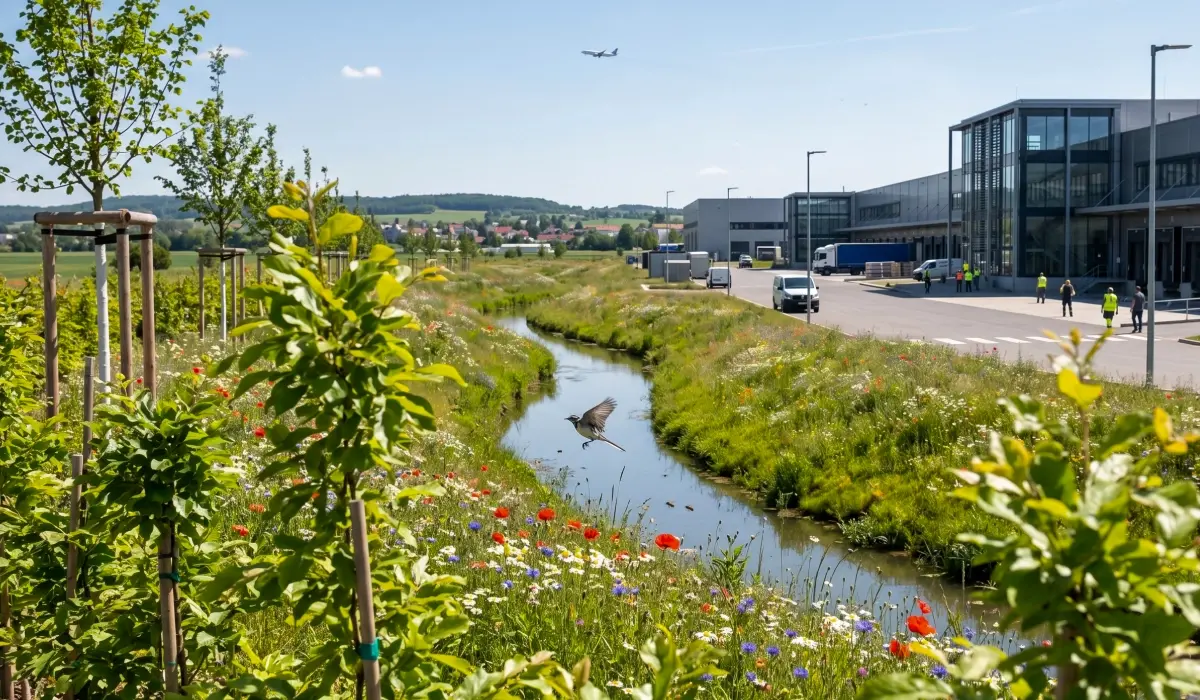
A corporate carbon footprint is never just an accounting figure. It maps onto real ecosystems. Before a product leaves the factory gate, something on the ground has already paid the cost. A forest has been converted. A river has been depleted. A patch of savannah that was once home to dozens of species now grows a single crop in every direction.
That cost is not always visible in the numbers that appear on a sustainability report. Product carbon footprints, which track emissions across a product's life cycle, from raw material extraction through manufacture and delivery, capture some of it. The Carbon Catalogue, a peer-reviewed dataset of 866 product carbon footprints across 145 companies, 30 industry groups, and 28 countries, documents how upstream and downstream emissions vary by industry, and how life cycle assessments (LCA) aid companies in achieving steeper carbon reductions through improvements throughout a product's value chain.
This blog maps four of the world's highest-impact industries’ effect on ecosystems, and shows what credible, nature-grounded footprint reduction looks like in practice for each.

What a product carbon footprint can tell you about nature
Most industries measure their environmental impact in tonnes of CO₂e—carbon dioxide equivalent. It is a standardised metric, internationally recognised, and increasingly required by regulation and investor disclosure frameworks. It is also incomplete.
Emissions are symptoms. The underlying causes are resource extraction, land conversion, and ecosystem disruption—processes that generate carbon as a side effect of doing something else: clearing a forest, mining a mineral, or draining a wetland for a warehouse. A product carbon footprint captures the emissions those processes produce. It does not, by itself, tell you which ecosystem absorbed the impact, or what was lost in the process.
Read more: How carbon project developers quantify biodiversity and community impact
A meaningful environmental impact analysis must go beyond accounting for the pressures from resource use and actually assess how resource demand affects ecosystems. In policy terms, it is consequences, not pressures, that should guide environmental decision-making. The four sectors covered in this blog generate some of the largest nature consequences in the global economy. Understanding each one separately, the ecosystems they depend on, the specific pressures they create, and the responses that actually work, is the first step to meaningful action.
Agriculture: the sector reshaping ecosystems at a continental scale
Stand at the edge of the Amazon basin and look south. What you see, or rather, what you no longer see, is the result of the most ecologically disruptive industry in human history. Agriculture does not just produce food. It converts, degrades, and fragments ecosystems on a scale that no other sector matches.
Read more: Deforestation in the Amazon Rainforest: causes, effects, solutions
The numbers are worth sitting with. Agriculture accounts for 80% of all global land-use changes, primarily through the conversion of natural ecosystems for crop production and pastures. In 65% of terrestrial ecosystems, land-use pressures have been associated with a loss of biodiversity intactness that exceeded the threshold identified as the 'safe operating space' for biodiversity under the Planetary Boundary framework.
Agricultural expansion is driving almost 90% of global deforestation: cropland expansion accounts for 49.6% and livestock grazing for 38.5% of forest loss. The net loss of forest cover between 2000 and 2020 amounted to nearly 100 million hectares.
In 2024 alone, the world lost 16.6 million acres of tropical primary rainforest, equivalent to 18 football pitches per minute. Drivers linked to agriculture account for 70% of the loss of terrestrial biodiversity projected by 2050, and the global food system currently threatens 24,000 of the 28,000 species at risk of extinction.
The ecosystems under most direct pressure are tropical forests (the Amazon, Congo Basin, and Southeast Asia's remaining primary forest), natural grasslands and savannahs converted to pasture, and freshwater wetlands drained for irrigation and cultivation. They are the planet's primary reservoirs of biodiversity, carbon, and freshwater.
Read more: 10 Vital ecosystem services: sustaining life on Earth
What decarbonisation looks like in agriculture
Reducing agriculture's nature footprint is not about farming less. It is about farming differently. The evidence for agroforestry and regenerative approaches comes from the ground, from farms operating under real conditions, often with limited resources.
The IPCC estimates that enhancing soil carbon sequestration through regenerative agriculture practices, including no-till farming, agroforestry, crop rotation, and cover cropping, could sequester up to 23 gigatonnes of CO₂ by 2050, a substantial portion of the mitigation required to meet international environmental targets.
 Green Earth team members and local farmers in a regenerative agriculture landscape, part of Green Earth’s Mount Kenya Regenerative Agroforestry Project.
What does this look like on the ground? Green Earth's Mount Kenya Regenerative Agroforestry Project is one of the clearest examples available. The project is expected to capture millions of tonnes of CO₂ over its lifetime, alongside measurable improvements in downstream water quality, groundwater recharge, and the reconnection of fragmented habitat corridors. Structured as a 41-year initiative, it reflects a long-term understanding of how ecosystems, and the communities that depend on them, actually recover.
Read more: Planning a food forest: the foundations for long-term carbon integrity in Kenya
Agroforestry also addresses one of the most underappreciated consequences of agricultural expansion: landscape fragmentation. Habitat corridors formed by connected strips of agroforestry vegetation allow wildlife to move between fragmented natural areas, which is essential for maintaining genetic diversity across populations that agricultural expansion has otherwise isolated. For instance the Sahel region, farmer-managed natural regeneration has spread across 24 million hectares of previously degraded land across 10 nations.

Construction: the hidden nature cost of cement, steel, and sprawl
The construction industry's nature footprint is both visible and invisible. Visible, because every building site is a landscape intervention: Land is cleared, soil is disturbed, habitats are removed. Invisible, because the deeper costs are embedded in supply chains: the quarries providing limestone for cement, the mines extracting iron ore for steel, the forests felled for timber, and the rivers dredged for sand and aggregate.
The global construction carbon footprint has doubled over the past three decades and is projected to more than double again by 2050. In 2022, over half of the sector's emissions stemmed from cementitious materials, bricks, and metals, the most nature-intensive materials in the construction supply chain. Taken together, the buildings and construction sector accounts for 37% of total global emissions.
In the UK, construction, demolition, and excavation account for 60% of all material use and waste generation. The UK Green Building Council has identified what it calls 'embodied ecological impacts': the biodiversity consequences of material extraction and manufacturing that occur offsite, often in countries with weaker environmental protections. These impacts include deforestation for timber, water depletion near quarries, and pollution of river systems adjacent to manufacturing facilities.
Critically, only about 3% of the Earth's surface is used for buildings and infrastructure. The construction sector's nature footprint is therefore not primarily a story about the land it sits on, it is a story about the supply chains that feed it, which stretch across ecosystems in the Global South that are often among the most biodiverse on the planet.
Read more: Nature-based solutions vs carbon capture technology: Which is most effective?
What footprint reduction looks like in construction
The most effective reduction strategies operate at two levels: material substitution and whole-life impact assessment.
Sustainably managed forests can provide high-quality timber while maintaining intact forest ecosystems. The Forest Stewardship Council (FSC) certifies over 200 million hectares of managed forests globally, ensuring that timber production does not compromise the biodiversity of the surrounding landscape. Mass timber construction, which can substitute for steel and concrete in structural applications, stores carbon in the building itself, turning the built environment from a net emitter into a net carbon store.
 Workers using mass timber that can replace steel and concrete in structural applications, effectively sequestering carbon dioxide within the building itself. AI generated picture.
Embodied ecological impact assessments are an emerging standard that extends the logic of embodied carbon accounting to biodiversity. They ask not just how much CO₂ a material produces, but which ecosystems were affected in producing it. Combined with nature-based solutions in urban design, green roofs, living walls, and urban rewilding, these approaches address both the production footprint and the local ecological value of the site itself.

Retail and fashion: where water stress and plastic pollution meet
No industry makes its nature footprint look smaller than it is more effectively than retail, and particularly fashion. The product is small, the price is low, and the transaction happens in a pleasant environment, far removed from the cotton field in a water-stressed basin, the dyeing facility releasing untreated wastewater into a river delta, or the polyester microfibre settling into ocean sediment thousands of miles from the consumer who washed it.
The fashion industry produces over 92 million tonnes of waste per year and consumes 79 trillion litres of water annually. Brands are now producing almost twice the amount of clothing compared to before the year 2000. The textile value chain uses 215 trillion litres of water per year—the equivalent of 86 million Olympic-sized swimming pools—and around 20% of industrial wastewater pollution worldwide originates from the fashion industry. Less than 1% of material used to produce clothing is recycled into new clothing, resulting in over $100 billion in material value loss annually.
Read more: Industry carbon footprints: transport, events, and celebrities
A 2017 report from the International Union for Conservation of Nature (IUCN) estimated that 35% of all microplastics found in the ocean come from the laundering of synthetic textiles, with plastic contamination directly harming marine ecosystems, aquatic life, and human health.
The ecosystems under most pressure from retail supply chains are semi-arid freshwater systems in cotton-producing regions (Central Asia, the Aral Sea basin, South Asia), river deltas and coastal marine ecosystems in textile-manufacturing countries, and ocean systems affected by microplastic accumulation. These are not abstract environmental categories; They are places where people live, fish, and farm, and where ecosystem degradation has direct consequences for human wellbeing.
What footprint reduction looks like in retail
Retail's nature footprint cannot be addressed by greenwashing individual product lines. It requires structural changes: reducing material throughput at source, building supply chain transparency, and connecting sourcing decisions to the specific ecosystems they affect.
 Farmers in India planting young trees for a wetland and reforestation ecosystem restoration project. AI generated picture.
Credible footprint reduction in retail involves three interlocking approaches.
- First, circular economy design: reducing the volume of new material entering the system, extending product life, and closing material loops through recycling and reuse.
- Second, supply chain-embedded nature targets: measuring freshwater use and land conversion per product and linking sourcing decisions to biodiversity outcomes, consistent with the Taskforce on Nature-related Financial Disclosures (TNFD) framework.
- Third, carbon credits linked to ecosystem restoration in the regions where supply chains operate: reforesting degraded land in sourcing geographies, restoring wetland habitats in cotton-growing basins, and reversing some of the accumulated damage that decades of intensive production have caused.

Logistics: when infrastructure becomes a habitat barrier
Logistics and freight infrastructure create a different kind of nature footprint from the other three sectors. It is not primarily about resource extraction or material throughput. It is about physical fragmentation: The way that roads and railways do not just cross landscapes, but split them, isolating wildlife populations, disrupting ecological processes, and degrading the connectivity that functioning ecosystems depend on.
The transport sector is one of the most important drivers of biodiversity loss globally, causing habitat degradation, landscape fragmentation, pollution, and wildlife mortality. Its effects are non-linear, long-lasting, and mostly harmful, and the combined 'effect zone' of transport infrastructure far exceeds its physical footprint.
A global analysis of road impacts found 18.6% lower forest cover, 2.7 m shorter canopy height, and significantly higher fragmentation within 1 km of roads compared to adjacent reference areas. The total estimated area of forest loss attributable to road impacts equals 4.26 million km²—equivalent to 10.7% of the entire global forest extent in 2020.
Global transport infrastructure is projected to grow by over 60% between 2010 and 2050, with most of that expansion in developing nations, the same regions that contain the world's largest remaining areas of intact tropical forest. Automobile traffic is expected to double over the same period. Roads do not only affect the land they occupy, but they also enable further deforestation by opening access to previously remote areas, creating a feedback loop between infrastructure development and ecosystem loss.
The ecosystems under most direct pressure from logistics infrastructure are tropical forests along freight and resource-access corridors, temperate grasslands and wetlands bisected by road networks, and mountain ecosystems in regions where road construction is expanding to serve mining and agricultural frontiers.
Read more: The next carbon standard: What CBAM and CSRD mean for European businesses
What decarbonisation looks like in logistics
Route alignment is the most powerful intervention: Identifying and avoiding the bisection of high-value habitats at the planning stage, before infrastructure is built, costs nothing compared to the ecological and financial cost of mitigation after the fact.
For existing infrastructure, wildlife passages and green bridges restore connectivity across fragmented landscapes. These are not marginal interventions: In Europe, over-road wildlife corridors have been shown to restore species movement across heavily fragmented landscapes that had been ecologically isolated for decades. Nature-based restoration adjacent to infrastructure corridors, such as native planting, wetland margin restoration, and riparian buffer zones, addresses the 'effect zone' that extends well beyond the physical footprint of the road itself.
 Over-road wildlife corridor. AI generated picture.
For companies in logistics and freight, carbon credits from afforestation and reforestation projects in regions affected by infrastructure-enabled deforestation offer a credible way to compensate for hard-to-abate emissions within the value chain. High-quality projects that specifically restore connectivity, linking fragmented forest patches, restoring riparian corridors, align the emissions compensation directly with the nature pressure that freight infrastructure creates.

The common thread: where carbon credits meet nature recovery
Across all four sectors, the pattern is the same. The hardest nature impacts are not at the point of sale, or even in the factory. They are embedded in supply chains and infrastructure that sit beyond the direct operational boundary: in the forest that was cleared to grow a commodity, the river that was depleted to process a fabric, the landscape that was fragmented to move goods from one place to another.
That is precisely where high-quality carbon credits can play a credible complementary role alongside operational action. They extend a company's environmental reach into the geographies where nature pressure is highest, and where restoration delivers the most significant biodiversity and community co-benefits.
Read more: How to choose high-quality carbon credits
The key word is 'complementary'. Carbon credits do not replace the need to reduce emissions and nature pressure within operations and supply chains. They address the residual footprint that remains after operational reductions have been made, particularly the hard-to-abate emissions embedded in complex global supply chains that no single company can transform alone.
For this to work, the credits must be credible. They must represent real, permanent, independently verified outcomes. They must deliver measurable biodiversity, water, and community co-benefits alongside carbon sequestration.
 Young Bulindi chimpanzee playing on a tree in its natural habitat. Bulindi Chimpanzee Habitat Restoration Project, Green Earth.
Green Earth's project portfolio—from agroforestry in Kenya to the Bulindi Chimpanzee Habitat Restoration Project in Uganda to the Lake Aral Afforestation Project in Kazakhstan—is designed to address exactly these intersection points: restoring ecosystems in the geographies where agriculture, construction, retail supply chains, and logistics infrastructure have left the deepest nature footprints.
Read more: The hidden strength of nature-based credits in corporate decarbonisation strategies
Decarbonisation starts with the footprint you can see
Reducing a nature footprint begins with understanding where it actually lives: which ecosystems, which supply chains, which geographies. The four sectors covered in this blog are not uniquely guilty; they are representative. Every sector that extracts materials, uses land, moves goods, or sells products carries a nature footprint. The difference between a sector that is managing it credibly and one that is not is whether the footprint has been mapped, measured, and acted upon.
The evidence reviewed here points in a consistent direction. Nature-grounded footprint reduction is technically feasible, economically viable, and increasingly well documented. Agroforestry restores soil, sequesters carbon, and reconnects fragmented habitats. Sustainable timber reduces the embodied ecological impact of the built environment. Supply chain transparency links retail purchasing decisions to specific freshwater and biodiversity outcomes. Infrastructure planning that puts nature first prevents damage that costs far more to repair than to avoid.
None of this happens automatically. It requires companies to look further along their supply chains than a standard carbon audit goes into the ecosystems where their products begin, and the landscapes their logistics networks cross. It requires verification frameworks that can translate nature outcomes into credible, reportable numbers. And it requires project developers with the expertise, independence, and long-term commitment to deliver those outcomes on the ground.
 Local farmers during seedlings distribution as a part of Mount Kenya Regenerative Agroforestry Project, Green Earth.
Green Earth develops and manages nature-based carbon projects across Africa, Central Asia, and the Indo-Pacific. Each project is designed to deliver measurable, independently verified ecosystem outcomes alongside certified carbon reductions.
Our end-to-end project development model, from site selection and community engagement through to monitoring, reporting, and verification, creates a system where every carbon credit we issue represents real, permanent, nature-positive impact on the ground. For companies in agriculture, construction, retail, or logistics looking to understand and address their nature footprint, we bring the field expertise, scientific rigour, and long-term partnership model that credible action requires.