
Tree planting
Deforestation
Agroforestry
Africa
Afforestation
Malawi
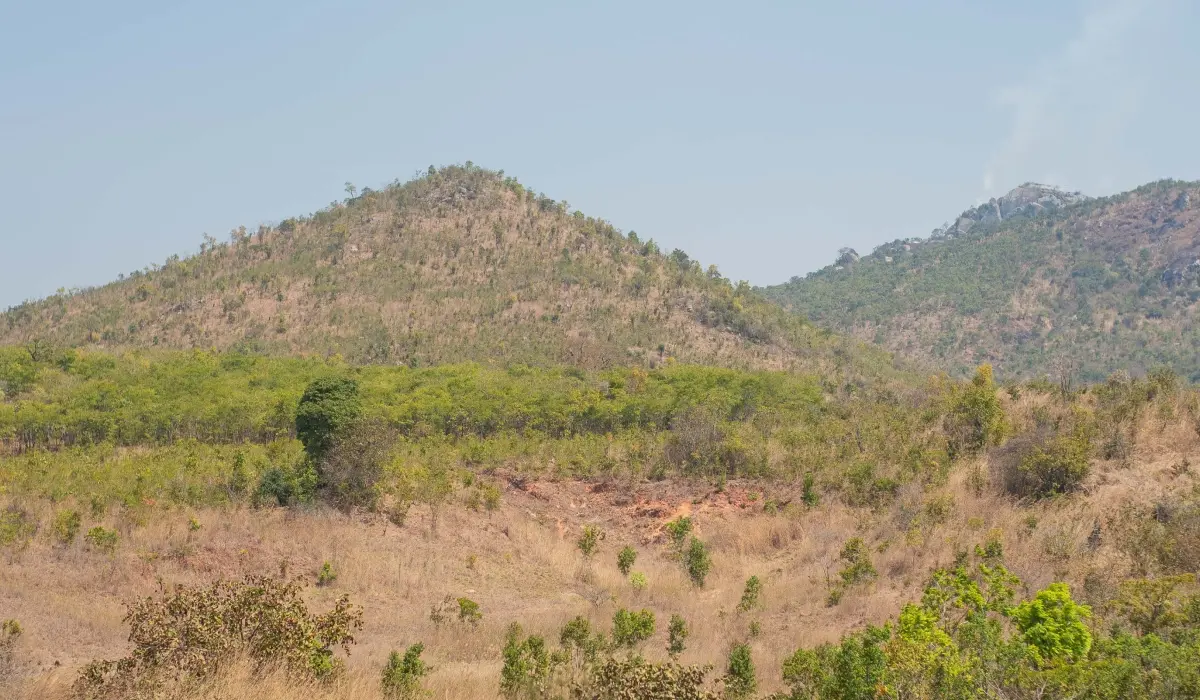
Malawi has lost a striking share of its forests over the past three decades. Woodlands that once covered well over a third of the country now cover less than a quarter, and the pressure on what remains is increasing. Behind those figures sit two practical questions: what is driving the loss, and what reverses it?
Deforestation in Malawi has clear, well-documented roots, as well as practical, proven remedies. This article sets out the main causes, the solutions gaining ground across the country, and the role carbon finance plays in turning restoration plans into planted trees.
Forests perform essential functions across Malawi. They stabilise soil on steep terrain, regulate the flow of water through the landscape, sustain wildlife, and supply the fuel that most households rely on for cooking. Their decline registers across agriculture, energy, and daily life, well beyond the forests themselves. Establishing how far that decline has progressed is the starting point, and acting on proven solutions is the collective action urgently needed.

How serious is deforestation in Malawi?
The scale of deforestation in Malawi is well documented. World Bank data compiled from FAO sources show forest cover falling from about 37% of the country’s land area in 1990 to roughly 22% in 2023. Malawi’s own National Forest Policy puts annual forest loss at around 2.8%, among the highest rates in the Southern African Development Community (SADC) region.
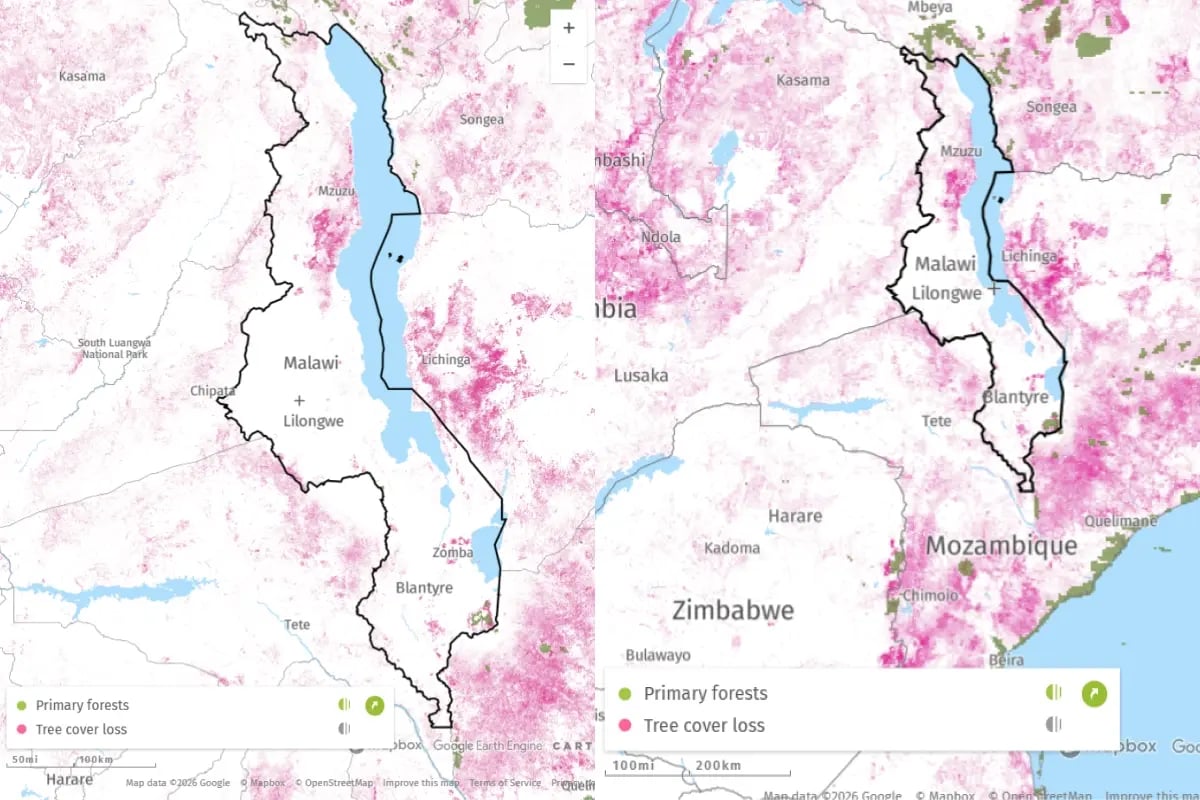 Tree cover loss in Malawi between 2001 and 2025. Source: Global Forest Watch.
Satellite monitoring points the same way. Global Forest Watch recorded about 2.1 million hectares of natural forest in Malawi in 2020, covering close to 18% of its land area. In 2025 alone the country lost 20,000 hectares of natural forest, equivalent to 7.4 million tonnes of CO₂ emissions. Over the longer term, from 2001 to 2025, Malawi lost 280,000 hectares of tree cover, around 19% of the total it held in 2000, before accounting for any regrowth over the same period. Its humid primary forest contracted by 25% in that time.
Between 2001 and 2023 the country lost in the region of 250,000 hectares of tree cover, and the single largest annual loss in that period fell in 2023. The Ministry of Forestry and Natural Resources has estimated yearly loss at around 30,000 hectares.
These figures describe a forest estate under steady pressure from everyday human needs, which is exactly why the remedies focus on how people cook, farm, and earn a living.
Read more: What makes Green Earth’s reforestation projects unique?
What causes deforestation in Malawi?
The causes of deforestation in Malawi are practical and well understood. Four pressures account for most of the loss.
-
Wood fuel for cooking. More than 97% of households rely on firewood and charcoal for cooking and heating, according to Malawi’s National Charcoal Strategy, and biomass supplies over 90% of the country’s total energy. With only about 16% of the population connected to electricity, wood remains the default fuel, and demand outpaces what the forests can sustainably supply.
-
Farmland expansion. A growing rural population clears woodland for crops, and shifting cultivation moves that pressure across the landscape. Maize alone occupies at least 60% of cultivated land.
-
Tobacco curing. Tobacco has long provided around 60% of Malawi’s export earnings, and curing the leaf over wood fires is a leading driver of forest loss. One peer-reviewed study in a tobacco-growing area found that roughly 69% of households depended on wood from forests for curing.
-
Population growth and poverty. Rising numbers and limited incomes intensify each of the pressures above, leaving households with few alternatives to the forest for energy and land.
In short, what causes deforestation in Malawi is the sum of everyday needs, such as energy, food, and income, met from a shrinking forest base.
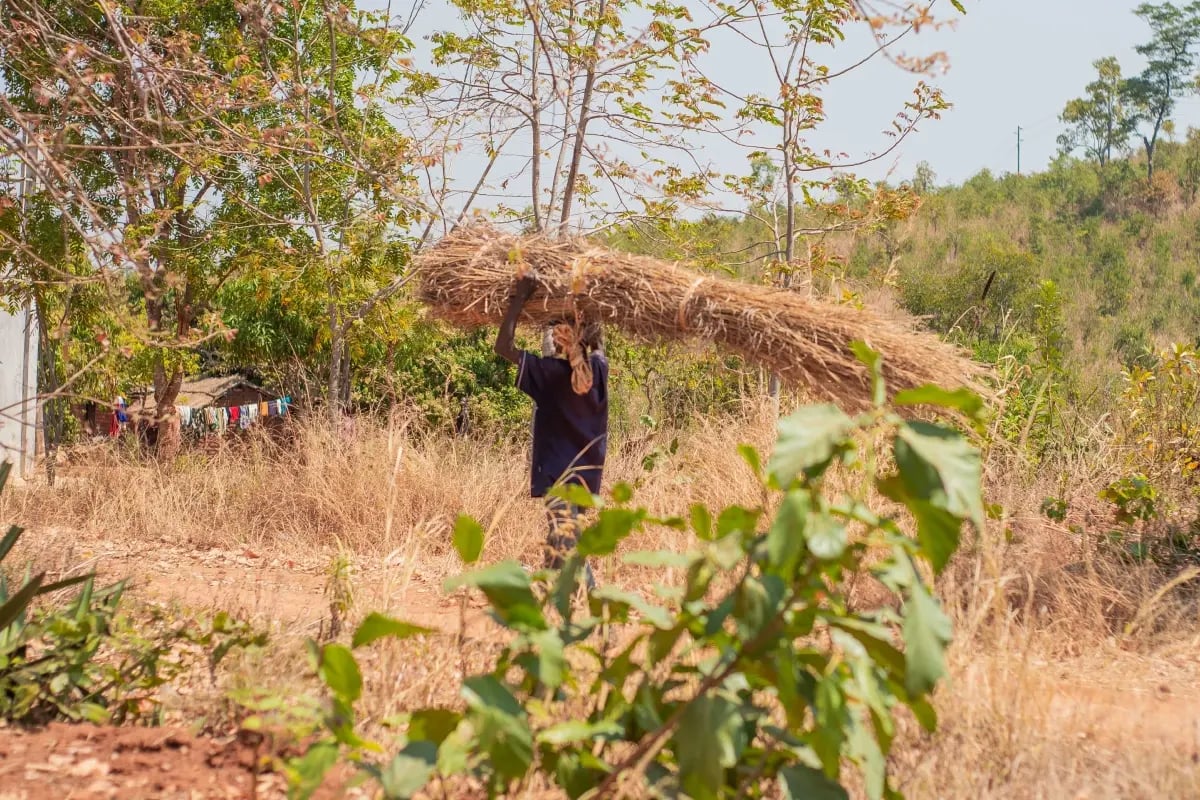 A man from a local community carrying firewood used as fuel for cooking. Namizimu Afforestation, Reforestation & Agroforestry Carbon Project, Green Earth.
The cost to soil, water, and communities
Forest loss carries a cost that lands squarely on the people who depend on the land. Without tree roots to hold the soil, erosion strips fertility from farmland and washes sediment into rivers and reservoirs, including the Lake Malawi catchment that supplies water and hydropower. Thinner soils mean lower yields, which pushes farmers to clear more land, and the cycle repeats. Heavy seasonal rainfall on bare slopes raises the flood risk for communities downstream. Households feel the loss directly through energy poverty, spending more time and money to find the wood they cook with.
Read more: Indigenous and local knowledge in carbon projects: why it defines credit quality
The economic toll is significant: land degradation was estimated to cost Malawi around $244 million a year, equivalent to 6.8% of GDP, over the period from 2001 to 2009. These are the conditions that effective solutions to deforestation in Malawi need to address.
Solutions reversing forest loss in Malawi
Malawi has responded on several fronts. Solutions to deforestation in Malawi are already in motion, and several approaches reinforce one another.
- A national restoration commitment. In 2016 Malawi pledged to bring 4.5 million hectares of degraded and deforested land into restoration by 2030 under the African Forest Landscape Restoration Initiative (AFR100) and the Bonn Challenge, an area close to a quarter of the country. A National Forest Landscape Restoration Strategy guides where and how that happens.
- Community forest management. Reserves managed by local communities tend to hold up far better than stretches left to under-resourced state oversight, because the people living alongside a forest have the strongest reason to protect it.
- Cleaner cooking and better managed wood fuel. Efficient cookstoves cut the amount of wood each household burns, and dedicated wood-fuel lots supply biomass from planted trees, easing the pull on natural forest.
- Agroforestry. Integrating trees into farmland restores soil fertility and raises yields, so reforestation in Malawi strengthens food security at the same time.
Read more: The hidden strength of nature-based credits in corporate decarbonisation strategies
That principle is clear. Delivering it at the scale of millions of hectares depends on finance, and public budgets alone do not stretch that far. This is where private capital, channelled through the carbon market, becomes decisive for forest restoration in Malawi, and it answers the practical question of how to stop deforestation in Malawi in a way that lasts.
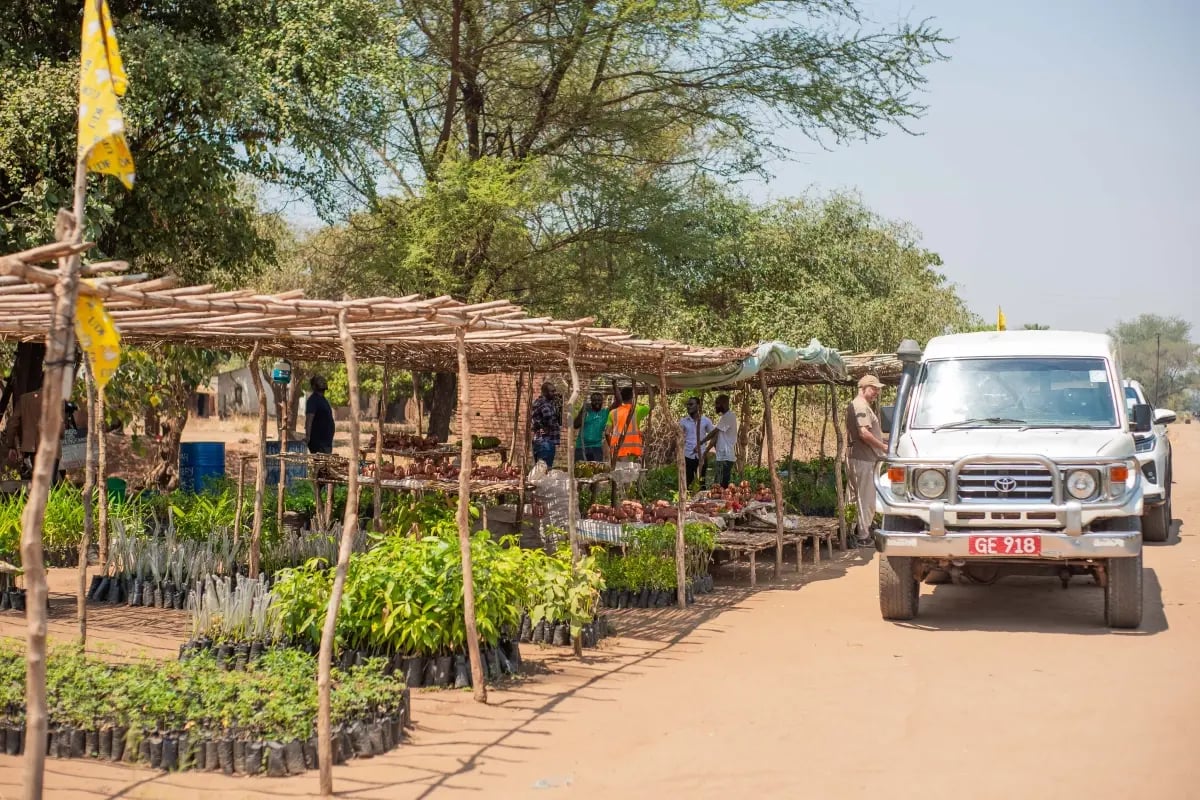 The Green Earth team and members of the local community at a tree nursery in Malawi, inspecting seedlings that are ready for planting. Namizimu Afforestation, Reforestation & Agroforestry Carbon Project, Green Earth.
How carbon finance funds forest restoration
Carbon finance turns restoration plans into planted trees. When a business measures its carbon emissions and chooses to compensate for the share it cannot yet reduce, it can purchase verified carbon credits. Each credit represents 1 tonne of CO2 that a project has removed or avoided, confirmed by an independent standard. The money flows to the project, which uses it to plant, protect, and monitor forest over many years.
The carbon market has evolved towards rewarding quality above all else, and quality rests on a few clear attributes:
-
Additionality means the restoration would not have happened without the carbon finance.
-
Permanence means the carbon stays locked in the trees and soil over the long term.
-
Independent verification, under a recognised standard in the voluntary carbon market, confirms the reductions are real and measurable.
-
Co-benefits — the jobs, food security, and biodiversity a project creates alongside carbon removal — add lasting value on the ground.
A credit that scores well on all four sends finance to exactly the kind of work Malawi needs, and it gives the buyer confidence that their contribution is genuine.
Read more: Why a forest with more species stores more carbon
Inside the Namizimu Afforestation, Reforestation & Agroforestry Carbon Project
We saw the same pressures at work in Southern Malawi, so we launched a project in direct response. The Namizimu Afforestation, Reforestation & Agroforestry Carbon Project sits inside the Namizimu Forest Reserve, one of the country’s most ecologically important and most pressured landscapes.
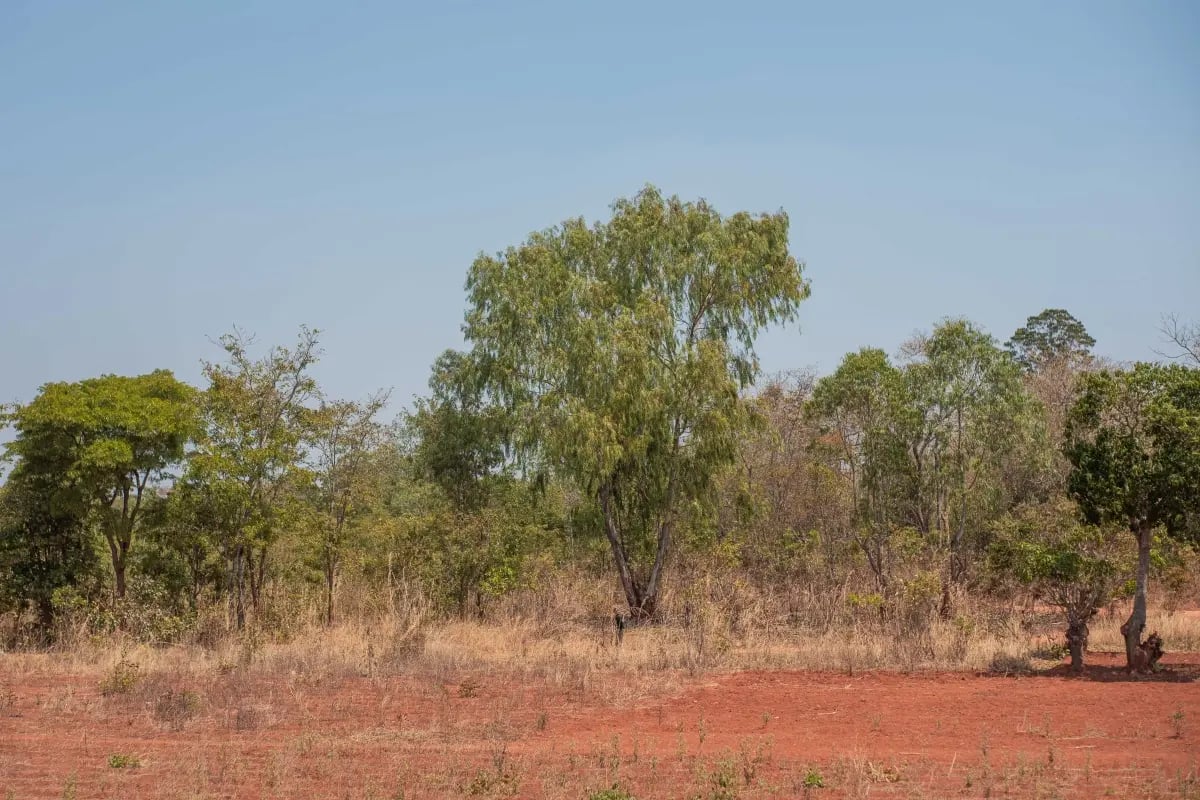 Malawi project site, Namizimu Afforestation, Reforestation & Agroforestry Carbon Project, Green Earth.
The project is designed to restore 27,980 hectares of degraded land by planting 15 million indigenous fruit, nut, and shade trees over a lifetime of 40 years, and it is expected to capture around 9.47 million tonnes of CO2 across that period. These are projected figures that will be refined as the work develops. The project is currently in its design phase, following a conditionally feasible assessment, with a 100-hectare pilot, Article 6 government approvals, and community consultations under Free, Prior and Informed Consent principles as the next steps.
Read more: Agroforestry explained: a guide to regenerative farming
What makes this afforestation and reforestation project Malawi meaningful is how directly it answers the causes of the loss. Agroforestry enhances soil fertility and crop yields, strengthening food security for around 18,000 residents. Restoration protects the Lake Malawi catchment from siltation, rebuilds biodiversity corridors, and recharges groundwater. The Namizimu carbon project is being developed to the Verified Carbon Standard using Verra’s VM0047 methodology, and it is designed so that every future credit represents genuine, independently verified, and permanent environmental and community value.
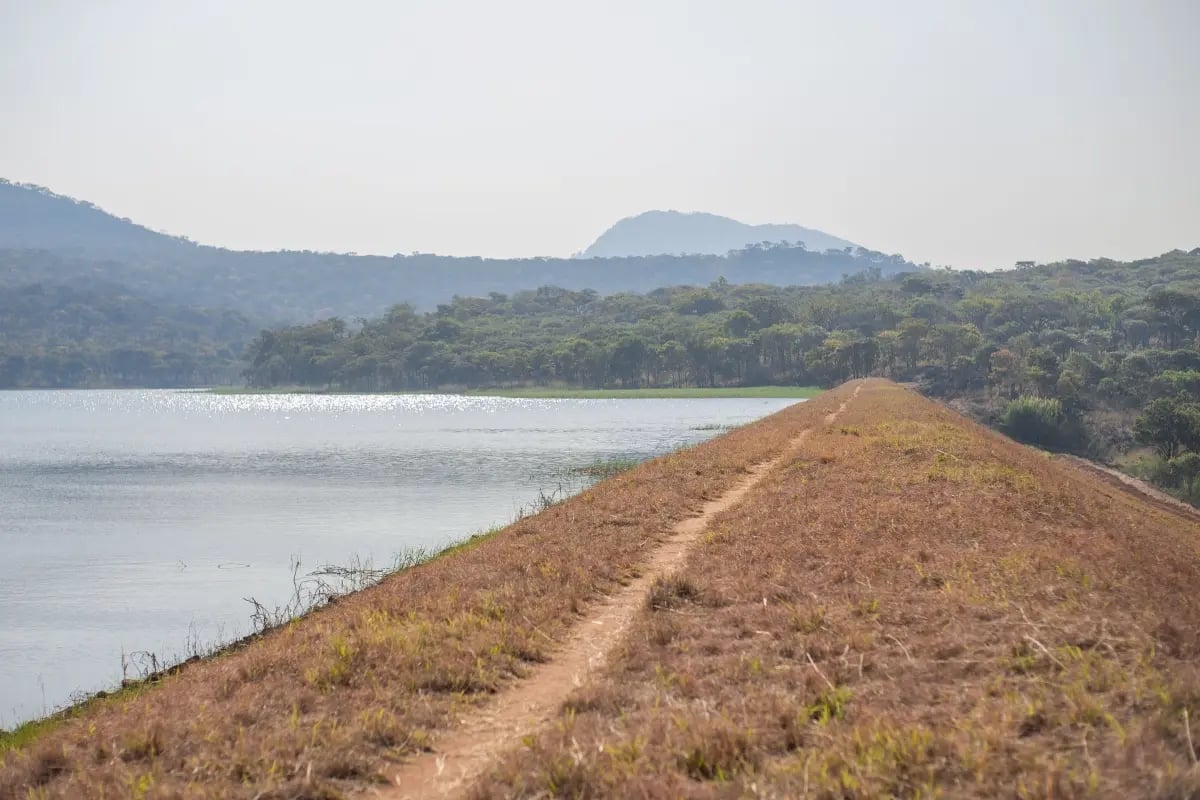 Malawi project site, Namizimu Afforestation, Reforestation & Agroforestry Carbon Project, Green Earth.
A greener future for Malawi
At Green Earth, we develop and manage our projects end to end, with complete oversight of the supply chain from the first seedling to the verified credit. The teams working in Southern Malawi, planting, monitoring, and working alongside local communities, are part of the same organisation a business buys its carbon credits from.
Reversing deforestation in Malawi is long-term work, and it succeeds on the strength of restoration that is planted, monitored, and verified year after year. Every verified credit a company purchases from our portfolio funds more of that work, restoring degraded land into living forest and building resilience for the people who depend on it. This is how businesses turn environmental responsibility into measurable impact on the ground.