
Carbon credits
Kenya
Nature-based solutions
Cookstoves
Nigeria
Local communities
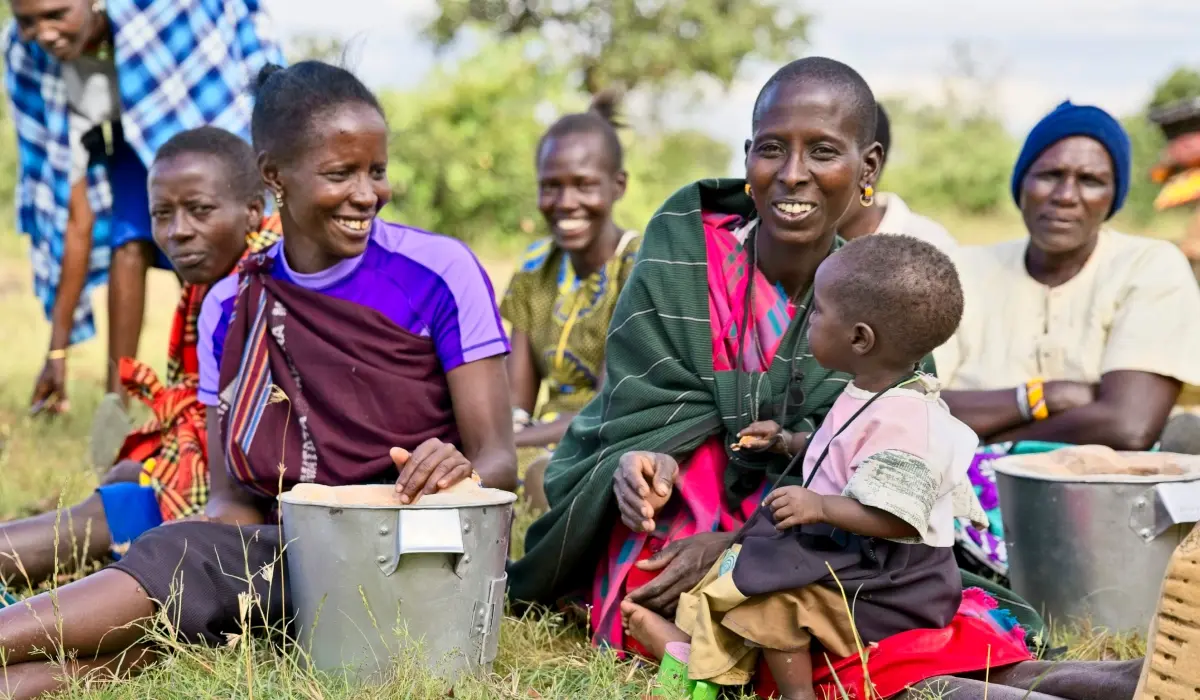
In a kitchen in rural Kenya, a mother kneels beside a three-stone fire to cook the day’s ugali (a starchy staple food). The flames are open, the smoke is thick, and her youngest child sits close by, breathing it in. This scene plays out in millions of homes every morning, and it is also where a measurable carbon credit can begin.
Cookstove carbon credits are among the most misunderstood and undervalued instruments in the carbon market. Next to tree planting, they can be harder to picture, so buyers may be inclined to pass them over. Yet a single efficient stove reduces carbon emissions at the source, clears the air a family breathes, and hands hours back to the women and children who do the cooking. Clean cooking is one of the most community-centred forms of carbon finance there is.
This article explains what a cookstove carbon credit really is, how the reductions behind it are measured, and why its impact reaches well beyond the tonnes on a certificate. Drawing on Green Earth's nature-based solutions, the article shows how cleaner cooking changes daily life for families, what sets a carefully measured credit apart, and what your purchase delivers on the ground.

How cookstove carbon credits work
An open fire is wildly inefficient. Most of its heat is not contained, so a household burns far more wood than a meal actually requires. An energy-efficient cookstove is engineered to hold and direct that heat, so the same meal needs a fraction of the fuel. It burns less wood and releases significantly less CO₂.
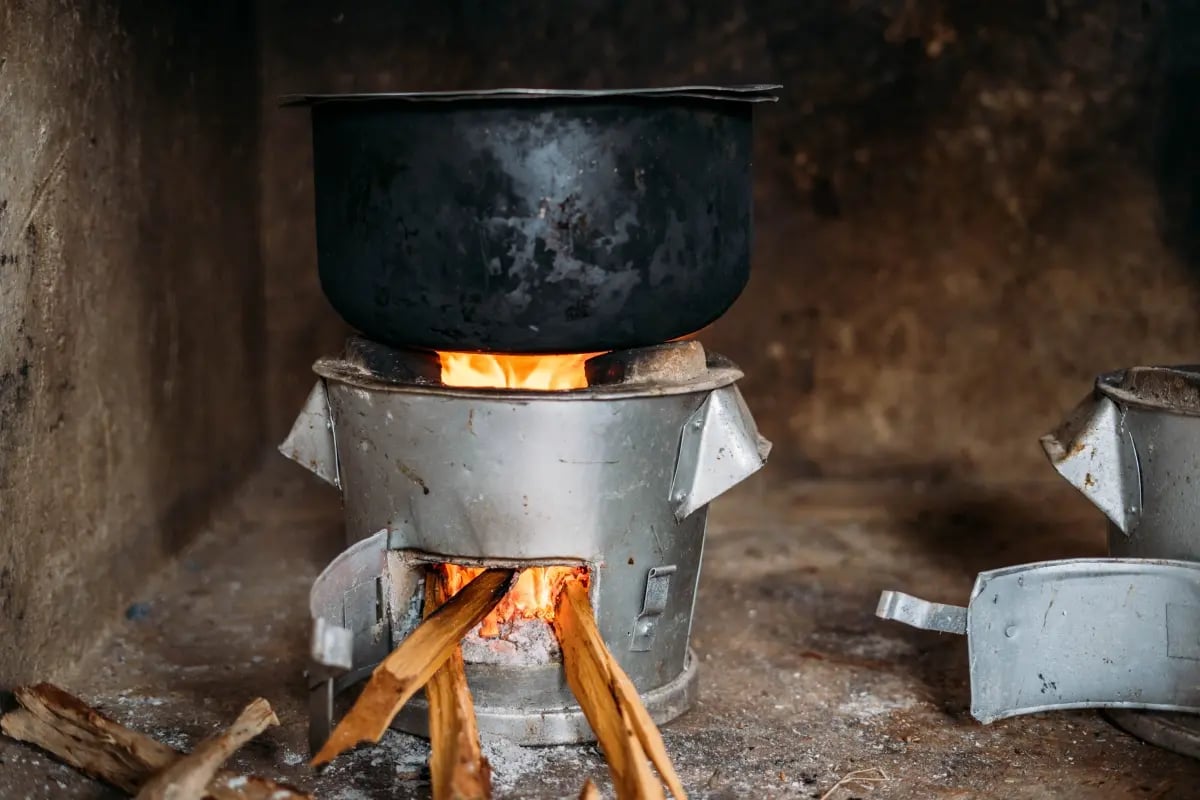 Close-up of a cookstove being used for cooking. Hongera Energy Efficient Cookstoves Project, Green Earth.
That is the whole basis of a cookstove credit. A project measures how much fuel a household used before the new stove arrived (the baseline), and it measures how much it uses afterwards, then verifies the difference. Each tonne of CO₂ avoided becomes one carbon credit. And because families would not have made the switch without the project funding the stoves, the reductions are additional—meaning they would not have happened otherwise.
Carbon credits generally fall into two types of categories: removal credits and avoidance credits. Forestry projects remove carbon from the air as trees grow, i.e. removal credits; cookstove projects prevent carbon from being released in the first place, i.e. avoidance credits. They tackle carbon differently, and a holistic portfolio has room for both. Clean cookstove projects simply get to work faster: a stove starts saving fuel the day it is lit, while a forest takes years to mature.
Read more: Green Earth’s cookstove projects: How they truly make a difference
The carbon you can measure
The scale of the opportunity is easy to overlook. Around 2.1 billion people still cook over open fires or inefficient stoves, according to the World Health Organization. The Clean Cooking Alliance estimates that clean cooking could reduce over a billion tonnes of CO₂ a year, emissions that are entirely avoidable. Even so, the sector remains starved of finance: The International Energy Agency puts the funding needed for universal clean cooking access by 2030 at around $10 billion a year, far above what flows today towards such initiatives.
The reductions per household are real and measurable. In Green Earth’s Hongera Energy Efficient Cookstoves Project in Kenya, field testing showed families use roughly 70% less firewood after switching from a three-stone fire to an efficient stove, down from 9–12 kg of wood a day to 2.5–3.5 kg. Multiply that across tens of thousands of homes, year after year, and the cookstove emissions reductions add up quickly.
This is why clean cooking carbon credits appeal to buyers who look for an immediate impact they can point to. The arithmetic rests on something tangible: a stove, a household, and a weighed bundle of wood.
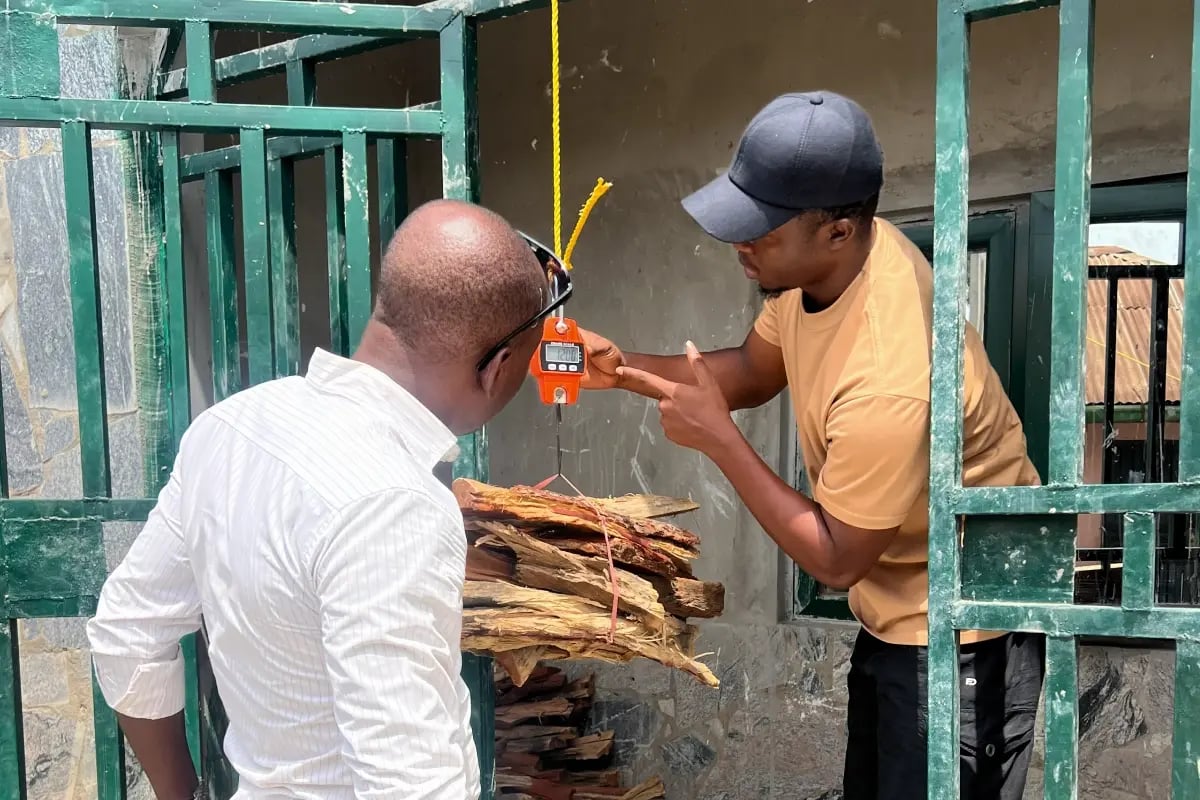 Wood being weighed by a Green Earth team member during project verification. Green Earth Sauki Cookstove Nigeria Project, Green Earth.
What changes in a single Kenyan kitchen
Leave aside the carbon accounting, and the human story is even more striking. The same field tests recorded what the new stoves meant for daily life.
Cooking time fell by about an hour per meal, roughly three hours given back to a household every day. Smoke, which once filled the kitchen throughout cooking, dropped sharply. And the relentless task of gathering fuel eased: Women who once walked 4 km to collect firewood three times a week, carrying 20 kg each trip, now make that journey just once.
Read more: New stoves, new beginnings: clean cooking for Maasai communities
These hours matter most for women and children, who do the cooking and the fuel collection. Across sub-Saharan Africa, women spend around three times as long as men on unpaid work such as collecting wood and water. Time freed from the fire is time for education, for earning, for rest. Cleaner air means fewer of the respiratory illnesses that household smoke causes, illnesses linked to around 3 million premature deaths worldwide each year. A cookstove credit, in other words, is paid for in tonnes but felt in lungs, hours, and the overall wellbeing of rural communities.

One credit, many layers: from kitchen to forest
The impact does not stop at the kitchen door. It decreases deforestation too. When a household burns 70% less wood, the surrounding forest benefits. Less firewood cut means less pressure on local woodlands, the water catchments they protect, and the wildlife they shelter. One purchase, several layers of benefit.
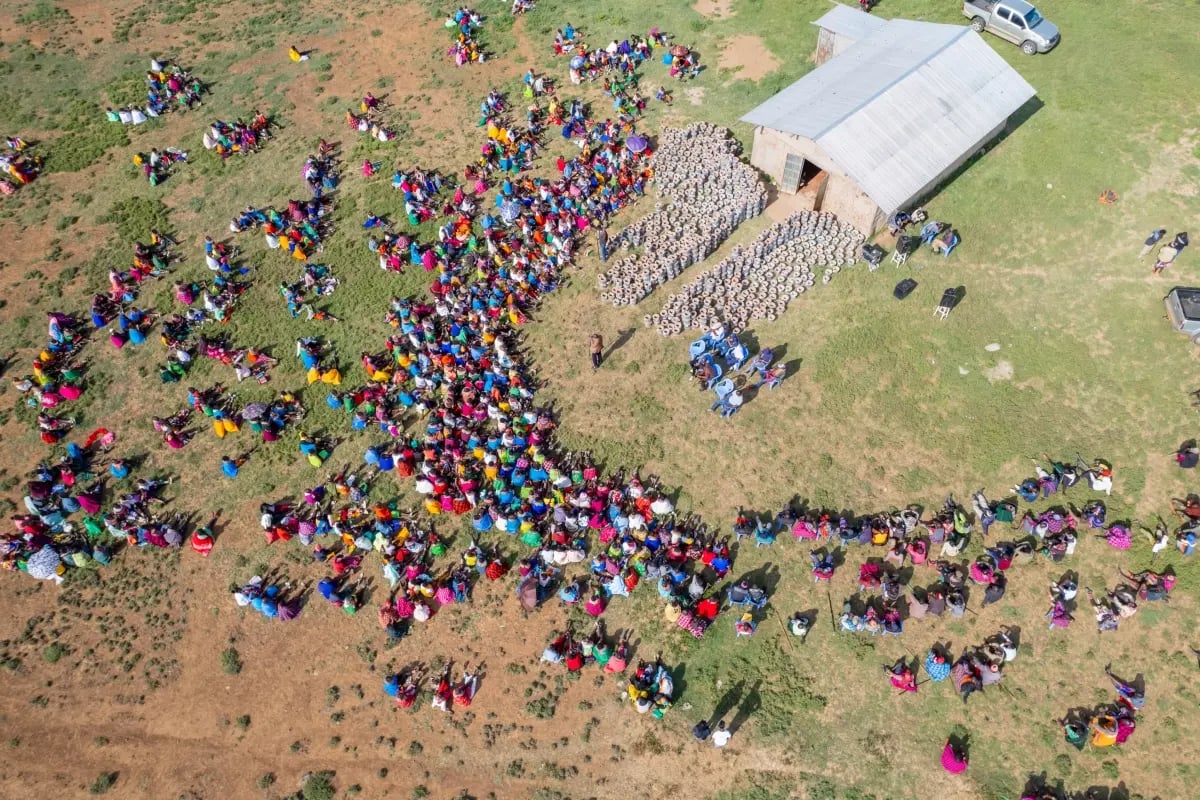 Local community members during a cookstove distribution, a project that benefits many families in the area. Hongera Energy Efficient Cookstoves Project, Green Earth.
This is the cookstove project co-benefits story that buyers miss when they compare credits on price alone. A cookstove credit can carry health, gender, livelihood, and forest outcomes in a single tonne. For companies addressing emissions across their value chain, including Scope 3, that breadth is part of the appeal: The credit speaks to environmental and social goals at once.
Read more: Beyond tonnes: How carbon credit co-benefits elevate value
How Green Earth builds its cookstove credits
Questions have been raised in the market regarding the methodologies underpinning impact measurement in clean cooking projects. These are legitimate concerns that warrant careful consideration. The appropriate response is not to disengage from the cookstove sector, but to apply greater scrutiny to the measurement practices employed by each project.
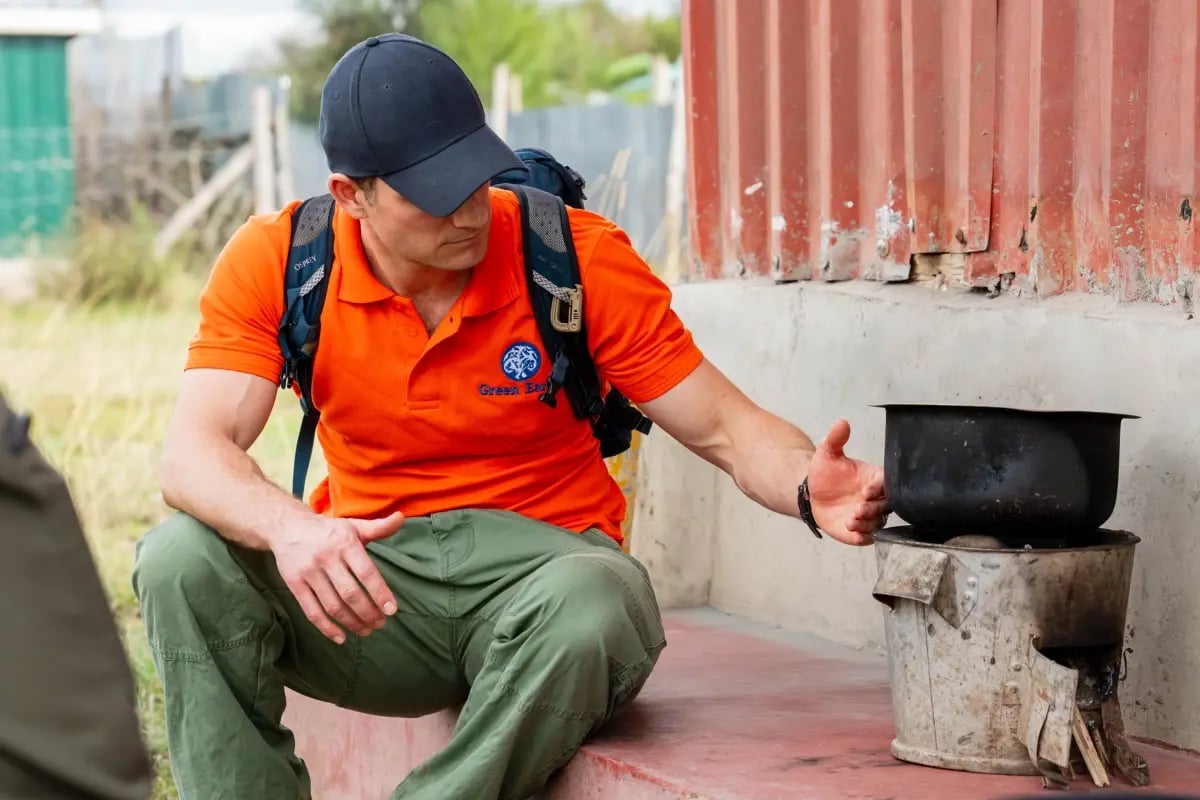 Thomas Donia, Director of Operations, during a cookstove verification visit. Hongera Energy Efficient Cookstoves Project, Green Earth.
This is where Green Earth’s end-to-end model stands apart. Our Hongera Energy Efficient Cookstoves Project is certified under the Gold Standard (project ID GS 12033), and its impact is established in the field, not estimated from a desk. In Kitchen Performance Tests, trained local ambassadors and Green Earth’s field team weigh each household’s firewood before and after cooking, keeping moisture below 10% for accuracy, then compare real consumption on the old method against the new stove. That measured difference is what underpins every credit the project issues.
Read more: A behind-the-scenes look at our cookstove production
The same rigour runs through production. At the project’s facility in Kirinyaga County, trained artisans build each stove from locally sourced clay and steel, firing the ceramic cores in kilns at 1,200°C. Every stove carries a serial number, and every recipient signs a beneficiary agreement when their stove is matched to them, so each unit can be traced from the kiln to the kitchen.
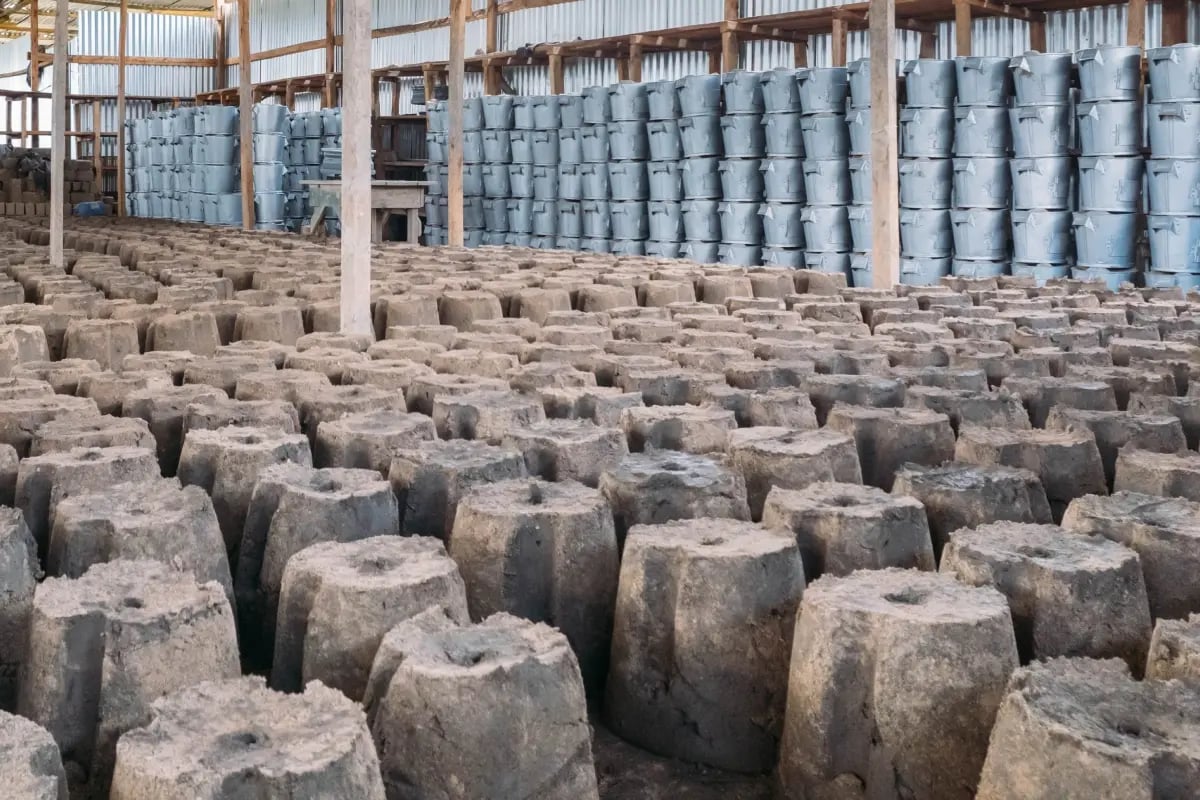 Cookstove manufacturing facility.
This rigour is replicated across all cookstoves produced by our teams. More than 78,000 cookstoves have already reached families across Kenya, including Maasai communities, on the way to the project’s target of 85,000, with expected reductions of around 815,000 tonnes of CO₂ over the stoves’ lifetime.
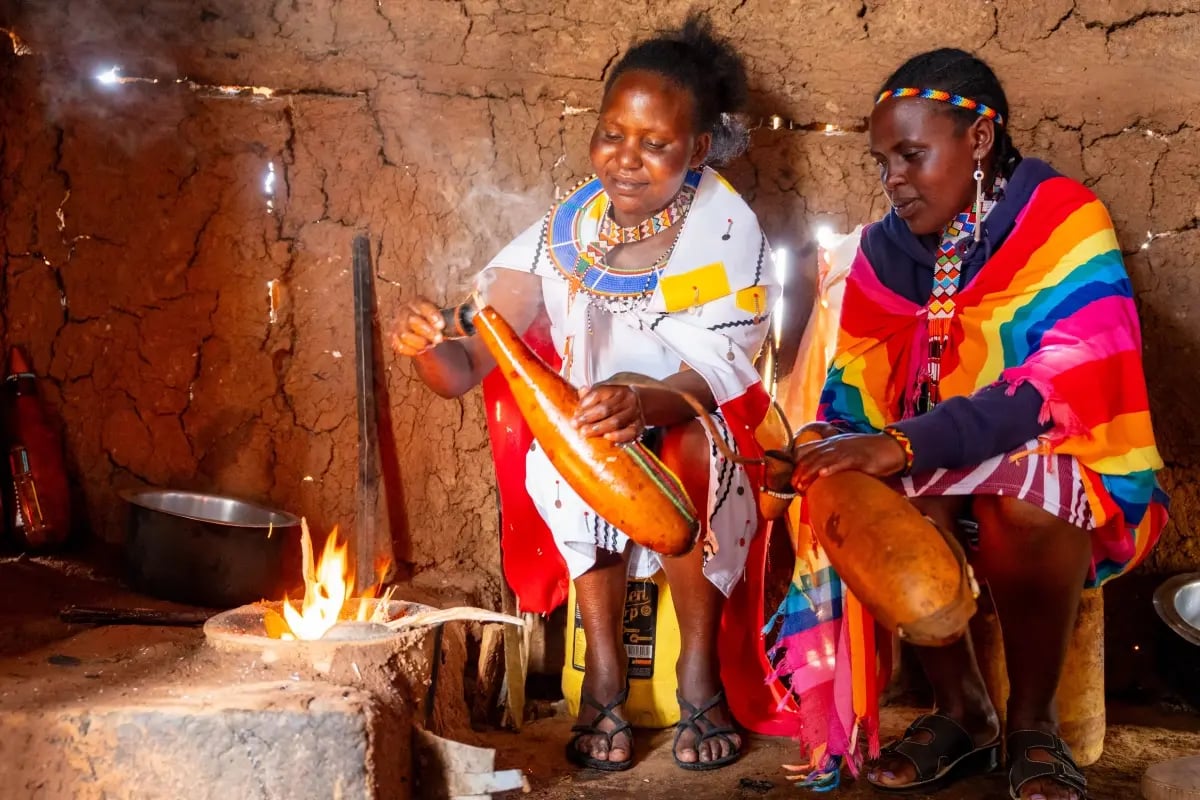 Two Maasai women preparing food using cookstoves.Hongera Energy Efficient Cookstoves Project, Green Earth.
In Nigeria, the Green Earth Sauki Cookstove Nigeria Project is now scaling the same approach towards 326,000 stoves. This is what end-to-end development looks like: Green Earth designs, manufactures, distributes, and monitors its projects, with no intermediaries standing between the credit and the kitchen it came from.
Read more: Cooking up results: inside the Sauki cookstove field test in Nigeria
What your carbon credits actually buy
To understand your offsets purchased is to understand what it buys. In our article about translating tonnes into hectares, we explain the underlying restoration behind reforestation and agroforestry credits. Here, we explain what a carbon credit purchased from a cookstove project translates into.
As a general guide across high-integrity clean cooking projects, cookstove carbon credits deliver over the project lifetime of 5–7.5 years:
- For 8 carbon credits: roughly 1 cookstove placed in a home
- For 100 carbon credits: around 12 households cooking cleaner
- For 500 carbon credits: about 62 families with clearer air, more time, and lower fuel costs
Bought at scale for your business’ carbon footprint, the picture grows into hundreds of stoves, whole communities, and forests under less pressure. And the impact does not vanish into a registry: Buyers receive an Impact Report that shows the number of cookstoves their purchase funded and the number of families supported, the tonnes on the certificate matched to homes on the ground. Buyers also receive a carbon credit certificate, CO2 compensated badge, and communication materials to share with their stakeholders.
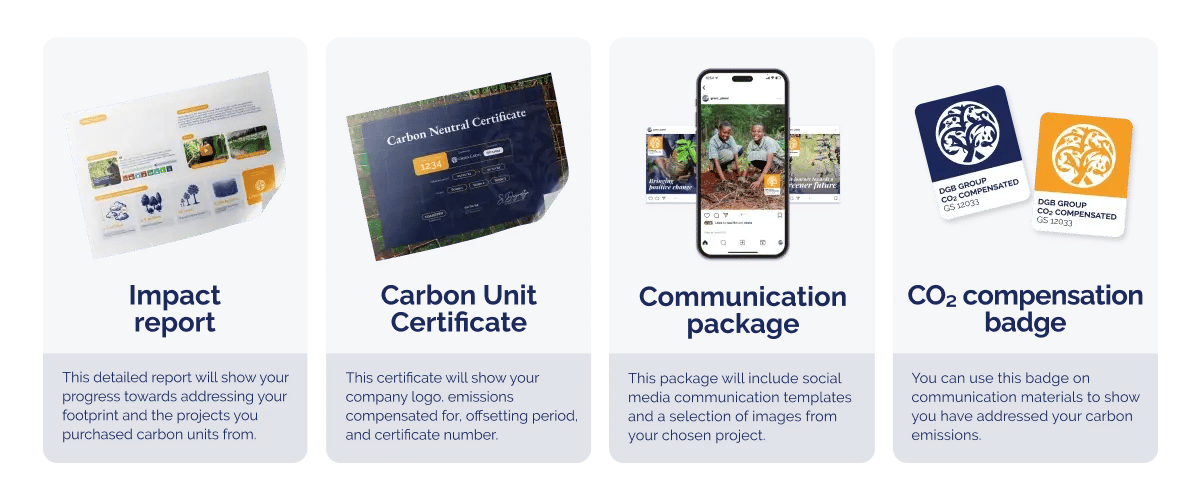 Green Earth carbon credits buyers’ package
At Green Earth, clean cooking sits at the heart of what nature-based carbon finance can do for people as much as for the planet. By building, manufacturing, distributing, and monitoring projects like Hongera from end to end, we make sure every cookstove credit stands for something real: a cleaner kitchen, a healthier family, a forest left standing. That is the quiet power of a cookstove, a small change in one home that, multiplied across thousands, becomes measurable carbon reduced, nature restored, and livelihoods improved for the people who use them.