
Agroforestry
Kenya
Nature-based solutions
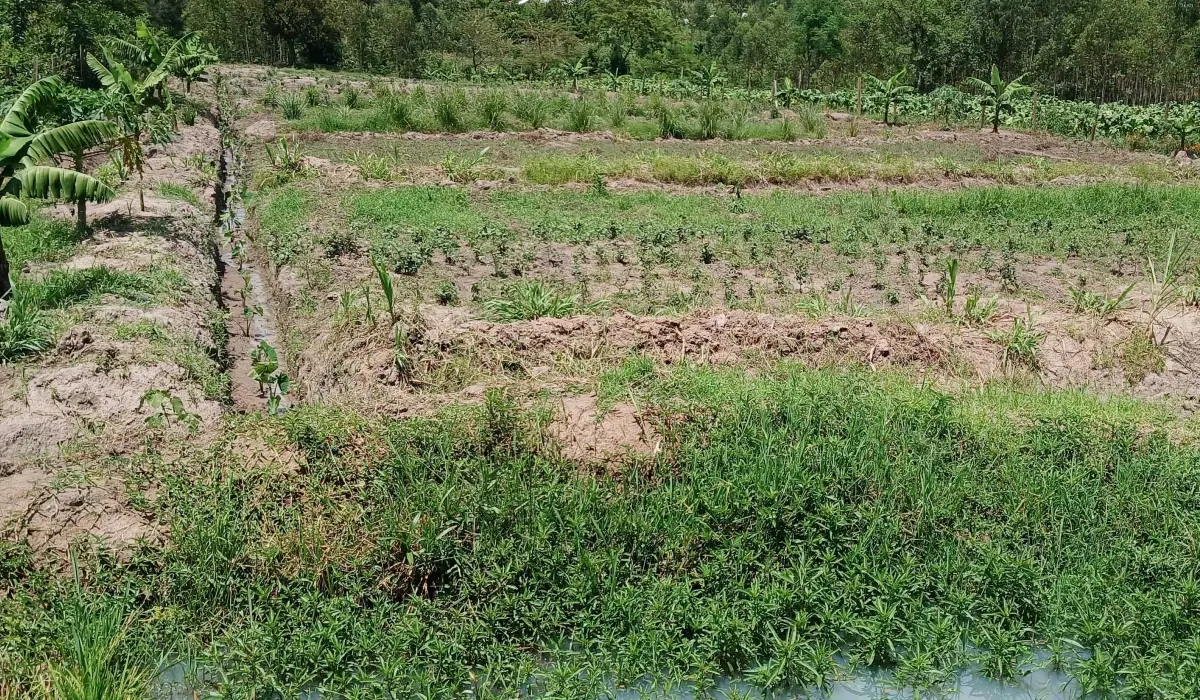
The Bungoma food forest team in western Kenya has carried out drainage and soil protection works across its active plot blocks for the October to December short rains. The works target the establishing coffee stands and fruit trees in the upper layers of the food forest, where heavy rain brings two risks to young trees: waterlogged roots and soil erosion.
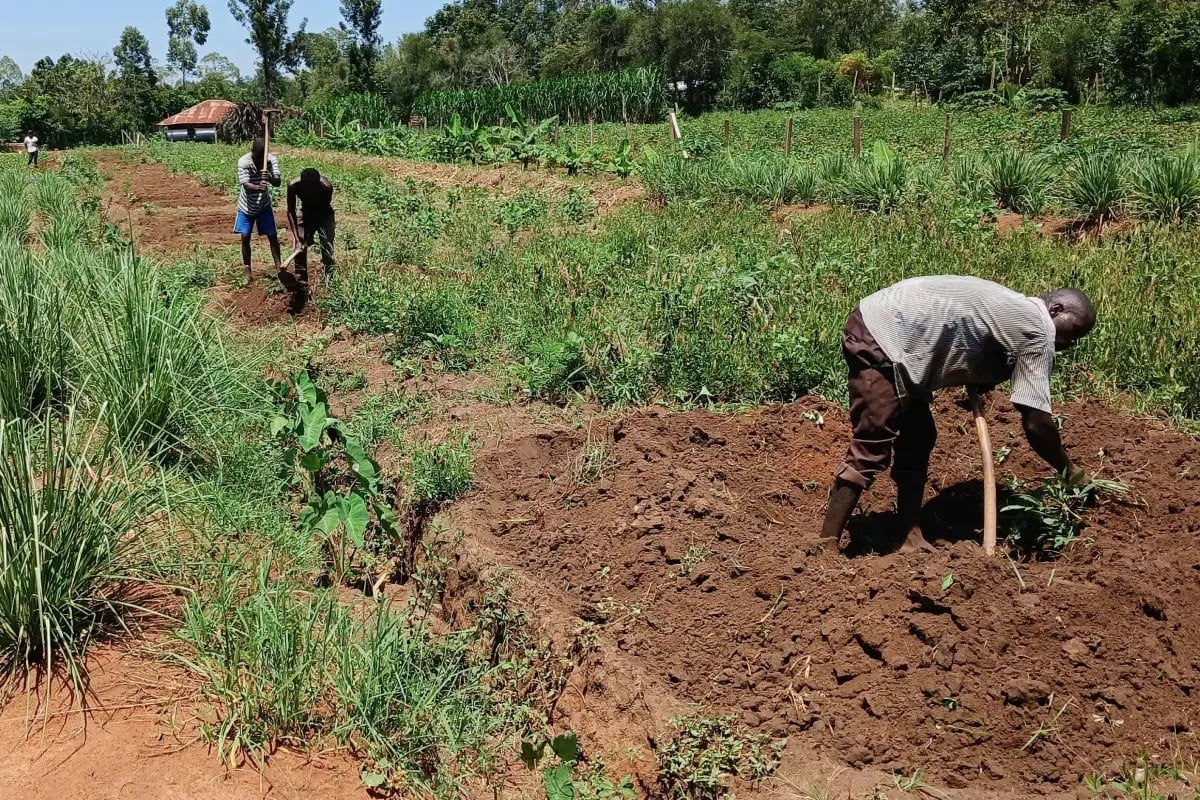 The Bungoma food forest team working on drainage and soil protection.
Three interventions are running in parallel across the plots:
- Desilting the swales: The team is clearing and unblocking the swales, shallow channels that follow the contour of the land. They collect rainwater, let it soak into the soil, and guide the surplus off the plots.
- Building micro-drainage around coffee: Targeted infiltration trenches around young coffee stems draw excess water into the ground away from the root zone and raise seedling survival.
- Weeding the understorey: Routine weeding cycles remove the plants that compete with the crops for nutrients and moisture.
Read more: Agroforestry explained: a guide to regenerative farming
The swales do two jobs at once. They harvest rainwater passively, building up soil moisture the trees can draw on in the drier months that follow, and they slow runoff so the topsoil stays in place. That topsoil holds the organic matter and soil life a multi-layered system relies on, and it adds to the carbon stored in the land as the food forest matures. The short rains are one of Kenya's two annual rainy seasons and a recurring window for Green Earth's restoration work across the country.
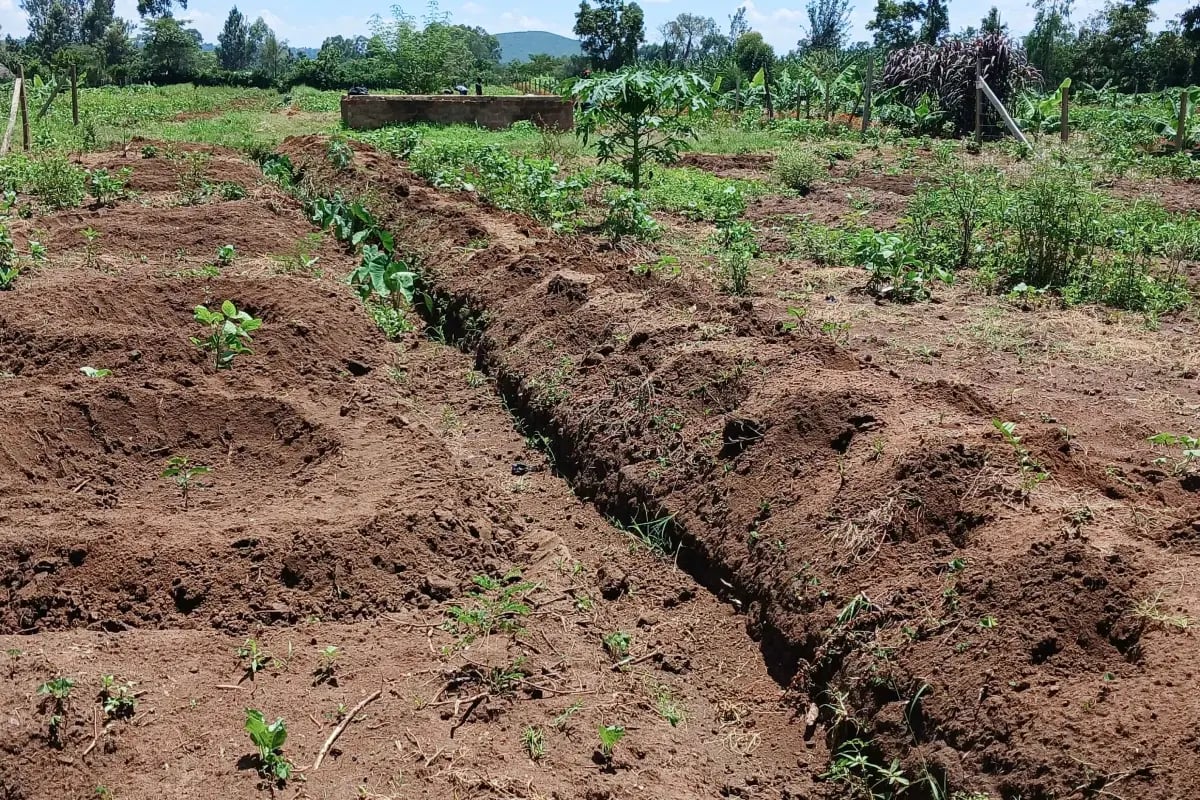 Prepared soil for effective rainwater harvesting and erosion protection.
The Bungoma food forest is part of Green Earth's wider agroforestry work in Kenya. It covers approximately 8 hectares (20 acres) across 21 registered plots in Bungoma County (as of August 2026). Coffee, fruit trees, nitrogen-fixing legumes, and indigenous vegetables grow in layers on the same land, and the coffee seedlings went into the ground during the planting phase reported in September.
Read more: Planning a food forest: the foundations for long-term carbon integrity in Kenya
The pilot is the first stage of a larger plan. Following a successful five-year run, the target is to scale the approach to around 200 hectares (500 acres) and integrate a carbon project at that stage. Tree survival in the early seasons shapes the density and biomass a site carries for decades, so protecting each young stand through the rains lowers delivery and permanence risk for that future carbon project. It also safeguards the coffee and fruit harvests that give farmers a stable income from their land.
Read more: Local nurseries driving our reforestation in Kenya
Seasonal groundwork like this is part of what Green Earth delivers as an end-to-end project developer with full oversight of its projects in the field. Our nature-based solutions in Kenya combine productive land, stable farmer livelihoods, and healthy ecosystems that store carbon over the long term. For businesses seeking agroforestry carbon credits backed by this level of field care, our marketplace is the place to begin.