Tree planting
Agroforestry
Kenya
Project updates
Local communities
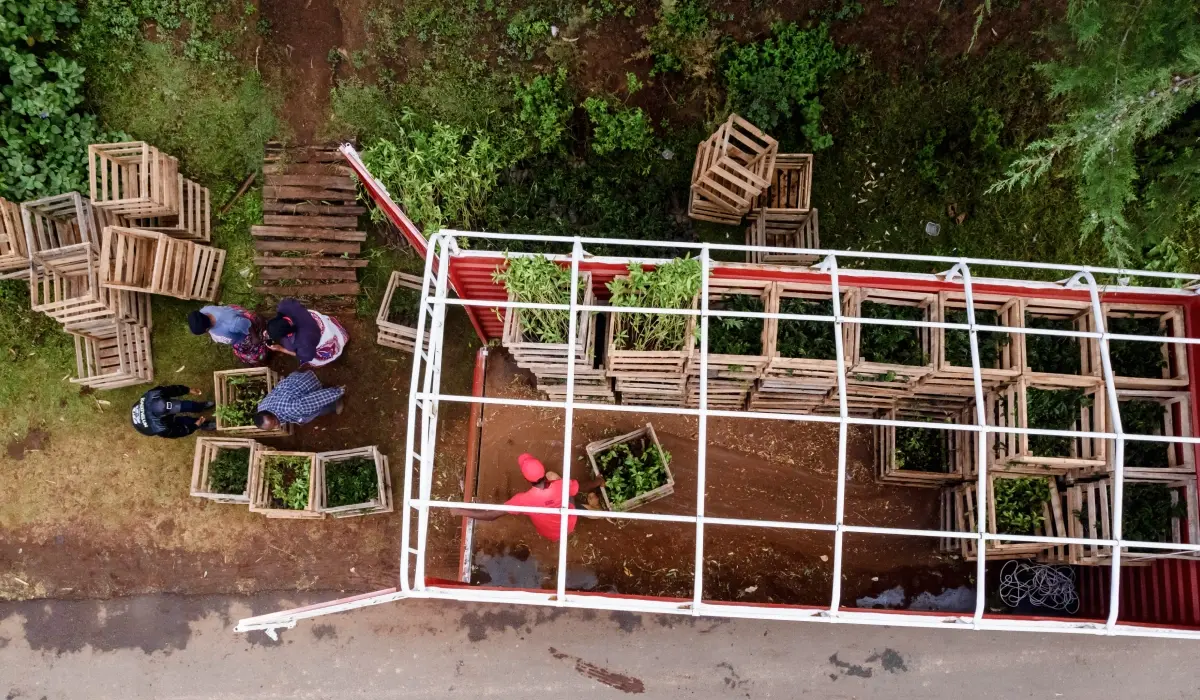
Green Earth delivered more than 86,000 tree seedlings to farmers in the Mount Kenya region in October 2026, ready for the planting season. The seedlings reached 491 farm plots covering 404 hectares in the Mount Kenya Regenerative Agroforestry Project.
The seedlings come from Green Earth’s community nursery partners around Mount Kenya, including nurseries in the Nyandarua, Laikipia, and Meru regions. Our Kenya field team and local field officers coordinated the distribution with participating farmers.
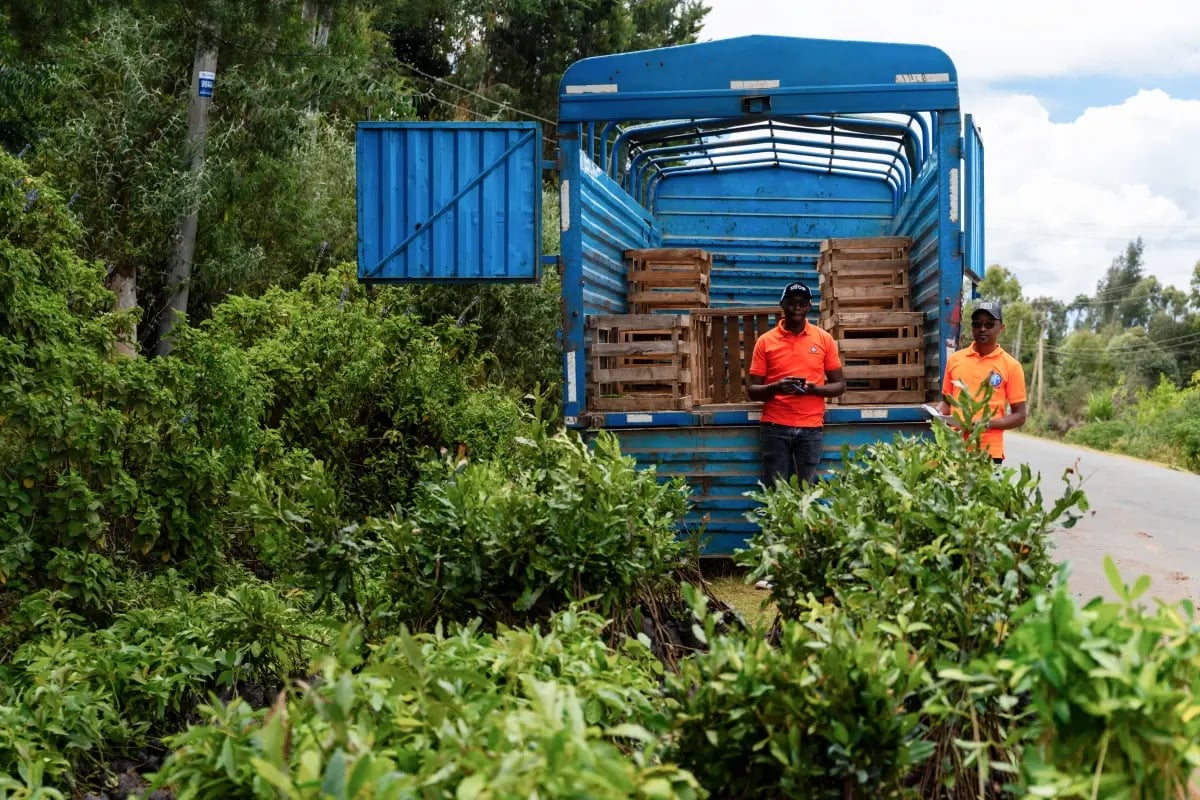 The Green Earth team delivering tree seedlings to farmers in the Mount Kenya region, ready for the October planting season. Mount Kenya Regenerative Agroforestry Project, Green Earth.
The majority of the seedlings are fruit trees: macadamia, grafted and seed-grown avocado, and mango. The remaining are indigenous species: African wild olive (Olea africana), Albizia gummifera, Syzygium guineense, Prunus africana, Markhamia lutea, Faidherbia albida, and Croton megalocarpus. The fruit trees already grow well in the region and have an established market. Green Earth provides a market for the harvest, so farmers have a buyer once their trees start bearing fruit.
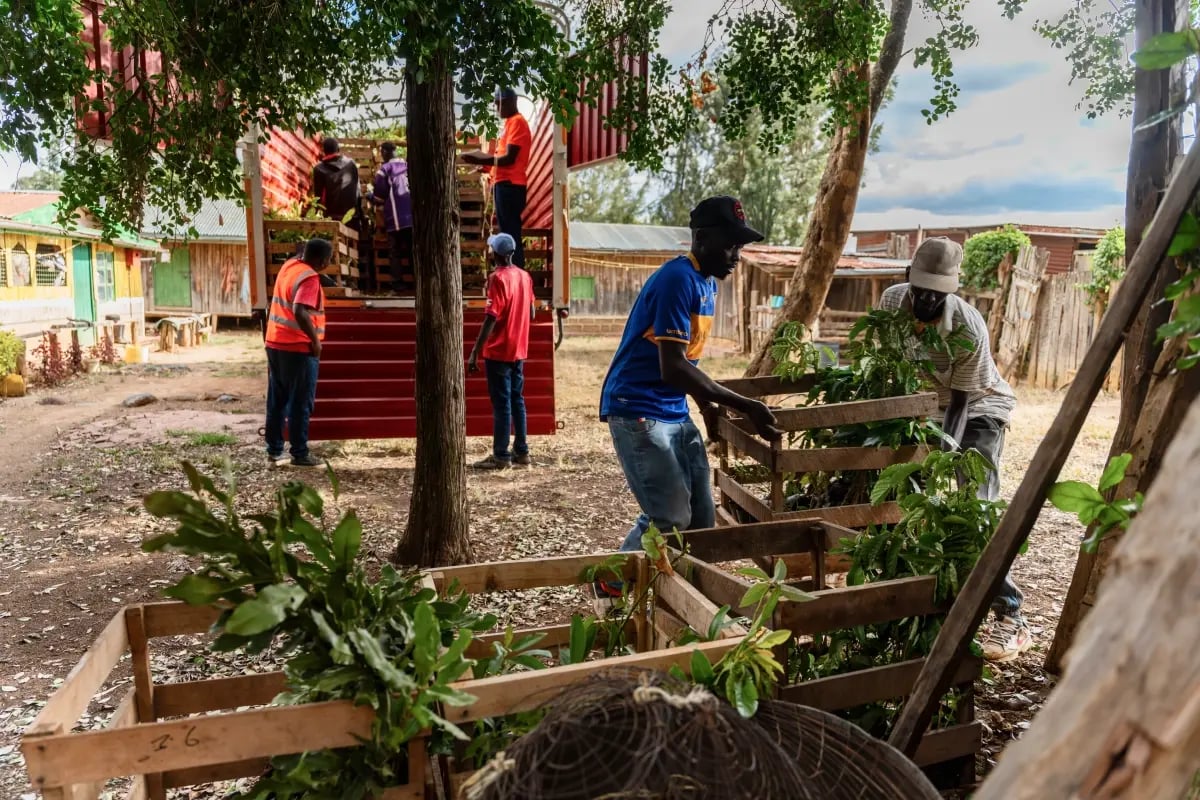 Farmers and field officers unloading seedlings from a truck and carrying them to a farm plot. Mount Kenya Regenerative Agroforestry Project, Green Earth.
The indigenous species are native to the area and restore the tree cover the landscape once had. Albizia and Faidherbia fix nitrogen, which feeds the soil and the crops around them. Deep-rooted Olea and Markhamia hold the soil together and keep water in the ground through dry spells. Croton provides wind protection, light shade, and leaves for mulch, and several species flower for bees, supporting pollination and honey production.
Read more: First harvests and coffee planting in Bungoma, Kenya
This season’s deliveries follow recent farmer training sessions across the region and focus on tree survival on farms already in the project.
This season was about making our existing farms stronger. Around 50% of what we delivered went to replanting trees that didn't make it, so farmers end up with a full, healthy plot. Growing is always good, but a farm only pays off for the farmer and the climate if the trees survive, and that was a big focus for this season.
Adam Steed, Venture Manager at Green Earth.
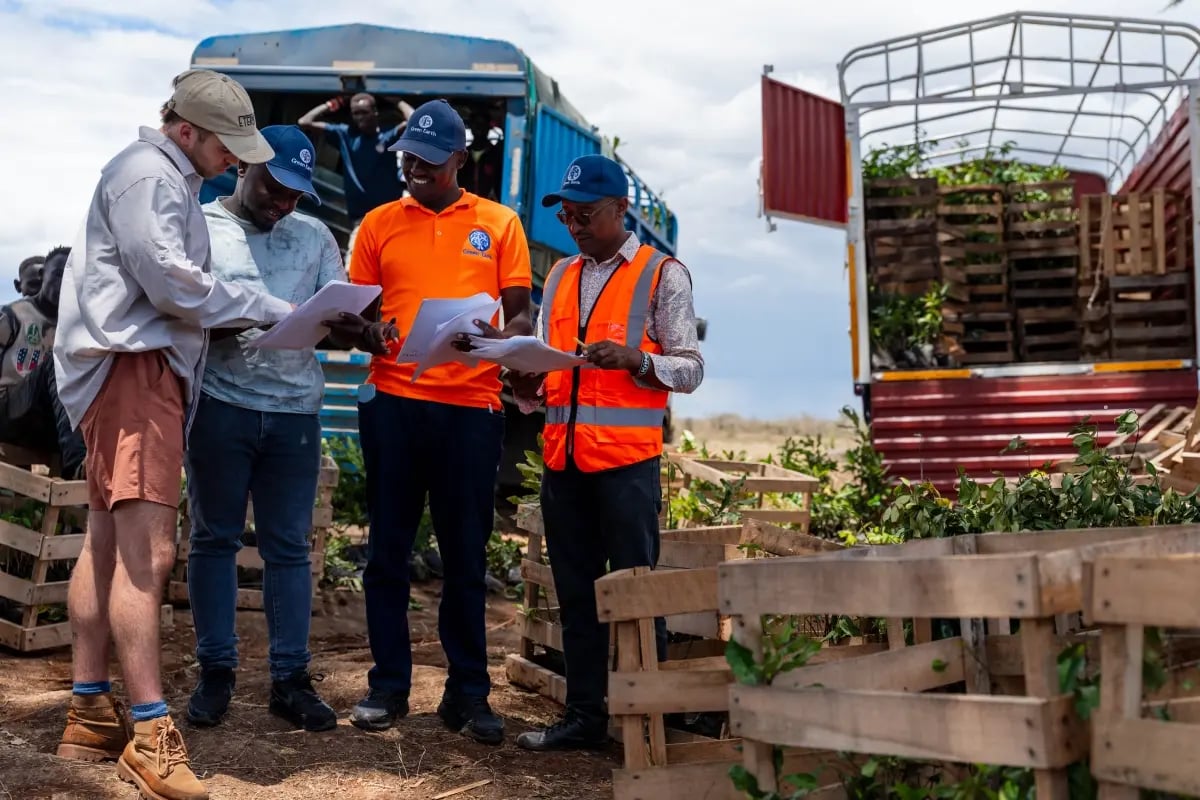 Green Earth’s field team checking delivery records with farmers next to a truck loaded with seedlings. Mount Kenya Regenerative Agroforestry Project, Green Earth.
The Mount Kenya project, registered under Verra’s Verified Carbon Standard (VCS), targets approximately 4.1 million trees across 15,000 hectares, with more than 5,525 participating farmers over its 41-year lifetime. Mount Kenya is one of Kenya’s five main water towers, which feed the country’s rivers and lakes. This makes agroforestry and reforestation efforts by Green Earth to increase tree cover on farms in Mount Kenya’s catchments essential. It helps reduce soil erosion, slow runoff, and protects the streams and springs that communities downstream rely on.
Read more: How community stewardship makes carbon credits durable
Each delivery adds to a project designed to last for decades. Farmers who keep their trees healthy earn from their harvests, and the trees they protect continue to restore the landscape around them.
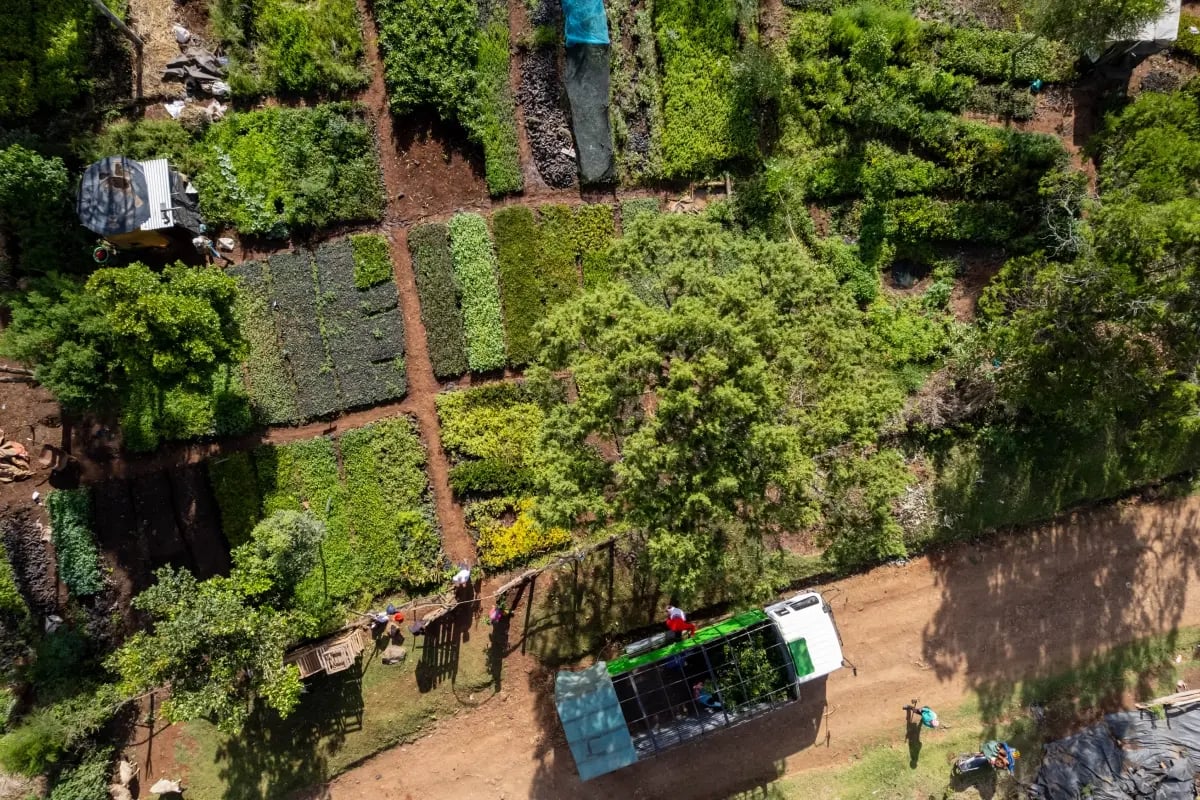 Field team unloading crates of seedlings from a truck at a farm in the Mount Kenya region. Mount Kenya Regenerative Agroforestry Project, Green Earth.
Carbon credits from the project fund this work on the ground. Our agroforestry projects support farmer livelihoods and restore native tree cover, and you can be part of that impact by purchasing verified carbon credits.