
Agroforestry
Nature-based solutions
Project updates
Uganda
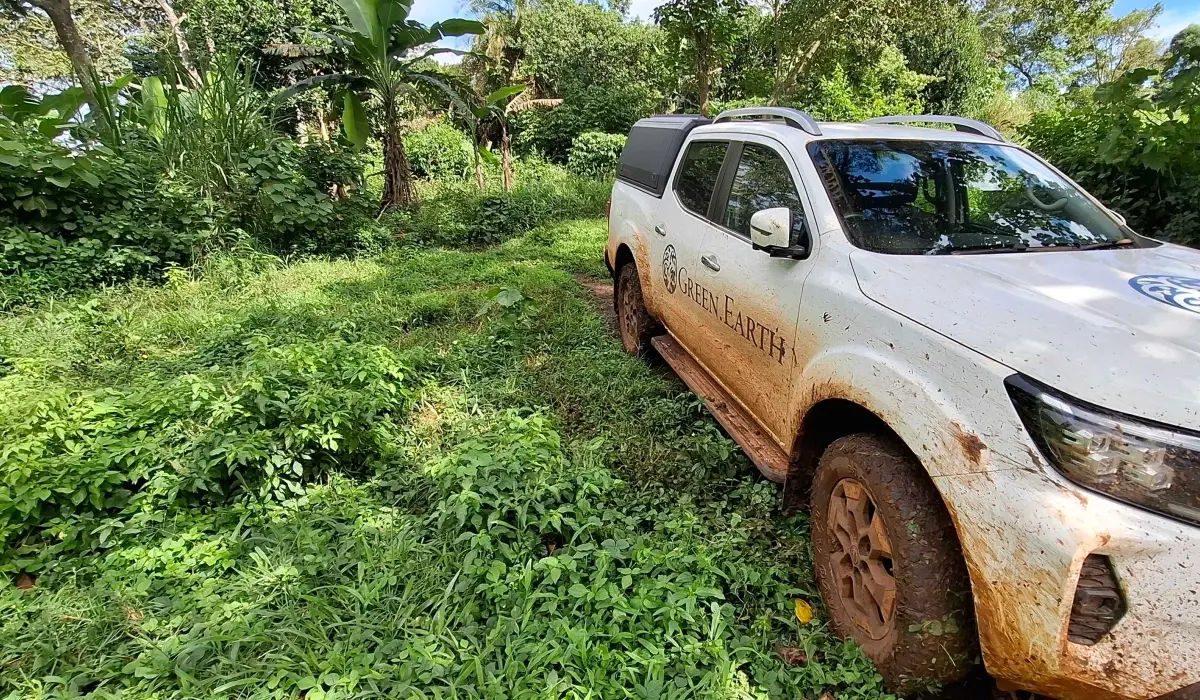
Green Earth's South team in Uganda completed its round of biomass verification on 18 November 2026, after three days of fieldwork on farms in Kakumiro and Kagadi districts. On the final day, the team recorded the round's highest tree density: 86 trees in a 10-metre circle on a hillside farm in Mabaale. The fieldwork forms part of the Bulindi Agroforestry and Chimpanzee Conservation Project, which works with local households to restore tree cover and chimpanzee habitat in western Uganda.
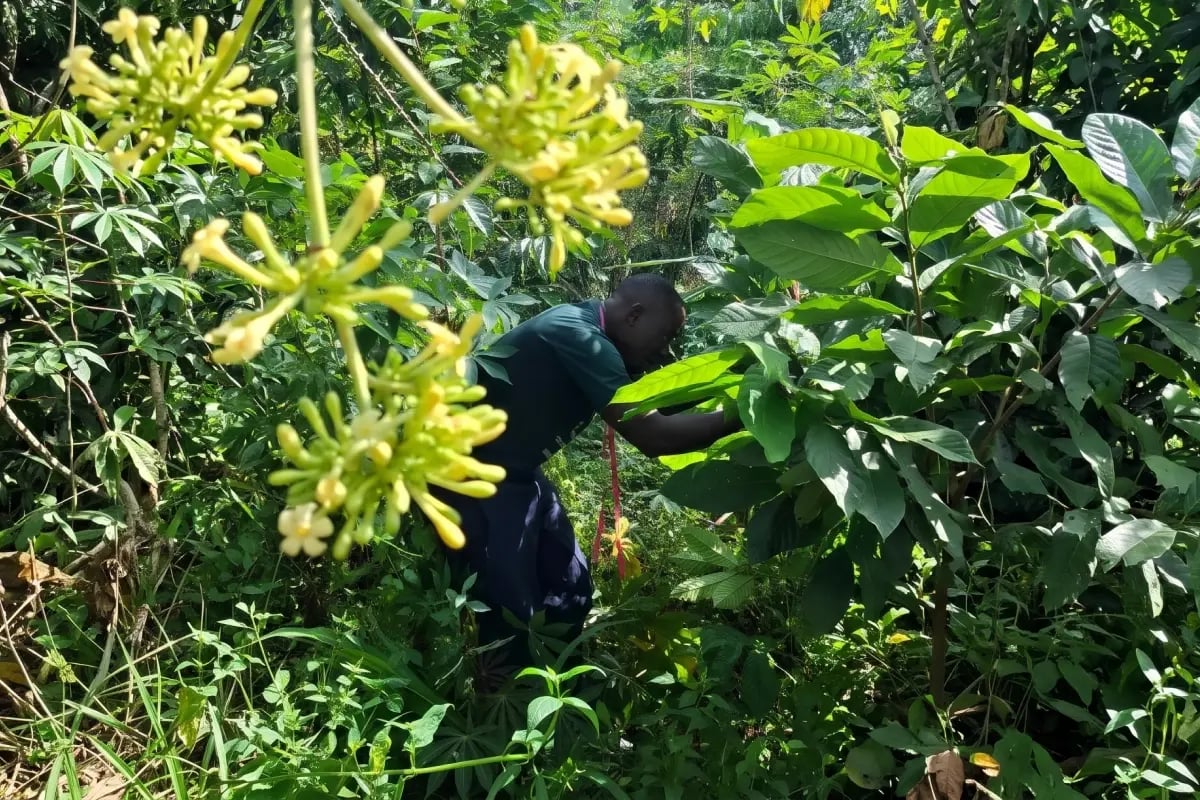 A Green Earth field team member measuring the farm plots. Bulindi Agroforestry and Chimpanzee Conservation Project, Green Earth.
Ouke Dijkstra, Country Director for Green Earth in Uganda, and three field team members measured the farm plots.
Reaching the farms called for sturdy four-wheel-drive vehicles to conquer the washed-out roads, narrow paths, and deep mud along the routes on all three days. On the first day, the vehicle got stuck where the road turned into a track, so the team walked the final 2 km to a farm on a steep, rocky hill. On 17 November, a stream blocked the most direct route, so the team took a longer road. On 18 November, the farmer met the team on his motorcycle and led the way into the rocky hills of Mabaale. High rocks stopped the vehicle 100 m from the farm, and the team walked the rest of the way.
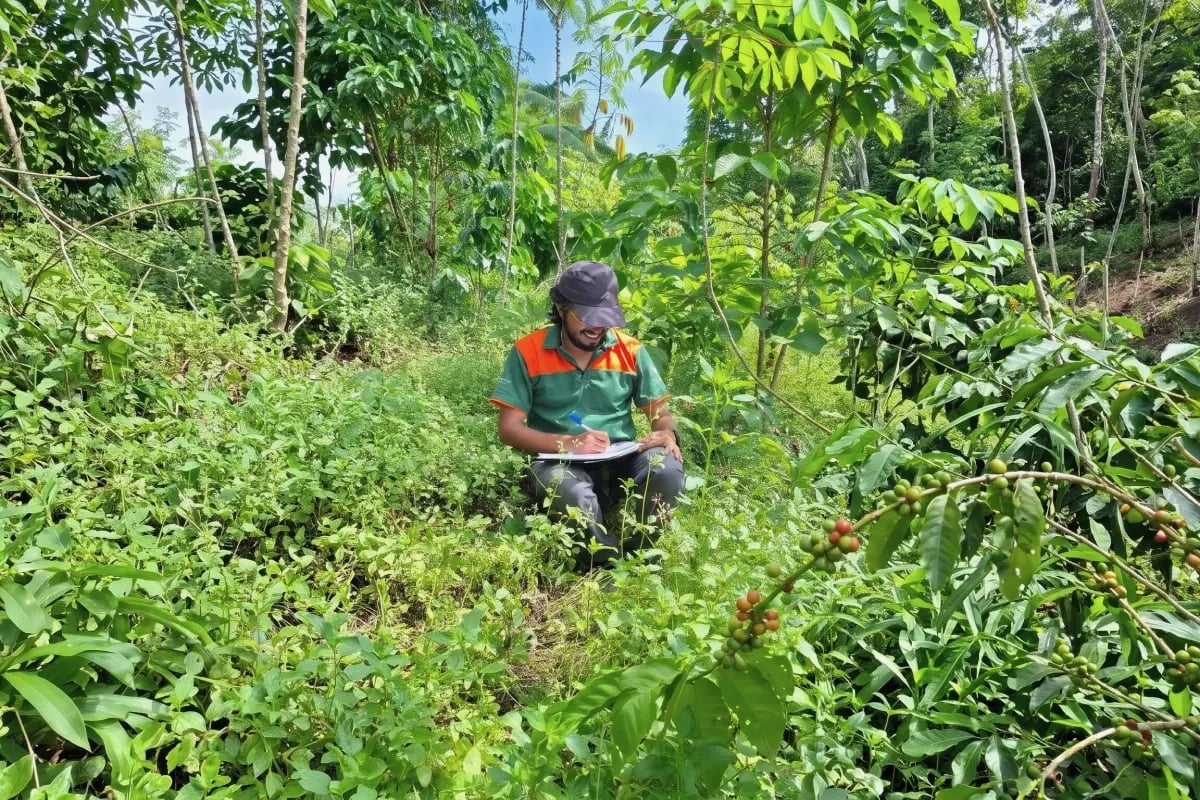 A Green Earth field team member recording tree data on a farm, with ripening coffee cherries in the foreground. Green Earth Uganda, Green Earth.
The hillside farm from the first day shows the project's agroforestry model working even on rocky, steeply sloping land. The Mabaale farm grows the indigenous trees alongside cacao, coffee, banana, medicinal trees, fruit, and vegetables, all planted between rocks. Systems like this combine food crops, cash crops, and native tree cover on the same land, supporting household income and local biodiversity together.
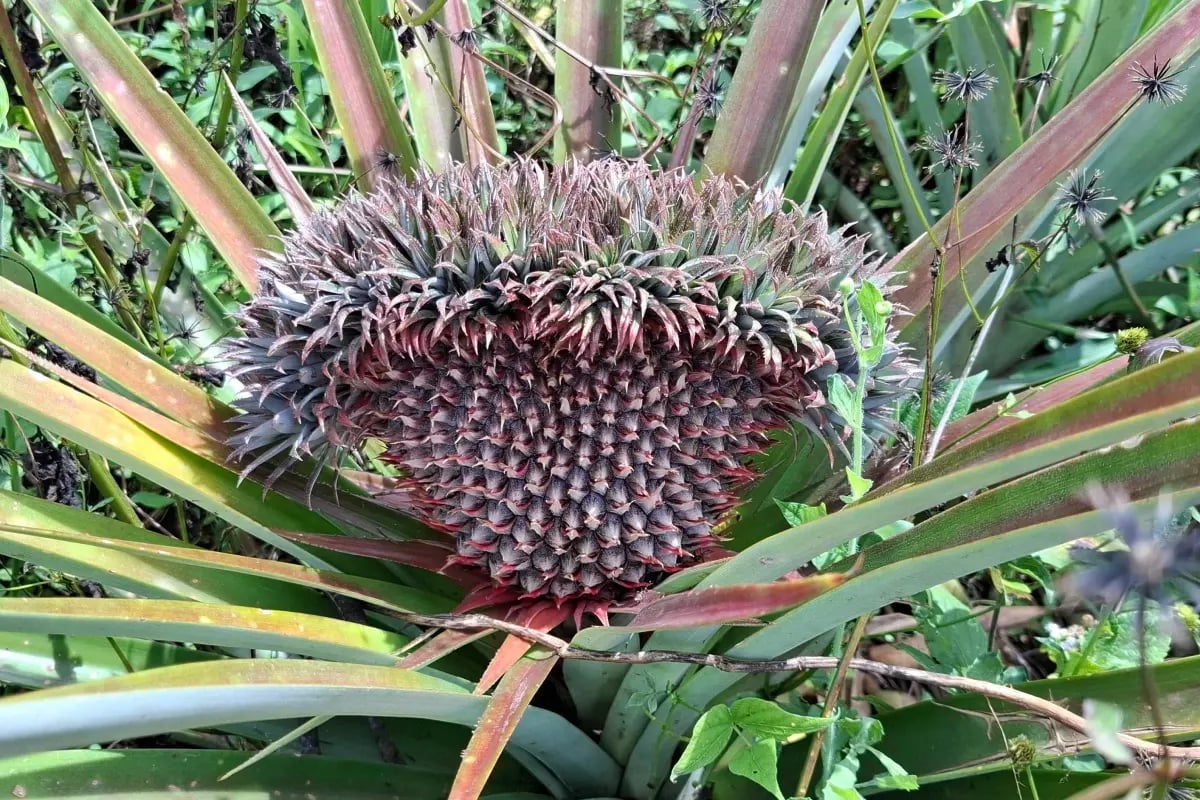 A pineapple growing among the diverse crops on the Mabaale farm. Bulindi Agroforestry and Chimpanzee Conservation Project, Green Earth.
Biomass verification measures the trees growing on participating farms to estimate how much carbon they store.
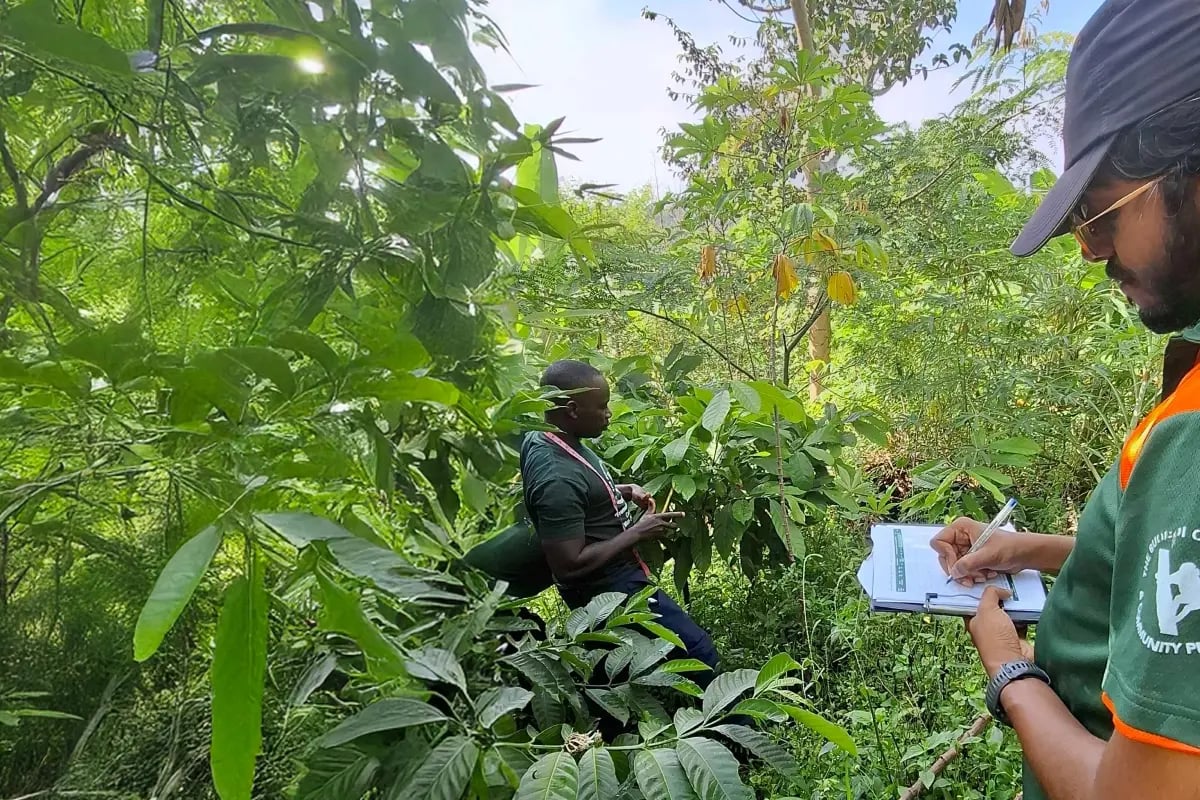 Green Earth field team members recording tree measurements among cacao plants. Green Earth Uganda, Green Earth.
Read more: From bushland to mother garden: Bulindi's Mwani nursery is growing strong
During the measurements, the team recorded several large trees, including a species that provides food for chimpanzees. The nearest chimpanzee groups live some distance away, so the team has marked the species as a candidate for planting in the project's chimpanzee corridors. The project sits in a corridor between the Budongo and Bugoma forests, where planting restores food sources for chimpanzees and helps ease conflict between people and wildlife.
Read more: How community stewardship makes carbon credits durable
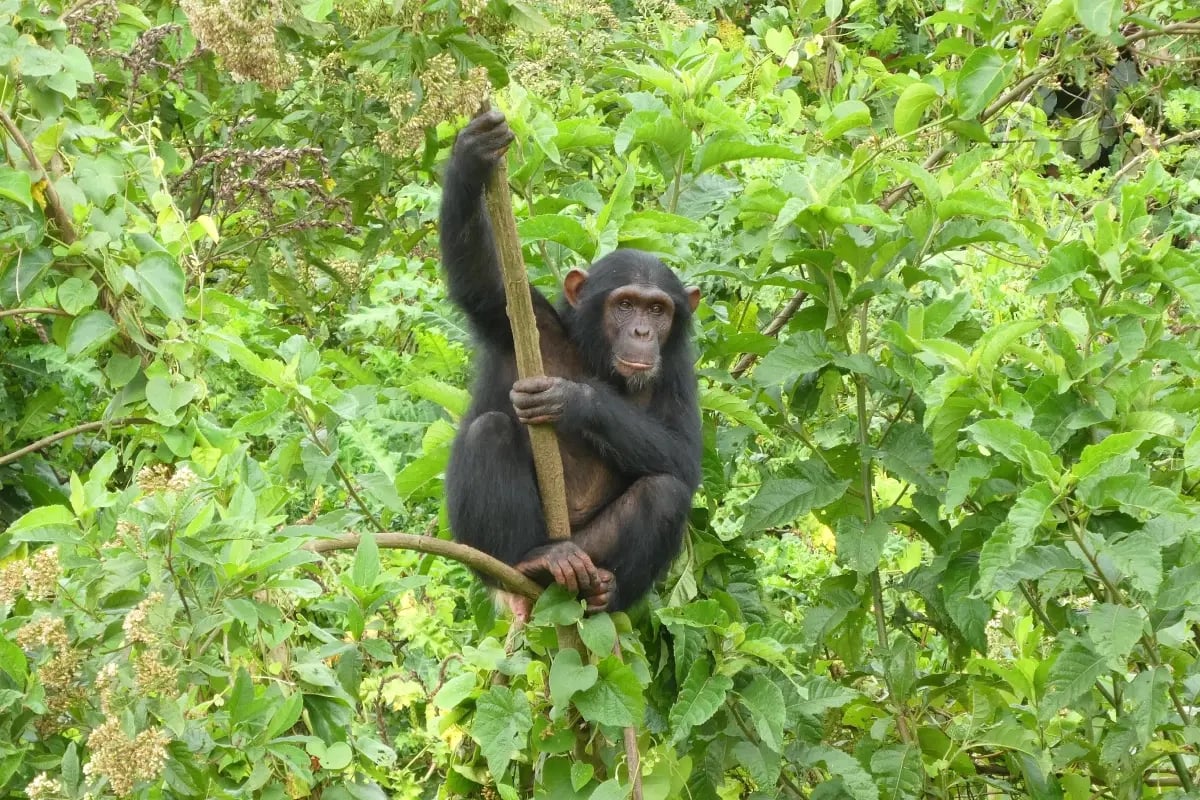 A Bulindi chimpanzee in its protected natural habitat. Bulindi Agroforestry and Chimpanzee Conservation Project, Green Earth.
Accurate biomass data underpins the carbon credits generated by the Bulindi Agroforestry and Chimpanzee Conservation Project, one of Green Earth's Gold Standard-certified nature-based projects. Each credit supports restored tree cover, stronger farming livelihoods, and protected habitat for chimpanzees in western Uganda. Companies that choose Bulindi credits support this work, from hillside farm plots to chimpanzee corridors.