
Carbon credits
Australia
Decarbonisation
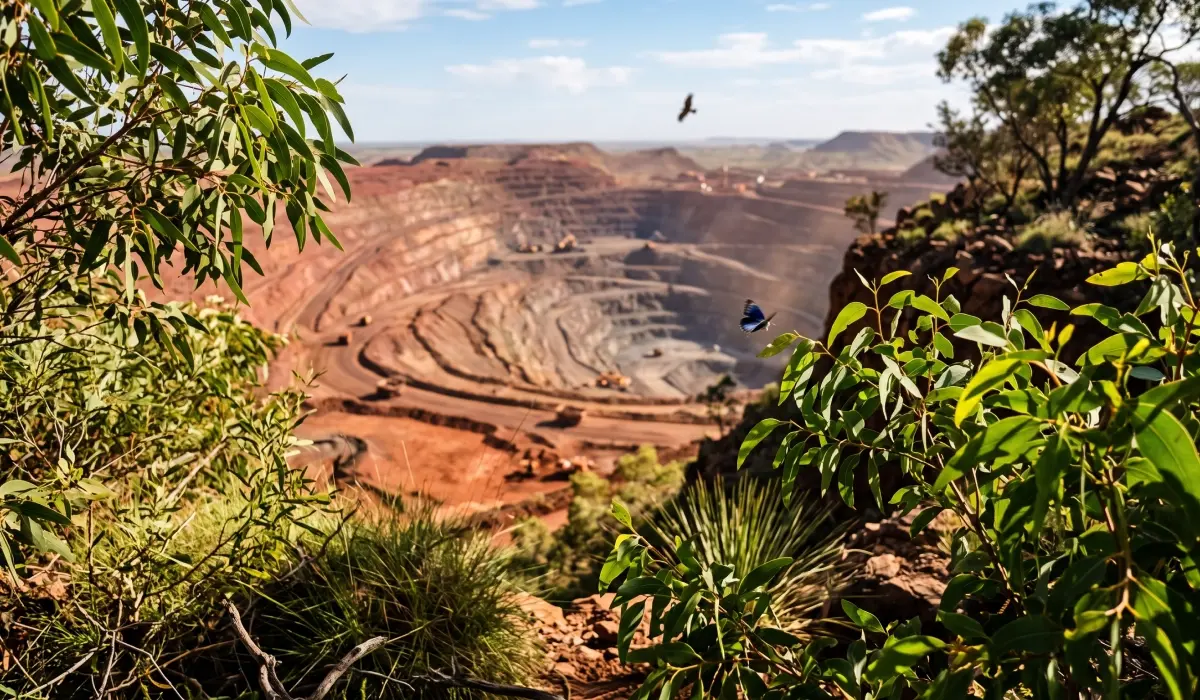
Australia’s coal mining sector will more than double its demand for carbon credits by the 2029-30 financial year, according to a new briefing note from the Institute for Energy Economics and Financial Analysis (IEEFA). Net demand is projected to reach about 12 million tonnes of CO2 equivalent, with coal alone potentially seeking more than half of the nation’s annual Australian Carbon Credit Unit (ACCU) issuance.
Coal is already the largest single user of credits under the Safeguard Mechanism (SGM), Australia’s main compliance scheme for industrial emissions, using close to 2.5 times the volume of the next-largest sector. In the 2024-25 financial year, it retired 5.1 million ACCUs, sourcing 60% of them from land-based vegetation projects and about 36% from methane-related projects.
The sector’s covered emissions rose 0.4% to 31.8 million tonnes of CO2 equivalent in 2024-25, including 19.5 million tonnes from methane, a highly potent emission released mainly as fugitive emissions from mines. Coal accounts for 86% of the methane emissions covered by the SGM.
“On-site emissions reduction efforts have largely stalled, with abatement activities limited to a handful of advanced projects. This has been driven partly by mixed incentive signals, and partly through industry under-investment into research and development,” IEEFA noted. The report links this to continued emissions-intensive production and a growing pipeline of new mines.
Read more: Nature-based methods lead new wave of carbon standards
The scheme’s baseline design shapes demand. Underground mines consume more credits to meet steeply declining baselines. Some open-cut mines with naturally lower emissions intensities earn Safeguard Mechanism credit units (SMCs) as their baselines trend toward the industry average.
“These grandfathered existing mines benefit about 10-fold compared with newly established mines whose target intensity factor is determined by a ‘best-practice’ approach — a rate more than 10 times lower,” IEEFA mentioned.
Supply of methane-based credits is tightening as coal’s reliance on them grows. The coal mine waste gas method behind much of that supply has closed to new projects and will not be renewed. “Coal’s own (net) credit requirements are approaching 100% of the supply of methane-based ACCUs issued in FY2025-26,” according to IEEFA.
IEEFA projects that coal will increasingly meet its compliance demand through land-based ACCUs, a shift it warns poses a risk to national and state emissions reduction targets. The finding sharpens a question already facing the carbon market: which credits deliver genuine, verifiable impact.
Read more: Net zero needs nature: a carbon credit guide
As demand grows for high-integrity carbon credits, the methodologies and standards behind every credit matter more than ever. Green Earth develops large-scale, nature-based carbon projects accredited by leading international standards, with full oversight of every stage of the project lifecycle — from design and implementation through to long-term monitoring and credit issuance. Our projects restore ecosystems, strengthen biodiversity, and improve community livelihoods, delivering verified environmental impact that stands up to scrutiny. For businesses meeting their environmental goals, that integrity is what counts.