
Carbon credits
Nature conservation
Nature-based solutions
Decarbonisation
Net zero is often described as a balancing act: cut what you can, account for the rest, and reach zero on the ledger. That framing is useful, but it leaves something out. It treats every tonne of carbon as interchangeable and every route to zero as equally sound, while the science tells a more specific story.
A credible net-zero strategy reduces emissions first, then compensates the emissions that remain with genuine carbon dioxide removal credits, and the most scalable removal available this decade comes from nature. This guide sets out why net zero needs nature, what carbon credit options for net-zero commitments actually look like, and how nature-based carbon credits turn a target on paper into restoration on the ground.

What net zero actually requires
Net zero is the state a company reaches when it has cut its carbon emissions as far as possible and removed an amount of carbon from the atmosphere equal to what it still releases. Reaching it through reductions alone is not achievable for most organisations, because some emissions are almost impossible to eliminate. The Intergovernmental Panel on Climate Change's Sixth Assessment Report is explicit on this point: carbon dioxide removal is unavoidable if net zero is to be achieved, precisely to counterbalance the emissions that remain after every feasible reduction.
These residual emissions cluster in hard-to-abate sectors such as cement, steel, aviation, and parts of agriculture, where low-carbon alternatives are early-stage or costly. A plan that leaves these emissions unaddressed stops short of net zero. There is no credible route to net zero without carbon compensation. Removing carbon from the atmosphere is the step that closes the gap, and carbon credits for net zero are how most organisations finance it.
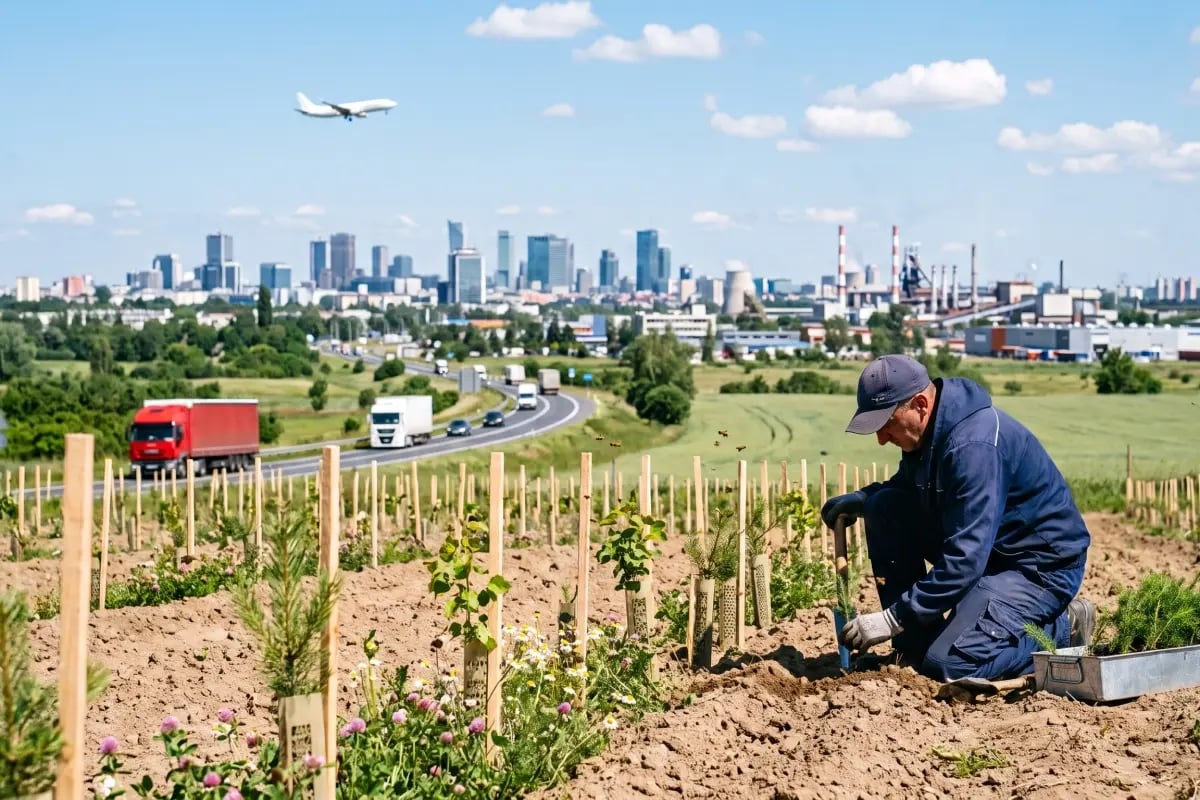 View through young trees in a reforestation project, with a large industrial city in the background. AI generated picture.
What are the top carbon credit options for net-zero commitments?
The carbon credit options for net-zero commitments fall into two broad families: credits that avoid or reduce emissions, like energy-efficiency projects, and credits that remove carbon from the atmosphere, like reforestation projects. Removal credits divide again into two: nature-based removal, which restores forests, soils, and wetlands so ecosystems draw down and store carbon, and engineered removal, such as direct air capture with storage.
Read more: The real cost of 1 tonne of CO2: Translating carbon into hectares
Each option sits at a different stage of maturity. Engineered removal can store carbon for very long periods, and today it operates at small scale and high cost. Nature-based removal is available now, at a meaningful scale, and at a lower cost per tonne. Two quality principles separate strong credits from weak ones in every category: additionality, meaning the carbon benefit would not have happened without the finance the credit provides, and permanence, meaning the carbon stays stored over time. Both matter more than the label on the credit.
Why nature is the scalable answer now
Nature holds much of the carbon removal capacity available this decade. A landmark study in the Proceedings of the National Academy of Sciences found that natural climate solutions, meaning the protection, restoration, and improved management of forests, wetlands, and grasslands, can deliver up to 37% of the cost-effective carbon mitigation needed by 2030 to keep the Paris Agreement's goals within reach. Forests alone account for over two-thirds of that potential.
Read more: Why a forest with more species stores more carbon
The reason is straightforward. Restoring an ecosystem removes carbon and rebuilds the living systems and biodiversity that hold it, returning water regulation, soil stability, and habitat for wildlife in the same act. In addition, nature-based projects can offer many benefits to local communities, such as job creation, training, and additional income streams. These co-benefits are why a nature-first approach does more than move a number: it produces outcomes a company can measure and report. This is the ground on which Green Earth works, developing nature-based carbon credits from projects that draw down carbon and restore ecosystems together.
How do carbon credits actually support corporate net-zero strategies?
Carbon credits support a corporate net-zero strategy by financing the reductions and removals a company cannot achieve inside its own operations, always alongside cutting its own emissions and never instead of it. Understanding how carbon credits support corporate net-zero strategies starts with sequence: reduce first, then compensate for what remains.
 Bulindi chimpanzees in their natural habitat. Bulindi Agroforestry and Chimpanzee Conservation Project, Green Earth.
Nature-based carbon credits play a specific role in that sequence. When a company buys them, its money funds real restoration, with trees planted, ecosystems rebuilt, and carbon drawn from the atmosphere and stored, and the resulting verified credits balance the emissions it has not yet eliminated.
The current frameworks recognise this. The Science Based Targets initiative (SBTi), the leading body for corporate net-zero targets, sets a pathway of roughly 90% emission reductions across Scope 1, 2, and 3 by 2050, with the remaining residual emissions balanced by removals. Its 2026 update also recognises high-integrity credits and removals as part of the journey towards that target. This is where nature-based credits earn their place in the voluntary carbon market: They let a company act on its emissions today and keep building towards the reductions science expects over time.

What makes a carbon credit worth buying
Not every credit delivers what it promises, and the difference comes down to quality. High-quality carbon credits share a set of traits a buyer can check: additionality and permanence, independent verification against a recognised standard, transparent measurement, and co-benefits for nature and communities that can be evidenced rather than asserted.
Read more: How carbon project developers quantify biodiversity and community impact
Verification is the anchor. A credit issued under a standard such as Verra's carbon programme has been independently assessed for the carbon it represents, which is what lets a company report it with confidence. Co-benefits raise the value further: A credit that also restores habitat, improves air quality, and supports local livelihoods carries an impact that a single carbon figure leaves out.
Restoring nature, and the benefits for our clients
Green Earth develops nature-based carbon credits from projects built to meet these tests. The Greening of the Dried Aral Sea Project, in the Kyzylorda Region of Kazakhstan, is one example. On the dried banks of the Aral Sea, one of the most ecologically fragile parts of the country, the Green Earth team works with local communities to plant saxaul, a hardy, salt-tolerant tree suited to the harsh conditions of the former seabed. Saxaul stabilises the soil, improves air quality, and reduces the sand-salt storms that affect the health of communities across the region.
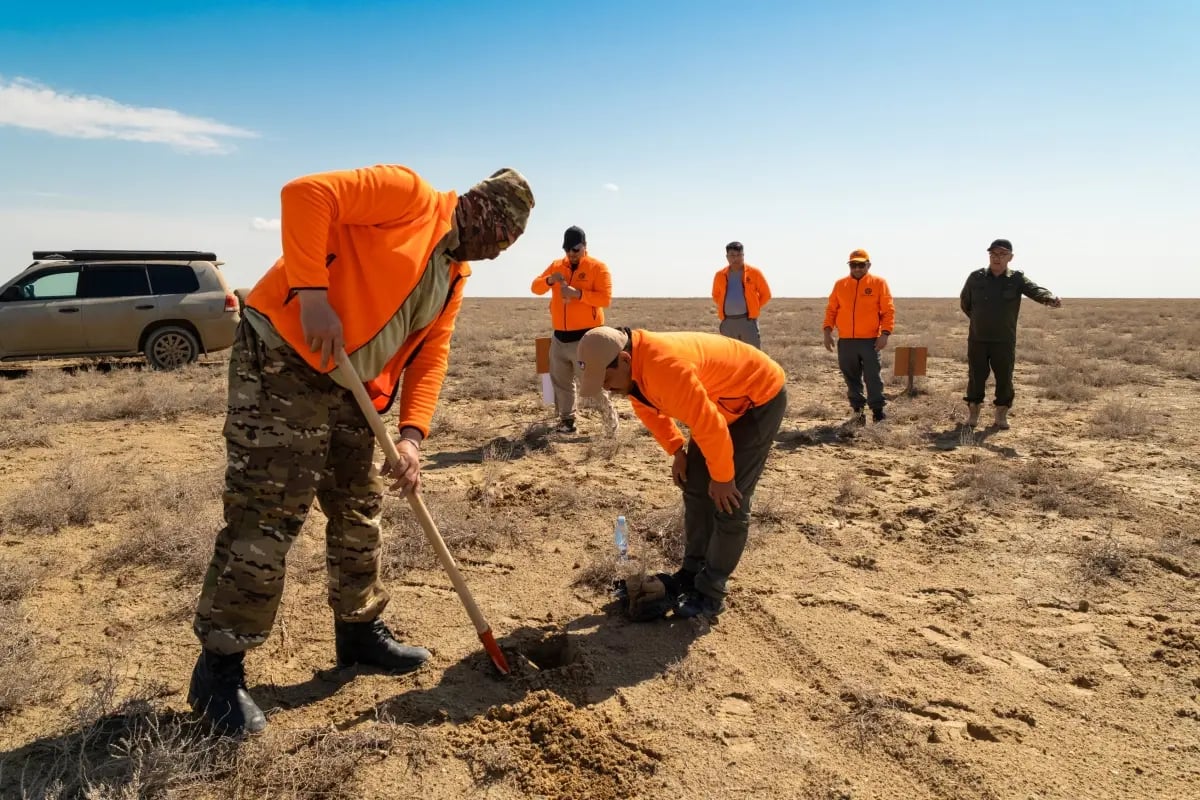 Members of the Green Earth team and the local community planting saxaul trees in the Kyzylorda Region of Kazakhstan. Greening of the Dried Aral Sea Project, Green Earth.
Restoration takes different forms across Green Earth's projects. In western Uganda, the Bulindi Agroforestry and Chimpanzee Conservation Project restores degraded farmland in the forest corridor between the Budongo and Bugoma reserves, rebuilding habitat for the region's endangered chimpanzees and supporting thousands of farming families.
The same regenerative approach runs through the Regenerative Agroforestry Project Cameroon and the Mount Kenya Regenerative Agroforestry Project, where tree planting restores soil, water, and livelihoods alongside carbon capture.
Each purchase from a Green Earth project comes with an Impact Report, a Carbon Credit Certificate, and a climate contributor badge — the evidence a sustainability lead needs to show the work behind the number. This is what a nature-first approach to net zero looks like in practice: verified carbon, restored land, and a record you can stand behind.
Net zero is a scientific commitment. Meeting it means reducing emissions and removing carbon, and nature offers the most scalable, most beneficial removal available today. Green Earth makes that route real, by facilitating access to long-term, meaningful impact on nature.