
Carbon credits
Google
Decarbonisation
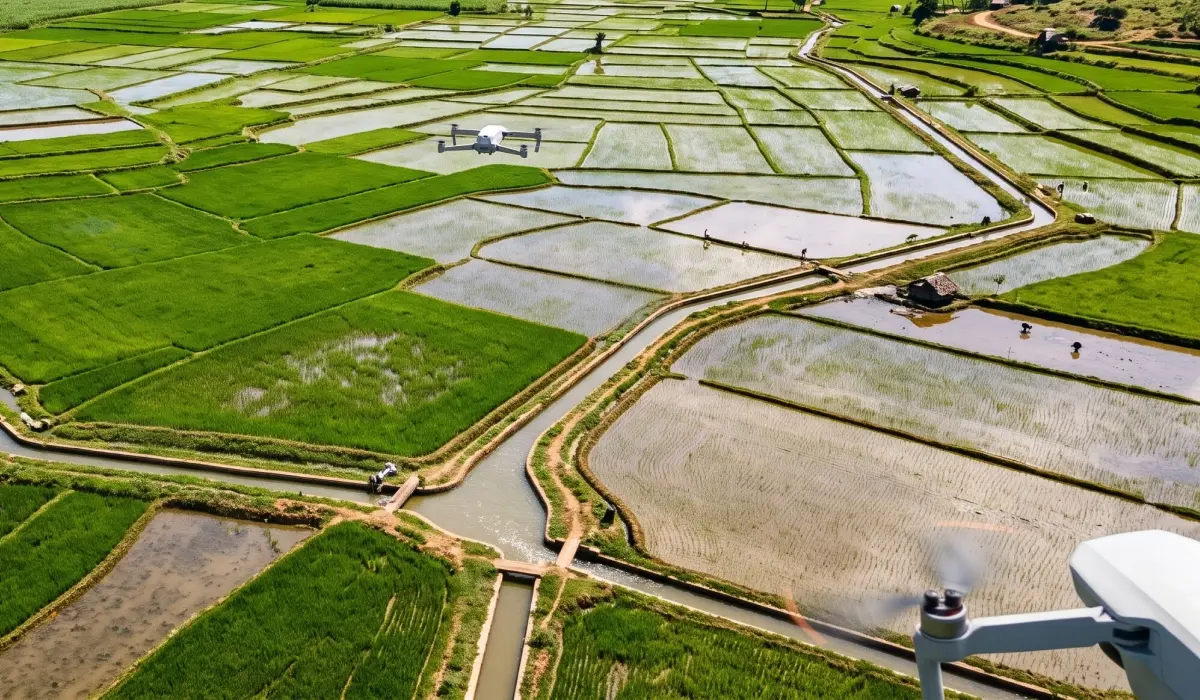
Google has agreed to buy 1 million carbon credits from rice methane developer Mitti Labs, the largest publicly announced deal of its kind. The four-year agreement runs through 2030 and funds a shift among smallholder rice farmers in India to alternate wetting and drying (AWD), an irrigation practice that cuts methane emissions from paddies.
AWD periodically drains rice fields rather than keeping them continuously flooded. The change reduces methane emissions by around 50% and water use by nearly 40%, and holds yields steady. Continuously flooded paddies let methane-producing microbes thrive and draw far more water. The programme will reach more than 70,000 farmers across Karnataka, Andhra Pradesh, and Telangana, covering more than 100,000 hectares at peak.
Over the term, the partnership is set to cut methane emissions equivalent to 3 million tonnes of CO2 on a 20-year basis (GWP20), or 1 million tonnes on a 100-year basis (GWP100). It also targets large water savings. "By 2030, our partnership will cover more than 100,000 hectares and unlock 1.5 trillion litres of water savings, roughly the equivalent of three years of Bengaluru’s entire water supply, across critical watersheds in India," Mitti Labs said in a statement.
Read more: Net zero needs nature: a carbon credit guide
"Mitti Labs’ approach delivers critical near-term atmospheric impact by cutting methane emissions, while conserving billions of gallons of water and empowering smallholder farmers to deploy advanced water-management practices," said Kate Brandt, Chief Sustainability Officer at Google.
Mitti Labs measures results through its own digital measurement, reporting, and verification (dMRV) system, a GeoAI platform that pairs high-resolution satellite data with ground readings to track crop health, soil moisture, and flooding. Its flagship project, Supporting Climate Smart Rice Farming In Telangana, applies a Gold Standard methodology and earned an A rating from Sylvera this year. The developer measures emissions directly in closed field chambers and fits every field with purpose-built AWD pipes — a costlier approach than the default emission factors many rice methodologies rely on.
The deal lands as Google scales its artificial-intelligence infrastructure. Its emissions reached 14.5 million tonnes of CO2 equivalent in 2025, up 18% on the year, and the company is targeting net zero by 2030 by halving emissions from 2019 levels and using carbon dioxide removal (CDR) for the remainder.
Cutting methane from farming is one of the fastest ways to lower near-term emissions, and demand for credits that deliver it is growing. Green Earth offers verified credits from projects in the same field. The Methane Recovery in the Netherlands project captures methane from Dutch farm manure before it escapes to the atmosphere and turns it into usable biogas, avoiding around 42,000 tonnes of CO2 equivalent each year. Verra-certified and available on our marketplace, it lets businesses back verified methane reduction and support rural energy independence and healthier soils across the Dutch farming heartland.