
Sustainability
United Kingdom
Forest conservation
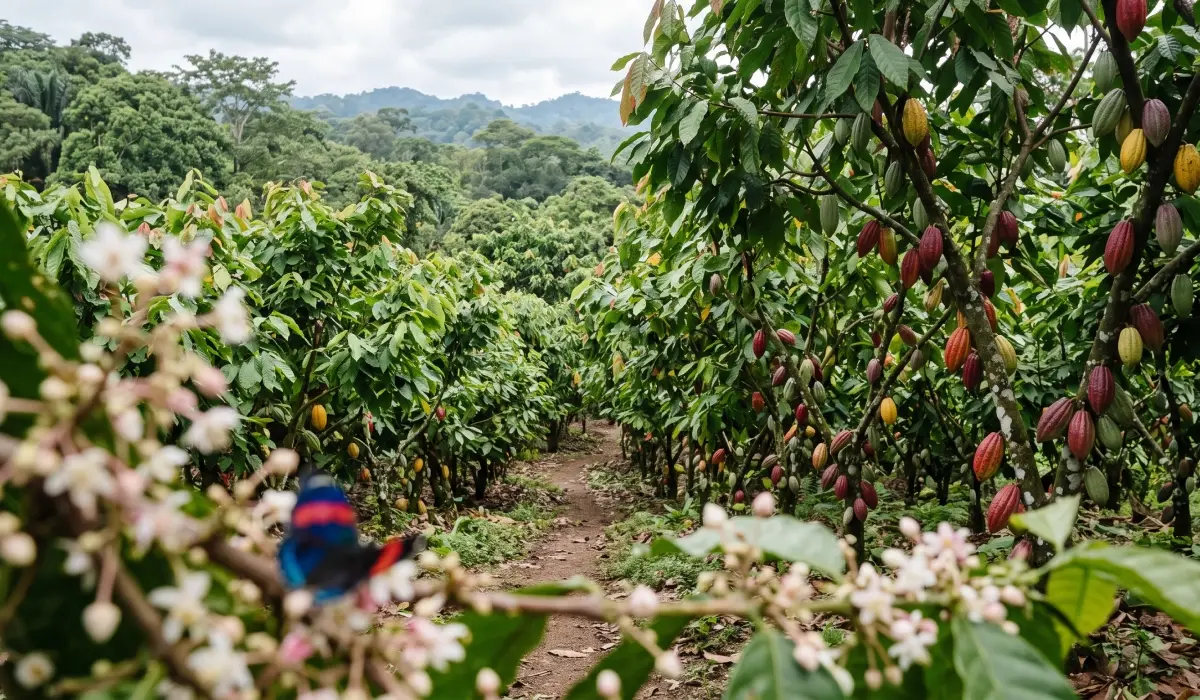
The UK government plans to make deforestation checks a legal requirement for businesses that trade in forest-risk commodities. Confirmed during London Climate Action Week, the measures shift responsibility for deforestation risk from voluntary pledges to a legal duty across Great Britain's supply chains.
Under the proposals, businesses with an annual turnover above £1 million that use forest-risk commodities and wood products will need to carry out due diligence on their supply chains. The rules would cover wood, cattle, cocoa, coffee, palm oil, rubber, soy, and derived products such as chocolate and furniture — commodities found in everyday goods including cooking oils, cosmetics, and confectionery. Companies will need to prove these goods were produced in line with relevant local laws, supported by geolocation data showing where products originate.
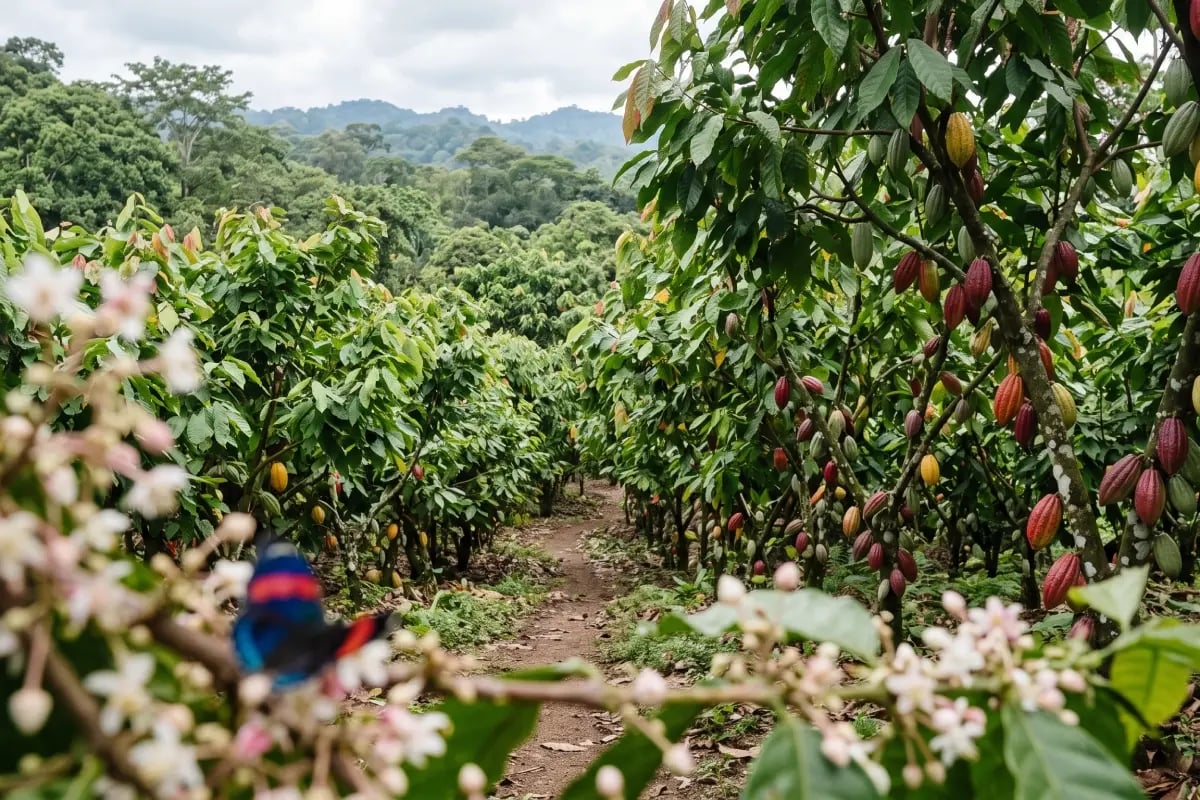 Cocoa plantation sourced from areas free from illegal deforestation. AI generated picture.
Forests store carbon at scale and sustain much of the world's biodiversity. Agricultural expansion drives around 90% of global deforestation, much of it tied to internationally traded commodities. In 2023, UK consumption of these goods was linked to approximately 29,000 hectares of deforestation worldwide and 9.4 million tonnes of carbon emissions.
Read more: Nature-based methods lead new wave of carbon standards
The government intends to use powers under the Environment Act 2021 and to strengthen the UK Timber Regulation, which has governed timber due diligence since 2013. A consultation with businesses, civil society, and international partners will follow later this year, setting the details of the new UK regulations.
Alignment with the European Union sits at the centre of the design. To preserve Northern Ireland's dual access to the UK Internal Market and the EU Single Market, the EU Regulation on Deforestation-Free Products (EUDR) will apply in Northern Ireland in phases from 30 December 2026. The UK is set to mirror the same core commodities and information requirements, reducing duplication and helping British exporters meet EU traceability standards.
Nature Minister Mary Creagh said: “Eliminating products linked to illegal deforestation not only helps to protect precious ecosystems but is good for our collective resilience and long-term prosperity.”
The government's longer-term ambition is a deforestation-free standard, requiring covered products to be produced free from any deforestation. For businesses across food, retail, consumer goods, and timber, stronger traceability and supplier due diligence will become the baseline for market access. Companies that can verify their supply chains now will be better placed when the rules take effect.
Read more: What is a life cycle assessment, and why does it matter?
As verification and traceability become the benchmark across supply chains, the same rigour defines credible environmental action, and demand grows for high-integrity carbon credits, where the methodologies and standards behind every credit matter more than ever. Green Earth develops large-scale, nature-based carbon projects accredited by leading international standards, as well as sourcing and providing high-integrity carbon credits for businesses set to keep their carbon footprint in check. Our projects restore ecosystems, strengthen biodiversity, and improve community livelihoods, delivering verified environmental impact that stands up to scrutiny. For businesses meeting their environmental goals, that integrity is what counts.