
Carbon credits
Nature market
Decarbonisation
.webp)
Buyers recorded their strongest quarter yet for carbon dioxide removal (CDR) in the second quarter of 2026, committing to a record 2.1 million tonnes of carbon dioxide (MtCO2), according to a new market review from ClimeFi. The total marks an all-time high for the wider buyer base and an increase of 136% compared with the same quarter of 2025.
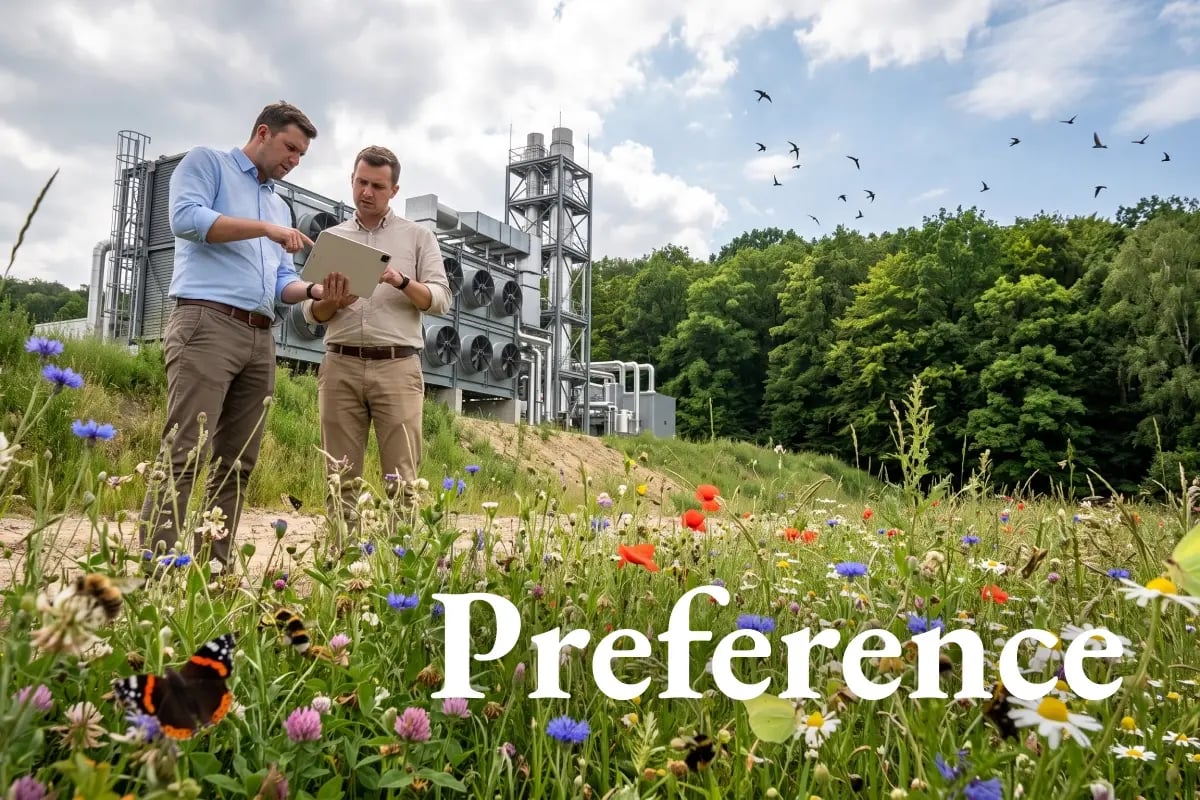 Engineers discussing carbon removal technology near a direct air capture facility with a forest ecosystem in the background. AI generated picture.
Those buyers signed 14 deals over the quarter, the most ClimeFi has recorded to date, and seven of them made their first major CDR commitment. A public authority also entered the market at scale for the first time, as the City of Stockholm agreed to buy 750,000 credits.
The commitments made during the quarter are valued at $676 million, based on all publicly disclosed tonnages for deals above 5,000 tonnes. The market added a further 3.37 MtCO2 of removal commitments quarter on quarter, an increase of 83%, taking cumulative commitments to 45.9 MtCO2.
Within the last quarter, three large deals in bioenergy with carbon capture and storage (Bio-CCS) lifted that route to a 60% share of quarterly commitments, up from 2% in the first quarter. Biochar remained the most sought-after pathway once those deals are set aside, accounting for 86% of volumes and passing 1 MtCO2 for the third time in five quarters. Issuances nearly doubled quarter on quarter, reaching 193,000 credits across multiple registries.
Read more: The new SBTi Corporate Net-Zero Standard: what it means for business
The quarter also brought a milestone for corporate demand. The Science Based Targets initiative (SBTi) published Version 2.0 of its Corporate Net-Zero Standard, introducing an Ongoing Emissions Responsibility (OER) programme that formally recognises high-integrity carbon credits as a way for companies to take responsibility for emissions released while they work towards their targets.
Fresh research shows why quality and pricing sit at the centre of the conversation. A new study from MIT Sloan School of Management finds that the price of a carbon credit in the secondary market reflects who is buying it more than the measured benefit it delivers. Buyer identity alone accounts for 62% of price variation, with prices ranging from a few cents to more than $100 per tonne for credits representing the same volume of emissions reductions.
Projects with a compelling background command a premium, the researchers found, and more measurable routes trade for less. The study’s authors call for greater transparency, including public price benchmarks. As MIT Sloan principal research scientist Florian Berg put it, “it’s very important that we create a mechanism to make it more transparent.”
Read more: EU Commission publishes landmark ETS reform proposal
Quality and transparency are what a maturing carbon market rewards. Green Earth’s nature-based carbon projects are built to meet exactly the criteria that buyers seek out: additionality, independent verification, and lasting benefits for the communities and ecosystems involved. For businesses deciding how much of their ongoing emissions to take responsibility for, and how to communicate that responsibility with confidence, a portfolio of high-quality verified carbon credits offers a transparent place to start.