
Carbon markets
EU ETS
Governments
The European Commission has published its long-awaited EU Emissions Trading System (EU ETS) review proposal, and the carbon market responded with a rebound. Following the announcement on 17 July 2026, EU Allowance (EUA) prices climbed by roughly €7, reaching €86 on 22 July.
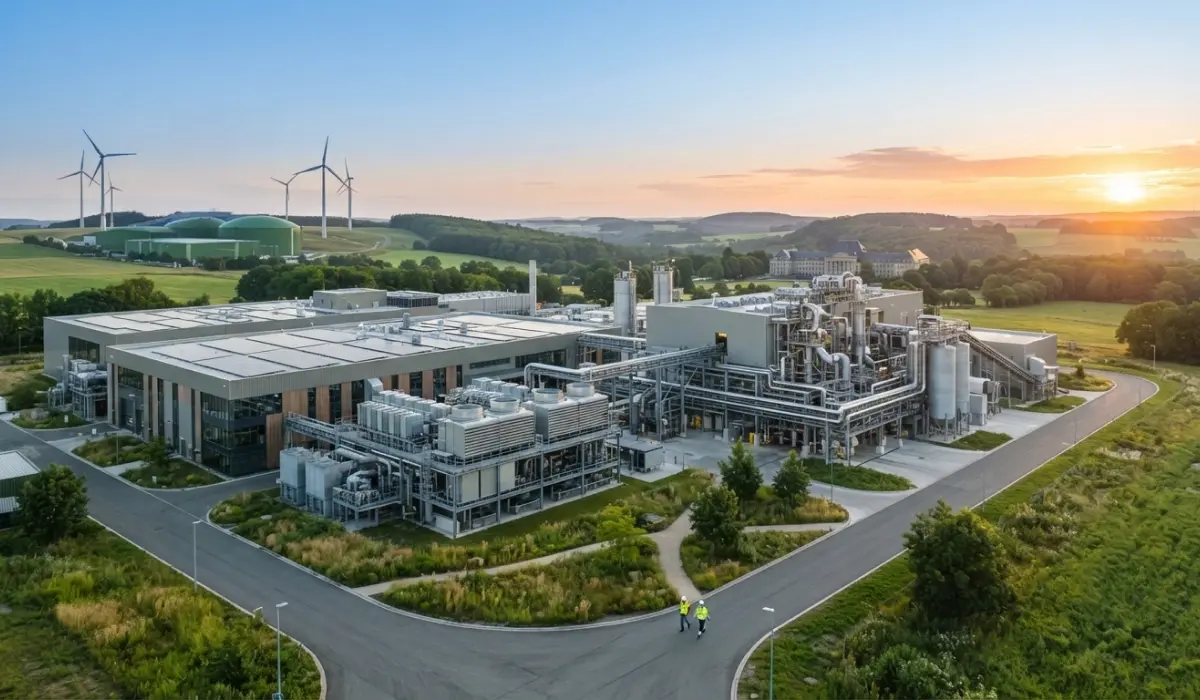
 A modern European industrial facility operating with advanced technologies and supporting the shift towards a lower-carbon economy. AI generated picture.
The package comprises a 141-page ETS Directive proposal, a revised heat and fuel benchmarks proposal, and an Electrification Action Plan. Together they set the legal framework for phase 5 of the system, running from 2031 to 2040, and align the ETS with the EU’s target of a 90% net reduction in emissions by 2040. Climate Commissioner Wopke Hoekstra said the review will transform the ETS into a “genuine engine for innovation and investment”.
The market climbed because the confirmed details proved less bearish than earlier worst-case expectations. The proposal lowers the Linear Reduction Factor (LRF), the annual rate at which the emissions cap shrinks, to 3.7% for 2031–2035 and 1.7% from 2036, down from the current 4.3%. This gentler trajectory pushes the point at which the cap would reach zero from around 2039 to roughly 2048.
Read more: Higher-integrity credits reshape the carbon market
Relief for industry runs throughout the package. The Commission proposes a €100 billion Industrial Decarbonisation Bank, with its first phase launching in 2028 as an Investment Booster of 400 million allowances, equivalent to around €30 billion of support for decarbonisation projects. Free allowances for heavy industry extend beyond 2030 and into the 2040s, supported by an immediate €6 billion boost of 80 million allowances through revised 2026–2030 fallback benchmarks. The phase-out of free allocation for sectors under the Carbon Border Adjustment Mechanism (CBAM) moves from 2034 to 2038.
Further revisions recalibrate the market’s core mechanics. The Market Stability Reserve (MSR) intake rate falls to 12% from 2028, and the 2027 surplus indicator is revised down by 173 million allowances to reflect historical aviation demand. The proposal also opens the EU carbon market to permanent domestic carbon removals and to international credits, connecting the ETS more closely with the global carbon market through the Article 6 and CORSIA frameworks.
The proposal now opens the EU’s ordinary legislative process. Member states and stakeholders have already set out their positions, and intense negotiations lie ahead through the autumn. Co-legislators aim to finalise the process by the first quarter of 2027.
Read more: How to improve Scope 3 data accuracy for CSRD
The proposal opens the EU carbon market to high-quality, high-integrity international credits and permanent removals, and demand for credible carbon credits will grow alongside it. Businesses preparing for this shift need a dependable supply they can stand behind: credits that are verified, traceable, and backed by real environmental results. Green Earth provides that supply. We give businesses access to high-integrity carbon credits from nature-based carbon projects that restore ecosystems and support local communities, so you can meet rising expectations for quality with confidence.