
Carbon credits
Net zero
Carbon markets
Decarbonisation
The carbon market is being reshaped by a clear shift towards quality. Buyers are paying more for higher-integrity credits, the standards behind those credits are tightening, and new sources of demand are opening as corporate and compliance frameworks mature. Sylvera's latest carbon market data snapshot captures that shift across three fronts: how quality is being priced into the market, the demand a stronger corporate net-zero standard could unlock, and the supply squeeze building in aviation ahead of a 2028 deadline.
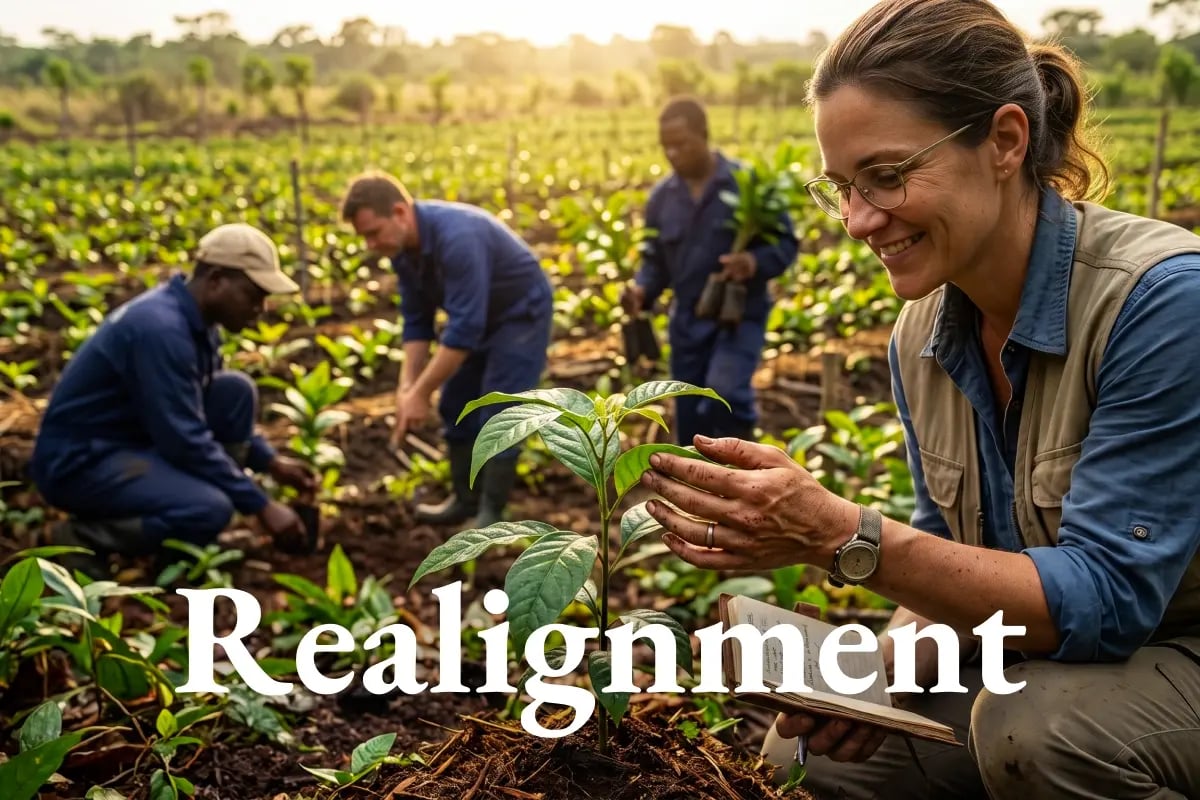 Field verification of a reforestation project ensuring the integrity of high-quality carbon credits. AI generated picture.
Quality is commanding a rising premium
The value side of the market held firm. Retirement value reached $247 million in the second quarter of 2026 (Q2 2026), up from $227 million a year earlier, and the average price paid per retired credit rose to $6.41, from $5.29. Retirement volumes moved the other way, with 38.55 million credits retired in the quarter and 89.27 million across the first half of the year (H1 2026), down 10% and 9% on the same periods in 2025. Much of that shift reflects a single buyer. Shell, historically the market's largest retiree, cut its retirements from 6.7 million tonnes to 494,100 tonnes, around two-thirds of the entire year-on-year decline. Buyers are paying more for fewer credits, and quality is the reason.
Read more: How to choose high-quality carbon credits
The premium for quality is widening. Investment-grade credits, those rated BBB or higher, made up 27% of rated retirement volume in Q2 2026 and 51% of rated market value. The gap is clearest in nature-based supply: afforestation, reforestation and revegetation (ARR) credits rated BBB+ averaged $28.55 in H1 2026, more than three times the $9.12 paid for lower-rated ARR, and improved forest management and REDD+ (reducing emissions from deforestation and forest degradation) credits show the same widening split. New supply is improving in step, as investment-grade issuances climbed to 29% in H1 2026 from around 13–16% between 2022 and 2024, and Core Carbon Principles (CCP) accreditation now covers 27.5% of issuances.
.webp?width=1200&height=734&name=220626_Carbon%20credit%20demand%20climbs%20as%20net-zero%20adoption%20soars%2c%20new%20report%20shows_visual%202%20(1).webp) Quality share of new issuances, source.
Quality share of new issuances, source.
A stronger corporate standard opens new demand
A stronger corporate standard is opening a fresh channel of demand. The Science Based Targets initiative (SBTi) released the second version of its Corporate Net-Zero Standard, which recognises carbon credits for the first time. The scale of the opportunity is large. SBTi-aligned companies (an estimated 11,000 worldwide, covering around 34.5 billion tonnes of carbon dioxide equivalent, or tCO2e, across Scope 1 to 3 emissions) retired credits equal to just 0.06% of their footprint over the past year, against a 1% threshold for the standard's Engaged status.
Read more: The new SBTi Corporate Net-Zero Standard: what it means for business
Sylvera's modelling shows how quickly that could change. Even moderate alignment would lift demand from SBTi-aligned companies to 55 million tonnes by 2030 and 293 million by 2035, and a more ambitious pathway reaches 224 million by 2030 and 1.1 billion by 2035. Meeting demand on that scale rewards developers who can supply credible, high-quality credits, which places a premium on the integrity of every project behind them.
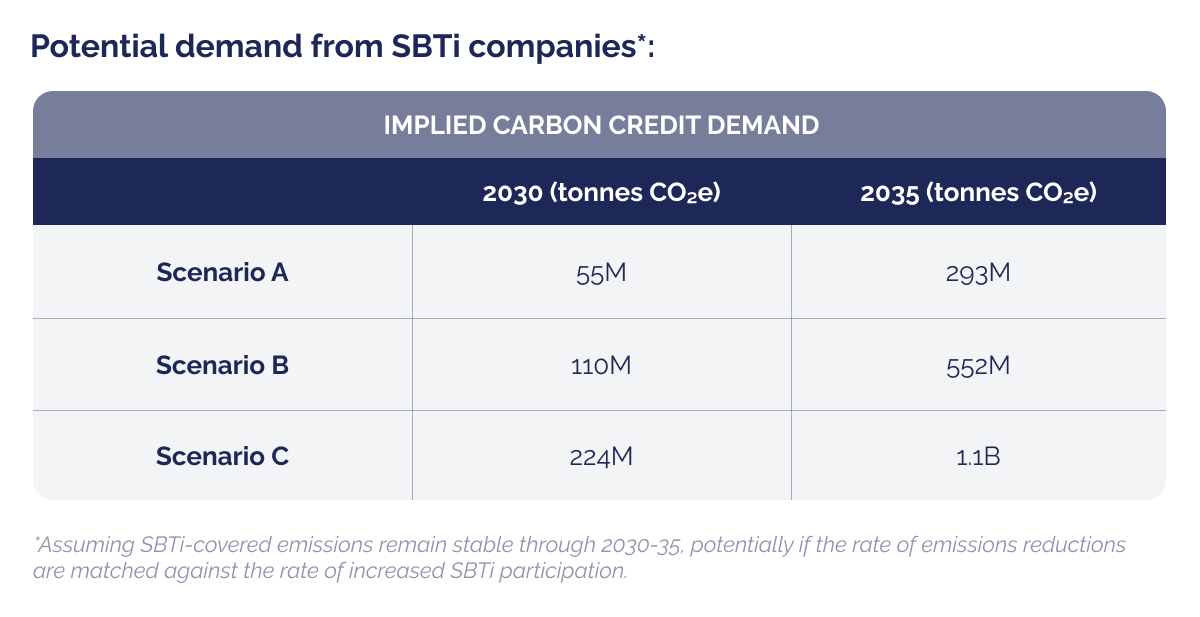 Sylvera’s modelling of potential demand from SBTi-committed companies, depending on various scenarios, source.
Aviation demand outpaces eligible supply
Aviation is emerging as a substantial new source of demand. Airlines retired 502,000 credits under CORSIA, the global aviation sector's carbon compliance scheme, in H1 2026, up from 14,000 across all of 2025, and CORSIA-aligned credits rose to 64% of new issuances in Q2 2026, from 52% in 2025. Eligible supply has further to travel. Of roughly 300 million credits potentially eligible for the scheme's first compliance period, 38 million have so far cleared the two requirements that turn a credit into an Eligible Emissions Unit: a host-country letter of authorisation and either a corresponding adjustment or qualifying insurance, against Sylvera's base-case demand of 163 million units.
The task ahead is to convert eligible credits into deliverable units. Sylvera's analysis finds the pool of CORSIA-aligned credits could grow towards 640 million by the January 2028 deadline, with 48 million meeting every requirement today and high-confidence delivery concentrated in a minority of host countries. That gap points to real headroom for high-integrity supply, and Sylvera forecasts eligible-unit prices in a range of $15 to $53 as the deadline approaches, with a median outcome of $33.
Read more: Carbon credit demand climbs as net-zero adoption soars, new report shows
One signal runs through the data. Across retirements, new supply and compliance demand, buyers are paying for integrity, and the standards that verify it are steering where capital flows. For businesses building credible net-zero strategies, the quality of each credit now carries real weight.
As demand grows for high-integrity carbon credits, the standards behind every credit matter more than ever. Green Earth develops large-scale, nature-based carbon projects accredited by leading international standards, with full oversight of every stage of the project lifecycle — from design and implementation through to long-term monitoring and credit issuance. Our projects restore ecosystems, strengthen biodiversity and improve community livelihoods, delivering verified environmental impact that stands up to scrutiny. For businesses meeting their environmental goals under frameworks such as the SBTi's updated standard, that integrity is what counts.