
Tree planting
Carbon sequestration
Forest
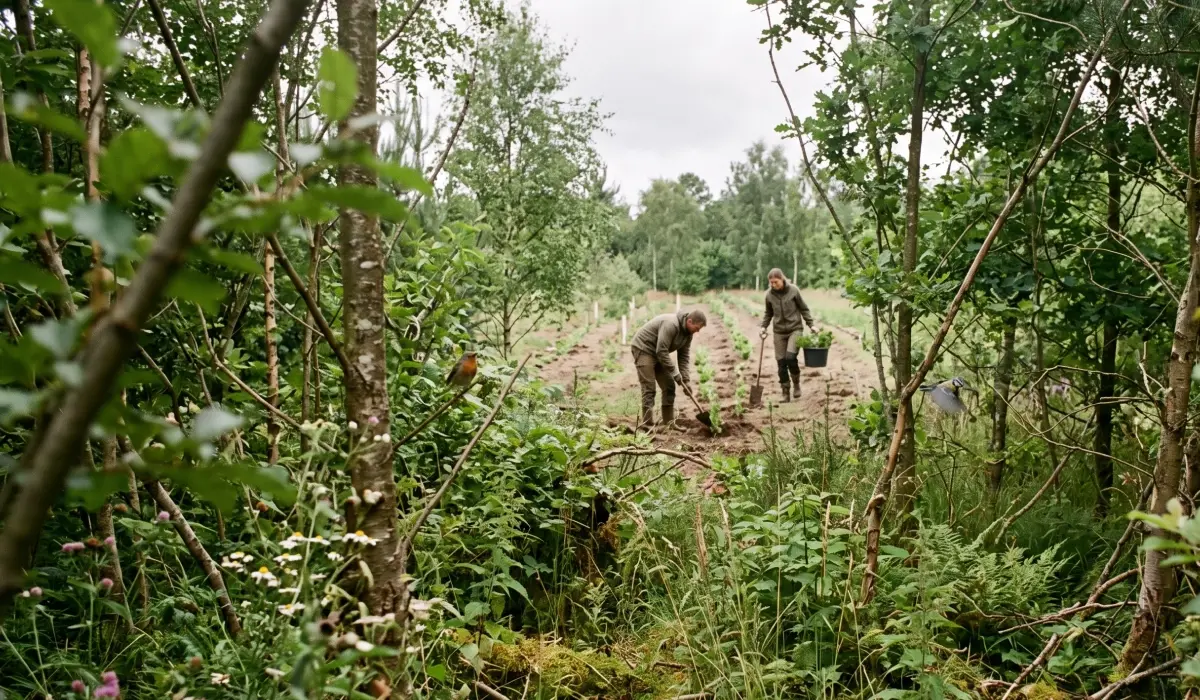
A long-term study from the University of Copenhagen shows that the way a forest is restored shapes both how quickly it stores carbon and how rich its ecosystem becomes. Researchers followed planted forests and naturally regenerated forests on former farmland in Denmark for around 21 years. Planted forests built woody biomass and stored carbon far faster. Naturally regenerated forests developed greater plant diversity and more varied ecological structure.
The research, published in Forest Ecology and Management by the University of Copenhagen, compared four kinds of land across 10 Danish landscapes: active plantations and naturally colonised sites of around 21 years, mature managed forests of roughly 130 years, and cropland as a starting point. Plantations accumulated tree biomass around 15 times faster than naturally colonised sites over the study period.
That head start is clear in the carbon figures. Plantations held about 117 tonnes of ecosystem carbon per hectare, roughly double the 56 tonnes per hectare on naturally colonised land, which stayed near the levels seen on cropland. Mature managed forests held the most wood biomass of all, a reminder that carbon stocks keep building as a forest ages.
Read more: Why a forest with more species stores more carbon
Rapid biomass growth tells only part of the story. Naturally regenerated forests followed their own path through ecological succession, letting a wider range of species and structures establish over time. These forests grew into distinct, varied tree communities that set them apart from planted stands. Each approach offers different ecological benefits: plantations excel at fast CO2 capture, and natural regeneration builds diversity and resilience.
The study looked below ground as well. Topsoil carbon held steady across the two decades, a sign that soil carbon recovers slowly whichever route a forest takes. The researchers point to a practical way forward: combining the speed of planting with native and mixed species can raise structural complexity and long-term stability, giving future afforestation projects the strengths of both methods.
For project developers and buyers, the findings reinforce a principle already shaping high-quality carbon projects: lasting value comes from forests designed to store carbon and restore living ecosystems together.
Read more: New study shows the significant returns of inversing in nature
That balance is exactly what careful project design delivers. Demand for credible, nature-based carbon credits keeps growing, and businesses preparing for that shift want a supply they can stand behind: credits that are verified, traceable, and backed by real environmental results. Green Earth provides that supply. We give businesses access to high-integrity carbon credits from nature-based carbon projects that store carbon, restore living ecosystems, and support local communities, so you can meet rising expectations for quality with confidence.