
Reforestation
Agroforestry
Coffee
Nature-based solutions
Project updates
Chimpanzee
Uganda
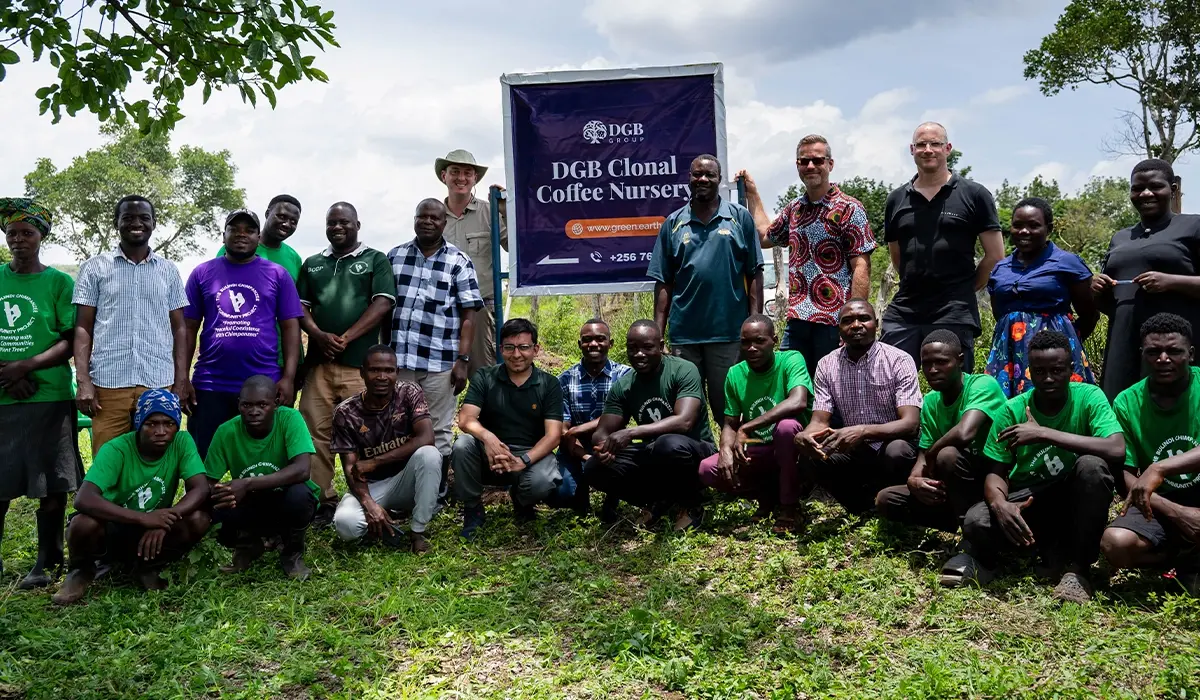
Green Earth’s recent field mission in Uganda marked another milestone in our commitment to building nature-based solutions that uplift both the planet and its people. Led by CEO Selwyn Duijvestijn, the visit highlighted the strength and diversity of our initiatives in the Hoima District—where agroforestry, biodiversity restoration, and sustainable agriculture converge to form a resilient model of environmental and economic regeneration.
During his time on the ground, Selwyn inaugurated the new clonal coffee nursery in Bulindi Town Council, a strategic hub designed to supply high-yield, disease-resistant coffee seedlings across the region. This official opening represents a critical step forward in our plan to scale up coffee sales in Uganda, adding income-generating opportunities for local farmers and accelerating our environmental portfolio.
- The visit coincided with a vibrant community distribution event, where 2,460 cocoa seedlings and 971 indigenous tree seedlings were distributed to local farmers.
- This effort is part of a broader seasonal plan to plant 300 hectares of diversified agroforestry systems.
- In the nursery, nearly 40,000 cocoa seedlings and 11,200 indigenous species are currently growing, laying the foundation for long-term ecological and economic impact.
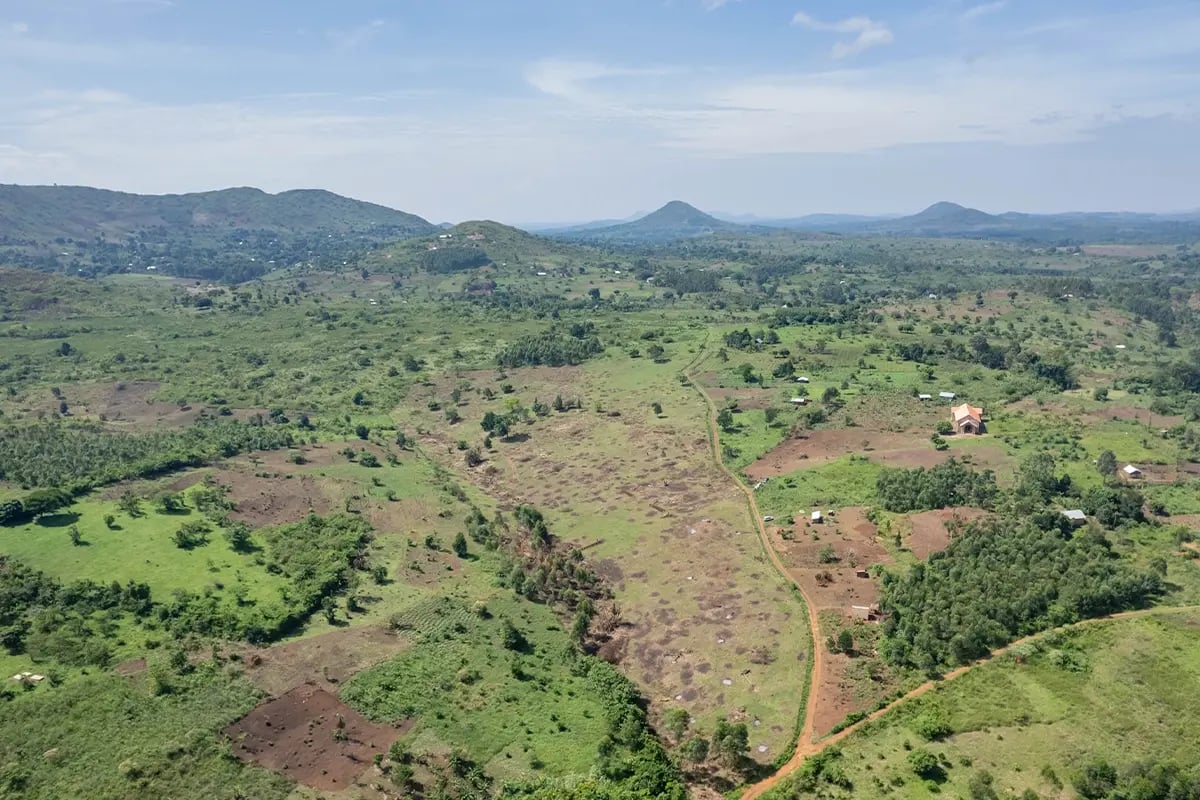 Aerial view of an agroforestry landscape in Uganda. Uganda Coffee Growing Project, Green Earth.
Alongside these core developments, Selwyn connected with our on-the-ground teams—including agronomist Pascal and the BCCP office staff—and explored future value chain opportunities with a visit to a bamboo farm and processing site. These engagements reinforce Green Earth’s holistic project design: one that restores degraded land, supports endangered wildlife (including chimpanzees in nearby Bulindi forests), and creates sustainable income streams through high-integrity carbon and biodiversity credits.
Read more: From the ground up to space: seeing Green Earth’s impact in Uganda
The Bulindi Agroforestry and Chimpanzee Conservation Project is a cornerstone of Green Earth’s conservation efforts in Uganda. Located in western Uganda, the project focuses on afforestation and reforestation to protect the remaining habitat of the Bulindi chimpanzees—over 300 wild individuals surviving in forest fragments scattered across agricultural lands in Hoima and Masindi districts. Developed in collaboration with the Bulindi Chimpanzee & Community Project (BCCP), led by Dr Matt McLennan, the initiative also provides vital support to local village households, blending ecological restoration with meaningful socio-economic uplift.

The Uganda Coffee Growing Project complements this vision by empowering rural communities through sustainable agriculture. Centred around a ‘mother garden’ nursery model, the project provides farmers with high-quality coffee seedlings to plant, grow, and ultimately profit from. Beyond enhancing livelihoods, the initiative strengthens Uganda’s coffee sector by increasing yields, supporting biodiversity, and promoting agroforestry practices that improve soil health and yields. It is a powerful example of how nature-positive development can also be income-positive for local families.
Read more: The Bulindi project expands its reach across Western Uganda
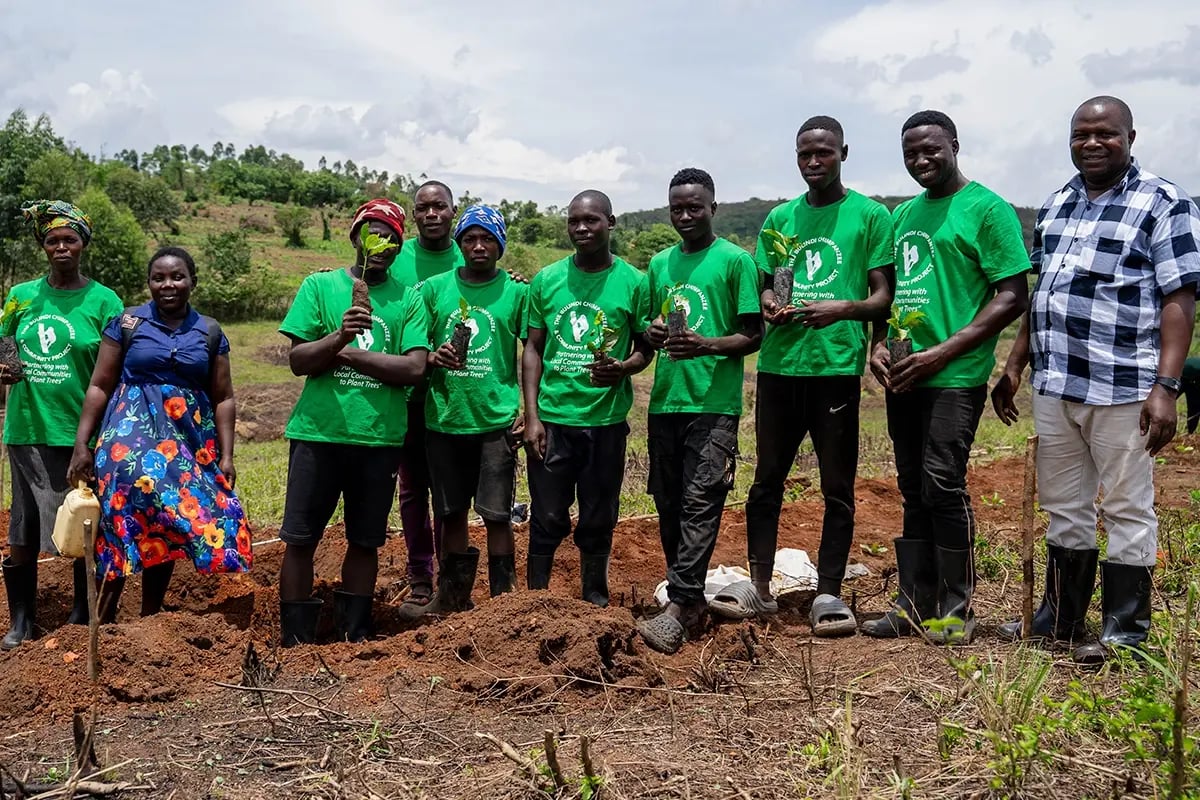 Local farmers during tree planting in Uganda. Uganda Coffee Growing Project, Green Earth.
From tree seedlings to future coffee harvests, Uganda is becoming a living showcase of Green Earth’s nature-positive ambition. Each activity, nursery, and partnership reflects our broader mission: to grow ecosystems that regenerate nature, empower communities, and deliver real, measurable environmental value.
Your business can be part of this positive change while addressing its irreducible emissions by buying high-quality carbon credits from projects like these.