
Nature-based solutions
Investing
Nature restoration
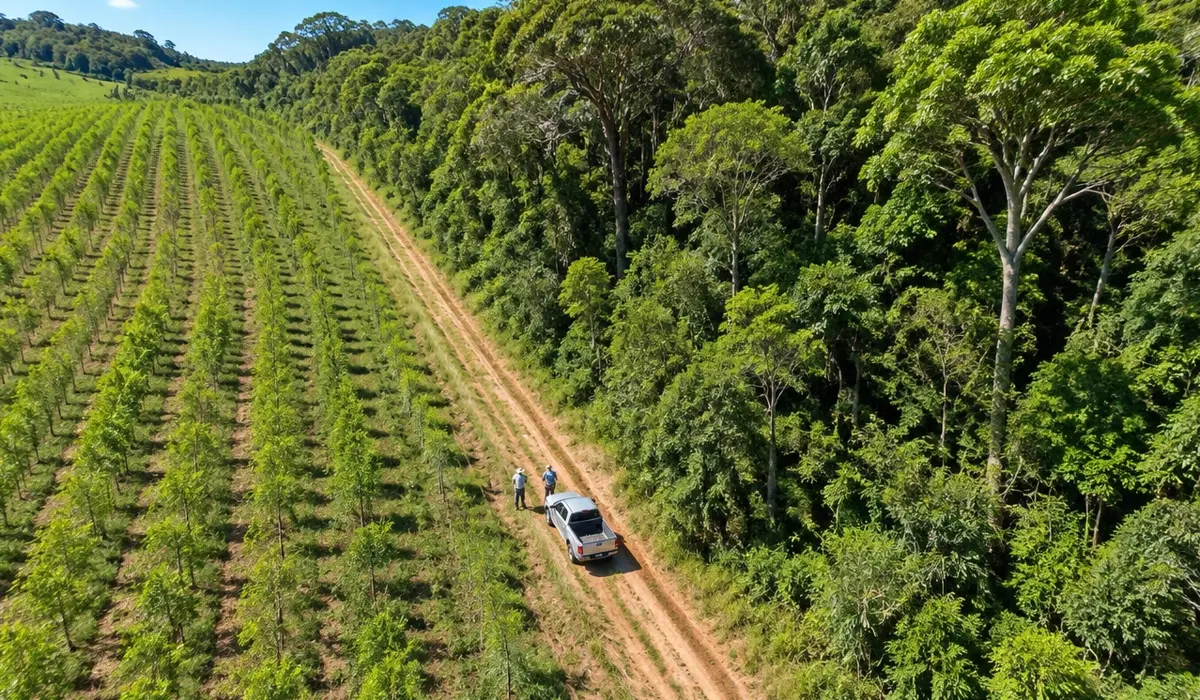
Six nature-based carbon removal funds worth a combined $494 million concluded in October 2026. The total continues the elevated level of fundraising recorded since the start of the year.
Dutch pension capital led the month. APG Asset Management committed €150 million ($167 million) to SLM Silva Fund II on behalf of pension fund ABP. The commitment marks the fund's first and final close. Managed by SLM Partners, the fund invests in continuous cover forestry projects across Europe, an approach that maintains permanent tree cover.
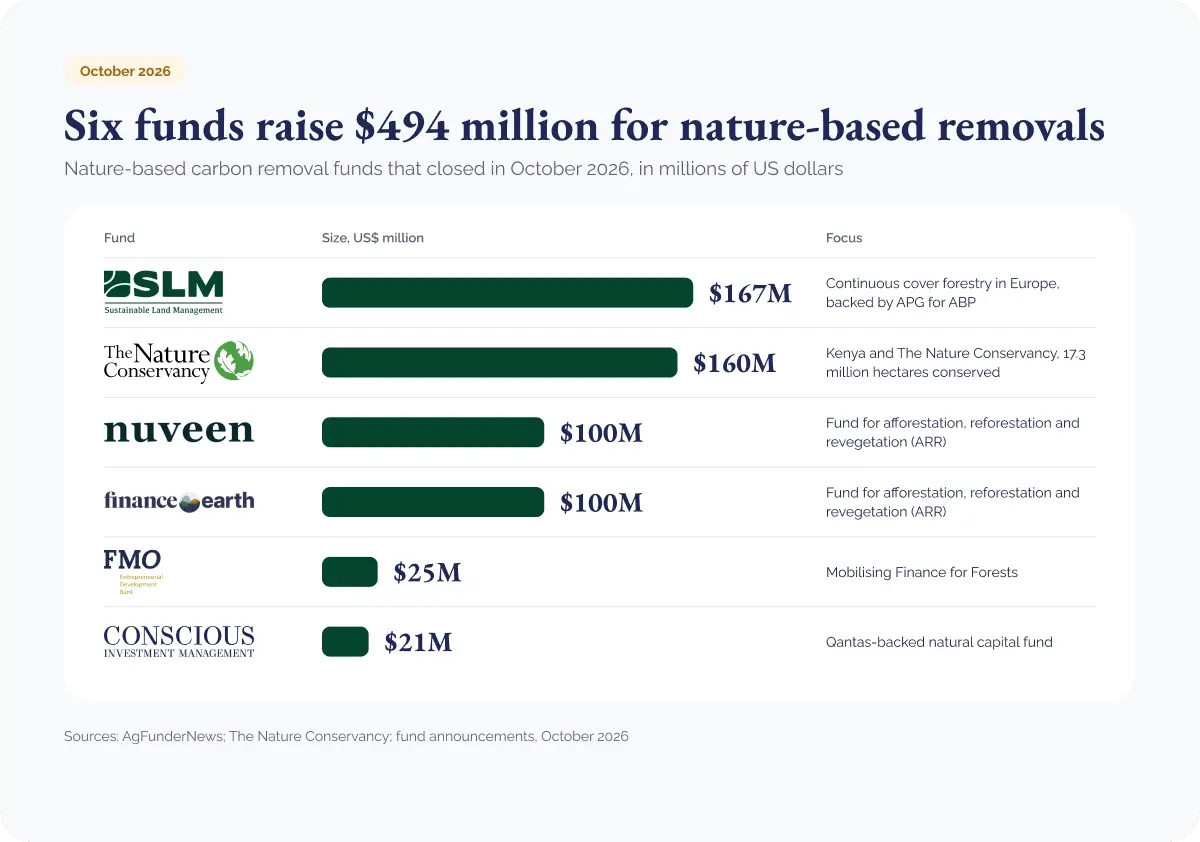
In Kenya, the Government and The Nature Conservancy (TNC) unveiled the $160 million Thamani Asili Project Finance for Permanence on 21 October. The initiative will help conserve around 17.3 million hectares over the next decade. Philanthropy provides $80 million, and the Government of Kenya is expected to match it over 10 years, as it proves to shape as the largest soil carbon fund since May 2022.
Ruth Masha, Country Director for Kenya at TNC, said: "We know that when communities lead, conservation can deliver lasting results."
Read more: Private capital invested in nature grows fivefold in a decade
The remaining funds broaden the mix. Nuveen and Finance Earth are each working on $100 million funds for afforestation, reforestation and revegetation (ARR). FMO's Mobilising Finance for Forests ($25 million) and Qantas-backed Conscious Investment Management ($21 million) complete the list. Brazil's development bank BNDES also provided a $50 million debt facility to ARR developer Belterra Agroflorestas.
Corporate buyers added forward demand. Brazilian developer Working Trees sold 270,000 tonnes of CO₂ equivalent (tCO₂e) of ARR credits to Google and 50,000 tCO₂e to McKinsey. France's Shared Wood Company agreed a 200,000 tCO₂e deal with Engie.
The supply side is broadening alongside the capital. Carbon standards added 11 nature-based developers in October, up from two in September. Isometric accounted for five of them, spanning soil carbon and agroforestry, against a single technology-based removal developer. October marks the first month the standard has listed more nature-based than technology-based developers, following a run of new methodologies for the sector.
Read more: Nature-based solutions vs carbon capture technology: Which is most effective?
Pension funds, development banks and corporate buyers are directing capital into nature-based removals through funds, debt and multi-year offtakes. Green Earth develops nature-based carbon projects end to end, with oversight from project design through to credit issuance, building the verified supply this capital seeks. For businesses planning their compensation strategy, Green Earth's verified carbon credits pair carbon removal with measurable benefits for forests, biodiversity and local communities.