
Rainforest
Agroforestry
Forest
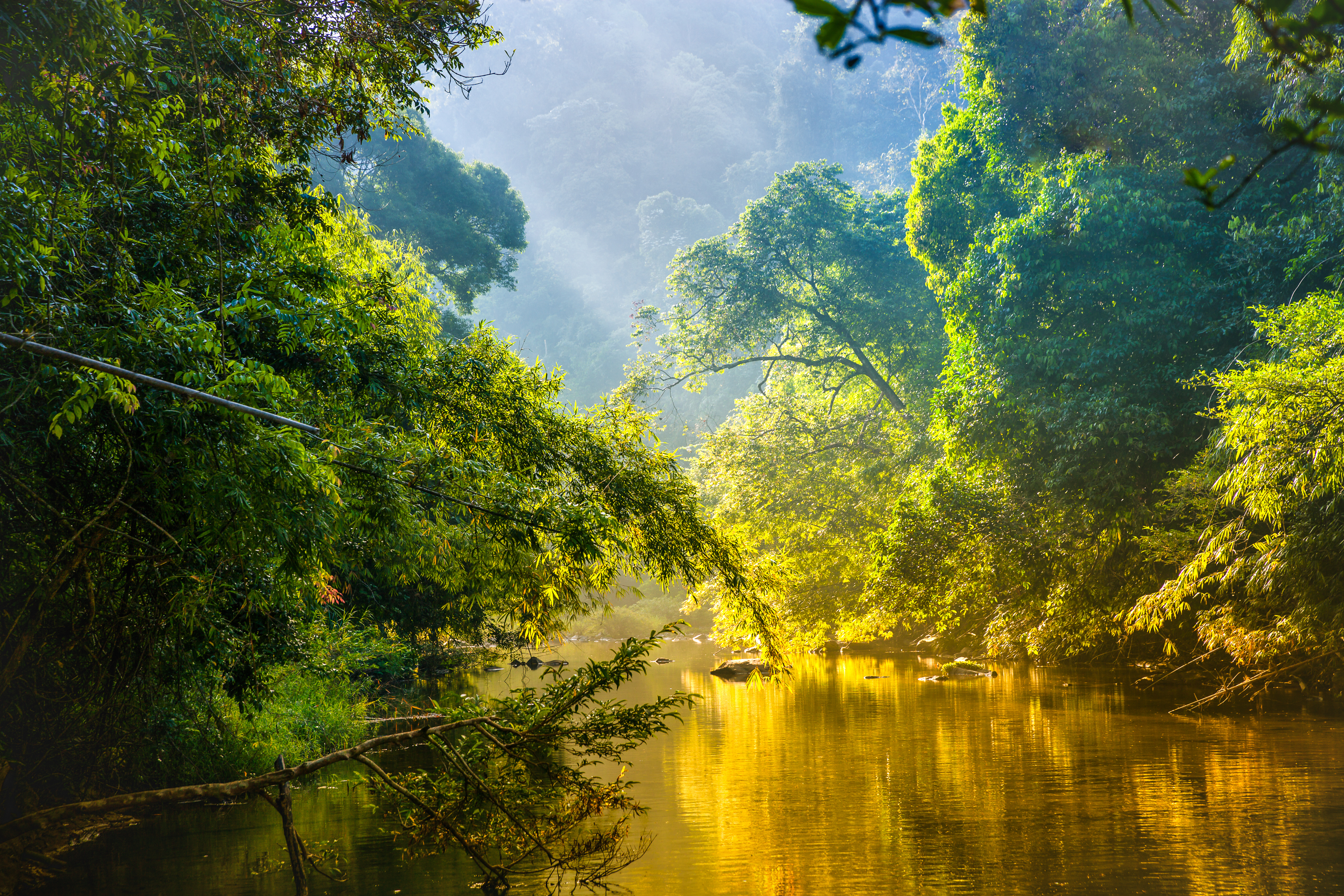
Rainforests are tall, mostly evergreen forests characterised by continuous or high rainfall, usually more than about 2,000 mm a year, according to National Geographic. They cover only about 6% of Earth's land, yet they regulate rainfall, store carbon, and support millions of people. Monsoon troughs, also known as the intertropical convergence zone, play a very important role in building all the climatic conditions that are necessary for the earth’s tropical rainforest. This page sets out 10 key rainforest facts.
Here in this blog, we discuss some of the most astonishing facts about rainforests, from the water cycle and medicines to the animals that live there and the threats they face.

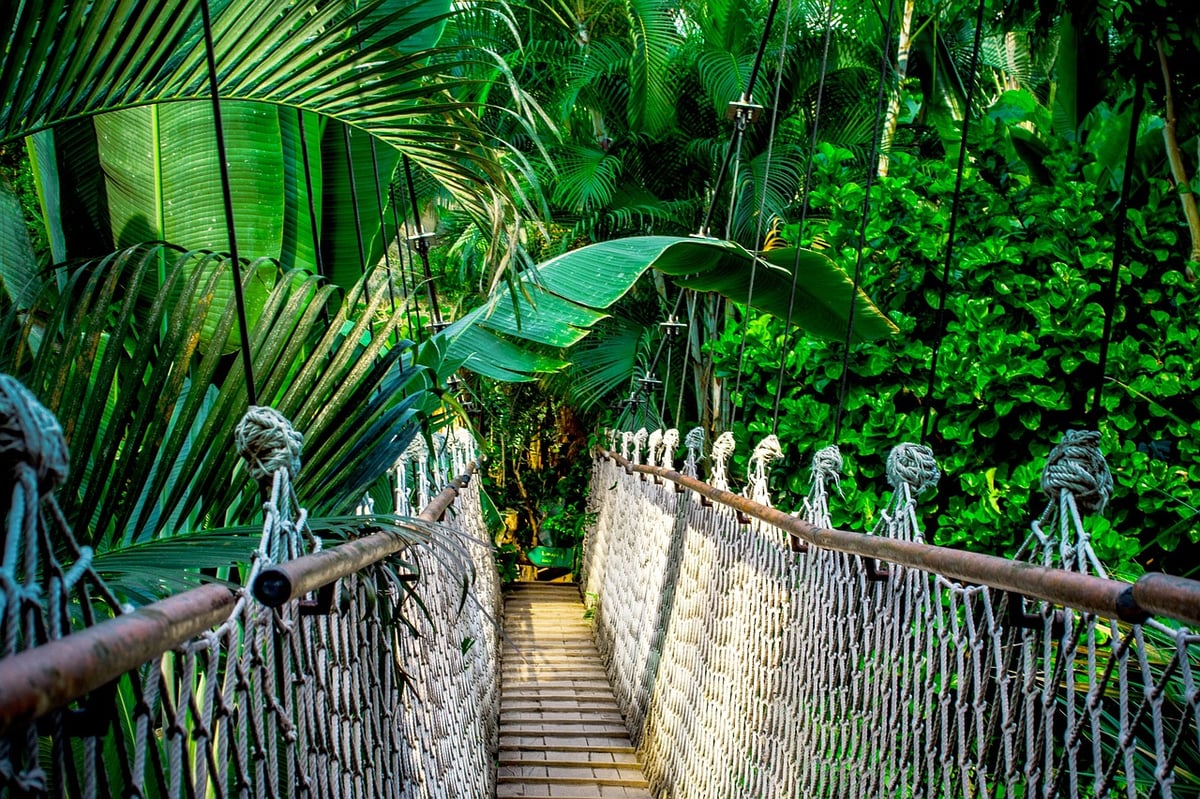
10 rainforest facts
1. Rainforests play an important role in maintaining earth's limited supply of fresh water
Trees release water vapour through their leaves in a process called transpiration. In the Amazon, trees return about 20% of all the rain that falls, and in the south-west of the basin more than 70% of rainfall is tree-transpired. Moist air can be recycled five or six times as it moves west, which is why the Amazon's moisture streams are called "flying rivers" (Amazon Conservation). Modelling studies suggest that if deforestation returned to pre-2004 rates, annual rainfall across the Amazon basin could fall by about 8% by 2050, although the effect is not yet detectable in observations (American Geophysical Union). The Amazon basin also supplies about 18% of the fresh water that the world's rivers discharge into the oceans, according to NASA. Learn why tropical rainforests are important for climate and water.
2. Rainforest plants have given us life-saving medicines
Indigenous peoples of the Amazon used curare, a plant extract from forest vines, on hunting arrows. Its purified compound, tubocurarine, was first used in surgery in 1942 and became the first neuromuscular blocking agent in anaesthesia, although newer drugs have since replaced it (California Society of Anesthesiologists). Quinine, the first effective malaria treatment, comes from the bark of the cinchona tree, which grows in the cloud forests of the eastern Andes (Wellcome Collection).
In 1987, researchers working for the US National Cancer Institute collected leaves and twigs from a rare tree in the rainforest of Sarawak, Malaysia. It yielded calanolide A, a compound that blocks HIV replication in the lab, although it is not an approved medicine (Mongabay, Nahar et al., 2020). Protecting rainforests keeps the potential for new medicines alive.
3. About one in five people in the world depend on forests for their livelihood
About 1.6 billion people, roughly one in five of the world's population, depend on forests for food, shelter, energy, medicines, and income (Global Forest Goals Report 2021). Of these, about 1.2 billion use trees on farms to produce food and income, according to the Food and Agriculture Organization of the United Nations (FAO). These figures cover all forests, not only rainforests. Sustainable forest-based livelihoods give people a lasting reason to protect the forests around them.
4. Rainforests shelter some of the planet's most endangered animals
Orangutans, jaguars, and mountain gorillas are among the species that live in tropical rainforests. All three orangutan species are Critically Endangered, according to the IUCN: the Bornean, Sumatran, and Tapanuli orangutans. There is good news too: mountain gorilla numbers rose from about 680 in 2008 to over 1,000 in 2018 thanks to conservation action, and the species moved from Critically Endangered to Endangered (IUCN).
5. Rainforests have four layers
Most rainforests are structured in four layers: emergent, canopy, understory, and forest floor. Emergent trees reach about 60 metres and spread wide crowns above everything else. The canopy is a dense roof of leaves and branches that blocks wind, rain, and light, and it holds more animals than any other layer. The understory is a dim, humid zone of shorter plants with large leaves that catch the scarce light. The forest floor is the darkest layer, where decomposers turn fallen material into nutrients (National Geographic). Explore the layers of a rainforest in more detail.
6. The Amazon is the largest tropical rainforest on Earth
The Amazon rainforest covers roughly 6.2 to 6.6 million square kilometres, depending on how it is defined, and spans nine countries and territories in South America (Guinness World Records). NASA describes the Amazon basin as home to Earth's largest rainforest.
7. Rainforests store large amounts of carbon
The world's forests store about 861 gigatonnes of carbon, and tropical rainforests hold about half of the carbon stored in trees, even though they account for only about 30% of tree cover, according to the World Resources Institute's Global Forest Review. This store is under pressure: a 2026 study found that drought pushed the Amazon to release between 10 and 170 million tonnes of carbon in 2023, although the authors say the result is not conclusive (Eos). Diverse forests tend to store more, as we explain in why a forest with more species stores more carbon.
8. Many life-saving medicines come from plants
Plants are the source of many of the world's medicines. About half of the small-molecule anticancer drugs approved between the 1940s and 2014 were natural products or derived from them (Henkin et al., 2018). One famous example is the Madagascar periwinkle, a plant native to Madagascar. It gave us the chemotherapy drugs vinblastine and vincristine, approved in the 1960s, and vincristine is credited with raising survival rates for childhood leukaemia from 10% to 95% (John Innes Centre). Protecting rainforests protects the plant diversity that future medicines may come from.
9. Rainforests cover only about 6% of Earth's land
Estimates range from about 2% to 7% of Earth's land, and National Geographic puts it at about 6%. Yet they shelter an outsized share of life. Tropical forests as a whole, a wider category that covers about 18% of land, are home to 62% of the world's land vertebrate species, according to a 2021 study in Frontiers in Ecology and the Environment (Pillay et al.).
10. Rainforests are shrinking, but the rate of loss can fall
The world lost 4.3 million hectares of tropical primary forest in 2025. That is 36% less than the record 6.7 million hectares lost in 2024, when fires caused nearly half of the loss, but still 46% higher than a decade ago. Brazil's loss not caused by fire fell 41% to its lowest on record (World Resources Institute, using University of Maryland data on Global Forest Watch).
Whatever be the reason, remember rainforests are very much essential for the existence of life on Earth. Not only due to the fact that they provide water, air, food, medicine, or shelter they are also one of our best natural defenses against constant climate change especially due to their ability to absorb greenhouse gases from the atmosphere.
Green Earth—restoring forests for people and nature
Protecting the rainforests that remain goes hand in hand with restoring forests that have been lost. At Green Earth, we develop and manage large-scale reforestation and afforestation projects, with a particular focus on Africa. In the Congo Basin region of Cameroon, our Greenzone Reforestation Project is planting over 16 million trees in seven years, and in western Uganda our Bulindi Chimpanzee Habitat Restoration Project restores forest for over 300 wild chimpanzees.
Each project generates verified carbon credits that fund the planting, the monitoring, and the local livelihoods that keep restored forest standing. By investing in our projects, you help restore forests and the biodiversity that depends on them.