
Net zero
Google
Carbon compensation
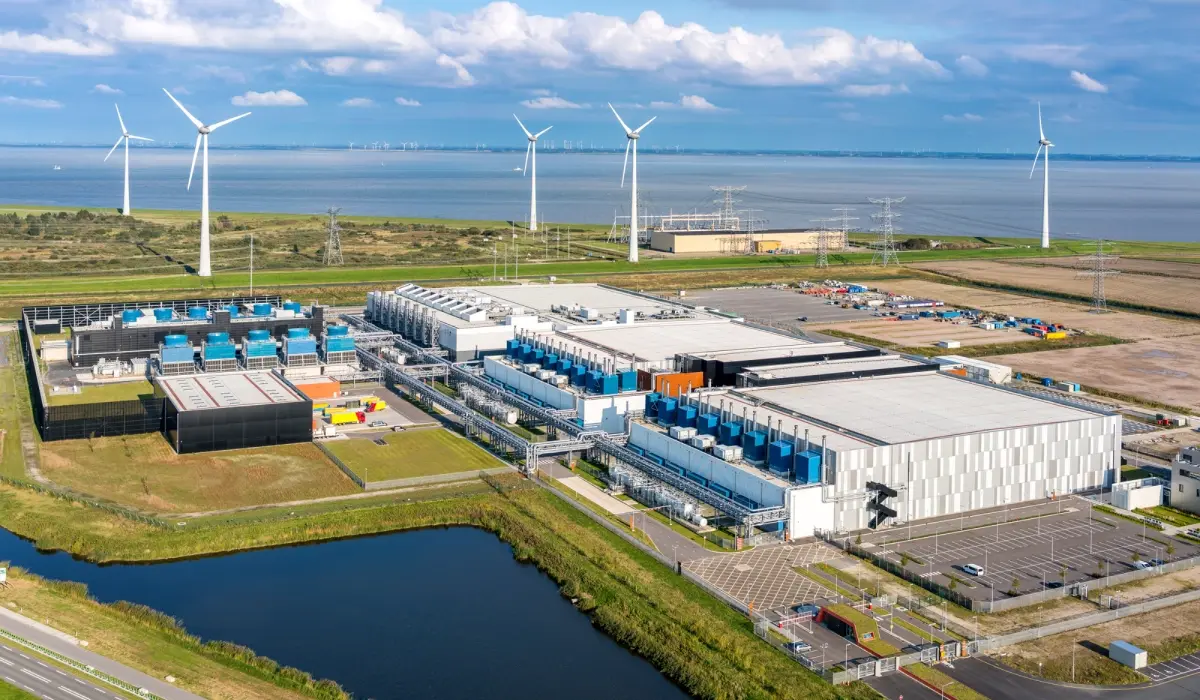
Google has reaffirmed its 2030 net-zero target, while admitting in the same report that artificial intelligence (AI) is making the path to that target "more complex and challenging than ever".
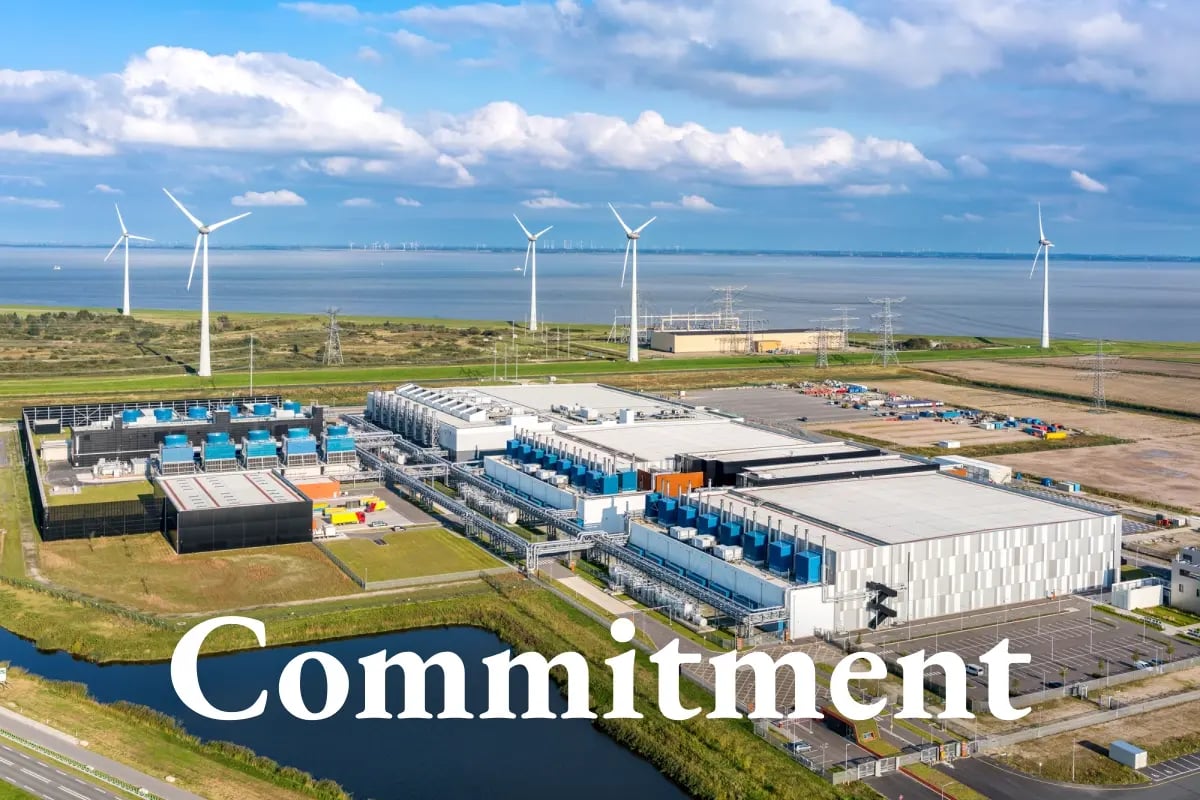 Aerial view of a Google data center powered by nearby wind turbines, reflecting the clean-energy demands behind the company's 2030 net-zero commitment. (Image: Google)
Alphabet, Google's parent company, released the 117-page environmental report at the end of June. It points to three converging factors behind the difficulty: the rapid expansion of AI, shifting government policies, and the risk that some early-stage carbon dioxide removal (CDR) projects may underperform. Together, these are reducing the "precision of our roadmaps and necessitate ongoing strategic adjustments".
"Meeting the unprecedented infrastructure and energy demands of AI creates significant headwinds to reducing absolute emissions," Google said.
The report signals no change to Google's purchasing strategy for carbon credits, of which the company is the second-largest buyer worldwide after Microsoft. Google said it will "continuously evolve" its portfolio and remains "deeply committed" to its 2030 goal.
The statement follows a period of uncertainty across the sector. In April, Microsoft said it was adjusting the pace of its own carbon removal acquisitions. AI-driven emissions are rising across the industry, and the cost of meeting 2030 targets continues to climb.
Read more: Retirements accelerate across the carbon market in multiple segments
Google's director of sustainability for Europe, the Middle East, and Africa moved to reassure the market in May, confirming Google would maintain its carbon removal procurement strategy regardless of Microsoft's decisions.
The report describes AI as "a critical inflection point for Google and the broader industry, driving non-linear growth that complicates long-term planning and forecasting".
In 2025, Google signed 16 carbon removal deals worth more than $100 million, covering roughly 600,000 tonnes of CO2 equivalent (tCO2e) over the coming years. Its cumulative contracted portfolio stands at more than 1.388 million tCO2e as of the end of 2025.
The company acknowledged that some of the early-stage projects it backs may fail to deliver the expected environmental benefits. It said it would disclose such setbacks and adjust the portfolio based on which technologies prove most effective.
Google's ambition-based emissions reached 14.5 million tCO2e in 2025—up 18% on 2024 and 81% on the 2019 base year. Under its 2030 strategy, the company aims to halve emissions from that 2019 baseline and use CDR to neutralise the rest.
Read more: Carbon credit project stewardship: what happens after credit issuance
Confidence in a carbon credit rests on the rigour behind it. Green Earth develops nature-based carbon projects at scale, accrediting each to leading international standards and retaining full supply chain oversight — from initial design through to long-term monitoring and credit issuance. The result is verified environmental impact across ecosystems, communities, and biodiversity, produced under the highest levels of regulatory scrutiny.