
Carbon sequestration
Nature-based solutions
Biochar
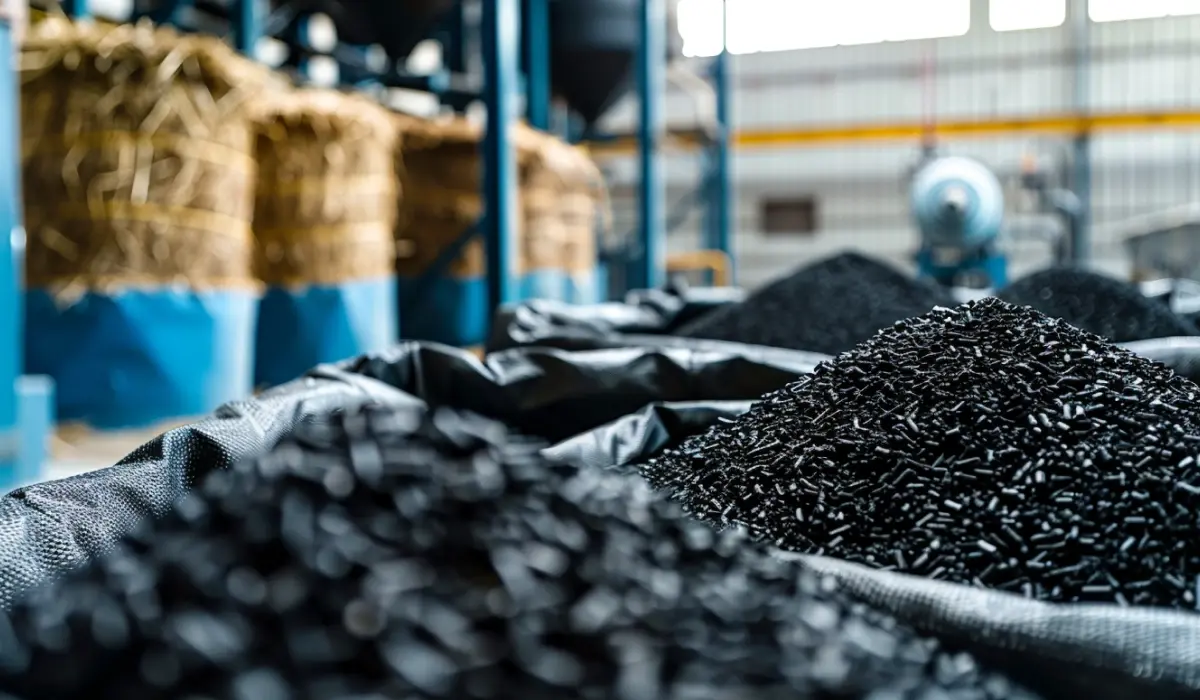
Biochar is gaining traction as a scalable carbon sequestration tool within the verified carbon market. New data from Argentina and a newly inaugurated plant in Cote d'Ivoire show both the scale of the opportunity and its growing real-world deployment.
 An industrial biochar facility transforming agricultural biomass waste into carbon-rich material used for scalable carbon sequestration within verified carbon markets. AI generated picture.
Argentina could issue more than 30 million carbon credits from biochar projects, according to a report by the Cordoba Grain Exchange (BCCBA), a local agribusiness institution. The country generates a biomass surplus of around 40.2 million tonnes a year from timber and crop production. A yield range of 25% to 35% could convert this surplus into up to 12 million tonnes of physical biochar.
Each tonne of physical biochar can generate an average of 2.8 tonnes of CO2 equivalent (tCO2e) in credits under international carbon methodologies, according to estimates from the American Biochar Institute. Physical biochar can also serve as a soil fertiliser or an energy source. BCCBA said Argentina does not yet have a developed domestic market for these uses. ‘It should not be lost sight of that… profitability is not sufficient to justify the production of biochar on its own, unless the aim is to incorporate that production into carbon credits,’ BCCBA said.
Read more: Retirements accelerate across the carbon market in multiple segments
West Africa's largest biochar plant, the Valency Cashew Biochar Facility in Abidjan, Cote d'Ivoire, has been officially inaugurated by the country's Minister of Trade, Industry and Handicrafts, Ibrahim Kalil Konate. The facility is developed by Singapore-based agri-waste specialist Revata Carbon in partnership with commodity trader Valency International. Its biochar unit processes up to 20,000 tonnes of cashew waste a year, producing nearly 6,000 tonnes of biochar.
‘We are thus witnessing the transformation of agricultural by-products into strategic industrial resources,’ Konate said. ‘The potential is immense. The opportunities are real. And Cote d'Ivoire is resolutely committed to this path.’
Revata Carbon has signed up to the Varaha Industrial Partners Program, introduced by India-based biochar developer Varaha, which will support measurement, reporting and verification and manage credit commercialisation for the project. Credits will be issued through Puro.earth, the Finland-based carbon standard.
Pricing for large-scale biochar credit deliveries under Puro.earth stood at $120 per tCO2e for spot transactions, according to recent price assessments. One of the world's largest biochar producers, Bolivia-based Exomad Green, expects to reach one million tCO2e in annual credit issuance by 2027, having signed offtake agreements with companies including Microsoft for nearly all its production until 2030.
Read more: Best carbon credit providers for enterprises in 2026
Biochar's growing footprint in carbon markets highlights why methodology and verification matter as much as scale. Green Earth applies the same rigour across its portfolio of nature-based carbon projects, each developed end-to-end and accredited to internationally recognised standards. From initial design through to long-term monitoring and credit issuance, every stage is overseen directly, delivering environmental impact that buyers can verify across ecosystems, communities and biodiversity.