
Deforestation
Agriculture
Nature-based solutions
United States
Sustainable Agriculture
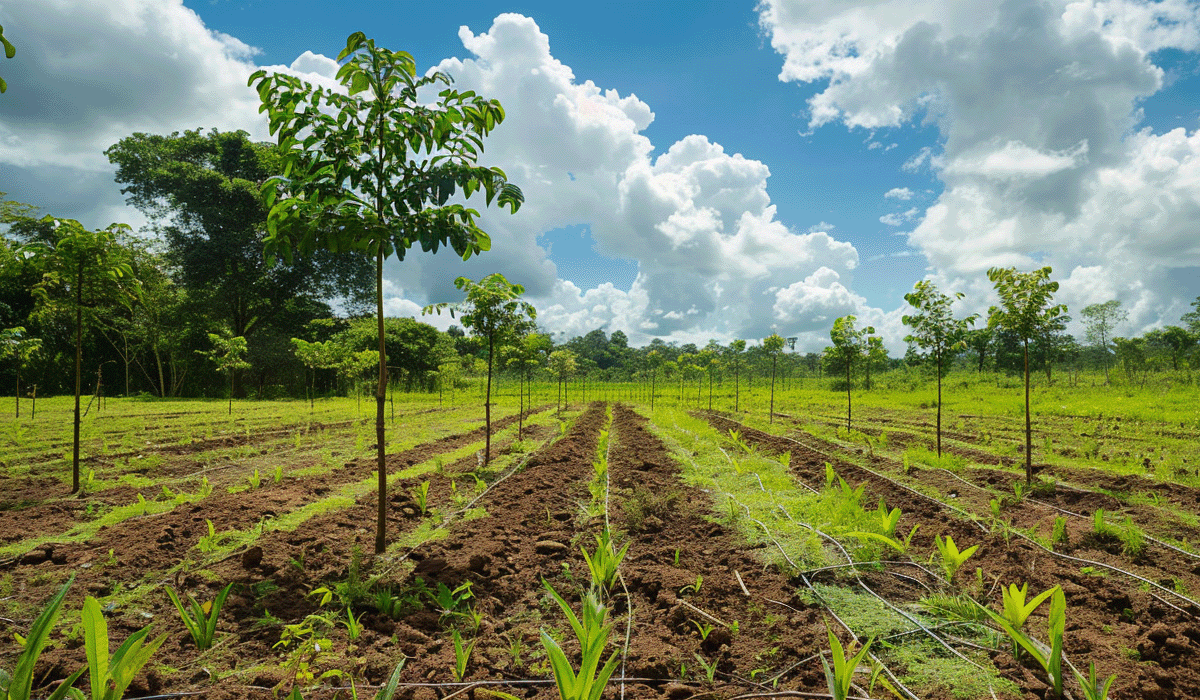
The US Agency for International Development (USAID) has teamed up with CIFOR-ICRAF and other key partners to launch the Regenerative Agriculture for the Conservation of the Amazon (ARCA) programme. With a substantial investment of $17.8 million, ARCA aims to address deforestation, greenhouse gas emissions, and biodiversity loss by promoting sustainable rural development and agroforestry practices.
 Amazon regenerative agriculture landscape. AI generated picture.
ARCA's initiatives will engage traditional and rural communities, encouraging the adoption of nature-based solutions such as regenerative agricultural methods and ecological restoration efforts. The programme also supports resource access, market connections, and policy subsidies to foster sustainable practices.
Read more: UK to impose VAT on voluntary carbon credits from September 2024
The programme's operations will be concentrated in the Pará, Mato Grosso, and Maranhão, regions identified as the ‘Arc of Deforestation’ in the Amazon. Through local to national level interventions, ARCA seeks to strengthen sustainable practices in these critical areas.
A diverse coalition of stakeholders will be involved in developing grassroots capacity and participating in governance forums. The programme will provide small grants for creating technological solutions and contributing to territorial planning and public policy development.
Read more: Deforestation in the Amazon Rainforest: causes, effects, solutions
CIFOR-ICRAF, a prominent forestry and agroforestry research centre, will lead the programme in collaboration with four strategic partners: Instituto Socioambiental (ISA), Instituto Sociedade População e Natureza (ISPN), Instituto Ouro Verde (IOV), and The Nature Conservancy (TNC) Brazil. Funded by USAID, ARCA is set to run for four years, bringing hope and sustainable development to the Amazon region.
At DGB Group, we embrace a holistic approach to sustainability, recognising that it goes beyond just carbon sequestration. Utilising advanced technologies such as AI, big data, and drones, we ensure the effective development, measurement, and validation of outstanding nature-based projects that combat deforestation. Sustainable farming practices are central to our efforts, implemented within our projects and shared with local communities to promote long-term environmental health. We invite forward-thinking organisations to partner with us in creating a greener, more sustainable future.
Use DGB’s carbon units to forward your environmental actions