
Carbon markets
Carbon pricing
Japan
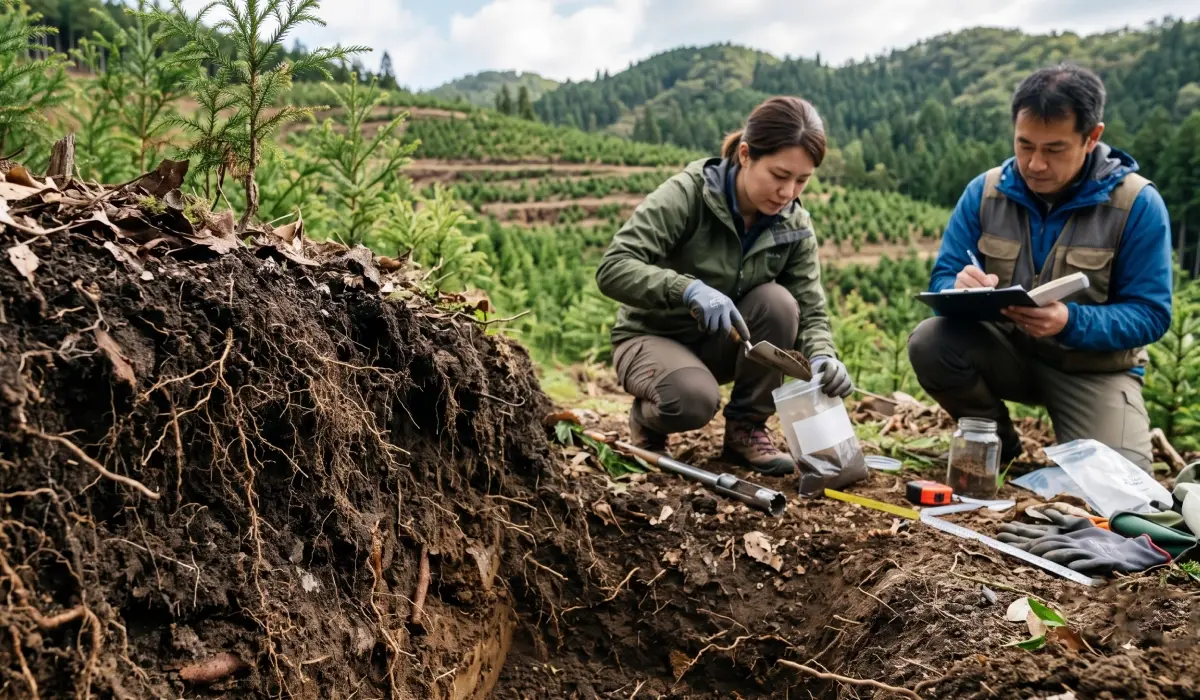
The first soil credits certified by a voluntary Japanese standard have sold at a premium, priced on the value of living ecosystems alongside the carbon they store. The credits changed hands at 20,000 Japanese yen ($124) a tonne of CO₂ equivalent (tCO₂e). The price reflects a method that measures a site's wider natural value together with its carbon.
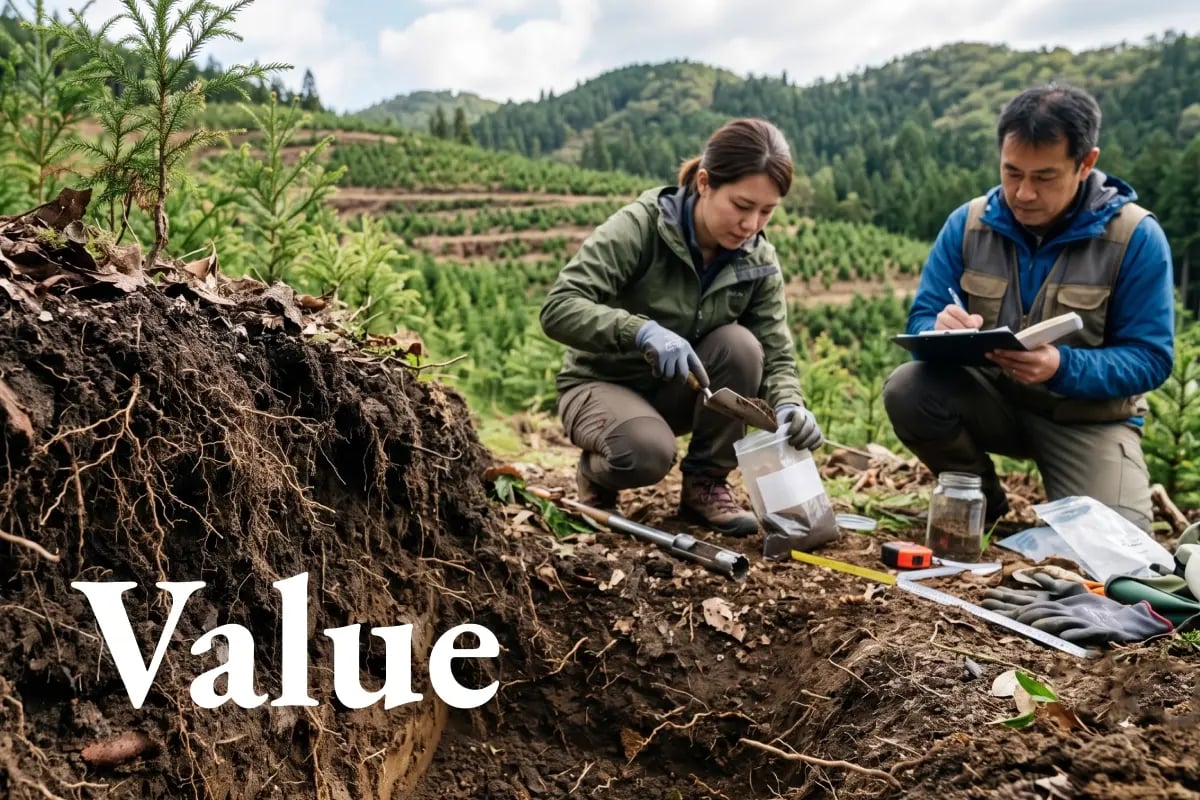 Researchers examining soil carbon storage in a newly planted Japanese forest ecosystem as part of a nature-based climate project. AI generated picture.
“The price is much higher than usual credits because we measure ecosystem value with carbon value, using academic help of Kyushu University and aiESG corporation,” said Shunsuke Managi. Managi chairs the standard. He is also a professor at Kyushu University and a director at aiESG, an AI-based sustainability data provider and consultancy in Fukuoka.
The Natural Capital Credit Consortium (NCCC) brings together companies, municipalities, and academic researchers. It reported its first sale last month. Those credits came from Tsujita Construction's Akaiwa Grassland project and went to Tokyo-based Sompo Japan Insurance. The grassland project is certified to generate 704 tCO2e through 2028.
Read more: Football faces its biggest carbon test at 2026 World Cup
The standard certified its second project on 1 July, its first in the forest management category. Developed by a local firm, the Tokyo site covers 17.31 hectares and will generate 1,562 tCO2e between 2025 and 2045. Managi said the deal for the iForest credits has been finalised with a real estate firm and a hotel operator, at a price likely above 5,000 Japanese yen ($30) a tonne.
The iForest price sits above the forestry credits issued under the government-backed J-Credit scheme. The Tokyo Stock Exchange listed that forestry J-Credit price at 4,400 Japanese yen a tonne. NCCC pairs carbon measurement with an assessment of each site's natural value, which its chair links to the higher figure.
NCCC is now working to extend its soil and forestry methodologies to other regions of Japan, supported by new technology, Managi said. The standard also aims to integrate its forestry methodology with the J-Credit scheme.
Read more: The new SBTi Corporate Net-Zero Standard: what it means for business
The premium NCCC secured shows how much the standard behind a credit shapes its value. As demand grows for trusted, high-quality carbon credits, so does the value of the accreditation and oversight behind each unit. Green Earth develops large-scale nature-based carbon projects accredited to leading international standards, keeping full supply-chain oversight from initial design through to long-term monitoring and credit issuance. Every project delivers verified impact across ecosystems, communities, and biodiversity, built to meet the highest levels of regulatory scrutiny.