
Nature conservation
Nature-based solutions
Nature market
Carbon trading
November saw renewed momentum in nature-based carbon removals, with project developers reporting substantial transaction volumes and new funding commitments despite a slowdown in equity activity. Data shows that developers disclosed around 670,000 tCO₂e in spot and offtake deals for nature-based removals during the month—an increase from roughly 500,000 tCO₂e in October and more than double the volumes recorded for engineered removals.
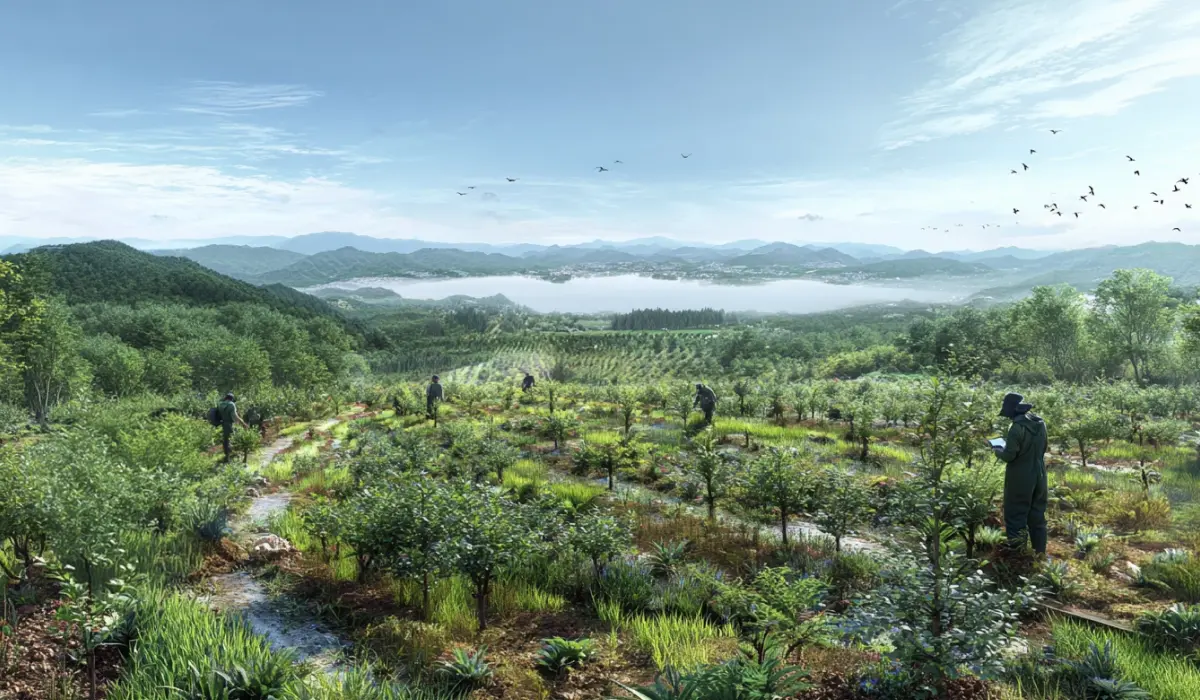
 Reforestation workers planting young trees across a wide Japanese landscape under a clear blue sky. AI generated picture.
Soil carbon dominated activity, with one transaction reaching 400,000 tCO₂e and another delivering 200,000 tCO₂e under the Symbiosis Coalition. Additional agreements were completed with major corporate buyers, including technology, mining and professional services firms, alongside several other trades across the soil and forestry space.
Although commitments fell below October’s record level, fundraising activity continued at pace. Approximately $617 million in new capital was introduced during the month, distributed across multiple investment structures and including a facility aimed at supporting blue carbon efforts in the Caribbean. Equity financing was comparatively subdued, totalling just $4 million.
Market activity was also influenced by the COP30 discussions in the Amazon, which highlighted the expanding role of nature-based solutions. The month saw several new entrants move into the sector with initiatives ranging from blue carbon to forestry and project origination in emerging markets. On the supply side, a 1.6-million-unit issuance from a Ugandan Plan Vivo project accounted for the majority of newly issued volumes.
Read more: Surge in nature-based funding marks COP30, setting the stage for COP31
Alongside these developments, Japan’s voluntary carbon market is preparing for a notable pricing shift. The Natural Capital Credit Consortium (NCCC) expects credits generated under its soil and forest management methods to sell for more than $64/tCO₂e, double the typical price of units issued through the government-backed J-Credit programme. According to NCCC chair Shunsuke Managi, ‘NCCC's method is more accurate in terms of measuring carbon and also adding the value for the ecosystem service maintenance.’ He noted that enhanced analytics—combining drone-mounted lidar with satellite data—aim to validate ecosystem benefits and support stronger price premiums.
NCCC is currently advancing several domestic forestry initiatives, with its next issuances targeted before the end of Japan’s 2026 financial year, and is in discussions with government officials about integrating its methodology into the national J-Credit scheme.
Read more: Balancing portfolios: Nature-based vs renewable carbon credits
The acceleration of nature-based removals, paired with the emergence of more sophisticated pricing and measurement approaches, reflects a market moving decisively toward higher standards and clearer value differentiation. As new methodologies mature and demand concentrates around high-integrity units, expectations for transparency, ecosystem co-benefits, and long-term durability continue to rise. At Green Earth, our portfolio is already built around these principles, delivering verified credits that restore landscapes, strengthen local livelihoods, and meet the quality thresholds buyers increasingly require. With momentum building and supply tightening, now is the time to move from observation to engagement—and we invite you to take the next step with us.