
Carbon markets
Blue carbon
Asia
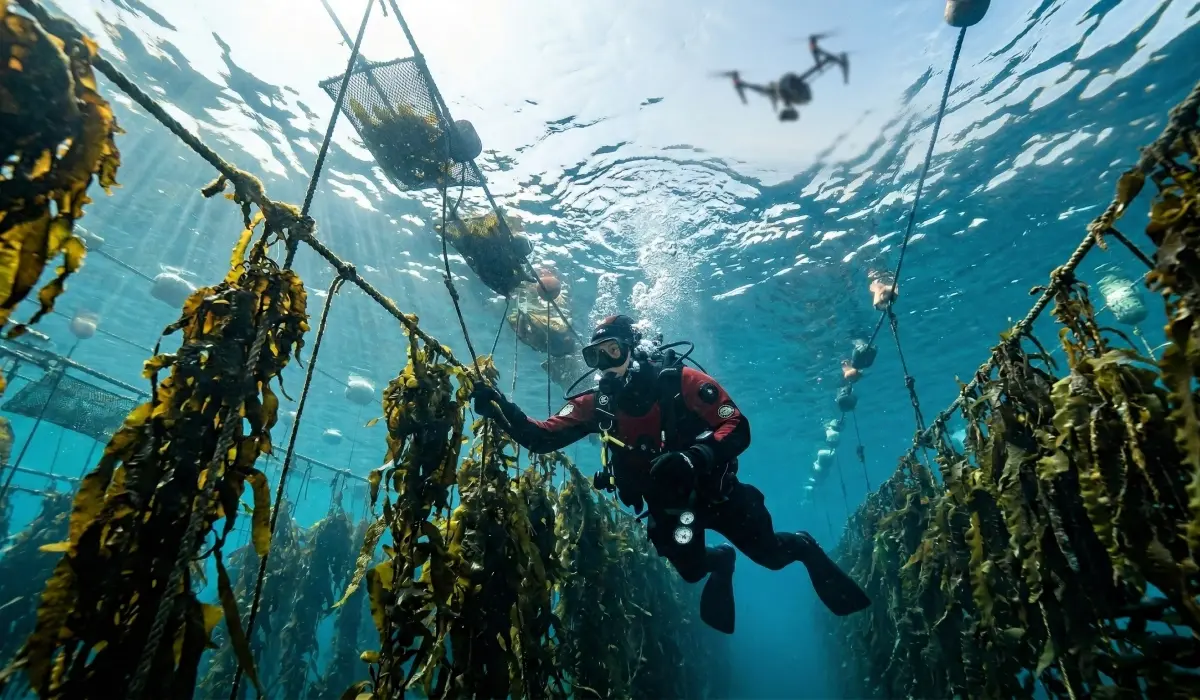
South Korea’s carbon market is entering a decisive period in 2026, marked by tightening supply in its compliance system and parallel efforts to expand carbon trading into marine ecosystems.
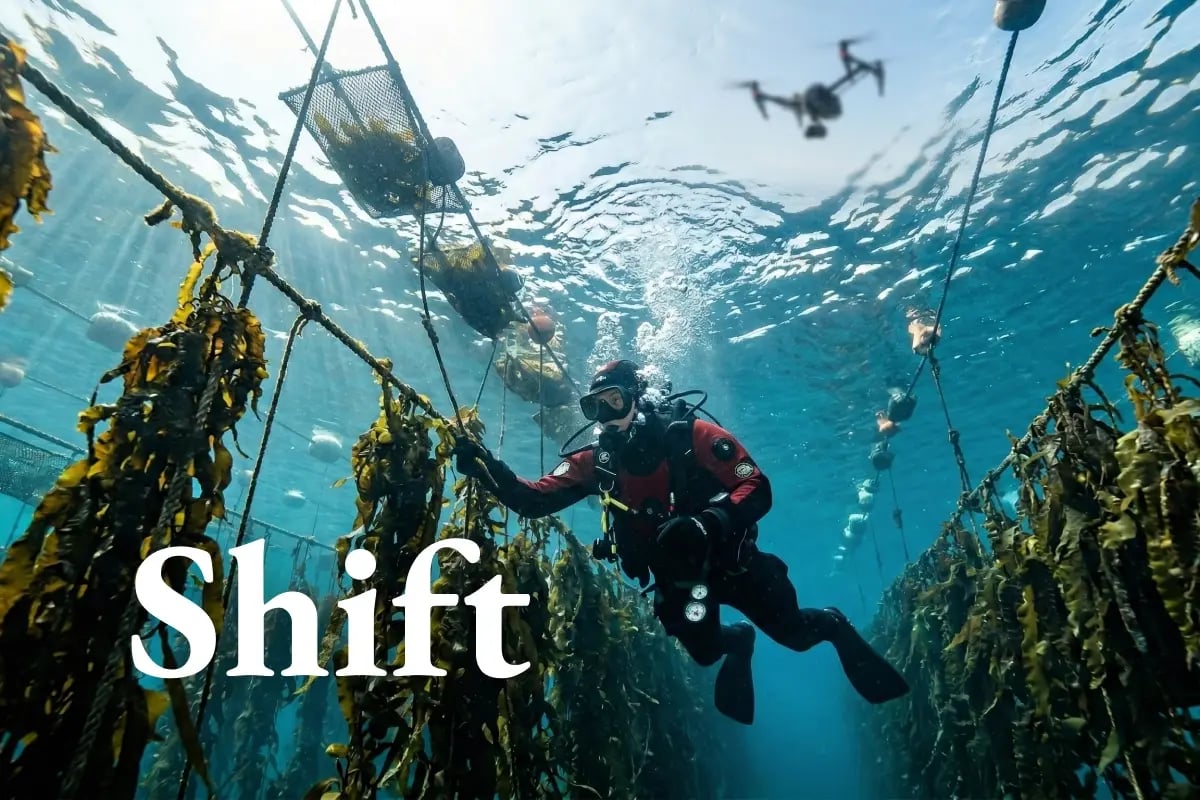 Diver inspecting a South Korean seaweed farm, monitored by a drone, representing blue carbon projects. AI generated picture.
Carbon allowances under the Korea Exchange have climbed to their highest level in three years, reflecting structural changes introduced under Phase IV of the country’s emissions trading system (K-ETS).
Korea Allowance Units (KAUs) rose 2.2% to KRW 13,750 ($9.53) per tonne of CO2 equivalent—their strongest level since April 2023—and are up nearly one-third since the start of the year. The rally coincides with the launch of the 2026–2030 compliance phase, which introduces a 12% lower emissions cap of 2.54 billion tCO2e compared with the previous period.
The new phase also establishes a Market Stability Reserve designed to remove surplus permits if prices weaken, reinforcing expectations of tighter supply conditions. At the same time, covered entities are gradually facing greater auction exposure. Power generators will need to purchase up to 50% of required allowances on the market by 2030, up from 10% currently, while the non-power sector will see its paid share increase to 15%.
Auction dynamics have further strengthened sentiment. February’s auction cleared at KRW 12,700/tCO2e—up 19% month-on-month—after drawing 2.3 million bids for 1.2 million allowances. The oversubscription is expected to support secondary market prices. Another 1.2 million tonnes are scheduled for auction in March, with authorities indicating additional sales could be held if demand warrants.
Read more: How to choose high-quality carbon credits
Alongside reforms to the compliance market, policymakers are advancing plans to extend carbon trading into coastal ecosystems. Under the Fourth Basic Plan for Fisheries Resources Management (2026–2030), released by the Ministry of Oceans and Fisheries, pilot projects for a blue carbon trading framework will run from 2026 to 2028, with full implementation targeted for 2030.
The scheme centres on so-called ‘sea forests,’ including kelp, seagrass and algae, and is designed to both restore marine ecosystems and create new income streams for fishing communities. Projects will involve seaweed transplantation and cultivation, supported by monitoring systems using AI, IoT, lidar and drone-based technologies, alongside pest control measures.
Taken together, the tightening of the K-ETS cap and the development of a marine-based crediting mechanism signal a broader effort to strengthen price formation in the compliance market while diversifying the country’s carbon asset base ahead of 2030.
Read more: Why 2026 could redefine carbon market dynamics
As South Korea tightens its compliance cap under the K-ETS and moves toward structured blue carbon trading, the direction of travel is clear: carbon markets are maturing, price signals are strengthening, and quality is becoming non-negotiable. As carbon markets evolve, integrity, compliance alignment and long-term capital are becoming central to strategic decision-making. The focus is shifting from short-term credit purchases to durable, high-quality nature solutions that stand up to regulatory and stakeholder scrutiny.
At Green Earth, we support this transition by developing high-integrity conservation and restoration projects built on robust science, transparent methodologies and measurable impact. Our approach strengthens ecosystems, enhances biodiversity and delivers verified carbon outcomes alongside tangible community benefits.