Selecting a carbon credit provider has become a material decision for corporate sustainability teams. Regulatory requirements are tightening, independent rating agencies now scrutinise credit quality, and procurement standards have risen accordingly. Buyers increasingly require clear evidence of where capital is directed and what each credit delivers.
 A Green Earth team member with the local community in Uganda during seedling distribution. Bulindi Agroforestry and Chimpanzee Conservation Project.
This guide examines the criteria that distinguish a credible carbon credit provider from the rest: the quality of nature-based projects, the strength of ESG reporting support, transparency and traceability, and long-term alignment with corporate net-zero commitments. Rather than ranking individual names against one another, it sets out the principal types of providers in the market, and the factors that matter most.
The two principal types of carbon credit providers
Most carbon credit providers fall into one of two categories, and identifying which category an organisation belongs to reveals a great deal about the carbon credits a buyer will receive.
The first category comprises carbon credit platforms, marketplaces, and brokers. These organisations do not operate projects themselves. They source credits from third-party developers, assemble a portfolio, and resell it, frequently alongside footprinting tools and reporting dashboards. The model offers convenience, but each credit passes through one or more intermediaries between the buyer and the project that generated it.
Read more: Carbon credit project stewardship: what happens after credit issuance
The second category comprises project developers, who originate, finance, and operate carbon projects themselves. The closer a provider sits to the project, the more readily a credit can be traced, substantiated to an auditor, and demonstrated to stakeholders. Not every developer sells to buyers directly, however, many supply their credits wholesale through platforms and brokers, which reintroduces distance between the buyer and the project.
The most transparent arrangement, therefore, is the end-to-end developer that operates its own projects and supplies the resulting credits directly to the buyer, with no intermediary in between. This is the model on which Green Earth is built.
A closer look at major carbon credit providers
The following profiles describe several of the major best carbon credit providers, and how each is structured. They are presented descriptively rather than scored, as the appropriate choice depends on an organisation’s priorities.
South Pole
South Pole is a Zurich-based climate solutions company established in 2006. It operates as both a large carbon project developer and a consultancy, having developed close to 1,000 projects across more than 50 countries. Its portfolio spans forestry, renewable energy, waste, and energy efficiency, complemented by net-zero strategy advisory services. It suits organisations seeking a global partner across multiple project types, entailing greater variation in project origin and type.
Ecologi
Ecologi is a UK-based climate action platform established in 2019. It provides a marketplace and subscription model through which organisations fund nature-based projects, tree planting, and verified credits, with footprinting and reporting available alongside. Ecologi reports that more than 75% of its credits are sourced directly from developers. It offers an accessible entry point, with credits originating from a range of third-party projects rather than Ecologi’s own.
Read more: How carbon project developers quantify biodiversity and community impact
Regreener
Regreener is a European platform that combines advisory services with a curated portfolio of credits, applying a quality framework to assess the project partnerships it offers. It positions itself as an extension of a company’s procurement function, supporting emissions reduction before compensation for residual emissions. As with comparable platforms, the credits originate from selected partner projects rather than projects Regreener develops itself.
Green Earth
Green Earth is a listed, end-to-end developer of nature-based projects. We design, finance, manage, and supply the resulting carbon credits directly, without brokers or intermediaries. Our portfolio is focused on nature restoration and improving local livelihoods and spans multiple continents, from large-scale reforestation and agroforestry to energy-efficient cookstoves.
 Green Earth’s projects.
Every project is certified under leading standards such as the Gold Standard or Verra’s Verified Carbon Standard, and is monitored using our own advanced technology, which combines artificial intelligence, satellite imagery, and on-the-ground data. This integrated structure provides full traceability from project to registry. Our high-integrity offsets are complemented by our expert organisational and product footprinting suit of services, supporting our clients from measurement to final compensation and reporting.
What to look for in a carbon credit provider
Irrespective of provider type, a number of criteria apply universally. A credible provider should offer assurance across five areas:
- Verification. Every credit should be certified under a recognised standard, such as Verra’s Verified Carbon Standard or the Gold Standard, with additional assessment by independent rating agencies like Sylvera where possible.
- Transparency and traceability. Each credit should be traceable to a specific project, backed by robust underlying monitoring data and verification reports. Direct-from-developer models provide this by default.
- ESG reporting support. As frameworks such as the Corporate Sustainability Reporting Directive (CSRD) require audit-ready disclosures, providers should supply clear methodology, traceable data, and verifiable impact metrics.
- Co-benefits. High-quality nature-based projects extend beyond carbon, supporting biodiversity, soil health, and local livelihoods.
- Long-term fit. Credits should align with an organisation’s wider corporate decarbonisation pathway, complementing internal reductions rather than substituting for them.
Read more: Carbon footprint offsetting strategies: How leading companies neutralise their emissions
Where Green Earth stands apart
Green Earth meets these criteria through full oversight of the carbon credit lifecycle. As end-to-end developers, we oversee every stage: financing the design and development of a project, operating it on the ground, and marketing and selling the resulting credits directly to buyers. With no intermediaries in that chain, we manage, maintain, and safeguard the integrity of each credit from origination through to retirement.
Because we develop and manage our projects directly, our credits carry extensive co-benefits beyond carbon sequestration. Our nature-based projects are designed around the communities in which they are embedded, taking an integrated approach that combines ecological restoration with long-term local engagement. Our reforestation and agroforestry projects restore degraded land, protect biodiversity, and improve soil and water systems, while generating income and employment for local households. Our energy-efficient cookstove projects reduce fuel demand, decrease deforestation, and improve household conditions and family wellbeing. These outcomes are developed with local stakeholders, and are delivered alongside the carbon impact.
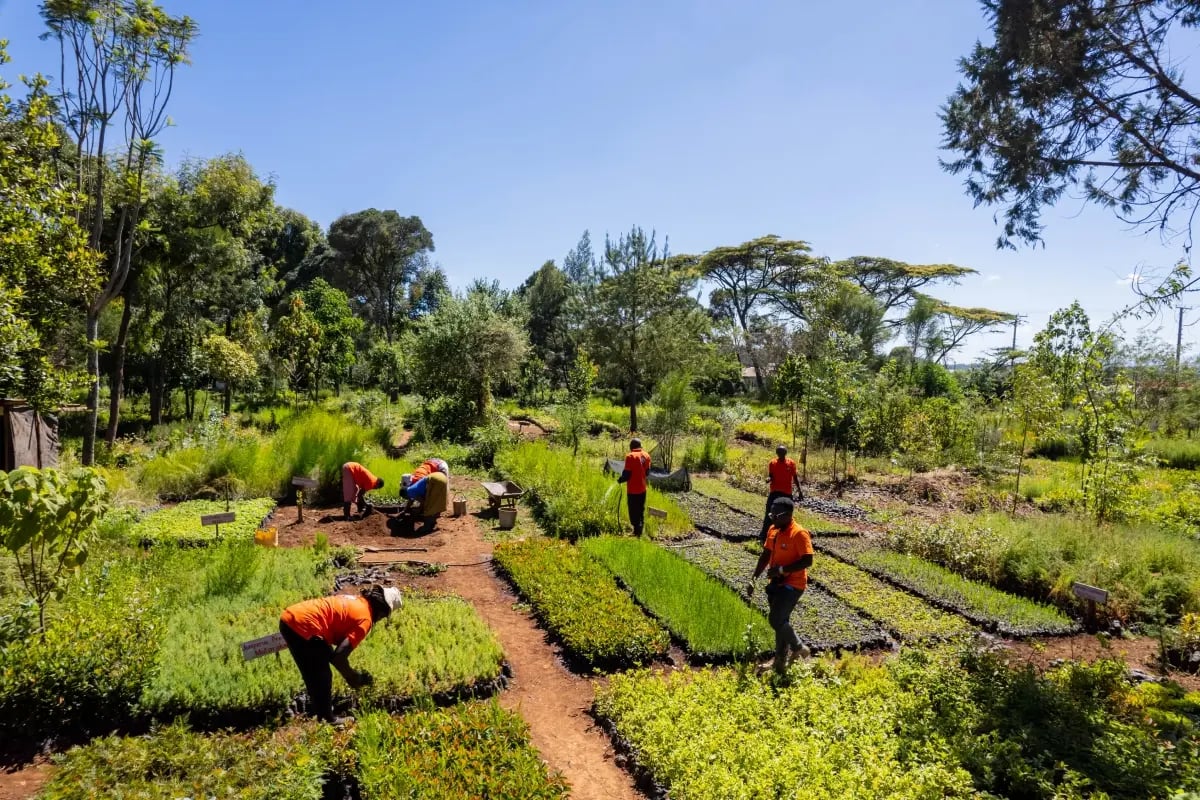 A member of the Green Earth team working in a tree nursery.
For corporate buyers, this provides enterprise carbon sourcing that is traceable from project to registry, certified under leading standards, and supported by audit-ready documentation for ESG reporting. Each purchase is accompanied by an impact report, a certificate, and a communication package suitable for stakeholder disclosure and aligned with corporate net-zero commitments.
In addition, to support companies with carbon management and accounting from start to end, we offer full carbon footprinting services:
- Scope 1, 2, and 3 measurement with our proprietary CO2 Expert carbon calculator
- Emissions reduction target setting
- Validated carbon footprint reports
- Scalable Life Cycle Assessments (LCA)
- ISO-compliant Product Carbon Footprints (PCF)
- Audit-ready Environmental Product Declarations (EPD)
- Stakeholder-ready reporting aligned with CSRD, GHG protocol, and ESRS E1
 Green Earth's CO2 Expert tool
That means that we are a full end-to-end partner, from first measurement to verified impact.
How do nature-based credits compare with technology-based removals?
Two broad approaches dominate the discussion of carbon removal. Nature-based projects, including reforestation, agroforestry, and forest protection, capture and store carbon through living ecosystems while delivering co-benefits such as biodiversity, erosion control, and local income. They are available at scale and are generally more cost-effective.
Read more: Nature-based solutions vs carbon capture technology: Which is most effective?
Technology-based removals, such as direct air capture, offer strong permanence but remain costly and limited in supply. Most enterprises therefore, base their portfolios on nature-based projects at present, while monitoring technology-based options for the future. A reforestation project sequesters carbon and, in addition, creates habitats, protects watersheds, and supports livelihoods, which is why it remains central to Green Earth’s work.
Frequently asked questions
What makes a carbon credit high-integrity?
High-integrity credits satisfy strict criteria for additionality, permanence, and accurate quantification. They are verified by recognised standards such as Verra’s Verified Carbon Standard or the Gold Standard, and are increasingly assessed by independent rating agencies. Green Earth supports integrity by developing each project end-to-end, with vigorous monitoring and third-party verification.
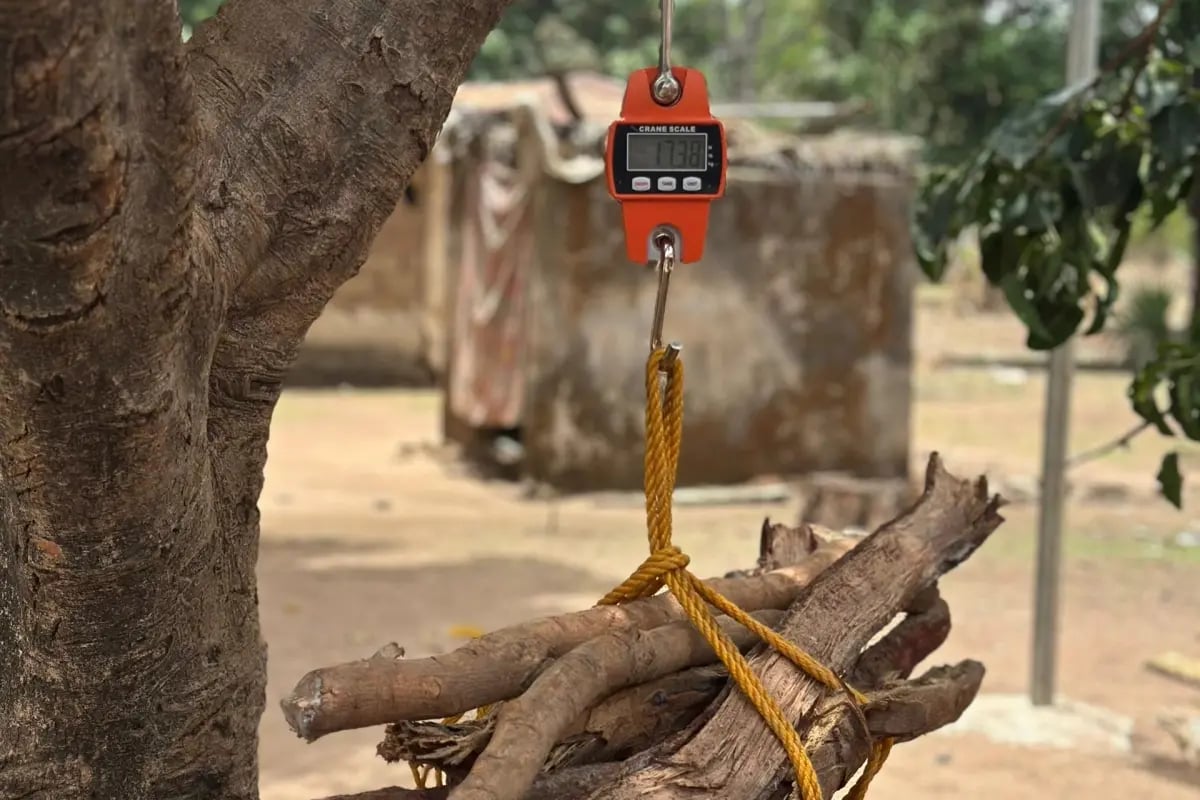 Data analysis and collection conducted during the KPT. Green Earth Sauki Cookstove Project.
How do carbon credits support net-zero commitments?
Carbon credits address residual emissions that cannot yet be eliminated through internal reduction. They are intended to complement reduction efforts, not to replace them. Each verified credit from Green Earth represents 1 tonne of CO2 removed or avoided, contributing to an organisation’s net-zero commitments alongside continued decarbonisation.
Which verification standards should I look for?
Credits should be verified under internationally recognised standards, such as Verra’s Verified Carbon Standard or the Gold Standard. It is also advisable to confirm whether credits meet the ICVCM Core Carbon Principles, which establish a benchmark for high-integrity credits in the verified carbon market (also known as the voluntary carbon market).
How do nature-based credits deliver co-benefits and support SDGs?
Beyond carbon storage, nature-based projects protect biodiversity, restore ecosystems, and support local communities. Green Earth’s projects generate income for farmers, improve soil through agroforestry, and create habitats for wildlife, while engaging with the local communities for successful project implementation..
Read more: Beyond tonnes: How carbon credit co-benefits elevate value
High-quality nature-based projects advance multiple United Nations Sustainable Development Goals (SDGs) alongside their carbon impact, because their co-benefits extend across environmental, social, and economic objectives.
 Green Earth team members with the local community in Uganda during seedling distribution. Bulindi Agroforestry and Chimpanzee Conservation Project, Green Earth.
Green Earth's reforestation and agroforestry projects contribute to No Poverty (SDG 1), Zero Hunger (SDG 2), Quality Education (SDG 4), Decent Work and Economic Growth (SDG 8), Climate Action (SDG 13), and Life on Land (SDG 15). Our energy-efficient cookstove projects contribute to No Poverty (SDG 1), Quality Education (SDG 4), Gender Equality (SDG 5), and Climate Action (SDG 13).
Why does buying directly from a developer matter?
Purchasing directly from a developer such as Green Earth provides full visibility of how each credit is generated. The absence of intermediaries removes uncertainty over provenance and supports transparent responses to auditor enquiries, which simplifies enterprise carbon sourcing and reporting.
How to get started
The central consideration when selecting the best carbon credit provider is the proximity a buyer can achieve to the activity its funding supports. For organisations seeking nature-based projects they can substantiate, the direct route is the most defensible. A bonus criteria for selection is if the provider also offers carbon footprinting services, so that your business can align its measurement and compensation strategies through a single, accountable partner.
Partnering with Green Earth follows a clear sequence: measure the corporate footprint, select projects aligned with organisational objectives, determine the volume to be compensated across Scope 1, 2, and 3, and complete the purchase with support from our team. Buyers then receive a certificate, impact report, and communication materials required for stakeholder disclosure.
Green Earth is committed to restoring nature through high-integrity carbon finance. As a listed, end-to-end developer of nature-based projects, we plant millions of trees, restore ecosystems, and support communities across the globe, ensuring that every credit remains traceable from project to registry. This is the standard of enterprise carbon sourcing we provide. And it’s what makes Green Earth the ideal partner for your business’ sustainability commitments.