
Biodiversity
Australia
Vital habitats
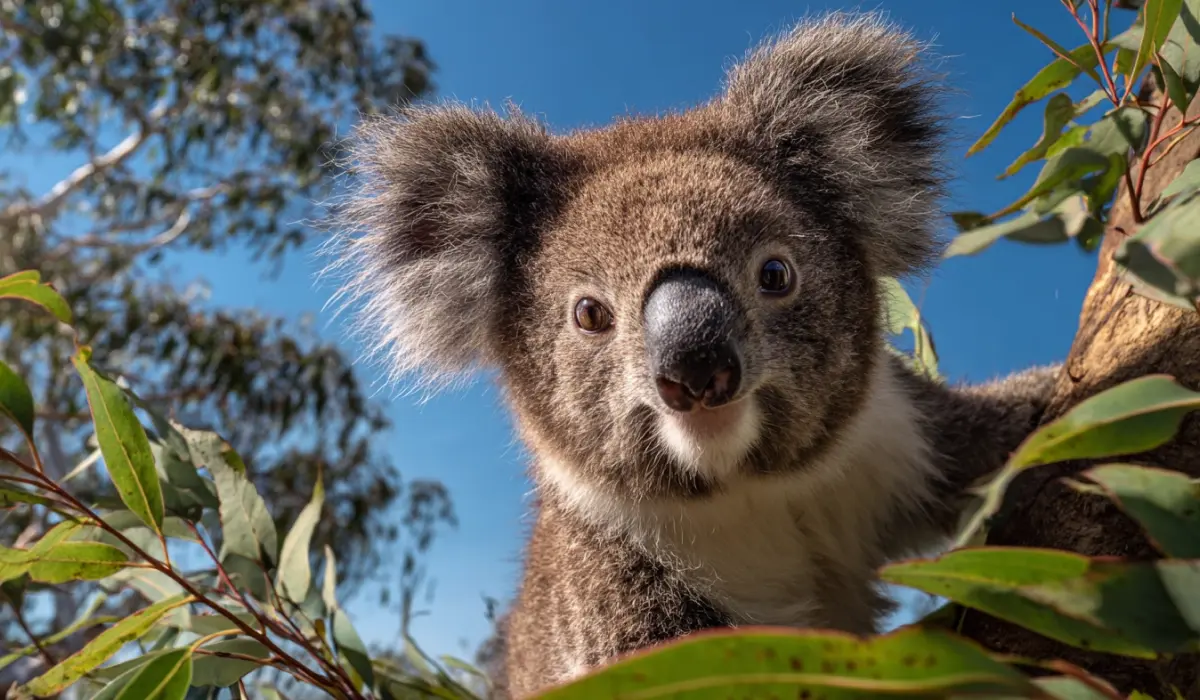
A native afforestation project designed to restore habitat for Australia’s endangered koala has secured a notable premium in its first reported carbon credit transaction.
 Koala calmly resting on a tree, surrounded by the lush greenery of an Australian forest. AI generated picture.
Australian developer Canopy, a subsidiary of Greening Australia, sold 200 Australian Carbon Credit Units (ACCUs) at AUD70.40 ($50) per tonne of CO2 equivalent (tCO2e), according to a source familiar with the deal. The buyer was a voluntary corporate participant.
The credits were generated under the Environmental Plantings (EP) methodology. Officially titled the Greening Australia and Canopy Nature-Based Solutions: National Reforestation Program 2022, the initiative restores native tree species on land previously used primarily for agriculture. To date, 3,547 ACCUs have been issued to the project, based on data from the Clean Energy Regulator.
Market participants describe the units as ‘Koala friendly’ ACCUs, reflecting their focus on rebuilding habitat and ecological corridors for the marsupial, which is listed as endangered in New South Wales, Queensland and the Australian Capital Territory.
Read more: Beyond tonnes: How carbon credit co-benefits elevate value
The AUD70.40/tCO2e transaction price stands above broader market benchmarks. Typically, spot EP ACCUs—generally associated with monoculture plantings—are traded at around AUD56/tCO2e ($40). Generic ACCUs were assessed lower still, at AUD36.90/tCO2e ($26). Multi-species EP projects with biodiversity co-benefits have historically attracted stronger pricing, often in the high AUD60s.
Attention is also likely to turn to projects developed under the Koala Friendly Carbon Initiative (KFCI), a collaboration between Climate Friendly, World Wide Fund-Australia and the New South Wales government. At least five EP projects under that framework have been issued a combined 10,321 ACCUs, according to regulator data, although no trades have yet been disclosed.
For investors and project developers, the transaction provides an early price signal for biodiversity-linked ACCUs. As institutional capital continues to flow into environmental plantings, attributes such as habitat restoration and species protection may increasingly differentiate projects within Australia’s afforestation market.
Read more: Bezos Earth Fund and Earthshot Prize channel new capital into carbon removal
As the premium achieved by biodiversity-oriented ACCUs demonstrates, the market is increasingly recognising that nature conservation drives enduring value—both ecological and financial. Credits linked to habitat restoration and species protection stand apart, offering measurable co-benefits alongside carbon abatement. At Green Earth, safeguarding ecosystems sits at the core of our strategy. Our Bulindi Agroforestry and Chimpanzee Conservation Project in western Uganda illustrates how restoring habitat for endangered chimpanzees can generate high-integrity carbon units while strengthening local communities. For investors and partners seeking exposure to nature-based solutions where biodiversity underpins long-term value, we invite you to explore our projects and discover how conservation-led carbon can deliver durable impact.