
Recycling
Biochar
Asia
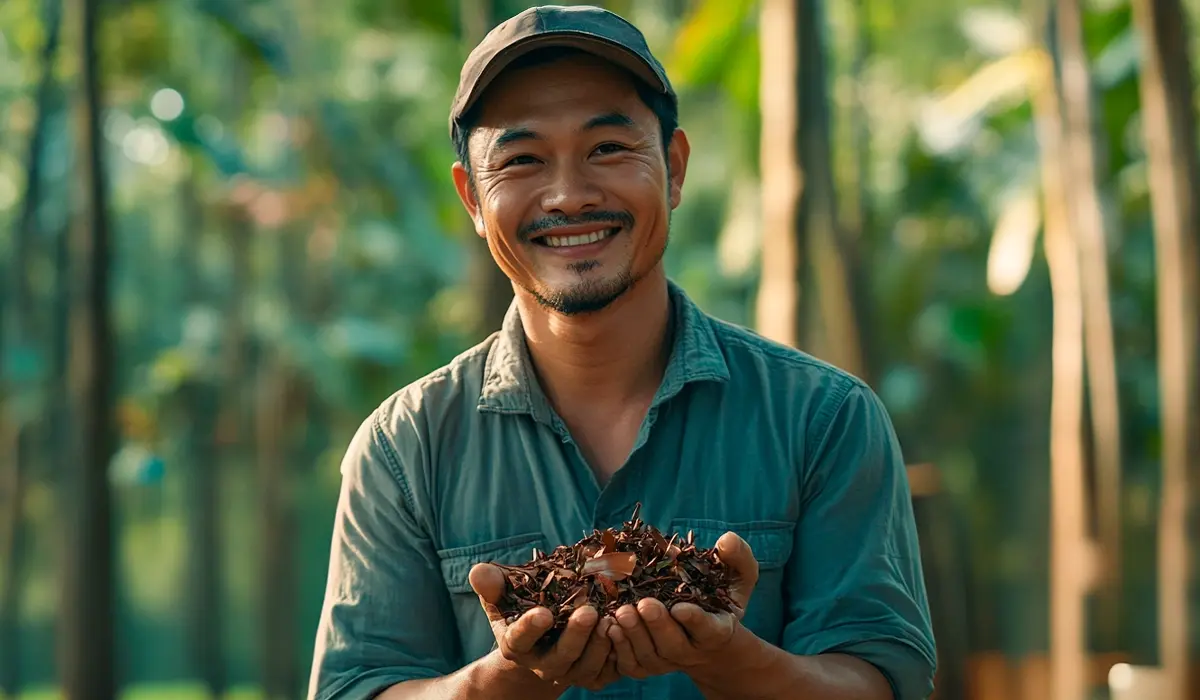
Japan-based Green Carbon has partnered with Thailand’s Rubber Authority (RAOT) to develop a groundbreaking biochar project. The collaboration formalised through a memorandum of understanding (MOU), aims to revolutionise carbon credit creation using rubber tree waste from plantations managed by RAOT.
 A Thai man holding a handful of rubber tree waste, with rubber trees in the background. AI generated picture.
The initiative will utilise wood scraps from rubber trees that have ceased latex production, typically after 25 years, transforming this often-discarded material into biochar. Green Carbon highlighted that this effort marks the largest-scale carbon credit initiative involving rubber trees globally.
Thailand, the world’s leading producer of natural rubber, oversees approximately 4 million hectares of rubber plantations. RAOT plays a pivotal role in managing the nation’s rubber industry, including ownership of significant plantation areas. By integrating biochar production into plantation operations, the project seeks to align environmental sustainability with industry practices.
This collaboration builds on Green Carbon’s recent efforts to expand nature-based carbon credit initiatives in Southeast Asia. In October, the company signed an agreement with a Thai university to promote similar projects.
Backed by prominent Japanese financial firms Mitsubishi and Sumitomo Mitsui, Green Carbon has been at the forefront of innovative carbon reduction strategies, including rice methane and mangrove-based initiatives in countries like the Philippines, Vietnam, and Cambodia.
By transforming rubber tree waste into valuable carbon credits, this venture represents a significant step forward in tackling climate change while promoting sustainable practices in the rubber industry.
Read more: Japan aligns carbon credit scheme with Paris Agreement goals
At DGB Group, we empower businesses to address their carbon footprints by offering access to verified, high-quality carbon credits derived from innovative nature-based solutions. Projects like the biochar initiative in Thailand demonstrate the transformative potential of combining ecological restoration with socio-economic benefits. By adopting sustainable practices, companies can make a tangible impact on climate change, contribute to a healthier planet, and strengthen both environmental and economic resilience for a sustainable future.