
Net zero
Carbon emissions
Carbon footprint
Case study
Motorsports
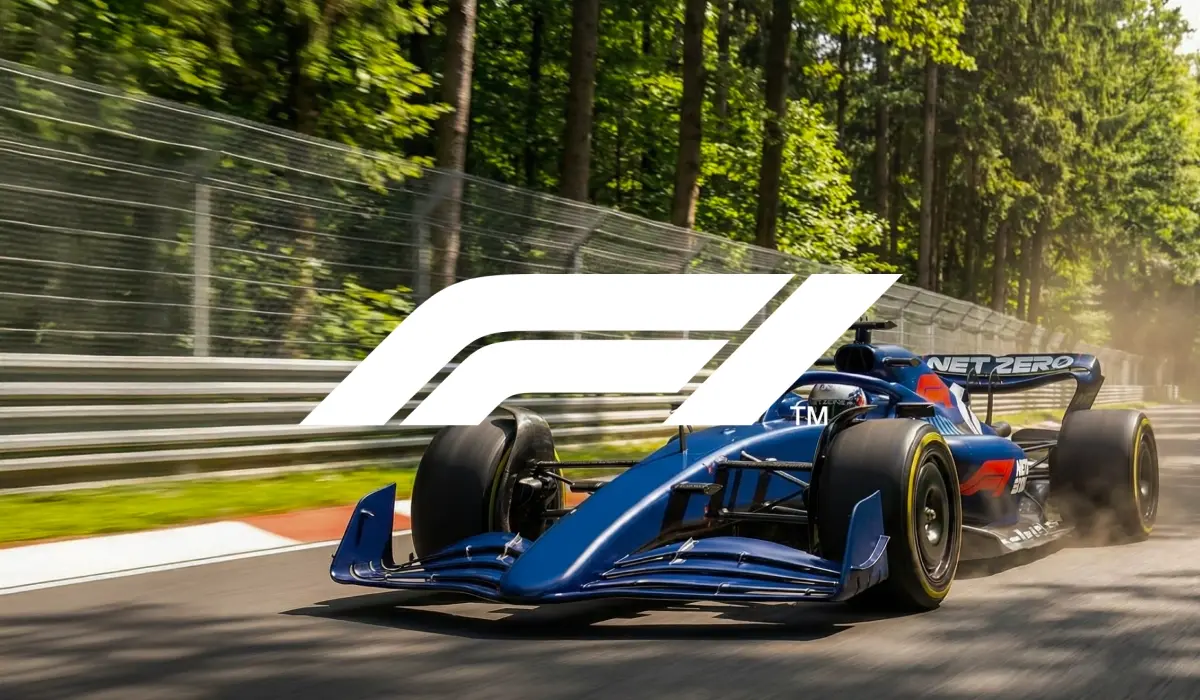
As a new season approaches, attention naturally turns to rivalries, driver line-ups, and performance predictions. But beneath the excitement lies a structural transformation that could define the sport’s next decade: The Formula 1 2026 regulation changes and their central role in achieving the F1 net zero 2030 goal.
Since Formula 1 was founded in 1950, it has represented the pinnacle of engineering performance. Today, however, it is also positioning itself as a platform for climate innovation. The transition into the F1 hybrid era is not simply technical evolution. It is a strategic shift designed to align speed with sustainability.
The race towards carbon neutrality in 2030 is underway.

Formula 1 2026 regulation changes: The technical foundation of net zero
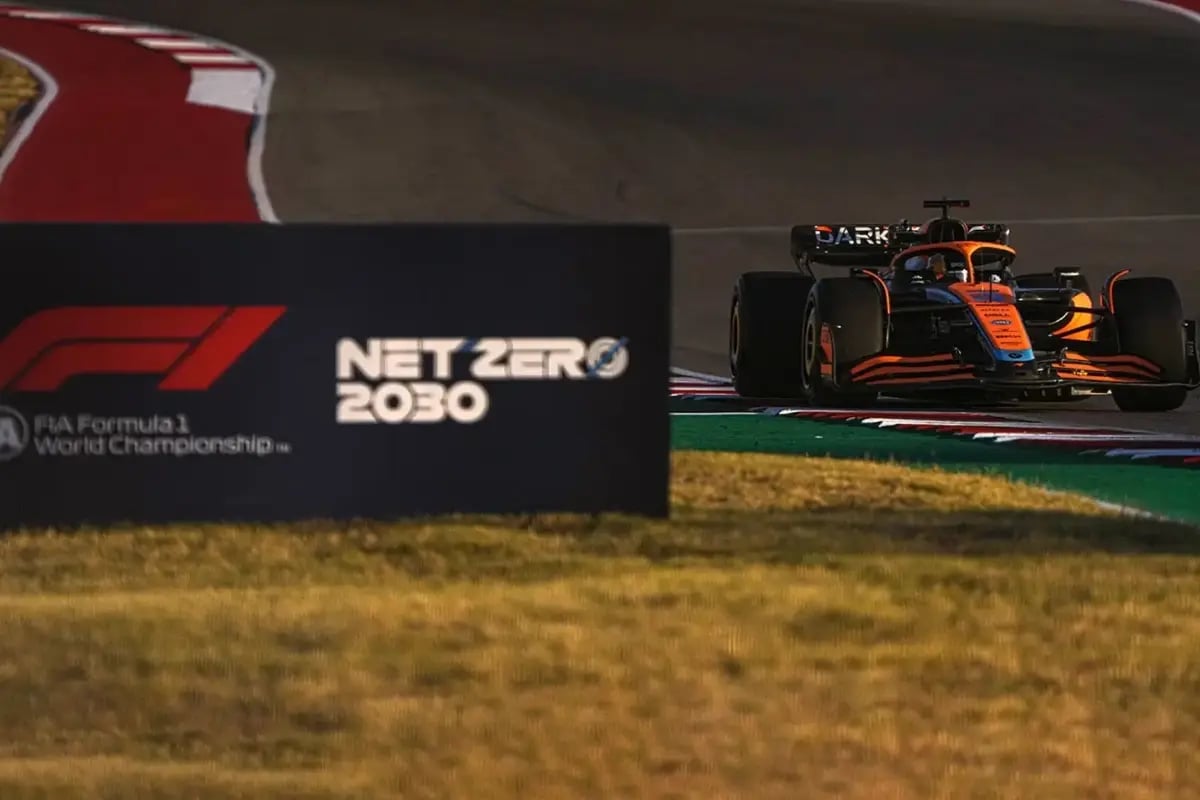
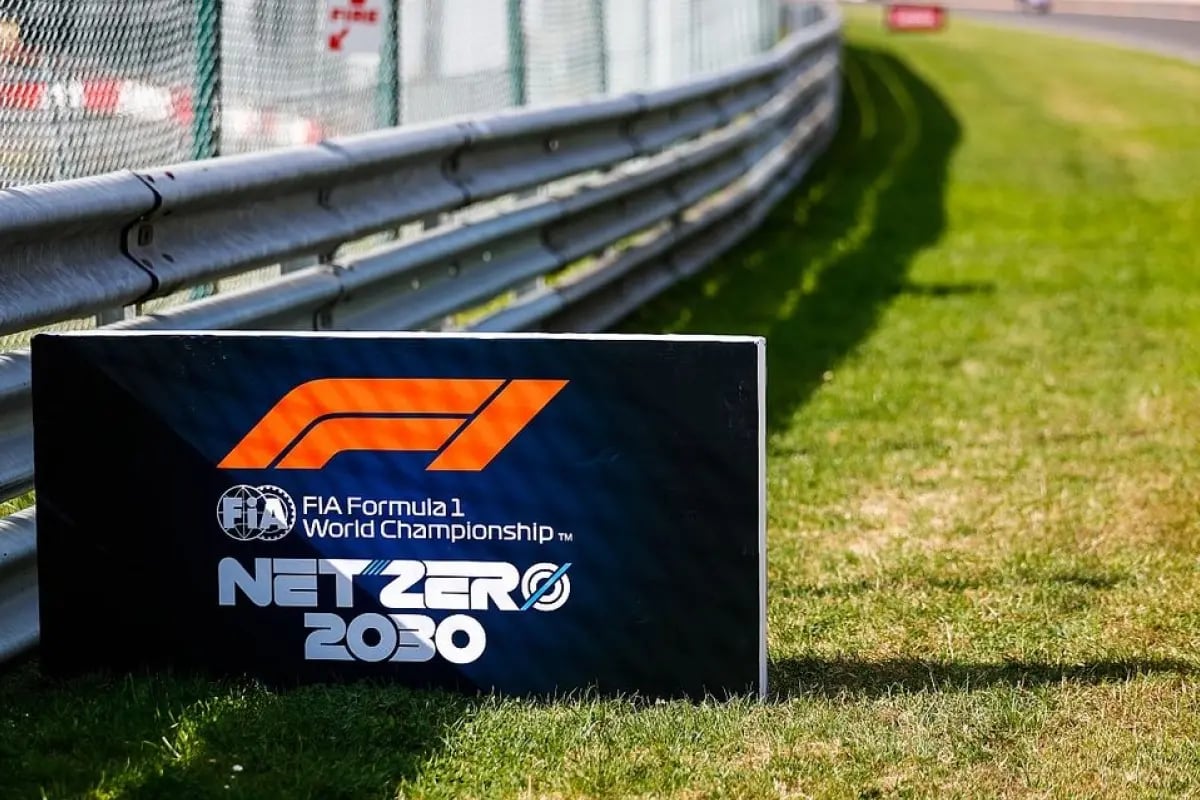 Net zero is driving the Formula 1 2026 regulation changes. Source: F1
What are the changes in Formula 1 for 2026?
Throughout the history of Formula 1, the rulebook has been in a constant state of evolution. While minor technical adjustments occur almost every season, major regulatory overhauls typically happen every 5–7 years. Historically, these significant shifts were introduced to improve safety standards or control escalating costs.
The consequences of these major resets are always profound. They force rapid engineering innovation, effectively level the playing field by requiring all teams to start their designs from scratch, and frequently reshuffle the competitive order on the grid. The 2026 changes are widely considered the most radical in the sport's history because they mandate a complete redesign of both the aerodynamics, the power unit, energy efficiency, and sustainable innovation simultaneously.
This time, the transition aims to maintain the sport's high-speed appeal while drastically reducing its environmental footprint.
Welcome to the F1 hybrid era
Are F1 engines hybrid?
-
Yes, and they will remain hybrid in the years ahead.
Are Formula 1 cars electric?
-
No. They are advanced hybrid systems combining combustion efficiency with powerful energy recovery technology.
The next-generation F1 hybrid engine will significantly increase the electrical power contribution, nearly tripling the electrical output compared to previous systems. At the same time, the MGU-H component will be removed to simplify the power unit and improve cost efficiency.
Most importantly, the 2026 F1 hybrid car will run on 100% advanced sustainable fuels (made with clean energies which contain zero crude oil), marking a major milestone in the sport's net-zero 2030 goal. These fuels are designed to be carbon neutral and compatible with existing internal combustion engines, making them highly relevant beyond the sport itself.
But if you’re a petrol-head, don’t worry. Formula 1 cars go as fast as ever, often exceeding 350 km per hour. This is the essence of the F1 hybrid era: maintaining performance while reducing lifecycle emissions.
Read more: Industry carbon footprints: transport, events, and celebrities
Growth and emissions reduction: A rare combination
One of the most compelling aspects of the F1 net zero 2030 pledge is that sustainability progress has occurred during a period of significant growth:
- The race calendar grew from 21 events in 2018 to 24 events in recent seasons, with three more races in 2026 than in 2018.
- Track attendance increased from 4 million to 6.5 million fans.
- The global fanbase expanded to more than 826 million people.
By the end of the 2024 season, Formula 1 had reduced its carbon emissions by 26% compared to its 2018 baseline. The sport’s carbon footprint fell from 228,793 tCO2e in 2018 to 168,720 tCO2e in 2024. That represents a reduction of more than 60,000 tonnes of CO2 equivalent.
If no operational changes had been implemented, the sport estimates its carbon footprint would have increased by around 10% versus 2018 levels. Instead, emissions declined sharply.
Read more: How to reduce your business’ travel emissions through nature
This progress has been driven by collaboration across the sport, including Formula 1 teams, partners, promoters, and the FIA.
Formula 1 is now over halfway towards its minimum 50% emissions reduction target under the F1 net zero goal 2030. Its remaining unavoidable emissions will be addressed through credible carbon compensation programmes aligned with best practice guidance.

In short, the sport is growing, but its footprint is shrinking.
Expansion in 2026: More teams, smarter systems
The discussion around 2026 Formula 1 teams includes the addition of a new team and two more cars on the grid. The calendar, as we mentioned, has grown to 24 races, reinforcing the sport’s global presence.
At first glance, expansion may appear incompatible with sustainability. More teams and more travel could imply higher emissions. However, the Formula 1 2026 regulation changes are embedded within a broader systems transformation.
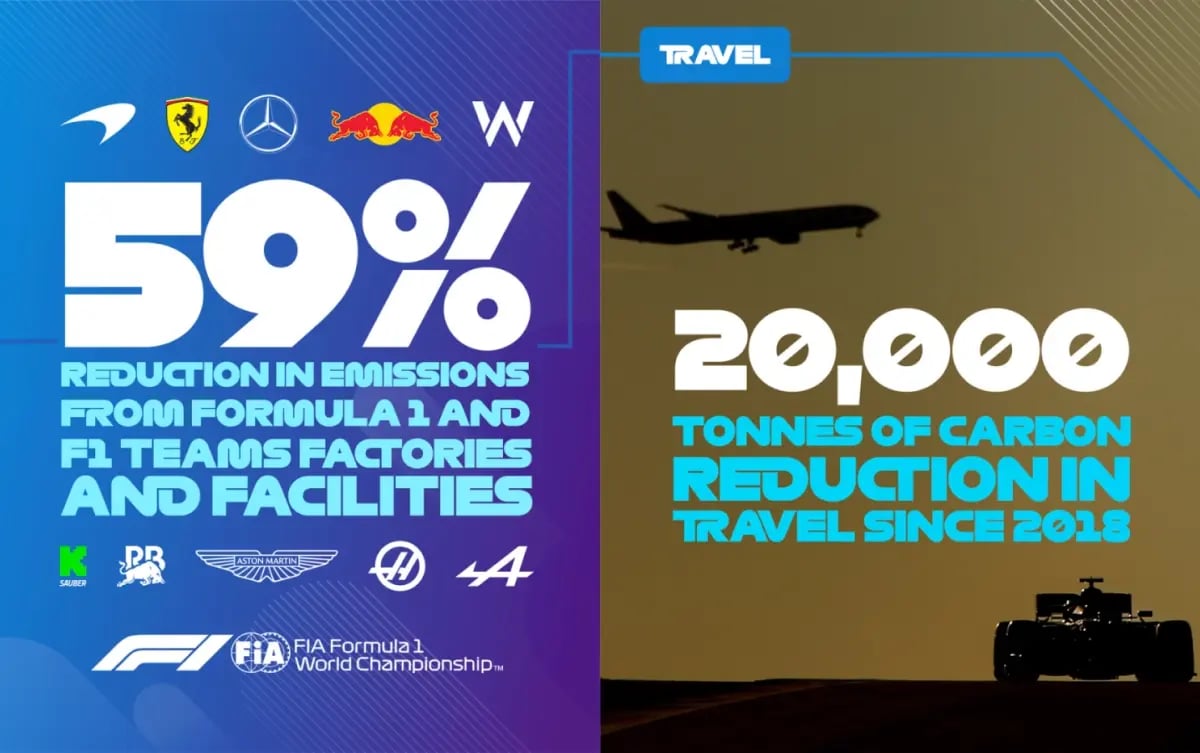 Formula 1 Formula 1's reporting on decarbonisation progress.s. Source: F1
Logistics are being optimised to reduce unnecessary long-haul travel. Remote broadcasting capabilities are reducing equipment freight. Renewable energy is being integrated across factories and facilities. Sustainable aviation fuel and lower-carbon transport options are increasingly central to freight strategy.
The 2026 regulatory reset therefore works in parallel with operational decarbonisation.
Read more: World famous companies pushing carbon compensation in sports
Beyond the engine: Positive race impact
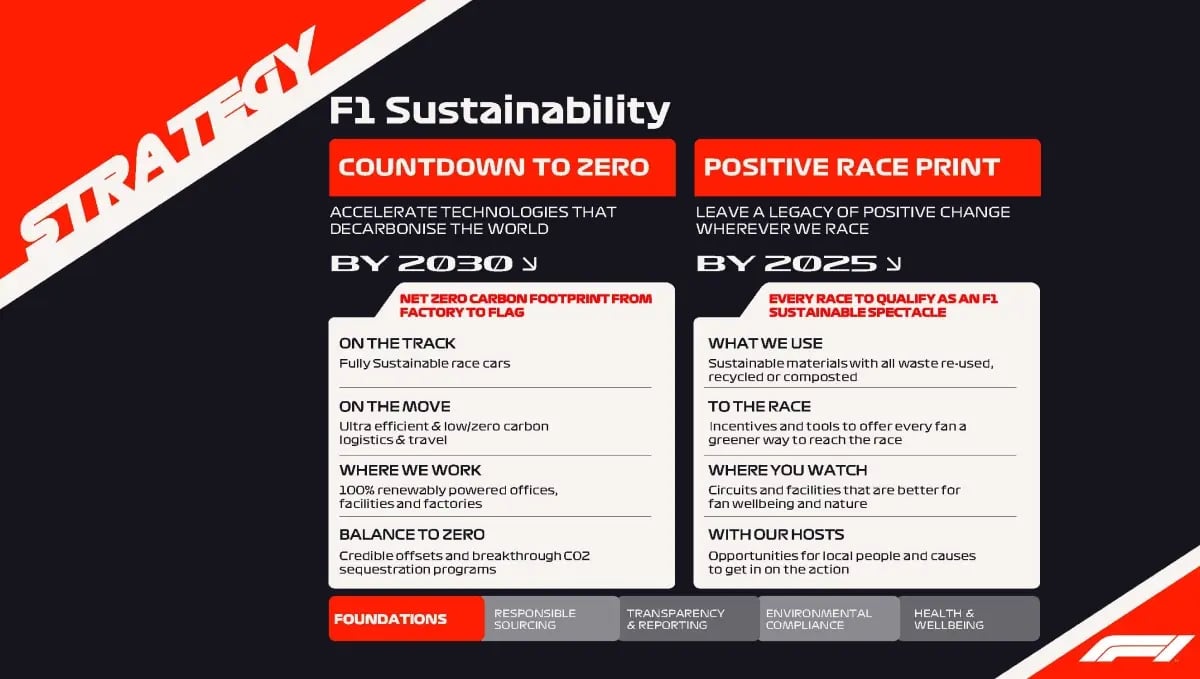
Before 2030, the sport has committed to ensuring every race qualifies as a sustainable spectacle.
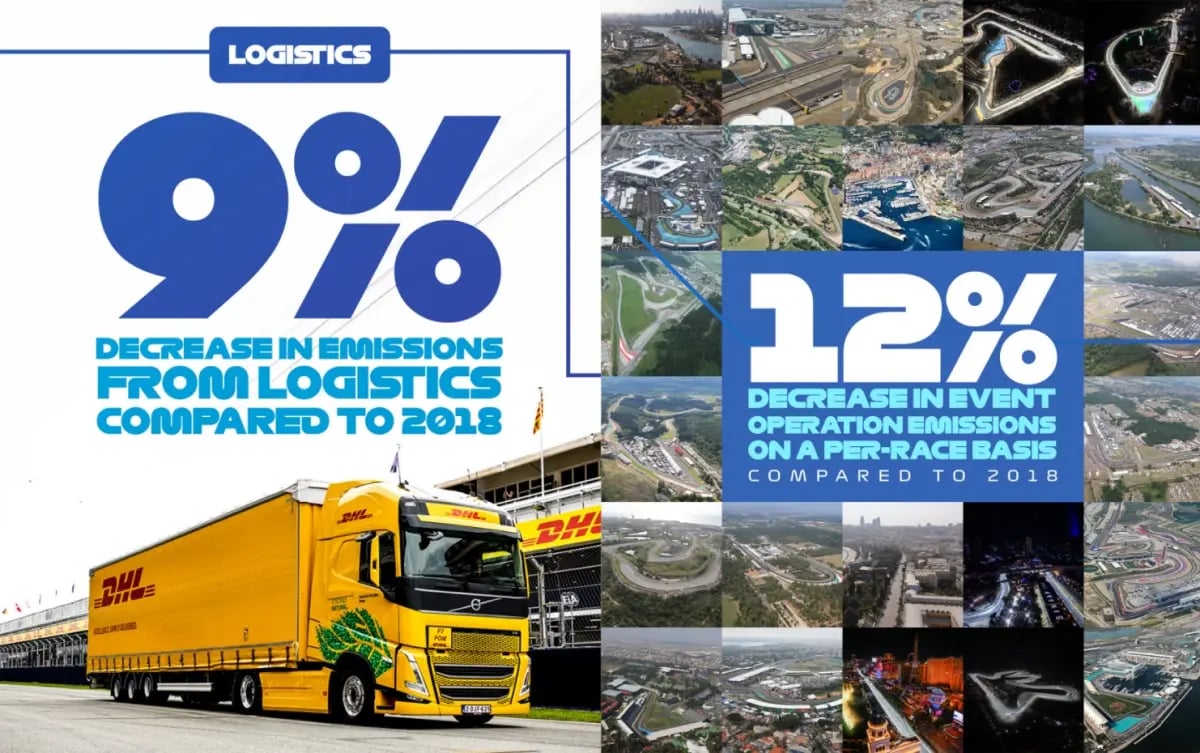 Formula 1's reporting on decarbonisation progress. Source: F1
This includes:
-
Sustainable materials and comprehensive waste reuse, recycling, or composting.
-
Incentives for fans to travel using lower-carbon options.
-
Circuits and facilities designed with environmental and wellbeing considerations.
-
Local community engagement to create positive social legacy.
The ambition is not only to reduce harm but to generate measurable positive impact.
Read more: Uncovering the impact of Scope 3 emissions
How will F1 go net zero?
The F1 net zero pledge 2030 is built around four pillars:
-
Fully sustainable race cars powered by advanced hybrid engines and sustainable fuels.
-
Ultra-efficient logistics and low-carbon travel solutions.
-
Offices, factories, and facilities powered by 100% renewable electricity.
-
Credible carbon removal and offset programmes to balance unavoidable emissions.
Read more: The importance of carbon offsetting in achieving net zero
 Formula 1's reporting on decarbonisation progress. Source: F1
Technology and efficiency can reduce a significant share of emissions. However, achieving full net zero requires carbon removal, much like the approach of Tesla, BMW, Volkswagen or even the Mercedes-AMG Petronas F1 team, which has invested in forest-based carbon removal.

The role of carbon removal and nature-based solutions
Even with a 50% reduction target, residual emissions will remain. The final step towards the F1 net zero 2030 goal requires credible carbon compensation.
High-integrity nature-based solutions can capture and store CO2 while restoring ecosystems and supporting biodiversity. When verified and transparently monitored, these projects complement technological decarbonisation strategies.
As the F1 hybrid era begins, the sport demonstrates that growth, speed, and environment responsibility can coexist. The evident expansion of the pinnacle of motorsport has not prevented emissions from falling. Instead, they highlight the power of systemic change.
The next phase will depend not only on engines and fuels but also on credible carbon capture.
 Net zero is driving the Formula 1 2026 regulation changes. Source: F1
At Green Earth, we develop verified, high-quality nature-based carbon credits from the ground up that convert degraded landscapes into measurable positive impact.
For your business, this means moving beyond vague sustainability promises. We provide the exact, audit-ready environmental assets you need to meet stringent compliance standards and satisfy stakeholder demands.
Just as an F1 team relies on precise engineering, your organisation needs a dependable partner to handle the complexities of carbon compensation. We help you confidently address your unavoidable emissions, protect your brand, and turn your net-zero ambition into a verified reality.

Buckle up as the new season and the F1 hybrid era unfolds. This year, the most important race may not be for the championship: but for net zero. And we will hopefully soon see the chequered flag.