
Sustainability
Carbon footprint
CSRD
SME
Reporting

Across Europe, a quiet but decisive shift is reshaping how companies work with their suppliers. As the Corporate Sustainability Reporting Directive (CSRD) comes into force, large organisations are under mounting pressure to disclose detailed, verifiable sustainability information—not only about their own operations, but across their entire value chain. And because up to 80% of a company’s emissions often come from its supply chain, the spotlight naturally turns to SMEs.
This is why CSRD for SME suppliers is becoming a real operational topic, even though most small and medium-sized enterprises are officially exempt from the legislation. The EU’s own legal commentary makes this clear: As companies begin reporting under the new rules, ‘the effect will spread much further—it will cascade down to the SMEs that make up their supply chains’. In practice, this means SMEs supplying corporates should expect new requests for data, documentation, and evidence.
But there is a positive angle here. Instead of treating this as an administrative burden, SMEs can use this moment to strengthen relationships with their best clients, streamline internal processes, and position themselves as low-friction, high-trust partners. In the new sustainability landscape, the suppliers that can deliver consistent, CSRD-ready data will be the ones who stand out.
Let’s explore why buyer expectations are changing, what kind of data SMEs will soon be asked to provide, and how frameworks like VSME—supported by digital tools such as our CO₂ Expert tool—can help small businesses prepare efficiently and confidently.

Why large buyers are requesting sustainability data under CSRD
The reason large companies are turning to their suppliers for sustainability information is simple: under the CSRD, they must report not just on their own operations but across their entire value chain. CSRD marks the first time EU companies must demonstrate traceability across all upstream and downstream activities—revealing where impacts originate, how suppliers contribute to overall performance, and how sustainability risks flow through the business.
A recent Deloitte review of 200 firms shows that many are already mapping their suppliers, reporting emissions from purchased goods, and detailing upstream transport emissions as required under the new rules. Without reliable figures from SMEs, companies simply cannot meet their CSRD obligations.
This is where CSRD data requests for SMEs come in. Corporate buyers now need consistent, verifiable information to fulfil their disclosure obligations. As CSRD enters into force for large companies (250+ employees) in 2026 for the fiscal year 2025, many companies have little time to wait for smaller suppliers to adjust.
For SMEs, this shift can feel sudden—especially for businesses that have never been asked to provide environmental metrics before. But from the buyer’s perspective, this is no longer optional: CSRD Scope 3 and supplier reporting is now part of a broader push to standardise sustainability transparency across industries.
So, what data will large buyers request from SMEs under CSRD?
- Energy use and fuel consumption (electricity, heating, fuel for machinery or transport).
- Greenhouse gas emissions data, especially Scope 1 and Scope 2, and activity data relevant to Scope 3.
- Resource and material usage, including water, raw materials, and key inputs.
- Waste generation and disposal practices, including recycling and hazardous waste handling.
- Transport and logistics information (freight distances, modes, fuel types).
- Packaging data (materials used, recyclability, reductions achieved).
- Environmental management policies or certifications.
- Supplier-level sustainability commitments, reduction plans, or targets.
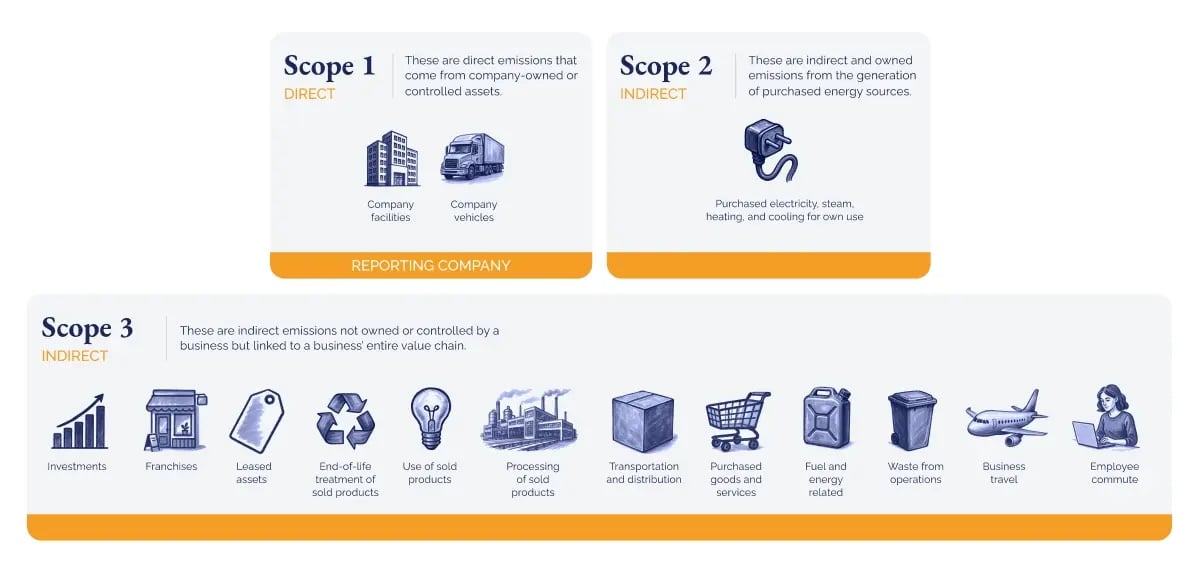 To measure the carbon footprint of a company, you need to calculate its 3 different scopes.
The strategic message is clear: SMEs that can produce clean, reliable sustainability data become easier to onboard, easier to retain, and more attractive as long-term partners. As CSRD continues to reshape procurement expectations across Europe, the ability to support customers’ reporting needs will separate the suppliers who fall behind from those who strengthen their competitive position.
Read more: Countdown to CSRD: Your 12-month plan for compliance and competitiveness
How CSRD Scope 3 reporting impacts SME suppliers
There is a question on the minds of many: Do SMEs have to comply with CSRD if they are suppliers? For most SMEs, CSRD pressure won’t arrive in the form of legislation—it will arrive quietly through procurement. Large companies now have to disclose their upstream and downstream sustainability impacts, and that makes supplier information indispensable. According to the European Commission, CSRD obliges companies to report using value-chain information where relevant, meaning SMEs become part of the reporting ecosystem by default.
This shift is already reshaping how procurement teams evaluate vendors. Legal analysis from JD Supra warns that under Articles 19a and 29a of the CSRD, data collection from suppliers becomes unavoidable, meaning ‘increased pressure will be placed on suppliers’ as reporting begins.
In practice, indirect CSRD pressure shows up in everyday business interactions:
- Corporate clients sending sustainability questionnaires that require specific environmental data.
- Procurement scorecards incorporating emissions, resource use, or policy disclosures as standard criteria.
- Requests for evidence-backed figures, not generic statements, especially for emissions, energy use, transport, and waste.
- Buyers expecting annual updates or asking SMEs to align with recognised frameworks such as VSME.
- Some clients even request supplier reduction targets or confirmation of future reporting plans.
Read more: The next carbon standard: What CBAM and CSRD mean for European businesses
For SMEs, this new expectation can feel like an extra layer of administration, but it is quickly becoming part of standard business hygiene. Buyers want assurance, comparability, and usable data. And those suppliers who can meet these expectations are more likely to retain existing contracts and win new ones as CSRD reshapes European procurement.
What is the VSME Standard for SMEs?
 CSRD for SME Suppliers: How to turn data requests into a competitive advantage. AI generated picture.
As large companies adopt the European Sustainability Reporting Standards (ESRS) under CSRD, SMEs need a way to respond to incoming data requests without taking on the same level of complexity. This is exactly why the European Commission introduced the VSME (Voluntary SME Sustainability Reporting Standard)—a simplified reporting framework designed specifically for smaller companies.
Read more: The VSME Standard for SMEs: Simplified ESG reporting in the EU
Unlike ESRS, which is highly detailed and geared towards large enterprises, VSME focuses on a small set of proportionate, high-value indicators that help SMEs communicate their sustainability performance in a structured and credible way. The Commission describes VSME as a tool to enable SMEs to respond to information requests from counterparties in value chains in a cost-efficient manner.
The VSME framework covers three key areas:
-
Basic environmental indicators: energy use, emissions, water consumption, waste generation.
-
Essential social information: employee practices, training, working conditions.
-
Core governance disclosures: policies, anti-corruption measures, management responsibilities.
This structure mirrors the logic of CSRD—but at a scale that makes sense for small businesses. It gives SMEs a consistent language for engaging with customers who need CSRD-aligned data without forcing them into full ESRS compliance.
This is also why VSME is gaining traction. It helps SMEs answer the emerging question: How does VSME help SMEs respond to CSRD requests? Because VSME provides:
-
A recognised European framework buyers trust
-
A structured way to collect CSRD-relevant data
-
A consistent format that procurement teams can integrate directly into their reports
-
A light-touch alternative to the administrative burden of ESRS
VSME is the bridge. It allows SMEs to stay competitive in a procurement environment increasingly shaped by CSRD—without overwhelming them with reporting obligations designed for large corporations.

How SMEs can prepare for CSRD data requests now
As CSRD reshapes how companies assess their suppliers, the SMEs that act early will find the transition far smoother. Preparing for CSRD-linked data requests doesn’t require a full reporting overhaul, just a clear, structured approach to collecting the right information.
So, how can SMEs collect CSRD-ready sustainability data? It starts with understanding what matters most to your customers and building simple internal habits that make data collection routine rather than reactive.
-
Identify which customers will request data
Start by identifying your larger clients and those already communicating about sustainability. These companies will be the first to request structured, CSRD-aligned information from their suppliers.
-
Establish a basic sustainability baseline
Most SMEs already have access to the operational data buyers want: energy usage, travel, fuel consumption, material inputs, and waste. Collecting these regularly, even in simple form, lays the foundation for answering CSRD data requests quickly and accurately. If you don’t have this data ready, now is the time to start measuring.
-
Use a lightweight, recognisable framework such as VSME
Because VSME mirrors the logic of the ESRS but remains proportional to SME realities, it gives small businesses a structured way to gather the information customers expect: environmental indicators, essential social data, and basic governance disclosures. It also helps SMEs avoid being overwhelmed by questions designed for large companies.
Read more: Benchmarking emissions: What’s a good carbon footprint for my industry?
-
Create an annual data-collection routine
Large companies report annually under CSRD—and they will ask suppliers for updated data on the same cycle. SMEs that gather and report on sustainability information once a year (the same way they handle financial accounts) will be able to respond quickly without last-minute stress.
-
Use digital tools to deliver CSRD-ready outputs
This is where the difference becomes tangible. Manual data collection can create inconsistencies, and buyers increasingly expect structured numbers they can plug directly into their ESRS reports.
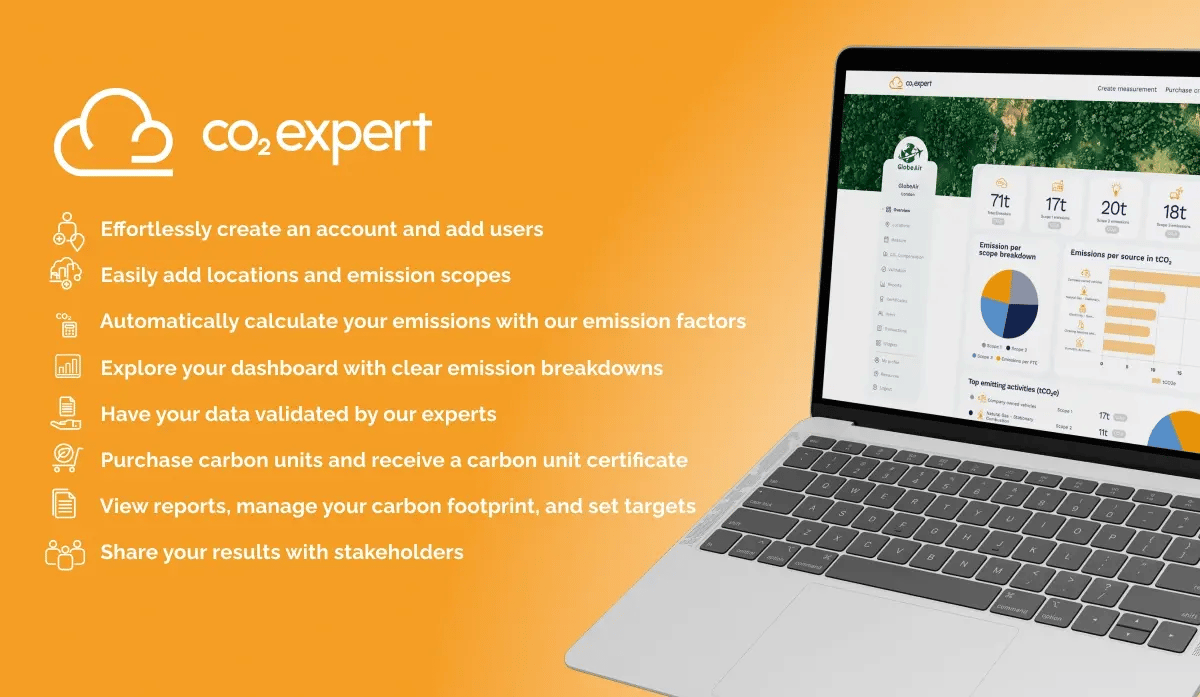 CO2 expert tool, Green Earth.
A tool like Green Earth’s CO₂ Expert tool enables SMEs to calculate their emissions accurately, store the information centrally, and export CSRD-ready data files that match what corporate clients are asking for, making the supplier look more organised, reliable, and ready to collaborate.

Why digital tools help SMEs generate CSRD-aligned reports
As sustainability reporting becomes part of standard business practice, SMEs are discovering that the biggest challenge isn’t the data itself—it’s the format. How to generate CSRD-aligned reports as an SME? Large companies need information they can integrate straight into their ESRS disclosures, and that means suppliers must present their numbers clearly, consistently, and in a way procurement teams can use without rework.
This is why relying on manual spreadsheets quickly becomes impractical. They’re hard to maintain, prone to version errors, and rarely match the structure corporate buyers expect. As CSRD drives more rigorous value-chain reporting, SMEs increasingly need tools that help them produce clean, verifiable, CSRD-aligned outputs.
Read more: Carbon footprint offsetting strategies: How leading companies neutralise their emissions
Digital platforms designed for smaller businesses solve this gap in three ways:
-
They automate complex calculations
Many SMEs don’t have internal sustainability expertise. Tools that calculate emissions or resource footprints remove the guesswork and ensure numbers reflect recognised methodologies, a key expectation for CSRD reporting.
-
They centralise data and avoid inconsistencies
Instead of re-entering figures each year or guessing which spreadsheet is the latest version, digital tools keep everything in one place. This reduces errors and makes annual updates easy.
-
They generate exportable formats that buyers can use immediately
Large companies often need data that aligns with ESRS categories or fits into supplier questionnaires.
This is exactly where our CO₂ Expert tool makes a difference. It allows SMEs to calculate their emissions, store the information securely, and export CSRD-ready files, meaning procurement teams can plug the data straight into their reports without chasing clarification or reformatting numbers.
Read more: SME sustainability tools: How they help your business grow
The result? SMEs appear organised, credible, and prepared, which strengthens trust and reduces friction in supplier relationships. In a landscape where sustainability transparency is becoming a procurement differentiator, the right digital tool doesn’t just simplify reporting; it helps SMEs operate like the suppliers buyers want to work with.
.webp?width=1200&height=697&name=CSRD%20for%20SME%20Suppliers%2c%20How%20to%20turn%20data%20requests%20into%20a%20competitive%20advantage_visual%205%20(1).webp) 5 Benefits of an impactful CO2 strategy.
5 Benefits of an impactful CO2 strategy.
Early preparation makes SME suppliers stronger partners
CSRD is reshaping how companies think about their value chains, and SMEs are rapidly becoming central to that transformation. Even without a direct reporting obligation, suppliers are now expected to provide reliable, comparable sustainability data, and those who can do so with confidence will stand out. Preparing early isn’t just about staying compliant with customer requests; it’s about becoming the supplier that procurement teams trust, prefer, and keep.
Read more: SME carbon footprints: a practical guide
And this is where the right tools make all the difference. A platform like the CO₂ Expert tool removes the complexity from data collection and turns sustainability reporting from a reactive task into a strategic advantage.
 CO2 expert tool, Green Earth.
If you want to position your business ahead of the curve, and make sustainability data a strength rather than a burden, now is the moment to act. Book a call with our team and see how CO₂ Expert can help you deliver CSRD-ready data easily, accurately, and with total confidence.