What is carbon credit investing?
Carbon credit investing involves the purchase and trade of carbon credits as a financial instrument through different carbon pricing mechanisms. These credits represent a reduction in carbon emissions.
What determines the price of carbon credit investing?
There are many ways to value a carbon credit, and many factors influence the price of carbon investing through carbon credits. A higher cost is generally required to ensure the quality of the project and that project benefits are real, long-term, and sustainable.
This is why carbon credits from reforestation and land restoration projects with strong co-benefits fetch higher prices than regular tree planting projects.
Factors influencing carbon credit prices
Carbon pricing is a mechanism to assign a monetary value to carbon emissions. It incentivises companies and countries to reduce their carbon footprint. Prices for carbon credits can vary significantly in the voluntary carbon credit market due to a variety of factors.
Type of project
Different types of projects have varying levels of environmental and social impacts. The costs and benefits of these projects influence the price of the carbon credits generated. Nature-based projects, like the ones developed by Green Earth, command the highest prices in the market.

Project location
Project implementation costs vary depending on the project's location, impacting the price of carbon credits. Projects in emerging markets may have lower labour and land costs but can involve higher risks, while projects in industrialised countries may have more stringent regulations.
Co-benefits
Projects that offer additional environmental or social benefits beyond carbon reduction are more attractive and command a premium. Co-benefits include biodiversity conservation, job creation, and air and water quality improvements. Green Earth’s projects have many co-benefits and are thus high quality.

Verification
Projects with robust verification and certification by leading standards (such as the Verified Carbon Standard and Gold Standard) demand higher prices as they provide greater assurance of the project's environmental integrity and impact. Green Earth works only with leading standards.

Carbon credit vintage
The age of a carbon credit can impact its price. Generally, more recent credits are more valuable as they reflect current emissions reductions. These credits are typically more desirable to buyers as they demonstrate an active commitment to reducing emissions in line with current global goals.

Regulatory environment
Government policies and incentives to reduce emissions can influence the demand for carbon credits. Changes in regulations or the introduction of new policies, such as carbon pricing, emissions trading schemes, and carbon taxes, can impact the price of carbon credits in the market.

Carbon pricing instruments
Carbon credits are generated through carbon pricing instruments such as carbon taxes, Emissions Trading Systems (ETS)—both on the regulatory market, and carbon crediting mechanisms. These instruments place a financial cost on emitting greenhouse gases, and their revenues contribute to the overall value of carbon credits.
Article 6 - Paris Agreement
Article 6 introduces new mechanisms for international cooperation and carbon accounting in carbon markets that can significantly impact the price of carbon credits, such as the Internationally Transferred Mitigation Outcomes (ITMOs) and the Sustainable Development Mechanism (SDM).

Other factors
Supply and demand: A higher demand for credits can drive up prices, while an oversupply can lower prices.
Buyer preferences: Some buyers prefer certain project types, locations, or co-benefits.
Market sentiment: The public’s view of the carbon market and nature impacts affects price and demand.

Why is carbon credit investing important?
Carbon credit investing drives carbon pricing, a tool that ties emissions to their source by placing a financial cost on CO₂. That cost reflects real damage: more frequent natural disasters, biodiversity loss, rising temperatures, and higher healthcare costs from poor air quality, dust storms, and heat waves.
By incentivising emission reductions, driving innovation, and generating revenue for environmental initiatives, carbon credit investing plays a vital role in the transition to a low-carbon future. While reducing emissions takes time, purchasing carbon credits lets companies address hard-to-abate emissions immediately, fuelling the rising demand and prices that have made carbon credits a hot commodity worldwide.
Carbon credits are a fast-growing commodity
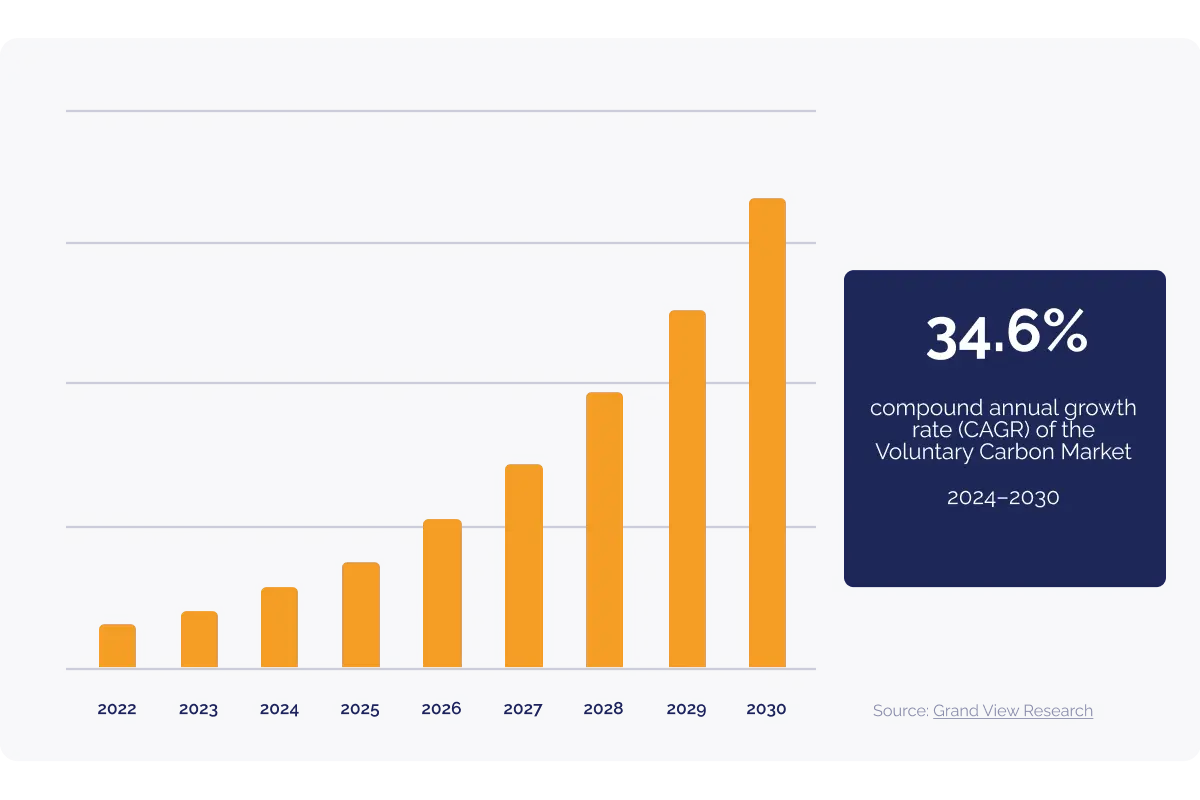
The voluntary carbon market is estimated at $4.7 billion in 2025 and is expected to grow almost 35% from 2024 to 2030. The overall global carbon market is projected to grow at a CAGR of 39.4% from $695 billion in 2025 to over $4 trillion in 2030.
Carbon credits are outpacing other traditional commodities, making carbon credit investing an attractive opportunity for investors.
EY:
Prices for carbon could rise to a central estimate of $80–$150 per tonne by 2035.
BCG:
In 2021, the voluntary carbon market grew at a record pace, reaching $2 billion—four times its value in 2020—and the pace of purchases is still accelerating in 2022. By 2030, the market is expected to reach between $10 billion and $40 billion.
McKinsey:
Demand for carbon credits could increase by a factor of 15 or more by 2030 and by a factor of up to 100 by 2050. Overall, the market for carbon credits could be worth upward of $50 billion in 2030.
World Bank:
Revenues from carbon taxes and Emissions Trading Systems (ETS) grew by over 10% in 2022, reaching almost $95 billion globally—according to the World Bank’s annual State and Trends of Carbon Pricing report (2023).
Carbon exchanges
Carbon credits are traded on various exchanges, such as the Carbon Trade Exchange (CTX), Xpansive, Toucan Protocol, and AirCarbon Exchange (ACX). There are also more recent market entrants, such as Climate Impact X (CIX) and Viridios AI, to which many buyers will refer for price benchmarks. These exchanges provide daily and weekly carbon prices.
As the VCM continues to evolve, the role of companies like CIX and Viridios AI will become increasingly important in shaping the future of carbon markets.
With the demand for high-quality, nature-based carbon credits exceeding supply, prices are rising rapidly. Experts predict the carbon credit market could reach $1 trillion by 2030. This makes carbon credit investing an opportunity that cannot be missed.
Climate Impact X
CIX is a leading global marketplace that provides a comprehensive platform for listing, discovering, comparing, purchasing, and retiring reliable credits that have been verified by internationally recognised standards such as Verra (VCS). As a key player in the Voluntary Carbon Market (VCM), CIX offers a trusted platform for trading carbon credits.
Viridios AI
Viridios AI revolutionises carbon credit pricing, valuation, and project info, mobilising positive action towards net zero. Viridios AI shapes the VCM with advanced tools, enhancing transparency and efficiency. Its real-time and historical data cover hundreds of investable carbon projects in blue carbon, forestry, energy efficiency, and renewable energy sectors.
Providing you access to the carbon credit market
The First Mover Fund, a preferred partner of Green Earth, is a carbon credit fund that provides ground-floor access to carbon credit investing and land restoration. Designed to remove market barriers, the First Mover Fund offers private individuals a vehicle to capitalise on the rising carbon credit market.

We develop and manage impactful projects that generate carbon credits
Green Earth is an institutional, end-to-end project developer that develops and manages high-quality nature-based projects aimed at generating AAA-rated carbon credits. Our projects offer a sustainable, quality investment opportunity as they offer many co-benefits in addition to carbon sequestration, such as biodiversity restoration, habitat protection, and community development.
Our environmental
restoration projects
We champion nature-based solutions as a powerful pathway to sustainability. Explore our portfolio of restoration projects and see the tangible environmental and social impact we are creating.

Bulindi Agroforestry and Chimpanzee Conservation Project
This afforestation and reforestation project in western Uganda aims to protect the remaining habitat of the Bulindi chimpanzees, restore nature, and support local village households.
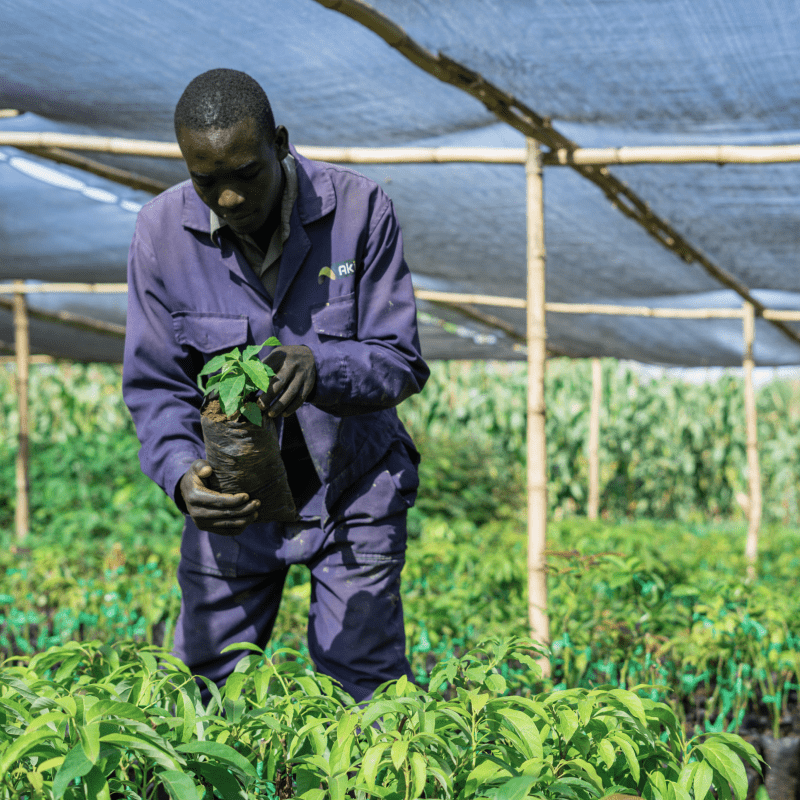
Mount Kenya Regenerative Agroforestry Project
This large-scale nature-based solution project involves replanting trees in Kenyan areas affected by illegal logging, agricultural clearance, development, construction, and firewood collection.
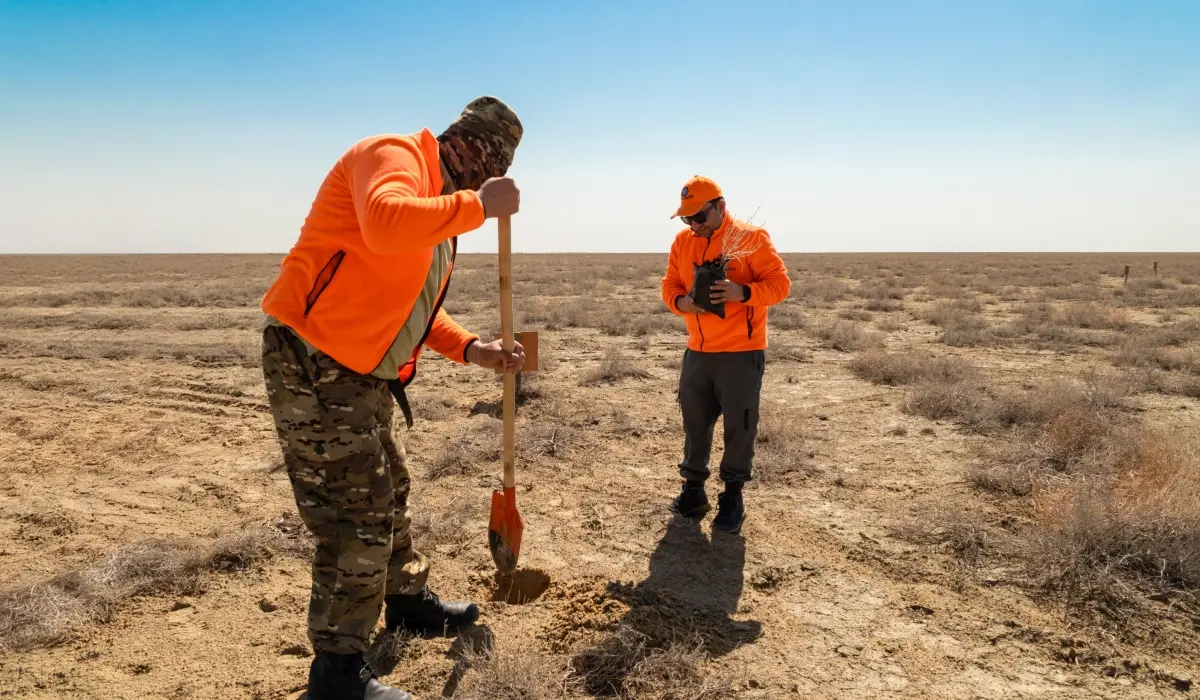
Greening of the Dried Aral Sea Project
The project in Kazakhstan focuses on the reclamation and restoration of the dried banks of the Aral Sea in the Kyzylorda Region through planting saxaul vegetation and creating new saxaul ecosystems.
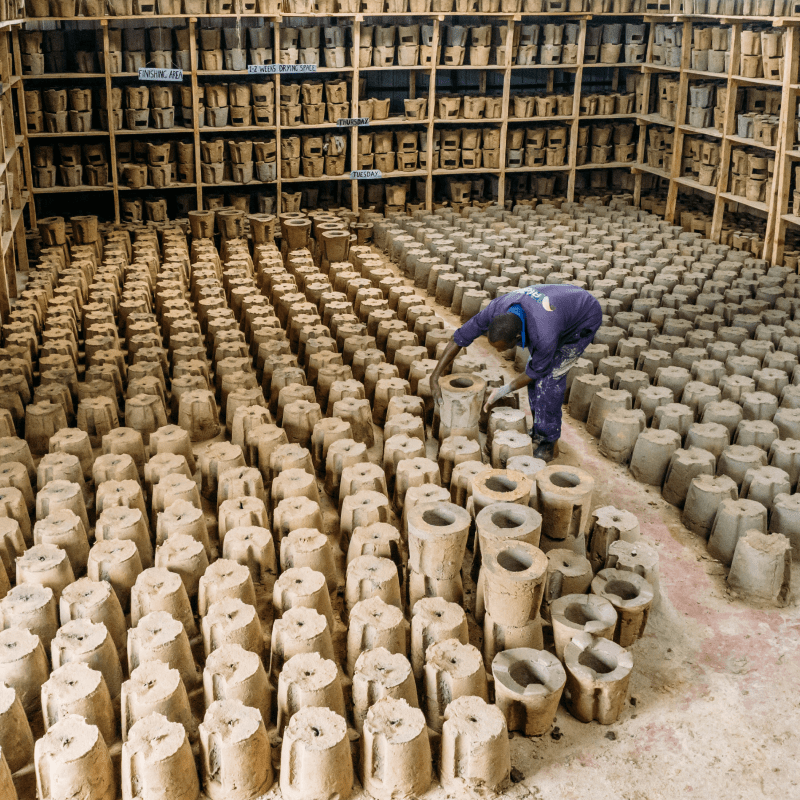
Hongera Energy Efficient Cookstoves Project
The project manufactures and distributes energy-efficient cookstoves to local communities in Kenya, reducing firewood usage, restoring nature, and minimising indoor air pollution.
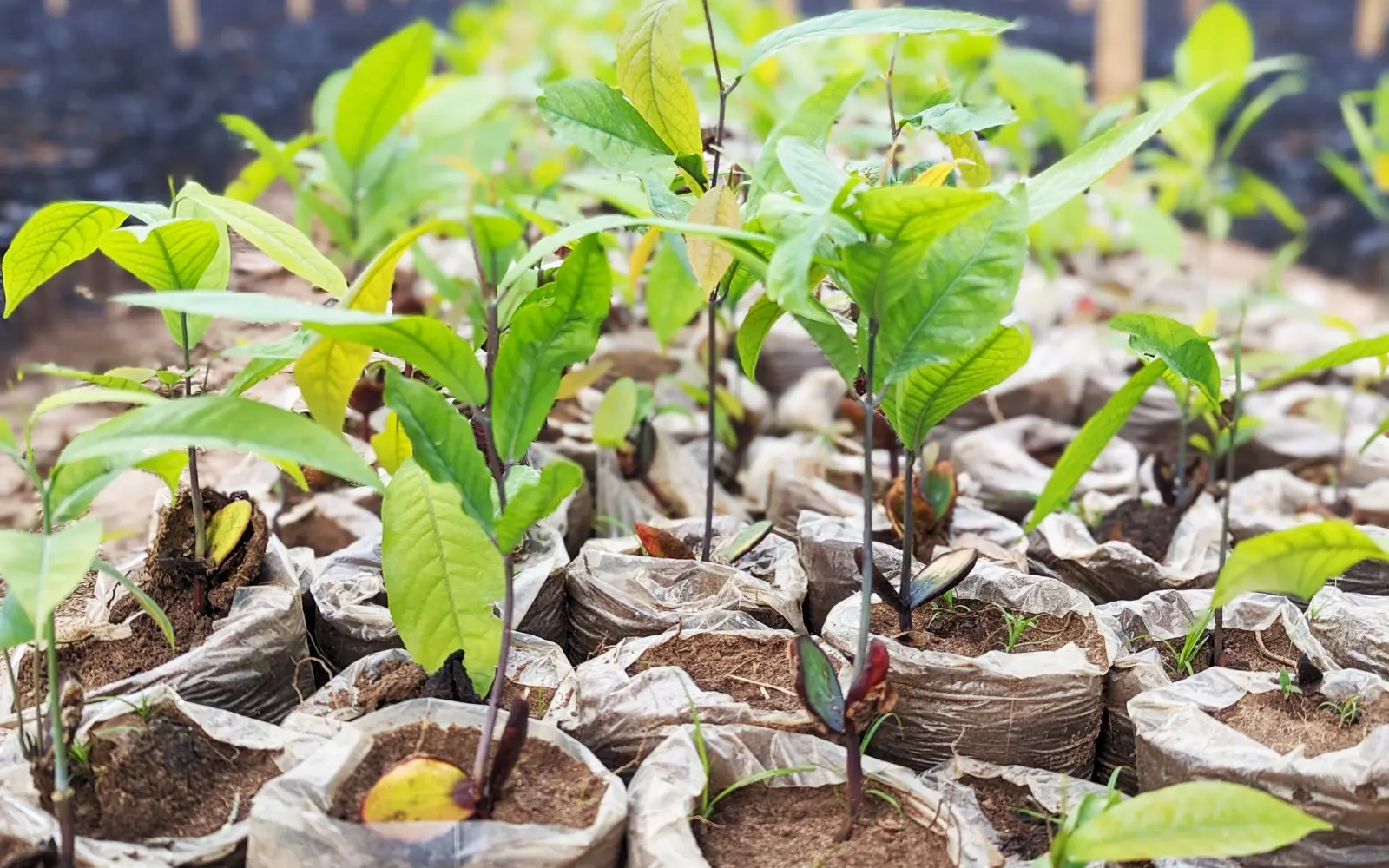
Regenerative Agroforestry Project Cameroon
The Regenerative Agroforestry Project Cameroon is a large-scale nature-based solutions project in Cameroon to restore nature, create forests, and promote sustainable development.
Frequently asked questions
The cost of carbon credits varies depending on several factors, such as the type of project, location, co-benefits, and verification standards used. At Green Earth, we adhere to the highest verification standards, ensuring that our carbon offsets are credible and meet international climate programme requirements. This rigorous process can be more expensive, but it's necessary to ensure our projects’ integrity and quality and that they have a significant positive impact on the environment and local communities. Our projects are designed to have long-lasting impacts. For instance, our reforestation and afforestation initiatives not only sequester carbon but also restore biodiversity, promote sustainable land management, and support local communities. In contrast, other projects may focus on less sustainable or less impactful measures, which can result in lower prices. Our pricing ensures that our projects meet rigorous, industry-leading standards and deliver meaningful results.
The cost of our projects can vary depending on several factors, such as the location, scope, scale, objectives, and complexity. Factors like local conditions, infrastructure, and logistics can also influence project costs. While both the Uganda and Cameroon projects are in Africa, they have different environmental and social contexts that affect their implementation and cost. For example, our reforestation initiative in Uganda involves planting and maintaining millions of trees in areas with degraded land and high deforestation rates. This requires a significant investment in land, labour, and ongoing maintenance to ensure the project's success. In contrast, our cookstove project in Cameroon is implemented on a smaller scale and in areas with existing infrastructure, making it easier to implement and monitor. Therefore, the unique challenges and opportunities of certain projects may require additional resources and investments to ensure their success and maximise their impact.
The cost of our projects can vary depending on several factors, such as the location, scope, scale, objectives, and complexity. Factors like local conditions, infrastructure, and logistics can also influence project costs. Cookstove projects are relatively cost-effective because they focus on providing energy-efficient cooking solutions to households, which can have immediate health and environmental benefits. Afforestation projects, on the other hand, involve planting and maintaining millions of trees over an extended period, which require more resources, labour, maintenance, and longer-term investments.
- Their limited supply—High-quality, nature-based carbon credits are in high demand as companies globally seek to reach net zero. However, the supply of these credits is limited, particularly because creating these projects takes time and effort.
- Multiple co-benefits—Nature-based projects, such as afforestation, reforestation, and regenerative agriculture, not only sequester carbon but also provide numerous co-benefits. These projects contribute to ecosystem conservation, improve biodiversity, protect wildlife habitats, enhance soil health, and offer livelihood opportunities for local communities. These additional benefits increase the project’s overall value and impact, leading to higher costs compared to projects solely focusing on emissions reduction.
- Long-term commitment—Nature-based projects, such as forest conservation and restoration, require long-term commitment and monitoring to ensure their effectiveness. This increases their cost as they require sustained efforts and resources to maintain their carbon sequestration benefits.
- Stringent certification standards—Nature-based carbon credits tend to undergo rigorous certification processes to ensure their legitimacy and effectiveness. Certifying bodies like Verra (Verified Carbon Standard) and the Gold Standard evaluate and verify the environmental and social impacts of these projects, which can involve additional costs for project developers.
- Significant scale and impact—Nature-based projects, especially those focused on preserving forests and ecosystems, have the potential to sequester significant amounts of carbon dioxide. The scale and impact of these projects make them more expensive to implement and manage compared to smaller-scale technology-based projects.
The voluntary carbon market operates on a voluntary basis, where participants voluntarily choose to offset their greenhouse gas emissions by purchasing carbon credits from projects that reduce or remove carbon from the atmosphere. The voluntary market has grown exponentially with the increasing global pressure to achieve the net-zero goals of the Paris Agreement. The regulatory carbon market exchange is governed by mandatory emission reduction targets and regulations set by governments to achieve broader climate goals. In these markets, companies must participate and comply with emission reduction targets set by government authorities. These emissions limits are known as ‘allowances’ or ‘caps’. Examples include the European Union’s Emissions Trading System (EU ETS) and California’s cap-and-trade programme. Both markets play essential roles in addressing carbon emissions and contribute to the fight against the climate crisis, with the voluntary market offering an additional avenue for companies and individuals to support emission reduction efforts.
Pricing in the voluntary carbon market is determined through negotiation and market dynamics between buyers and sellers. Organisations wanting to offset their emissions through carbon credits engage in transactions with project developers or intermediaries, and the price is influenced by factors such as project type, location, and co-benefits. Pricing is also affected by demand, the availability of high-quality emission reduction projects, and the credibility of carbon credits. In the regulatory carbon market, pricing is usually set by government authorities based on carbon reduction targets and the cap-and-trade system. Carbon allowances may be auctioned or allocated based on specific criteria, and companies must comply with the pricing structure set by the regulatory framework. The pricing dynamics in the regulatory market are directly impacted by government policies, emission reduction goals, and market mechanisms designed to achieve the overall targets of the compliance programme.
Brokers can play a pivotal role in the rapidly evolving Voluntary Carbon Market (VCM) by facilitating transactions, providing market liquidity, and contributing to price discovery. As intermediaries, they connect buyers and sellers, helping to negotiate prices and terms that satisfy both parties. Brokers such as EMSurge, ClearBlue Markets, Sigma Broking, and ACT Commodities serve as vital links in the VCM. They provide platforms for bilateral over-the-counter carbon trading and origination, offering access to various carbon credits across various sectors.
Organisations however do not need brokers to acquire carbon credits from project developers to start with carbon credit investing. You can contact us directly to purchase carbon credits generated by our impactful projects. Alternatively, you can invest in carbon credits via carbon credit funds like the First Mover Fund.
Get in touch
Green Earth is actively working to restore nature. Join us in creating a greener future through impactful nature-based projects.
Reach out to us to learn more about our work or how you can invest in carbon credits.

+31320788118
contact@green.earth