
Biodiversity
Nature-based solutions
United Nations
Carbon markets continue to play an important, if still emerging, role in mobilising private finance for nature-based solutions (NBS), according to a new report from the UN Environment Programme (UNEP), ‘State of Finance for Nature 2026: Nature in the Red - Powering the Trillion Dollar Nature Transition Economy’, which highlights both current limitations and significant opportunities for growth.
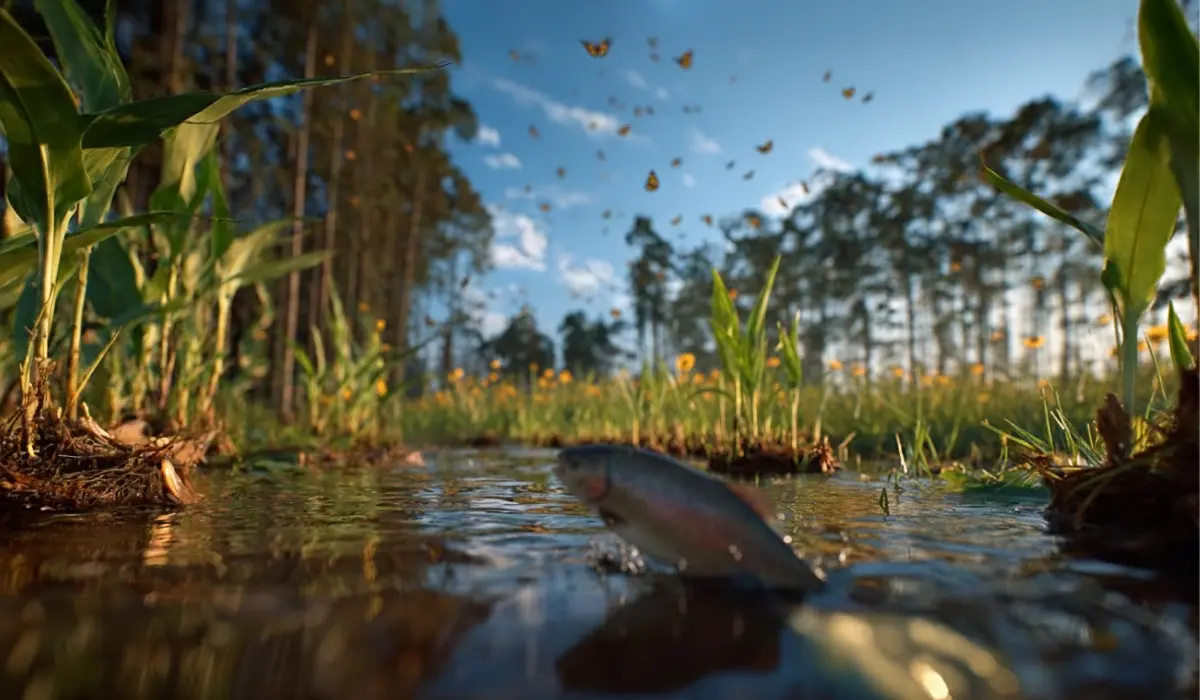
 Wild landscapes rich in biodiversity. AI generated picture.
The report estimates that carbon markets directed around $1.3 billion towards NBS projects globally in 2023. Compliance markets accounted for $942 million of this total, while voluntary carbon markets contributed a further $355 million. For project developers, these figures underscore that carbon finance is already supporting conservation, restoration and sustainable land-use activities, albeit at an early stage of market development.
By comparison, biodiversity offset markets attracted approximately $7.1 billion last year, making them the largest single source of private NBS finance. UNEP noted that these markets, which are largely driven by regulatory requirements, currently mobilise substantially more capital than carbon markets. However, developers point out that carbon markets are structurally different, with demand shaped by evolving corporate environmental strategies, integrity frameworks and policy signals.
Overall, private finance for NBS totalled about $23.4 billion in 2023, with additional capital flowing through green and sustainability-linked bonds, payments for ecosystem services, philanthropic funding, certified commodity supply chains and private finance mobilised by official development funds. Carbon revenues form part of a broader and increasingly blended finance landscape for NBS delivery.
Within compliance markets, New Zealand’s Emissions Trading Scheme was the largest contributor to NBS-related carbon finance, with cancelled credits accounting for $679 million. California’s cap-and-trade programme generated $195 million through surrendered NBS credits in 2023, followed by Colombia’s carbon tax at $57 million and Australia’s Carbon Credit Unit Scheme at $28 million.
Read more: Emissions accounting without an ESG team: achieving the best of both worlds for SMEs
UNEP acknowledged that carbon markets face ongoing challenges, stating that ‘Integrity challenges, policy uncertainty and limited demand for verified nature-positive outcomes continue to constrain (carbon) market confidence.’ At the same time, the report emphasised that ‘Strengthening transparency, regulatory coherence and links between private and public finance will be critical to scaling credible and sustained investment in NBS.’
By contrast, biodiversity offset markets benefit from clearer regulatory mandates. The United States accounted for around $6.2 billion of biodiversity offset investment last year, while India ranked second at approximately $860 million, primarily through its National Compensatory Afforestation Programme.
For NBS and carbon project developers, the report’s findings reinforce the scale of opportunity ahead. UNEP estimates that combined public and private NBS finance, which reached $220 billion in 2023, will need to more than double by 2030 and triple by 2050 to meet global targets under the Rio conventions on sustainability, biodiversity and land restoration—pointing to a substantial future role for well-designed, high-integrity carbon markets alongside other financing mechanisms.
Read more: VCM prices diverge as integrity becomes the new currency
The UNEP report reinforces the growing recognition that nature-based solutions are becoming a cornerstone of sustainability, biodiversity and land restoration strategies. As regulatory-driven biodiversity markets continue to scale and carbon finance evolves towards higher-integrity outcomes, the long-term value of NBS lies in projects that deliver measurable environmental impact alongside financial resilience. At Green Earth, we focus on developing large-scale restoration initiatives that integrate biodiversity, environmental, and community outcomes within robust governance frameworks. As public and private capital increasingly converge around nature as an asset class, well-designed NBS projects are positioned to play a critical role in closing the global financing gap—and we invite stakeholders to explore how nature-led approaches can unlock durable value across environmental objectives.